Sinai Moments – Parshat Vaetchanan 5777

sinai-moments

For me, all of my “Sinai moments” are tied in some way to family. If you’ve never considered your own Sinai moments before, the idea is fairly self-explanatory. These are events in your life which carry a certain power or splendor, akin to the feeling Moshe and the Israelites might have had upon receiving the Torah at Mount Sinai. The Torah describes the scene as majestic, with thunder and lightning and grand theatrics. Clearly this was a moment that changed an entire people and connected them to one another and to future generations in a way they were not connected before.

We use the term now with some hyperbole, but nevertheless there are moments in our lives that affect us in monumental ways. My Sinai moments include my rabbinic ordination, my wedding day, and the days my children were born. Often these moments are joyous and uplifting, but they are undeniably powerful and life-changing. And for me, these moments were in some way, shape, or form tied back to my connection with my family, specifically those who came before me and those who might come after.

Parshat Vaetchanan, this week’s Torah portion, continues with the retelling of the laws here again in the book of D’varim. We’re also reminded of God denying Moshe’s entry into the Land of Israel. The Torah then reiterates that our mitzvot are the building blocks on which our society is formed. Finally, Moshe establishes three cities of refuge, and we receive the most well-known instruction in the Torah, the Shema.

Within the commandments about passing on our great tradition, God commands the following in chapter 4, verse 9:

And make them known to your children and to your children’s children: The day you stood before the Lord your God at Horeb . . .

The importance of passing on our tradition from generation to generation repeats throughout the Torah, but in this instance, the Torah includes grandparents. The Babylonian Talmud picks up on this notion in tractate Berachot, page 21b:

When a child is taught Torah by a grandparent, it is as if that child received it at Sinai.

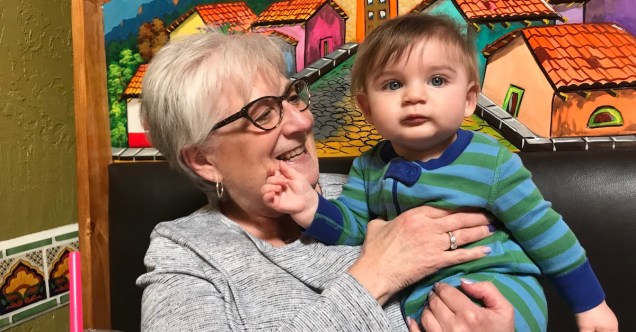
Now you understand why our momentous, awe-inspiring occasions – the ones we call Sinai moments – often center on family. A Sinai moment by definition is one generation to another sharing tradition and wisdom. I take great joy in hearing my mom share with my children the stories from the Torah that she shared with me when I was a child because it tells me the preservation of our family culture and Jewish heritage are secured. Parshat Vaetchanan simply articulates one of the Torah’s primary imperatives, which is to educate our children and future generations on the beauty of our heritage.


Speak My Language – Parshat Devarim 5777

speak-my-language

One of the hardest parts for me about spending time in Israel is the way my brain works with foreign languages. I am easily able to understand Hebrew in written or oral form, but when it comes to actually speaking the language, sometimes I’m at a loss. I stumble over conjugation, I can’t access words I know I’ve learned, and I turn into a one or two-word answer girl.

Languages are just not my strong suit. I had the same trouble with Spanish in school. My teacher promised to pass me out of Spanish 4 as long as I promised not to take Spanish 5. Language – how we communicate with one another – is of the utmost importance in our world. It can be frustrating not to understand what someone is asking of you, not just person to person, but in a larger, global sense as well.

This week in our parshah, we enter into the final book of the Torah, D’varim (Deuteronomy). D’varim stresses the covenant between God and Israel and looks toward Israel’s future in a new land as they build a society that pursues justice and righteousness. The central theme of this section of text is monotheism, the belief in one God, and building a society around the laws we’ve been given during the course of the four previous books.

In chapter 1, verse 5 we learn: “On the other side of the Jordan, in the land of Moab, Moses undertook to expound this Teaching.” What was Moshe expounding? Hadn’t he been sharing the Torah all along the way? The Sfat Emet teaches that Moshe went on to interpret the Torah in many languages so that future generations of Jews in many lands would have access to it in terms that they could understand. The Torah is written in lashon kodesh, in Hebrew, as that is the “holy tongue,” but right here we learn that the most important piece is not the language in which it is written, but the language we use to understand it.

The Torah keenly picks up on the notion that we are better off when we engage with one another on and with terms and languages we share. Whether that means changing your wording and trying again with a toddler, or exercising a little more patience in conversation with someone who speaks a different language literally, culturally, or politically. We have a Torah imperative to understand one another, though it may not always be easy.

Your Mood Swing is an Act of God

Mood Swing

Hannah Glass, one of Neveh Shalom’s seniors, once told me, “God is the explanation for those things we simply cannot understand.” Not only is it Jewish nature to wrestle with God, it is human nature. In a world that relies on physical evidence, a being that cannot be physically seen or touched is difficult to believe in at times. Some people find faith challenging; others find comfort believing that there is an entity greater than us in every way. And to add to this inner struggle, we also have to realize that as we change, our understanding of God can change too. Growth means we shift and adjust, and therefore our notion of God can too.

The proof is in the Torah, which is full of different experiences of God. There are times when God is kind, times when God is vengeful, times when God is caring like a parent, and times when God has what is unmistakably a short temper. These different aspects reveal an ever-changing nature of God and the kind of emotional changes we ourselves might experience. However, we also learn that fluctuations in God’s temperament do not diminish the loyalty and dedication God has for the Jewish people.

This week we read the last segments of the fourth book of the Torah, Bamidbar. Parshiyot Matot and Masei start by talking about the various vows the Israelites will make, and afterward they detail the requests of the different tribes as they prepare to enter the Promised Land. This section ends with the last arrangements of the tribes as they define their territorial legacies.

As the Israelites get closer to entering into the Promised Land, they also enter into discussions with God about what their options are in this new, uncharted territory. In chapter 33, verse 52 we learn:

You shall dispossess all the inhabitants of the land; you shall destroy all their figured objects, you shall destroy all their molten images and you shall demolish all their cult places.

It’s easy to read this as a literal takeover, or at least a pretty harsh declaration of intolerance. But the Torah’s larger purpose here is more of a warning to the Israelites not to fall into the trap of blending their religious practices with the practice of the Canaanites, thus losing their own culture. At this point in the Torah, the Israelites still face the very real fear that the God they have known is only with them for the duration of the Exodus. Their concern is will this new place necessitate new ways to connect with God? This is why the Torah makes a point of stating, “No, you don’t need those other gods. I, the God with you through the Exodus, am your God through life.”

We often think of God, at least in the Torah, as having human-like emotions. But since we are created in God’s image, wouldn’t it stand to reason that perhaps we are the ones having God-like emotions? And yet even a God-like mood swing or emotional struggle only has as much power as we give it. Yes, we go through changes. Yes, there is uncertainty in life. That doesn’t mean we lose who we are.

Mystery Woman – Parshat Pinchas 5777

mystery-woman

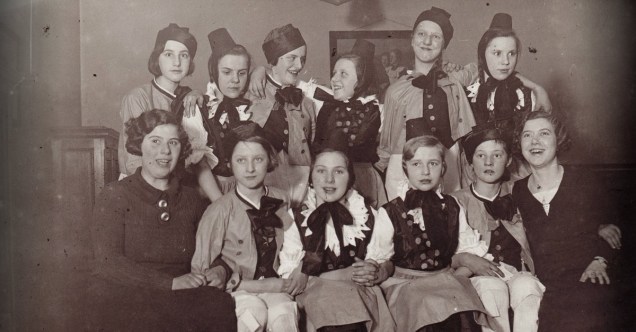
I love learning about my family history. My grandparents all did a fairly decent job of remembering and recalling details about cousins, aunts, and uncles from generations back. They could pick up an old photograph and instantly recall the name of the person and how they were connected to the rest of the family. In some cases there were complicated histories behind the people and relationships in these photographs. And then there were always a few pictures that had a name written on them, but no one knew exactly whom that person was. I imagine many families are like this; there are pictures that tell the story of your family tree, and yet there are still one or two faces or names for which no one can remember the connection.

As Jews, the Torah is our family ancestry project, and throughout its text it shares stories of different generations and the relationships between the generations. This week’s parshah, Pinchas, is no different. We begin with the story of Pinchas (identified as Aaron’s grandson) and the extreme action he took against those who defied the prohibition of idolatry. Then we move to the daughters of Zelophechad (Joseph’s great-great-great-grandson), who want to inherit land after their father’s death because he had no sons. Then Joshua is appointed Moshe’s successor, and we end with the sacrifices we are to make for Rosh Chodesh and the holidays.

For the most part, we know the history of our matriarchs, Sarah, Rebecca, Rachel, and Leah, and who they married and which children they mothered. However, one woman’s name stands out in the Torah without much background given. Certainly there are plenty of people who are only mentioned once, but the name Serach appears twice in the Five Books of Moses and again later in Prophets (Nevi’im). Yet her presence in both places remains a mystery. She is the woman you can’t quite identify in the picture.

In the Torah, Serach’s mention appears to be purely anecdotal, but she is also mentioned in Samuel 2, verse 16:

Then a wise woman called from the city, “Hear, hear! Please tell Joab, ‘Come here that I may speak with you.'”

It may not be obvious at first glance, but according to Rashi, Serach is alluded to as the isha chochma (wise woman) who challenges the general for not knowing the Torah’s rules for besieging a city.

While her exact role in our ancestral “family” and how she lived so long between these sections of biblical text are relatively unknown, Serach is nevertheless a wise woman and a part of our ancestry. There are plenty of well-known Torah stories we hear over and over again, year after year. Children and adults alike can recall Noah, Joseph, and Moshe in great detail. However, reading Parshat Pinchas this week I am reminded that an individual’s “fame” within the context of our history simply means we know their story. The people in the photographs whose names we do not know are just as important, though their stories may remain untold.

Frenemies – Parshat Balak 5777

frenemies

There are some people who bring out the best in you and others who bring out the worst. There are some friends who, though they may drive you crazy at times, are true friends and make your life complete because you know them. Then there are those you stay in touch with only because you follow the rule of keeping your friends close and your enemies closer. However you classify the people in your life, it’s the interactions we have that determine our behaviors and even how we view ourselves. For this reason the company we keep is so important.

This week we read Parshat Balak, a narrative filled with opportunities for taking the right or wrong action and saying the right or wrong words. You know this parshah – it’s of course the one with the talking donkey. Parshat Balak is the story of Balak, son of Tzipur and king of Moav, who solicits Balam the “prophet” to curse the children of Israel. God allows Balam to go to the land of Moav, but only if he will speak what God tells him to say. On the way there, Balam finds himself frustrated with his donkey, who refuses to move. As it turns out, the donkey sees an angel of God in the road. Balam cannot see the angel, only the donkey can, so Balam gets angry at his stubborn animal and beats the donkey.

We often get stuck in the cartoon, supernatural aspects of this story. But what made Balak so upset with the Israelites in the first place? He saw them as a people dwelling apart, not “reckoned” among the nations. The Israelite people were “other,” and that was a big issue for Balak since, for him, other meant different, non-conforming, and a threat to his leadership.

The Ba’al Shem Tov, the 18th-century rabbi regarded as the founder of Hasidic Judaism, suggests that the Jewish people have survived not despite the enmity of their neighbors, but precisely because of it. Maintaining a “frenemy” status prevented the Israelites from becoming too close to their neighbors and assimilating into their culture. What Balak saw as the potential downfall of the Israelite nation was actually their saving grace in this time of transition.

We are the company we keep, but that’s not necessarily always in our best interest. As we can learn from this parshah, the people we surround ourselves with are the people we tend to identify with, but it’s by maintaining our true identity and being true to who we are that we are able to survive.