Renewing Ourselves – Parshiyot Nitzavim and Vayelech 5778

renewing-ourselves.jpg

*Next week I’ll be posting my Rosh Hashanah sermon, so this week I’ve included d’vrei Torah for the portions covering the next two weeks.

About a year after Matan was born, Duncan turned to me and said, “You know I love you now more than ever, but do you ever get the feeling these days that we’re more like roommates than husband and wife?” Never before were truer words spoken. It is so easy to get lost in the single-minded focus of the first year of a child’s life. Add to that one three-year-old, two crazy work schedules, and so much more, and we often ended up like two ships passing in the night. As we learned, unfortunately intimacy sometimes takes a backseat to necessary sleep, and a romantic anniversary lunch date can quickly turn into swapping calendars and talking about the kids instead of focusing on our relationship. A marriage, or any partnership that involves an intimate human connection and closeness, requires reaffirming the commitment. Commitment is not a one-time thing; it’s an active, ongoing process.

This applies not just to personal relationships, but to Torah and even to religion in general. Judaism as a faith is based on the relationships we maintain with one another, with text, and with God. Over the next two weeks we will read Parshat Nitzavim and Vayelech. These are the two parshiyot that often surround the High Holy days. Parshat Nitzavim reminds us of our free will in life and that the proper path is to repent, to follow the rules, and in general to be good people. Parshat Vayelech teaches us about Moshe’s process of transferring leadership to Joshua and the final words he will share as the leader of the Israelite nation.  

The text begins in Parshat Nitzavim that we should “enter into the covenant of the Lord your God, which the Lord your God is concluding with you this day with its sanctions.” This is interesting timing. Didn’t the Israelite nation already affirm their commitment to God’s mitzvot and to God when they stood at Sinai and agreed “na’aseh v’nishma”? “All that God has said we will do and we will understand.” Why are we now asked to enter into the covenant once more?

Shneur Zalman, the 18th century rabbi of Liyadi, views this relationship as an intimate marriage. He teaches, “Just as a husband and wife need to reaffirm their commitment to each other when the early days of romantic attraction have given way to the day-to-day struggle to overcome accumulated disappointments, so too God and the people Israel need to reaffirm the covenant at this later date.”  

Like new parents trying to maintain intimacy when daily life takes over, our relationship with God and with our faith community requires attention and intentionality in order to be maintained. These two parshiyot at the end of the Torah remind us that we are in need of constant work and engagement in order to find fulfillment in Judaism. What a perfect reminder in the new year that the text is there, the community is ready, and all it takes is intention.

How I Learned to Pray Again – Parshat Ki Tavo 5778

pray-again.JPG

In the year after my father died, I lost my ability to speak to God. I couldn’t open the siddur, the words which I had read my entire life fell meaningless on my lips. My heart wasn’t in it. I couldn’t share a prayer of a loving God when I felt so unloved, and I couldn’t praise the creator of the world when I felt like my world had been so deeply crushed. My prayers were more filled with silence or rage than calm and compassion.

There are clearly times when the words on the page of the siddur, the formatted, clear-cut, and poetic verse, simply does not fit the moment, the experience, or the mood of prayer that day. I often find myself questioning, “What words truly speak to my heart today?” I know this experience is far from unique to me. As an educator I often hear profound prayers and thoughts about God from the tiniest human beings. A laugh at the silent Amidah in shul is a beautiful way for a baby to lighten my soul, and a request for God’s “presents” instead of “presence” in prayer is in a way a beautiful misunderstanding of a really important concept. But, what would God think about all these outside-the-box prayers?

Luckily, we have our portion this week, Parshat Ki Tavo to shed some light. This is the section of the Torah that reminds us again of the blessings and curses that come to us as we choose to follow or ignore the laws of the Torah. Specifically, we learn of the requirement to make an offering of “first fruits” for the priests in the Beit HaMikdash, and the different ways in which we are supposed to thank God and give praise (before prayer was a daily activity). Finally, the text reminds us of how we’re supposed to take time to rebuke one another when we’ve taken a misstep and the ways in which we can do so with compassion and kindness.

Within the text is the commandment to build the altar using “unhewn stones.” These stones are not perfect. They are not cleanly and evenly quarried; they are not polished or shiny. The altar on which we are to offer up our sacrifice, and with it our prayers, to God is not perfect or pristine. It is made up of whole, natural, imperfect stones. Martin Buber, the great philosopher, is quoted as saying, “Eloquent polished prayer is like hewn, polished stone. Here the ‘unhewn’ (lit. whole) stones represent the inarticulate yearning of a sincere heart – which God prefers.”

Perfection is not prayer. Prayer is made up of the words of our heart in raw, unfiltered form. While the words in the siddur are beautiful and polished and a great jumping off point for prayer, the words in our hearts are those that are offered up as a sacrifice to God. As we approach our sacred time of repentance and teshuvah (returning), Parshat Ki Tavo reminds us that perfection is unnecessary in our relationship with God. Anger, rage, understanding, sadness, and joy are all real human emotions, and when those emotions are shared in prayer, that is when we are truly offering up ourselves in prayer to God.

Till Death Do Us Part – Parshat Ki Teitzei 5778

till-death-do-us-part

As I’ve written about before, I love the way that Judaism tackles death. From the laws of mourning, to the laws of memorializing, there are so many beautiful ways in which we are bound by law and practice to celebrate and honor the memory of our loved ones. But those rituals are largely focused on what we do as mourners for people we cared for. What about people who we didn’t love, or who led less than upstanding lives?

While it’s somewhat easier to acknowledge that we are all created in the image of God, and thus we start out as equals at birth, it’s much more complicated to apply that same equality all the way through until death. However, the Torah has an answer for this too. Parshat Ki Teitzei, which we read this week, gives us a sense of how we should treat one another as human beings in a variety of situations. This portion of Torah contains in it more laws than any other single portion of Torah. In it we have laws that govern the fields, interactions with others, how we treat ourselves, returning lost items, signs of purity, merits involved in various acts, and a whole lot more.  

Part of the text is based on the notion that we are all equal from birth through death, in war and in peace. Every human being has a value and a purpose. Even those who may not live their lives in the most honest and upstanding way are required, according to this week’s Torah portion, to have a quick and proper burial. Chapter 21, verse 23 states that even “A man who is guilty of a capital offense and is put to death, and you impale him on a stake, you must not let his corpse remain on the stake overnight, but must bury him the same day. For an impaled body is an affront to God.”  

It’s gruesome, but even a murderer is due a proper burial and is to be treated with the same regard in death as any other body. (Not “anybody,” but literally “any body.”) That’s not to say there isn’t punishment in the living world for crimes committed, but in death we are to think always of the life lost, and the gift of life comes from God.  

Our parshah is a subtle reminder that the universal equality that awaits us should be paralleled by a universal equality we afford others while we’re alive. Human life is valuable, and our bodies, divinely designed, are deserving of care and respect in their final moments on the earth. Even more so are they deserving of those things in life.


Above the Law – Parshat Shoftim 5778

above-the-law.jpg

Rules don’t always apply to everyone. There are plenty of examples in the home where decisions are meant for the younger set. Rules like “no ice cream for dessert tonight” might be what we tell the kids, and then I have a spoonful after they go to bed. Or it’s “no TV on weekdays,” except the minute they’re asleep Duncan and I can’t wait to catch up on our shows. It’s not that as the parents we are above the law, but it is true that as the rule makers we may have different needs, and we have the ability to bend the rules to meet those needs.

Laws, however, are different than rules. Our duty to obey the law is pretty crystal clear, and that responsibility falls on everyone the same way, no matter their position in society. In fact, part of what makes laws work is that they apply to everyone, with the objective to create a fair, orderly, and just society.

This week the Torah reading reminds us of this fact. The portion is Parshat Shoftim, a section of Torah that completely focuses on the legal system and specifically on justice and the context of the laws. This text includes the commandment to establish judges and officers, as well as a listing of punishments for certain transgressions against mitzvot (commandments). We also learn about the laws surrounding false witnesses and murder. Ultimately, it’s a sense of fairness and justice that’s at the heart of creating these laws.

Chapter 17, verses 14-15 raise the question as to whether or not the king is actually required to live according to the mitzvot. On the one hand, the king is not considered to be a god or of divine birth. Even though the king is seen as being approved by God, the king is also a servant of the people, required to uphold standards, solve disputes, and wage war if necessary. Verse 18 then teaches that the king has the responsibility of writing his own Torah scroll or having it written for him. It’s this requirement that reminds us that the king is not above the law, but subject to it like everyone else. Even the king must obey the words of the Torah.

We live in a world where all the time we see people in positions of power trying to overstep their bounds, ignore the laws, or try to get away with something. Whether it’s a teenager thinking she’s invincible or a politician skirting tax laws, thinking laws don’t apply to you comes at a severe price when those laws catch up with you. The Torah this week in Shoftim reminds us that we are all equal in God’s eyes. Whether you’re a leader or a follower, the words of the Torah still apply. We are all kings of our own castles, all beholden to the same standard: to uphold that which is right and just and to teach the next generation to do the same.

Go Unnoticed – Parshat Re’eh 5778

go-unnoticed.png

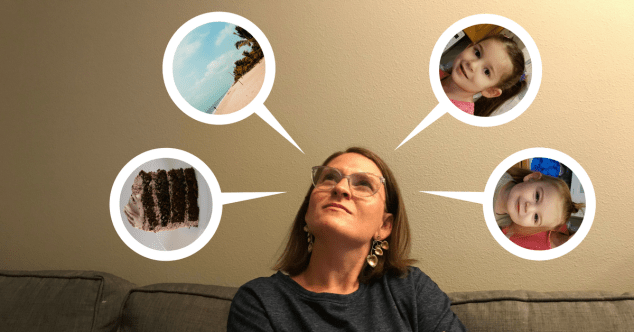
“Out of sight, out of mind” suggests that we’re going through life like infants, with no sense of object permanence, which of course is absurd. I, for one, am never able to fully put things out of mind. Whether it’s craving a piece of chocolate cake regardless if there’s cake nearby or thinking about my family as they are spread across the globe, things that are meaningful to me are never far from my thoughts. To be conscious of multiple things at once can be helpful. It means we can concern ourselves with a refugee crisis even if we go about our daily lives without seeing any refugees. We can care about providing food and water and humanity even if the recipients aren’t in our own backyard.

However, just because we can comprehend something’s existence without seeing it doesn’t mean we can focus on ten things at once. With big, global issues vying for a place in our thoughts, occasionally we’re blind to the issues that are right in front of us. This is completely natural; it’s simply a fact of life that we can only think about so many things at once. The question is, how do we deal with that?

This week, Parshat Re’eh gives us some guidelines for this very problem. In our parshah we learn about the blessings and curses that will come with observance (or lack thereof) of the mitzvot we’re given. We receive some final warnings about following the laws against idolatry, laws for keeping kosher, and the importance of treating each other as equals. Finally, we receive some more information on our three pilgrimage festivals.

In chapter 12, verse 19 we read, “Be sure not to neglect the Levite.” As you may know, the Torah never shares words without some purpose. The Levites were a tribe who had great responsibility in caring for the nation, and at the same time, they were not “among the people” in the general sense. German Orthodox rabbi from the 19th century Samson Raphael Hirsch teaches, “Among a population engaged in farming and raising cattle, such ‘unproductive’ members of society could easily come to be neglected and resented. The people might fail to recognize the vital role of the Levites in their spiritual and moral welfare.”

In other words, the Levites aren’t “productive” members of society when it comes to working the land or feeding the cattle; their productivity is less defined and more difficult to see on the surface. Their role is the moral compass of the people, a job that might be easily overlooked by the general population. Parshat Re’eh and Rabbi Hirsch remind us that just because something isn’t right in front of our eyes doesn’t mean it’s without concern or fails to contribute to society. For a community to succeed, we have to not only fulfill our own responsibilities, but put trust in others to do the same.