Meaning in the Mundane – Parshat Eikev 5784

Hearing good news, seeing a head of state, and going to the bathroom. They all have one thing in common. No, they’re not random cards from a game of Apples to Apples. Our tradition has a blessing to follow all three. Blessings for everyday and ordinary situations are, in my opinion, one of Judaism’s subtle beauties. Sure, we have the ceremonial grandeur of the High Holidays and the weekly joy and recharge of Shabbat, but there’s something special about finding meaning in the mundane, and I’d extend this to include seemingly mundane commandments. 

Parshat Eikev contains a related, and powerful, message that connects mitzvot (commandments) and blessings. The portion begins with the word eikev itself, which is often translated as “because,” suggesting that the blessings we receive are a direct result of our actions. But eikev also means “heel,” hinting at those mitzvot that are often overlooked or taken lightly, the ones that we might not even notice as we step through our lives. This dual meaning is a reminder that our everyday actions, even those that seem small or insignificant, can have just as much an effect on our lives as the big milestone moments. Our mitzvot aren’t a checklist of to-dos; they’re individual and unique opportunities to bring good into our lives and the world.

The text this week promises that if we observe the commandments, we will be blessed in many ways—through fertility, abundant harvests, protection from enemies, and good health. These blessings aren’t just rewards; they are the natural outcome of living a life aligned with the values and principles that God has laid out. When we live in accordance with basic values—kindness, justice, humility—we create an environment where blessings can flourish.

What we have to remember is that blessings aren’t always immediate or obvious. Sometimes, the blessings come in forms we don’t expect, or they arrive in subtle ways. But Judaism isn’t about a one-for-one exchange of good deeds and rewards. It’s about having faith that our efforts to do good will ultimately bring goodness into the world, even if the results aren’t always abundantly clear. This is especially true with the “heel” mitzvot, the ones we might think don’t matter as much. It’s far too easy to focus on the big, dramatic acts (literally, the ten huge ones on the side of our building come to mind) and overlook the small, daily opportunities to do good.

Parshat Eikev teaches us that every action counts. We don’t just receive blessings, we create them through our actions and attitudes. There’s a reason the Jewish value of gratitude is hakarat hatov in Hebrew, or “noticing the good.” By paying attention to the small mitzvot, and by cultivating gratitude for the everyday, we can create a world where blessings abound. This week’s parshah calls us to recognize the power we have to bring blessings into our lives and the lives of others, one small act at a time. The small acts of kindness, the quiet moments of gratitude, the everyday decisions to do what’s right—these are the building blocks of a life filled with blessings.

Place of Refuge – Parshat Vaetchanan 5784

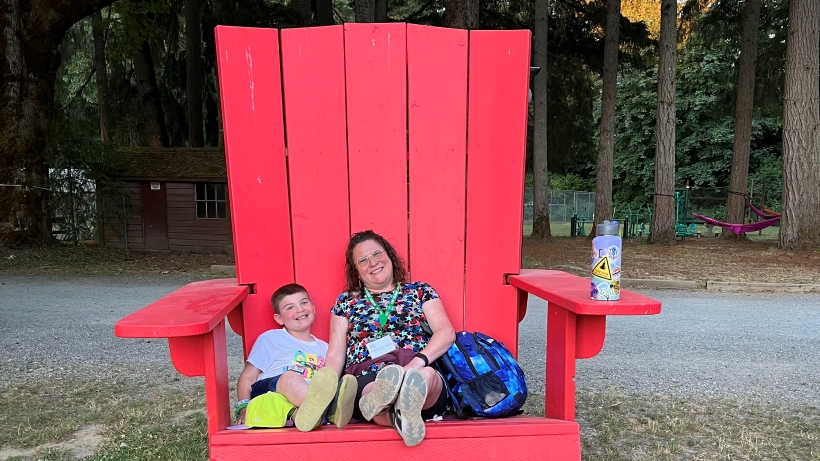
I love visiting summer camps; it’s a highlight of every summer. I just visited Camp Solomon Schechter earlier this month, and walking through the gates of Schechter or BB Camp and seeing the vast expanse of nature and the cheerful sounds of joyful kids brings me peace and contentment on a whole other level. Do you know what’s funny about that? I hated being a camper at overnight camp. To clarify, I tolerated most of camp. From 8 a.m. to 8 p.m. I was a pretty happy camper. It’s just that by the end of the day, I was peopled out. Back in the 80s and 90s, we didn’t understand sensory processing disorders or introversion the way we do today. There was no safe place for me to take refuge when the noise and excitement of camp got too overwhelming for me. So while camp is supposed to be a refuge from the rest of the chaos in our world, it started out for me as its own chaotic space that just left me wanting for quiet.  

Yet, this time in my childhood represents one of my most important and treasured experiences because of the lesson it still provides. As a rabbi now, this is a constant reminder to me to hold the balance between the variety of needs our congregants have in order to feel a place of calm. It has often been said that we lead from the place of our own brokenness to create a new wholeness, that is indeed true not only of my own leadership, but of Moses as well.  

Parshat Vaetchanan continues with the retelling of the laws here again in the book of Deuteronomy. We also read about God’s persistent refusal to allow Moshe to enter the Land of Israel. The Torah then issues a caution to uphold the mitzvot as the key to building an Israelite society. Moshe then sets three cities of refuge, and we receive probably the most well-known instruction in the Torah, the Shema.  

In chapter 4, verses 41-42 the text reads: “Then Moses set aside three cities on the east side of the Jordan to which a manslayer could escape, one who unwittingly slew a fellow without having been hostile to him in the past; he could flee to one of these cities and live.” These verses follow an address but were not directly spoken by Moses; it’s simply narrative. Commentary asks the question “Why would this act be so important to Moses that it interrupts his address to the nation?” The answer is because Moses himself had to flee when he struck a man in Egypt. In other words, as a leader, Moses knows what it is to need a place of refuge to regroup and understands the importance of those places in a society. 

Parshat Vaetchanan makes it clear that a place of refuge can look different for each person. What matters is not what or where the place is, but how we can be supportive of the environment that allows for refuge to take place. As we move slowly to the final encampment of the Israelites in the land of Israel, Moses and the Torah give us this message: find your place, find your peace. 

Be Yourself and Have Fun – Parshat Devarim 5784

When I used to go to camp, or on a big trip, my father would put notes throughout my duffle bags or backpacks for me to discover throughout the trip. They were sticky notes and letters hidden with messages of encouragement, love, and, very often, reminders. It wasn’t that he and my mother didn’t tell me these things all the time before I left, it was more like him wanting to make sure that even when we were not in direct contact, in the days before email and texting, that the important life lessons they wanted me to carry with me were always there. I’ve adopted this habit as well, and when I send Shiri off to camp each summer, I have so much fun writing little notes to discover during that time away. “Don’t forget to change your underwear.” “Be kind and smile.” “You’re wonderful.” “I love you!”Even when I leave for a trip, I often leave notes for my kids or Duncan to find. Except for the one about the underwear – I don’t have to remind Duncan to do that.

It turns out my father was not alone in his need to pass on those last-minute reminders and messages. In fact, this very action of cramming final words into those remaining few minutes before a departure either in person or in written form comes from the Torah. 

Parshat Devarim begins the final book of the Torah, which shows the Israelites totally unmoored by the change in leadership and location ahead of them. Devarim stresses the covenant between God and Israel and looks toward Israel’s future in a new land as they build a society that pursues justice and righteousness. The central theme of this section of text is monotheism, the belief in one God, and building a society around the laws we’ve been given over the course of the four previous books.

The book of Devarim is called Deuteronomy in English, originally from Greek, meaning literally the “second telling” because it is comprised of a repetition of the laws and rules shared earlier in the Torah. Interestingly though, 70 of the 100 laws that are given in this book are brand new to the Israelite nation. It almost reads as though God is getting ready to send them off on an adventure and has a list of 70 last-minute reminders on how to be human before they can officially start this next phase of their lives.

However, I don’t see this as procrastination. I don’t think God waited until the last minute, God was setting an example for the kind of leadership we need in our world, the kind that guides and encourages. True leaders want others to succeed, and so they pass along every piece of advice they can think of. What advice would you share? 

Thorn in Your Side – Parshat Matot-Masei 5784

My paternal grandparents (a.k.a. Nana and Papa) were expert gardeners; they certainly had a green thumb that I sadly did not inherit. Papa always planted a beautiful flower garden in the backyard of their house every year and would invite me to help. Then Nana would plant the vegetable garden, and I’d tend the plants with her. We’d put up a fence to keep the deer and bunnies away from the bounty. While at the time I may have gone out of my way to avoid eating anything resembling a vegetable, I do remember planting and then watching them grow. The inside of their house was filled with plants too. They kept most of them on a beautiful window seat behind their dining room table, one of which was a potted cactus. One Rosh Hashanah lunch after services, my younger sister tried to squeeze between the edge of the seat where the cactus was and my Papa’s seat and ended up falling into the cactus. Ouch! 

After calling poison control, my dad and uncle wrapped their hands in duct tape to extract the cactus needles from my sister’s arms and face. Unfortunately, the little spines were so tiny and thin that we were finding them for days. And that’s when I truly understood the meaning of “a thorn in your side.” We moved the cactus to a different spot, but our family never forgot the trauma of the incident, a lesson which is described symbolically in our Torah portion this week. 

In our parshah this week we read the final sections of text from the fourth book of the Torah, Bamidbar. Parshiyot Matot and Masei begin with a discussion of the different vows Israelites might make, and then they detail the requests of the various tribes as they get ready to enter the Promised Land. The chapters end with the final placements of all the tribes as they prepare to divide their land inheritance. Along with this information are warnings about what it might be like to live within an area with a variety of customs and cultures. Not since leaving Egypt have the Israelites lived in a place long enough for God to worry about them acculturating and assimilating. 

In chapter 33, verse 55 we read: “Those whom you allow to remain shall be stings in your eyes and thorns in your sides.” This warning is meant to illuminate for the Israelites that sometimes their adversaries will be in plain sight (a sting in your eye,) and sometimes they will walk beside you, with a false sense of camaraderie until they dig in their barbs (a thorn in your side). 

Like avoiding the cactus with her unseeable needles, the Torah reminds us to use precaution as we journey through life. It’s easy to get caught up in the literal interpretation that we need to rid the land of certain people who might be against us, but the real lesson is to recognize and rid ourselves of the more insidious metaphorical needles of intolerance and ignorance. Those are the needles that do the most damage. 

Checking In – Parshat Pinchas 5784

One of my favorite parts of teaching is the check-in that precedes the work of the day. When I was in the classroom daily, I would start with a brief check-in question to see where students were at, what was going on, and what support they might need. When I shifted to the pulpit, I started using this technique differently, but still find it equally important. 

Whatever group you’re addressing, whether it’s a class, a congregation, or a team meeting, ask how everyone is. It shows you care as a teacher and leader. If someone is having a bad day, I want to know. That might change the way they participate in the session. At the same time, if someone is in a phenomenal mood, that has an effect on the learning as well. You never really know until you ask, and this I learned from the Torah. 

This week we read Parshat Pinchas, which begins with the story of Pinchas (identified as Aaron’s grandson) and the extreme action he took toward those who defied the prohibition against idolatry. Then we move to the daughters of Zelophechad (Joseph’s great-great-great-grandson), who want to inherit land after their father’s death because he had no sons. Then Joshua is appointed Moshe’s successor, and we end with the sacrifices we are to make for Rosh Chodesh and the holidays. 

What struck me in reading the text this week is that we once again begin with a census. Didn’t the book of Bamidbar (Numbers) begin with a census? Why do we need another one? The answer is simple: it’s a check-in. Each time we read about a census, that’s our clue that time has moved on, that people have changed, and that a check-in, or a check-on, is in order. Specifically at this point in the narrative, we know that all the Israelites who left Egypt were to die before they made it to Israel, and that requires a pretty significant status check. 

The repeated check-in might seem frivolous, but as the parshah teaches us, we receive lists for every holiday and for each month. The purpose is to connect us to the moment. In this case, the census is to remind us of who we are, where we’ve been, and how we’ve grown and changed. Small talk can make a big impact, and sometimes it’s these exact types of questions that remind us to pay attention to those around us.