Shelter of Peace – Sukkot 5776

shelter-of-peace

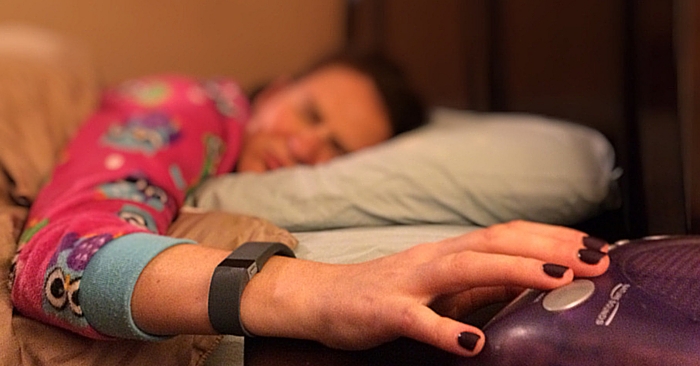
Yesterday was a difficult day.  Even’t if I hadn’t been accidentally woken at 5:30 am by an ill-timed Siri alarm, it still would have been a day filled with emotional extremes.

I attended the funeral of a beloved man in our community, and with those touching moments still fresh on everyone’s minds, we learned of the horrid terror attack in Israel against an innocent family and the baseless gun violence that happened in my own state of Oregon at Umpqua Community College.  I was in tears watching the news when my daughter walked in the door from playing.

“Mommy,” she called as she walked in. “Let’s eat in the sukkah.” I gathered my tears and my strength for this beautiful two-year-old so she shouldn’t know my pain.

Ufros Aleinu sukkat shlomeicha.  My favorite line of our liturgy. God spreads over us a shelter of peace.  I meditated on this line as I joined her for a quick dinner in our own sukkah of peace.

I thought about the symbols of this holiday. While I love the sukkah, I’ve always been uncomfortable with the lulav and etrog.  They feel pagan, phallic, and foreign to me.  But I was determined to show my sweet, innocent two-year-old a world in which our discomfort pushes us to accept, to look beyond.

There is a rabbinic teaching that gives each of the four species of the lulav and etrog a body part, and this teaching helped me to find meaning even in my least favorite part of the holiday.

Hadas:  the myrtle is for our eyes.  I am grateful to raise my child with eyes that can see past discomfort and difference.  I want to raise her with eyes that can see injustice and work to fight it, eyes that see human beings as valuable and worthwhile.

Aravah: the willow, the mouth.  My daughter, and all of our children, should be blessed with mouths that speak love, truth, justice, and kindness.  May her mouth be filled with words of peace, with words that are stronger than violence.

Lulav: the tall, strong palm, and the spine.  May our children grow to be strong, upstanding human beings. May they stand firmly against injustice and violence, and only for peace, love, and what is good in our world.

Etrog: the citron.  This is the heart.  May we raise our children to let their hearts shine through. A world filled with love, passion, and understanding is a world that fulfills God’s promise of a shelter of peace.

This year, may your sukkah represent growth and understanding, peace and listening.  The lulav and etrog represent the foundation on which we must raise future generations so that we may someday see an end to gun violence and hatred of all kinds.  This is the blessing of our holiday.

Head in the Clouds – Parshat Ha’azinu 5776

Head in the Clouds

You probably already know one of my favorite parts of my day is the time I take to walk.  When I got a Fitbit last year as a gift, it spurred me on even more. Here’s the catch: I don’t walk on a treadmill or on a track in the gym.  Indoor exercise feels lacking to me, especially because I use my walks to clear my mind, brainstorm new programs and sermons, and find myself at peace.  Walking outside all the time can mean that sometimes I’m bundled up, and sometimes I’m seriously sweating it out. In Portland, it often means that my walks happen in the morning fog and clouds that hover over our hilly neighborhood.  Ironically, when I’m physically in the clouds is when I find myself most clear-headed.

Weather plays a prominent role throughout the Bible; consider the stories of Noah, Jonah, and Job. Specifically, clouds and fog are referenced in spots as well.  Mount Sinai is described in the Torah as being covered in a heavy cloud, which represents God.  One imagines Moshe needing to wade through the heavens in order to “find God.”  Way back in Bereshit, the descriptions of the earth mention being covered in a fog-like substance that then swirls and whirls and separates into water and sky before the land takes shape.  Walking in fog can be a surprisingly spiritual reminder of a preformed world.

This week we read the penultimate Torah portion, parshat Ha’azinu, which has the special honor of being the last section of Torah read on Shabbat morning.  Parshat Ha’azinu is a poem which warns of the negative behavior of the Israelites, but reminds us of the blessings that will come to them with the good behavior they are capable of.  The text ends with Moshe ascending the mountain into the clouds as he takes his leave of the Israelite nation.  This parshah is the link between generations, between new and old leadership, and between living on earth (in the land of Israel), and living with God (on top of the mountain in the heavens).  

The parshah begins, “Give ear, O heavens, let me speak; Let the earth hear the words I utter!”  The Hatam Sofer, an 18th century commentator from Hungary, interprets the verse in the following way:  “Listen to me you spiritual people whose thoughts are in heaven, and also you down-to-earth people whose concerns are more material.  This message is meant for all of you.”  As the final Shabbat-read section of the Torah, Ha’azinu not only has the unique designation of being a mini summary of the entire Torah, it also points out that Torah is for everyone. Judaism can speak to your soul and your brain; it can challenge your mind and your body.

Wherever you are, with your head in the clouds or your ear to the ground, there is a piece of Torah for you. As we enter a new year of learning and living, may we find ourselves growing and engaging with our spiritual selves as well as with our physical world, and may the journey be filled with blessing, challenge, and success.  

Once More With Feeling – Yom Kippur 5776

Yom Kippur 5776

Yom Kippur sermon for Congregation Neveh Shalom
September 23, 2015

A Hebrew school teacher is making the rounds in her second grade classroom, inspecting the young students’ High Holiday artwork. Some are drawing shofars, some are drawing apples and honey, some are making cards that say “I’m sorry.” The teacher leans over one particular desk as a little girl is scribbling intensely, and she asks what the girl is drawing. The girl says, “It’s a picture of God.” The teacher, seizing every open opportunity to turn a situation into a lesson, says, “But we don’t know what God looks like.” The little second grader, without taking her eyes off her paper, keeps scribbling and says, “You will in a minute.”

If I asked you what prayer looks like, there would probably be just as many answers as there’d be if I asked you what God looks like. That is because prayer is different for everyone. I’m not just talking about the experience for davener versus congregant, or conservative service versus reform service. I mean the concept of prayer leaves plenty of room for everyone’s ideas and notions as to what that entails.

And not only is it different for everyone, it changes throughout the year. Case in point: the Days of Awe. We’ve made it to the second of the three big fall holidays. By now our total running time in services since Erev Rosh Hashanah is somewhere around 15 hours, and we have easily double that left between now and the end of Sukkot. Don’t worry, I’m not going for any Guinness records for sermon length. The point is the liturgy is different now, and your personal prayers and the feeling you have when you pray at this time of year might be different as well. Which leads me to the question: How many of you have an amazing experience every time you “pray”? Do all of your prayers feel generally the same, or does it fluctuate based on season or prayer substance? I don’t want to spend too much time talking about what we should pray for. That’s a whole other sermon, and to be honest I don’t have any of my Tim Tebow notes with me. Today I want to focus on what it feels like for you to pray and how to take this thing we engage in multiple times per day and make each time feel like its own experience with purpose and intention.

I’ll start with a little of my own personal background to give you some examples. I have always loved services. But prayer for me, especially over the last decade or so, has had major ups and downs. When I started rabbinical school, my father, who had a lifetime of health challenges, wound up in the hospital right before Rosh HaShanah. Of course I went home to Michigan because they weren’t sure what would happen. That started a roller coaster of emotions that took me on a pretty unpleasant ride each time he was in the hospital after that. And it changed prayer for me. Long before my father had been seriously ill, I had understood the feelings behind praying for healing, for strength, for love, and for the benefit of others. But in 2007, after a year of his trips in and out of the hospital, my relationship with God changed, and my relationship with prayer changed. I could no longer pray for healing – it seemed like wasted energy. Instead, I simply prayed to know what would happen.

The roller coaster ran off the rails that summer; my grandfather died in July, and exactly four weeks later on August 19th, my father died. My prayers had residual momentum that carried me to the Yamim Noraim, High Holy Days, but after that I was done. Prayers that previously had incredible meaning now felt like nothing. I would just sit with my siddur closed on my lap.

. . .

There’s a tradition with the Shema that many of you have probably heard before. Some people have the custom of taking a full complete breath for every word in the prayer. It sounds like this:

Shemaaaaaaaaaaaa

Yisraeeeeeeeeeeeel

You get the idea. There are several reasons for this. One is that because the Shema is the central tenet of Judaism, there is much meaning packed into these words, and they each need their own sentence. There’s also the idea that we need time to lose ourselves in prayer, and turning these words of Torah into a mantra of sorts helps us accomplish that. Praying, especially a prayer like the Shema, should feel different than the way we usually talk or even the way we usually think.

The Shema is supposed to be the last thing that a Jew says, the final words, the final affirmation of belief in God and our traditions. Most people never get the chance to have this final moment in time, but my papa – my grandfather – had this chance. Twenty-eight days after he said the Shema and took his final breath, I sat with my father at his bedside as he took his final breaths. He wasn’t conscious, his strength had gone, but I sat with him, and said the Shema. As I later journaled about this experience, I affirmed for him (and me) that singular expression of faith. It was something that he himself had long ago explained to me was a legacy we as Jews couldn’t ignore and a destiny we couldn’t change. But somewhere in the mourning process, prayer felt foreign. I found myself thrust into this strange place where not only did prayer seem fruitless because my father died, it had lost all meaning. And remember this was right in the middle of rabbinical school, where I was supposed to be training to teach others how to find meaning in prayer.

So how did I get the meaning back? Writing about it, crying about it, talking about it. I had a teacher who reminded me that it isn’t mandatory to say all the words in the siddur. If I could just open the siddur and say one word, that would be sufficient. There’s a Grand Canyon sized difference between honestly and earnestly using a single word to express your prayer and saying all the words on the page when they feel empty.

That first word didn’t come right away. I started to just sit in services with the siddur closed on my lap. It was second nature to open it up, but following along wouldn’t have meant anything. Instead, I forced myself to acknowledge the change that had happened, the change in the way it felt to pray. And then I learned this text:

Praying Without Expectation- Talmud Bavli 32b

(Case 1) R. Hanin said in the name of R. Hanina: If one prays long his prayer does not pass unheeded. Whence do we know this? From Moses our Master; for it says, And I prayed unto the Lord, and it is written afterwards, And the Lord hearkened unto me that time also.

Basically, it isn’t the length of the prayer that counts, but the purpose of it.

(Case 2) But is that so? Has not R. Hiyya b. Abba said in the name of R. Yohanan: If one prays long and looks for the fulfillment of his prayer, in the end he will have vexation of heart, as it says, Hope deferred makes the heart sick? What is his remedy? Let him study the Torah, as it says, But desire fulfilled is a tree of life; and the tree of life is naught but the Torah, as it says, She is a tree of life to them that lay hold on her!

And here we learn you can’t pray for immediate action, but rather for courage, understanding, or direction.

Hama son of R. Hanina said: If a man sees that he prays and is not answered, he should pray again, as it says, Wait for the Lord, be strong and let thy heart take courage; yea, wait thou for the Lord.

Again, it’s the idea that prayer is not about the physical rewards, not even always the content at all, but about the feeling you have when you pray.

It’s cliché to say “life is about the journey” – the real sentiment should be that by making the journey meaningful and enjoyable, you’ve given your life meaning and joy. And the same is true for prayer. There’s a performing arts group in Dallas that has had the same motto for the last several decades. It’s not on their brochures or their website, but when a show director wants to convey the power and purpose of the journey, he tells his performers, “Hard work is fun when improvement is evident.” Prayer is most meaningful, most beneficial, not when the result is getting what you asked for, but when it’s giving you a purpose and focus you didn’t have before.

So what was the one word that got me back? What was the one phrase that refocused my Judaism after this emotional Jenga puzzle came crashing down in front me? I’m sure you know by now . . . it was the Shema. It’s the last prayer we say and the first prayer we teach. In fact it’s still pretty new to Shiri, but I remember the first time on her own she held up her little fingers and covered her eyes when she heard the Shema sung at services. We beamed at her, and she beamed back with the pride of learning what she was supposed to do. Now she’s starting to learn bits and pieces of other prayers and blessings (what can I say, she’s a rabbi’s kid) but for a while, the Shema was the only prayer she could say.

In the late summer of 2007, the Shema was the only prayer I could open my mouth to say. As I wrote then, “It is the utterance of those six words that place me in a moment in time that I will forever cherish. It is these six words that reaffirm my belief in God, in man, and in myself. I will understand it one day, I will hear the world around me, I will find God in my daily life.” When I arrive at the High Holidays, I find myself in a unique conundrum. On the one hand, the notion of prayer and introspection for a dedicated number of days excites me; it feels like a mandate to take an accounting of myself and really listen to my heart. On the other hand, I’m a doer, and the thought of all of these hours spent stationary feels anything but productive. More than that though, these days call into question my personal relationship with prayer. Prayer is not always easy, and probably shouldn’t be.

There have been other times for me when I struggled with prayer not because of some spiritual blockage, but because the words themselves just didn’t flow naturally. Part of my time in rabbinical school included chaplaincy at a hospital back in Michigan. It was my job to sit and pray with patients, and only a small number of them were Jewish. So most of them wanted to hear Christian prayers, the ones they grew up with and knew from church.

Luckily I had the benefit of brilliant rabbi teachers, one of whom insisted we open each class with an extemporized prayer, and we would rotate through the class and have each student take a turn giving the prayer on a particular day. Including me, there were two students in this class. Needless to say, I got a lot of prayer experience that semester.

My goal today was to share my own experiences as a way of opening the door to a wide variety of things prayer can be for you. Prayer isn’t always about changing the world, but it is always about connecting with yourself, doing it over and over again, and about having the patience to wait.

. . .

Before we move on to Yizkor, I’ll share some some passages that I meditated on that reopened my conversation with God, and maybe they’ll do the same for you. Here is an example from one of my favorite prayers, D’ror Yikra, which is traditionally sung around the Shabbat table. I started by breaking down the words, which read: “Shema Koli B’yom Ekrah.” Hear my voice on the day that I call.

SHEMA: Hear. Hear the thoughts I can’t speak out loud, hear my heart’s deepest desires. Sometimes we pray because we can’t verbalize our thoughts; prayer is our private meditation space with God, and for God to listen, we also have to listen to ourselves.

KOLI: Think about your voice. What is it that you and only you can offer to the world? That is your personal prayer, your voice, and no one else can do it for you.

B’YOM: “On the day” is in the moment. You can have regular prayer and still make it fluid, not fixed or static. If prayer represents the innermost thoughts in your heart, then it’s going to change based on your mood, based on your needs. It can be as simple as thank you or please. It can be focused on individual growth or about what you specifically need to call out to God. Your prayer today doesn’t have to be your prayer tomorrow. Open yourself anew each day, and search for one new thing to share. Maybe it’s a hope for the day, a thank you for yesterday, or a goal you need extra support to accomplish.

EKRAH: I will call out. Allow yourself to call out, to let go of your inhibitions, and enter into the relationship with prayer that puts your everything out there. I’m not just talking vocally, but emotionally. Think about it – how can there be “shema” – listening – without something to listen to?

Our relationships with God change, always, and no matter how far out God and prayer can feel, there is always a way back in. For me, it still isn’t always easy to pray, but the meaning comes each day as I remember that it doesn’t have to be perfect, that God listens even when the siddur is closed. Find your voice, listen to your heart, change it up a bit, but mostly, be open to that experience. As we stand here on the brink of the moment of judgement, may we find our minds as open as the midbar, the wilderness, to the feeling of prayer, even if it’s just a word at a time.

Something For Everyone – Parshat Vayelech 5776

Something For Everyone

One of my favorite shul memories from my childhood is going with my Zayde to services on Shabbat morning.  He had a regular ritual that during the Haftorah he and his friends would disappear from services into the small kitchen for a l’chaim.  I remember this was called the “key club” because someone from the group had to provide the keys to let them into the otherwise locked space.  The men would enjoy a beverage and a chat during Haftorah, and return to sing their hearts out during Musaf.  

Likewise, there was a group of women that had a special ritual too. Toward the end of the service I remember the women exiting to the social hall to set out kiddush.  

And the children? We too had our special time, and of course it was the best ritual of all. During the Torah service, I was whisked away on a parade through the sanctuary to a special kids-only space where I could play, pray, and learn without having to be quiet.  

What was great about the Shabbat mornings of my memory, and those just like it in synagogues all over, was the emphasis on the idea that Jewish ritual and practice are open to all. Everyone finds a way to connect.

This week we read from parshat Vayelech, which speaks of the difficulty leaders have in transferring over their power.  We read of the final days of Moshe and the gift of life he had in living 120 years.  The Israelites approach the land promised to them and witness the transfer of “power” to Joshua.  Finally, Moshe writes the words of the Torah and passes down the commandment to the Kohanim to read the Torah.  Moshe’s final moments with the Israelites are near, and he prepares for this by coming up with a transfer of legacy, tradition, and history.  

The Torah teaches us in chapter 31 that as Moshe is going through this transition, he makes the following request to gather the people.  “Gather the people, men, women, children and the strangers in your communities – that they may hear and so learn to revere the Lord your God and to observe faithfully every word of this Teaching.  Their children too, who have not had the experience, shall hear and learn to revere the Lord your God.”  Everyone is invited to learn, and everyone is considered to be an inheritor of our tradition.  This also means that we are individually responsible for engaging and enjoying this rich tradition in a personally meaningful way.  

Most notably, Moshe mentions the children “who have not had the experience.” It is commanded in the Torah that we bring children into our communities so that they can learn.  Imagine Mt. Sinai as the world’s biggest Tot Shabbat.  Noisy as it must have been, that idea is what Jewish learning is about.  

Whether you come for the l’chaim, the kiddush, the d’var Torah, or the communal davening, the Torah’s lesson this week is that one need only show up to partake.  Judaism is for us all, men, women, and children, and the job we share is to gather together to teach, to learn, and to listen so that our beautiful traditions live on.