Parents, what’s your bedtime routine? A story, a song, a hug from a certain stuffed animal? This week the Torah teaches us the importance of closure.
Hard to Believe – Parshat Vayigash 5776

Growing up watching the Tanner family on TV’s Full House, can you understand why I have mixed feelings about Netflix’s upcoming reboot of the series? Fuller House, which debuts February 26, follows the same format as the original, but with the kids now in the grown-up roles raising the next generation. The idea is tantalizingly nostalgic, but the secret recipe of the late 80s/early 90s series simply can’t be replicated. Sitcoms of that era had a cozy, comforting cheesiness that current television has evolved away from. I’m not sure that today’s audiences appreciate the signature catchphrases or the easily solved storyline problems as much as we used to. What made the show magical twenty years ago was that it was all just too happy to believe.
Life rarely feels like a sitcom. While we all experience moments that feel too good to be true, most days are mixes of highs and lows. Some things work out in our favor, some things don’t. However, there are moments of ultimate joy – the ones when we have to pinch ourselves to make sure they’re real. One of these for me was shortly after finding out I was expecting our daughter. The confirmation in the doctor’s office and seeing and hearing Shiri’s heart beat for the first time felt surreal. She’s already two years old, and I still have a hard time wrapping my head around the power of that moment.
Parshat Vayigash, which we read this week, is about such a “believe it to see it” type of moment. In fact, Joseph and his brothers have many moments of heartfelt joy. Joseph’s brother Yehudah tries to redeem himself by asking to be imprisoned instead of Benjamin, and Joseph reveals himself to his brothers and heroically invites the whole family to Egypt to save them from the starvation facing Israel. In addition, Joseph and his father Jacob are reunited, and Joseph is able to finally reveal his newfound position of power. Joseph is given high praise in this parshah as a leader in Egypt, the saving grace to the people of Egypt and Israel, a loving brother, and a forgiver of past indiscretions.
But when this news is first revealed to Jacob, it’s too much for him to believe. In chapter 45, verse 26, the brothers return from Egypt with the exciting news that their brother Joseph, whom they had presumed dead, is not only alive, but is the pharaoh’s right-hand man. The brothers try to explain this to their father, and the text describes his reaction, saying: “His heart went numb, for he did not believe them.” And why should he believe their fantastical story? After all, Jacob had been deceived before (and even did some deceiving himself). Rather than take their word for it, Jacob demands to see with his own eyes if there is truth to their claims.
Even though the miraculous events in the Torah aren’t regular occurrences in our modern lives, the emotional highs and lows we experience every day are not unlike those in our biblical narrative. That’s not exactly the case in the sitcoms of my childhood. The Tanners provided an entertaining escape because all conflict was neatly resolved in half-hour intervals. For us, the unbelievable high points we do have are made that much sweeter because they are part of a complicated, intricate tapestry of experiences.
Parenting by the Parshah – Vayigash
Family reunions bring with them a flood of emotions. This was the case in parshat Vayishlach for Jacob and Esau, and also this week in parshat Vayigash for Joseph and his brothers.
Brother Against Brother – Parshat Miketz 5776
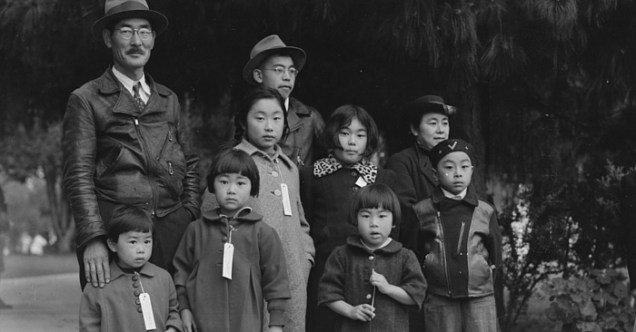
This week we commemorated the Japanese military strike on Pearl Harbor, which led to the United States’ entry into World War II. Among the many tragic events following that attack was the internment of people of Japanese ancestry living in the United States, the majority of whom were American citizens. Sadder still is that fact that it wasn’t until 1992, more than 50 years after Pearl Harbor, that the Civil Liberties Act Amendments finally ensured all remaining internees received redress payments, a process that was put into motion in 1988.
Asking for and granting forgiveness can be a long, difficult road, especially in the extreme instance of nations at war. But that certainly doesn’t explain away this type of treatment of fellow citizens who are our brothers and sisters. This week’s Torah portion, parshat Miketz, speaks to the idea of familial forgiveness in a more literal sense. It’s a lesson in perseverance and understanding between brothers.
We pick up in part two of the life and trying times of Joseph. Our hero has had a few setbacks, among them being sold into slavery by his brothers and thrown into jail. However, Joseph gets his big break when Pharaoh has a startling occurrence of dreams. When none of Pharaoh’s resident magicians are able to interpret his visions, Pharaoh calls on Joseph, and with God’s help, Joseph translates the dreams as a sign of an approaching period of fertility followed by a period of famine. Joseph presents Pharaoh with a game plan and becomes Pharaoh’s right-hand man in preparation for these times that will certainly be difficult not only for Egypt, but also neighboring lands.
With a little project management, Joseph stores the extra food during the fertile years and saves Egypt from starvation during the seven years of famine. Joseph’s brothers are sent by Jacob to Egypt to buy food for the family, and the stage is set for a surprise confrontation between the brothers and Joseph, who has become one of the most powerful men in all of Egypt.
Joseph has a choice to make. He can seek vengeance and throw his brothers into jail (or a dark pit) to rot, or he can forgive and accept them back with open arms. Though we know he chooses the path of forgiveness, he does so in a way that tests their feelings towards their father and their youngest brother Benjamin in order to see if they’ve repented yet for selling him into slavery.
The reunion has a happy ending, but not just because of forgiveness. The greater lesson here is one of perseverance. Joseph could have easily given up hope when his brothers left him to die or while he was in jail when others were set free. Instead, he pressed on and let the fire burning inside him carry him from the darkness rather than consume him.
Crimes committed out of fear against our brothers and sisters, whether in an immediate family or in the more global sense, are a byproduct of ignorance of the worst kind. It was this type of crippling ignorance that forced over 100,000 people into internment camps in the early 1940s. Now imagine if we saw our brothers the way Joseph saw his. Even for Joseph, free and full forgiveness was difficult to achieve, but it came as a result of understanding and ending the ignorance that existed between them. May we learn from Joseph that acceptance is possible, and may we have the perseverance to get there.
Parenting by the Parshah – Miketz
How many times have you heard (or said to yourself) “It’s just a phase”? For Joseph, phases were feast or famine . . . literally. For us, phases are footie pajamas. This too is Torah.

