Personal Injury – Parshat Mishpatim 5779


personal-injury.jpg

Since becoming a parent I have learned that I need to look at every situation with my children through multiple lenses. When they’re hurt it’s easy to judge the physical injury. I can look for a bruise or a scrape, clean it off, apply kisses and a bandage (usually My Little Pony), and physically they’re on their way to healing. But that’s just a surface cure. If they fall and hurt themselves on the playground, that might result in a fear of the monkey bars for a while. I might have to offer extra guidance and support on the monkey bars, even if they had successfully conquered them prior to the fall. Or if they fell in front of their friends, they might be shy or embarrassed and need some time to recover their pride. There are so many situational layers in everyday life, and sometimes it’s hard to see them all.

This week we read Parshat Mishpatim, the middle section of text in Sefer Shemot, the Book of Exodus. The Israelites are on their way out of Egypt to Israel. They have begun to set up their own system of laws and rules, beginning last week with the Ten Commandments. This week, Parshat Mishpatim focuses on interpersonal laws with regard to business. The main idea of this section of text is that we have the obligation to treat each other in business and in relationships as complete, equal human beings.

The laws about injuries inflicted person to person are numerous. Chapter 21, verse 19 teaches that the perpetrator of an injury is required to pay for the treatment as well as the idleness that results. The Mishnah in tractate Moed Katan teaches us that a person who injures another is liable for five types of restitution: for the injury itself, for pain, for medical expenses, for absence from work, and for humiliation and mental anguish. Now that’s what you might call comprehensive health coverage. Life is complex, and the whole person must be taken into account as we work towards healing. In other words, physical healing is only the beginning of how we can support and guide one another through the challenges we face.

Always Watching – Parshat Yitro 5779

Leading by Example

We’ve all had those moments – the ones that make you either exceedingly proud or exceedingly sad. As a parent, the proud moments are when my children show compassion to others and use the words and actions we’ve tried to teach them since the day of their birth. That’s when my heart explodes in joy. The sad moments are  when they’re hard on themselves or have difficulty maintaining control. But let’s face it, that’s going to happen – they’re kids. I still have the rare out-of-control moment when I get really frustrated, and my heart breaks knowing that for better or worse, our traits are handed down not only in DNA, but by modeling behavior. Our children are always watching. They see how we act and react and know when we’re proud of ourselves or when we’ve done something wrong, and they learn how to exist in the world based on our examples.

The choices we make, whether as parents, teachers, or citizens, have repercussions for those in our community and beyond. That’s how we’re aware of the harm we’ve done to the planet, how we take control of our spending and savings, and how we set boundaries. Setting a good example also means setting up the next generation up for success, and hopefully not punishing them for our own misdeeds.

The Torah reminds us of this in Parshat Yitro. The central piece of the portion is the giving of the 10 Commandments by God to Moshe and the people Israel. We now have a set of laws to live by, a guide to being a free people outside of slavery. But before the Torah gives us these laws, it reminds us of the family relationship Moshe has with his father-in-law and how he sets up a legal system.

As God is giving the 10 Commandments to the nation, we receive this reminder: “For I the Lord your God am an impassioned God, visiting the guilt of the parents upon the children.” That’s right, God holds a grudge. More so, God remembers the ways in which we behave, both good and bad, and reminds us that what we do now does indeed affect the future of humanity.

The 10 Commandments are the essential elements that God puts forth to guide us in creating a positive, caring, civil society. These are the rules we are to teach our children. Why? Because they’re always watching, and they will always remember. It is our duty to teach them by showing the ways in which we are to treat one another and build community. Everything we do will live on throughout generations – our failures and our successes.

Guatemala, Day 6: If Not Now, When?

Guatemala-6b.jpg

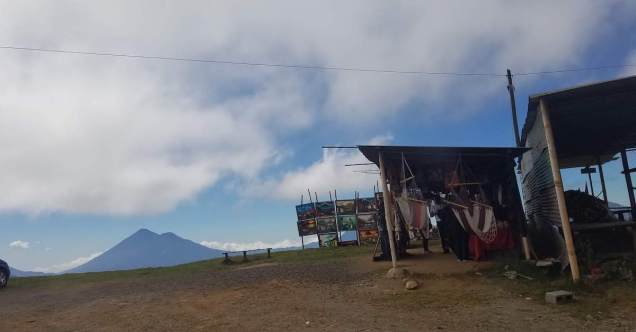
We woke up this morning to the gorgeous views of the Filadelfia Plantation. We arrived in the dark last night, so it was a delightful surprise to wake up to views of the “Water Volcano” and see coffee beans being worked outside our windows. Those who wanted to get their morning started with a run or a walk were treated to the glorious fresh and warm air. Eisa eynai, we lift up our eyes to the mountains.

Our first session of the day started with a conversation on how our personal stories connect to the stories of the courageous men and women we’ve been meeting while we are here. We began by reading the speech Rabbi Joachim Prinz gave at the March on Washington in 1963. I was struck by the similarity to the problems we’re still dealing with in America and the world today. “Neighbor is not a geographic term. It is a moral concept. It means our collective responsibility for the preservation of man’s dignity and integrity,” he wrote. Yes! V’ahavta l’reiecha kamocha, love your neighbor as yourself. Every person is created with dignity in God’s image, and it is our job to see the humanity in all beings. He also reminds us that it is “not enough to hope together, and it is not enough to pray together.” Thoughts and prayers are so easily shared in our world today at every tragedy, from gun violence to natural disasters. Ours is not to sit and pray, it is to get up and act with moral courage.

This story would repeat as we met with the women of Nuevo Horizonte. These women are my heros. They travelled over 27 hours to be able to meet with us. They fight daily for the rights of women and children. They try to reduce violence and discrimination against women. They began with a role play scenario about a woman who was a leader being undervalued and mistreated by the male counterparts. The woman in the room made eye contact and laughed. This is all too familiar to our own stories as female clergy and women in the world.

The women shared that education is not allowed for women, that while they sit on the council for their villages, they are simply decoration, not taken seriously. They work to seek gender equality in a society filled with machismo. I met with Ana, who shared that women carry shame and fear to speak up. They are now finding their voices because the day they stop speaking up is the day that they die.

In a place where there are no people, strive to be a person. Hillel teaches this in Pirkei Avot. These women are trying to teach the men what it means to be a person. L’dor v’dor, from generation to generation, Ana shared. They must teach the next generation what is fair and just or society will never change. The women ended our time with them by telling us how grateful they were to see a society in which men and women work together and partner. Suddenly, the injustices of my own experiences as a women are put into place.
Guatemala-6a.jpg

From here it was time to eat again, so we went on our way to a delicious lunch, followed by contributing to the local economy. It ended a bit unnervingly as we were swarmed in the plaza by a group of street vendors.

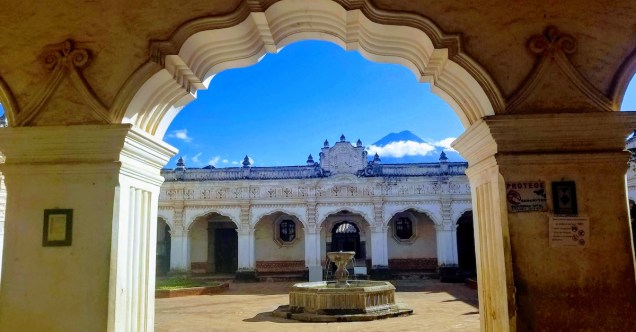
Finally we returned to Filadelfia to prepare for Shabbat. On Wednesday the midwives taught us that rest and restorative time is essential to living a balanced life. As rabbis we often don’t have a Shabbat, a time to rest, because we’re always taking care of others. This Shabbat in the beautiful envelopment of Antigua was restorative as we sang away our week and entered into the holy community we’ve established in this very awesome and powerful week.

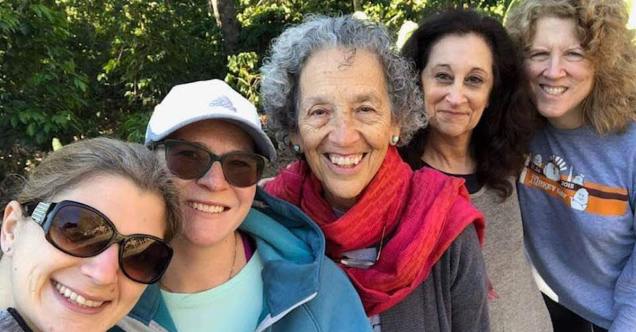
Shabbat was an interesting and comfortable way to end a week of exploration. Gathering a group of rabbis together for Shabbat is always a treat. As Aderet mentioned, we spend all our lives guiding others, so when we have the chance to sing our hearts out without caring what our board president might think, magical things happened. For me, the melodies of Kabbalat Shabbat were unfamiliar and foreign. I sat in discomfort as the words sounded familiar, but the melody was not. This resonated as the experience of the week. I found my story in the words of the speakers, but their experience was foreign to me. We sang, we danced, we ate, and then, we oneg’d.

We told our stories and the story of this journey through song. Ozi v’zimrat ya. God is my strength, and I will sing to God. We ended this experience with the words we opened with. Lo Yisa Goy, Gesher Tzar Me’od, a Hinei Ma Tov sing-off, Olam Chesed Yibaneh, If I Had a Hammer, and more. We sang and sang. I fell asleep listening to my colleagues and friends sing the hopeful lyrics of “Ba shannah, haba’ah…” Next year may the grantees be that much closer to the justice they are pursuing.

Last week I led a PJ Havdallah program with our young families, and they blessed me as we went from kodesh, holy, to chol, the mundane. This last week was anything but mundane. We witnessed holy work and holy community. As we step into the next week and our next phase as advocates, may we be blessed to see the mundane, the ordinary, through holy eyes; may we never see injustice as the status quo, and may we continue to lift one another up in holiness.

Wishing it Away – Parshat Beshalach 5779

phases-stages.png

As a parent of young children, I live in a world of contradictions. I always have two simultaneous thoughts running through my head: I want my children to remain in the stage they are currently in forever, and at the same time I want them to move out of this terrible phase and mature already. And it never fails; the minute they’ve reached a new milestone, I go through the same emotions again.  Sleep through the night? Sure, but then I miss those sweet, intimate snugly moments at 3 a.m. when nothing else matters. Get yourself dressed? Wahoo, except that also means relinquishing control over what outfits get put together.

A popular way to examine the relationship between God and the Israelites is as that of parent and child, and the notion of stages of growth fits that comparison perfectly.

When they found themselves in Egypt, naturally they were unhappy as slaves. The minute they were free, the harsh realities of that freedom made them yearn for the comfort of what was familiar.

In Parshat Beshalach we read:

As Pharaoh drew near, the Israelites caught sight of the Egyptians advancing upon them. Greatly frightened, the Israelites cried out to the Lord. And they said to Moses, “Was it for want of graves in Egypt that you brought us to die in the wilderness? What have you done to us, taking us out of Egypt? Is this not the very thing we told you in Egypt, saying, ‘Let us be, and we will serve the Egyptians, for it is better for us to serve the Egyptians than to die in the wilderness’?”

This tendency is human at a basic level. No situation, no moment in time is going to be without its own harsh realities. In reading about this phase of the Israelites’ journey into freedom, we are reminded to take a step back and reflect as objectively as possible before proceeding. We can attempt to wish away the phase, or we can set about doing the work necessary to change the reality into something better.

Does that mean I won’t long for the days of easier airplane trips and reliable nap schedules? Of course I will, but I will do so knowing I made the most of each phase to prepare myself for the next one.


Guatemala, Day 5: Everywhere in Between

Guatemala-5b.jpg

This morning began like the others, with an early and somewhat chilly walk around our host city, in this case Quetzaltenango. We walked quickly and early so we could pack up and get on with our day.

Our first session was an opportunity to learn about the life of the in-country consultant for the organization that sponsors this trip. As unbelievable as it sounds, he spent years of his adolescence hiding in the trees of the jungle to avoid the same fate as some of his family members, who were killed simply because they were indigenous, they were different. Escaping with his life, he chose to devote his life to helping others in the same situation. He finds strength in his faith and in the good he sees in humanity. (Just, wow.)

From there we boarded the bus for the long and beautiful ride from Quetzaltenango to Antigua. The roads were punctuated with small villages and fruit stands. From the windows we saw different parcels of land dedicated to crop production and very slim cows grazing. We saw the three volcanoes that surround the area, and Fuego was even giving off puffs of smoke as a show for us.

Our upbeat conversations were quickly halted when we learned about the Rohingya humanitarian crisis, as the genocide is being committed against them in Burma/Myanmar. Once again I’m reminded that “never again” is sadly still a slogan and not a reality. We’ll be learning more about this genocide and the work we can do to raise awareness and mitigate it as we prepare for our advocacy day in D.C. in March.

After a long and winding road, we finally made it to Antigua. We had a delicious lunch at a local restaurant and then went to meet with an organization dedicated to free and fair press. These people dedicate themselves to being on the front lines in all areas of the country and reporting on what they are actually seeing, not what the government wants them to publish. They rely on social media to get their messages out. Mayn of the investigative journalists face grave danger for their work, and yet they keep fighting. They are the voices of the resistance and do it through their persistence. Their stories resonated with me as I reflect on the state of journalism in America.

Guatemala-5a.jpg

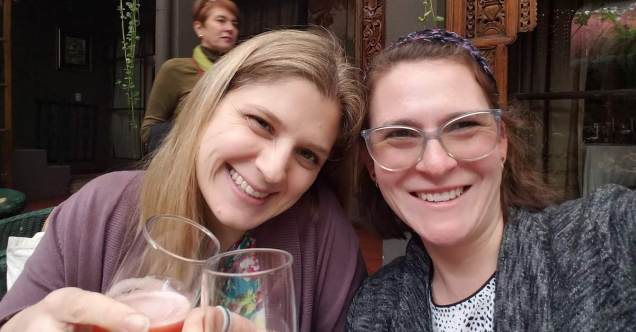
From there we had some time to boost the local economy. I bought local chocolate and then engaged in a delicious tasting of three local rums. About half the group joined together for this tasting, and it was a relief to have some time to reflect, rejuvenate, and simply be together. The conversation turned to where we should go on our next advocacy trip. I’ve caught the bug of advocacy and would be honored to continue to travel with this organization and promote the work they do.

Dinner was another delicious feast, and then after dark we arrived at our final accommodations: a coffee plantation with gorgeous views and stellar rooms.

I have so much to ponder and reflect upon, and so much gratitude for the honor of being on this trip and for the grantees we are meeting who show me what moral courage, bravery, and persistence look like in the human spirit.