Grand Spectacles and Small Miracles

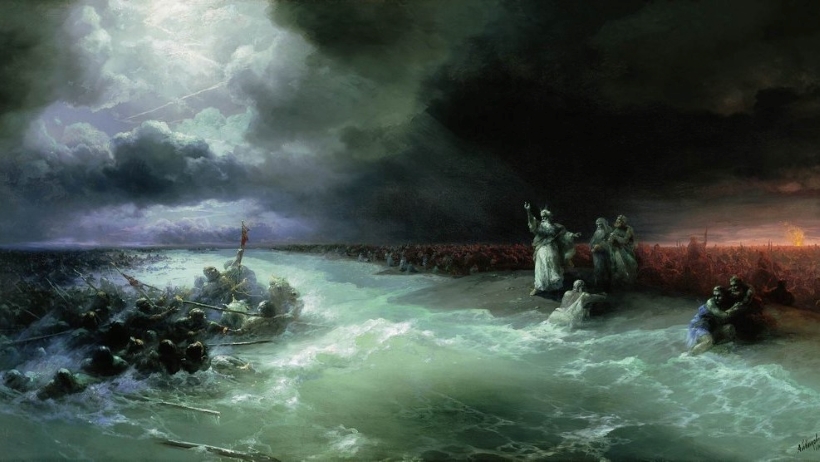
Imagine the scene—towering walls of water, dry land underfoot, and an entire nation walking through the sea as if it were a pedestrian footpath. It’s no wonder that this miraculous event is considered one of the foundational moments of Jewish history.

In this week’s parshah, Beshalach, we encounter one of the most awe-inspiring moments in the Torah: the splitting of the Red Sea (or Yam Suf in Hebrew, often translated as “Sea of Reeds”).

After crossing to safety and witnessing the Egyptians’ defeat, the Israelites burst into song, praising God for this incredible act. The Shirat HaYam, the Song of the Sea, is filled with imagery that celebrates God’s power over nature. It’s a Wow! moment if ever there was one.

These days, we don’t often see seas splitting or manna falling from heaven. But that doesn’t mean the wonders of creation are any less miraculous. In fact, Jewish tradition gives us a tool to recognize these everyday marvels: the blessing Oseh Ma’aseh Bereshit or “[Blessed is God] who makes the works of Creation.”

This blessing reminds us to pause and appreciate the beauty and wonder in the world around us. It’s typically recited when we see something extraordinary in nature, like a majestic mountain range, a stunning sunrise, or a rainbow after a storm.

But here’s the catch: What counts as “extraordinary”? If you think about it, the splitting of the sea wasn’t the only miracle in Beshalach. God provided manna, a food that appeared out of nowhere. The Israelites received fresh water from a rock. Even the way nature was manipulated to allow their survival in the wilderness was miraculous. Yet, the Torah teaches us that recognizing miracles isn’t just about seeing the extraordinary; it’s about noticing the divine in the ordinary.

Was the splitting of the sea just about the moving water? Or was it also about the Israelites having the courage to step into the unknown, trusting that the path would open before them? Perhaps the real miracle wasn’t just in God’s actions, but in the partnership between God’s actions and human faith.

When we recite Oseh Ma’aseh Bereshit, we’re invited to cultivate this same perspective. It’s not just for grand spectacles; it’s for the small miracles too. The chirping of a bird, the smell of rain, or even the crunch of snow underfoot—all these moments are invitations to marvel at the works of creation.

A Taste of Haste

In Parshat Bo, we reach the dramatic climax of the Exodus story, as God brings the final plagues upon Egypt and commands the Israelites to prepare for their liberation. Among the mitzvot introduced in this parshah is the commandment to eat matzah during the festival of Passover: “And they shall eat the meat that night, roasted over the fire, with unleavened bread and bitter herbs” (Exodus 12:8). This simple food, matzah, carries profound significance, embodying themes of haste, freedom, and faith that define the Exodus experience.

When we recite the blessing “Baruch atah Adonai, Eloheinu melech ha’olam, asher kid’shanu b’mitzvotav v’tzivanu al achilat matzah” during the Passover Seder, we affirm not only our participation in this ancient mitzvah but also our connection to its deeper spiritual lessons.

Matzah is known as the “bread of affliction” (Deuteronomy 16:3), a reminder of the suffering endured by the Israelites in Egypt. Simultaneously, it’s the “bread of freedom,” eaten in haste as they departed slavery. This dual identity reflects the tension of transformation: leaving behind the familiar, even if it is painful, for the uncertainty of redemption requires courage and faith.

The haste with which the Israelites prepared their matzah mirrors the urgency of faith. They had no time to let the dough rise, yet they trusted that God’s promise of redemption would sustain them. This trust in God urges us to act with conviction even when the path ahead feels unclear.

It’s matzah’s simplicity that we contrast with rich leavened breads we might associate with luxury. By eating matzah, we strip away excess and remember that liberation is not about material abundance but about spiritual purpose. The blessing over matzah reminds us to sanctify moments of simplicity and embrace the things that truly matter. Through this simple Passover blessing, we connect not only with our Israelite ancestors, but with the generations of contemporary Jews who came before us who’ve said the same words, affirming that their story is our story—a story of courage, trust, and redemption.

As we read Parshat Bo, think about the “matzah” in your life. What are the moments that require us to act with both haste and faith? How can we find meaning in simplicity, even on the complicated journey toward freedom? 

On Stretching and Unwinding

As I’ve aged I’ve noticed and become much more grateful for the big stretch that I take each morning as I wake up. Especially as my joints and bones tend to creak in the damp winter months, getting out of bed and working my body from head to toe is essential to transition from the constrictions of slumber into the movement of my day.

This is precisely why the rabbis added a blessing to our morning liturgy reminding us to do exactly this stretch work:

Baruch Atah Adonai, Eloheinu Melech HaOlam, Zokef Kefufim.

“Blessed are You, Adonai, our God, Sovereign of the Universe, Who straightens the bent.”

This blessing, part of the morning Birkot HaShachar, is essential in its relation to our physical presence each day, but it also reflects the themes of liberation and the restoration of dignity present in Parshat Vaera, themes which are on our minds even more so this week with our hopeful eyes on Israel.

Parshat Vaera continues the story of the Exodus, emphasizing God’s power and the beginning of the plagues that challenge Pharaoh’s authority. Through the signs and wonders Moses performs, God asserts the Israelites’ worth and challenges the power structures keeping them enslaved. Blessed is the one who empowers the oppressed. 

In addition to the physical ways the blessing addresses our days, it also reminds us about the way the Israelites are downtrodden under the weight of slavery, and God’s actions in this parshah begin to “straighten” their burdens, paving the way for eventual freedom. Blessed is the one who strengthens the bent.

Moses also begins to gain confidence in his role as God’s agent, embodying the transformation from one who felt inadequate to one who stands tall in faith. Blessed is the one who strengthens resolve. 

Sometimes interacting in the world feels just as much like an emotional stretch as a physical one. May we regularly find strength in “unbending” ourselves from the burdens we carry so we can be our full outstretched selves.

Redemption Song

As Cantor Bitton knows, I love the use of contemporary melodies matched with ancient liturgy. It’s one way of making prayer more accessible, something Jewish composers have been doing for hundreds of years. One of my favorite mashups is Bob Marley’s “Redemption Song” sung as the melody for the Mi Chamocha prayer. The original lyrics to this song are often on repeat in my head. They speak of being redeemed from the “bottomless pit” which is the mental and physical pit of slavery in US history, but also paints a picture of the story of Joseph, who was thrown into a pit, escaped those bonds to fame in Egypt, and brought us to this moment in our Jewish narrative, as the Israelites have been thrown once again into the bottomless pit with a new pharaoh. 

Parshat Shemot marks the beginning of the Exodus and redemption of the Israelite nation from Egypt to the story of their own nationhood. The themes of redemption and sacred human dignity repeat again and again throughout the book because redemption is both a human experience and a partnership with the Divine.  

As part of the weekday Amidah we recite the following blessing, which is one powerful connection to the idea of redemption:
“בָּרוּךְ אַתָּה ה’, גּוֹאֵל יִשְׂרָאֵל”
“Blessed are You, God, Redeemer of Israel.”

Additionally, a meaningful personal blessing inspired by Parshat Shemot could be:
“May you be blessed to recognize your sacred mission, like Moses, and to act with courage and humility in partnership with God to bring freedom and justice to the world.”

This blessing encapsulates the idea of Moses’s journey from self-doubt to leadership and God’s call for human action in the pursuit of redemption.

Sibling Sleepover

A few weeks ago something strange happened in my home. Duncan was out of town attending a conference. It was one of those Shabbat days when my kids would have to spend more time at Neveh, their second home, than at our home. We had Tot Shabbat, Kiddush Club, and a bat mitzvah service in the morning, and then we were heading back for a fun PJ Havdallah that night. And, strangely, Shiri and Matan were as close to angels as they’ve ever been. They played together, laughed together, and overall were helpful and fun to be with. After a full day of togetherness, we got home and they ran upstairs to set up a “sibling sleepover.” If you’ve got a sibling or are a parent of siblings, you know how rare this can be. 

Our Torah portion this week, Parshat Vayechi, is the final portion in the first book of the Torah. This book has shared the narrative of multiple sibling relationships, all of which were fraught with rivalry and general discontent. The end of the book, however, contains several blessings in it, including the well-known blessing of Jacob to his grandsons Ephraim and Menashe. This moment is the source of a traditional blessing given to children in Jewish homes, especially on Shabbat:

For boys, the blessing is:
יְשִׂמְךָ אֱלֹקים כְּאֶפְרַיִם וְכִמְנַשֶּׁה
“May God make you like Ephraim and Menashe.”

For girls, a parallel blessing is often used:
יְשִׂמֵךְ אֱלֹקים כְּשָׂרָה, רִבְקָה, רָחֵל וְלֵאָה
“May God make you like Sarah, Rebecca, Rachel, and Leah.”

This tradition comes from Jacob’s statement in Genesis 48:20:
בְּךָ יְבָרֵךְ יִשְׂרָאֵל לֵאמֹר, יְשִׂמְךָ אֱלֹקים כְּאֶפְרַיִם וְכִמְנַשֶּׁה
“By you, Israel will bless, saying: May God make you like Ephraim and Menashe.”

This blessing is significant because Ephraim and Menashe were the first siblings in the Torah to live in harmony, without recorded rivalry, symbolizing unity and peace—values central to Jewish tradition.