Here, There, Everywhere – Parshat Tetzaveh 5780

here-there-everywhere.jpg

At our twice-monthly Tot Shabbat celebrations, we sing about how “God is everywhere, and God is one.” We then ask the children to tell us where they might find God, and the range of answers is beautifully diverse. We find God in the sky, the trees, the sun, and the moon. And apparently we find God in places like ice cream, unicorns, and fire trucks. We find God in our mommies and daddies, and we find God in our hearts.

Every time we sing this prayer, I am awestruck by the different ways in which our children are able to “see God.” They understand and acknowledge that different circumstances call for different visions of God, and the way their week has gone is often the determining factor in how they see God working in our world. Most importantly, however, they ALWAYS see God.

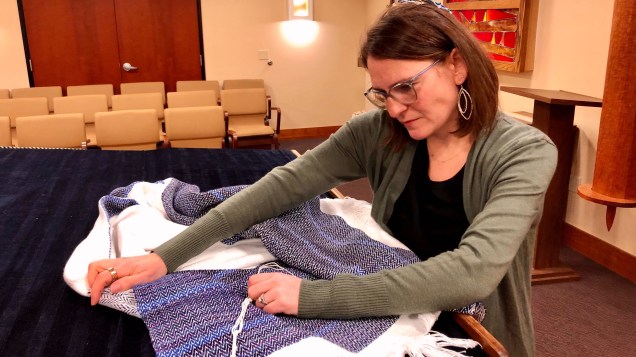
In Parshat Tetzaveh, the Torah portion we read this week, God gives the commandments for what clothing the priests will wear, how they should be fashioned, and the materials that should be used in their fashioning. The priests wear special clothing that distinguishes them from others in the service of God. These clothes are meant to add an aura of holiness to the priests as they complete their work. Since these vestments and garments are to be used for such a unique purpose, God gives a special instruction regarding who is to make them and what they are to look like. 

There are precise garments and colors that the Priest is mandated to wear. They are made up of linen and wool and defined by certain colors as well. According to Rabbi Samson Raphael Hirsch, a modern commentator on the Torah, the linen represents the vegetable/plant world and is white, the color of purity. The wool, a symbol of the animal world, is red, purple, and crimson. Other garments are blue, like the sky. Each color and material represents a different part of our world, a different level of connection with our natural surroundings, and thus a different type of connection with God. 

Just like these various articles of clothing, there are many levels by which we may connect to God and each other. It might be on an earthy, deep, dark crimson level, or flying high like the bright blue of the sky. We might feel plant-based and pure, but relatively still, or we could be purple and red and animalistic in our tendencies.

The High Priest wears each color and material as a representation of how diverse our community is, and the priest serves them all at any time and any stage. What a wonderful example for leaders today. Though they may not represent it by their clothing the way the priests did, modern leaders must be equipped to work with a variety of people and maintain a variety of relationships. This is the type of community in which God is most surely present.
Connected to Each Other – Parshat Terumah 5780

connected-to-each-other.JPG

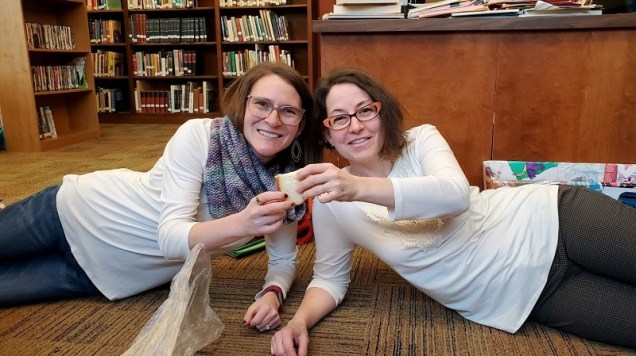
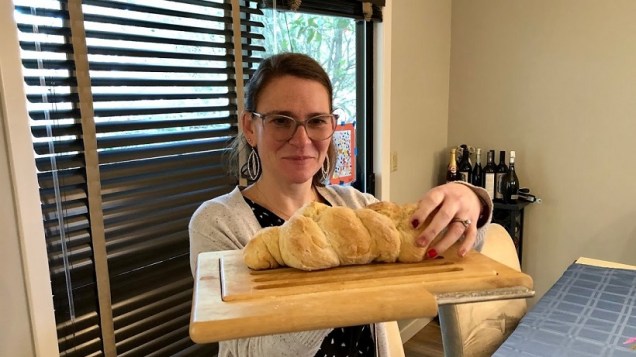
In some homes on Shabbat, families have a tradition of touching the challah as it’s blessed. In larger groups, the tradition is that each person touches someone who is touching the challah, so that everyone present is connected to the things that nourish and sustain us, like food and family.

Every week at Foundation School when we celebrate Shabbat, we raise up our hands, stretch our bodies, and ask the person next to us if it would be ok if we rest our hands on each other’s shoulders and create a circle of blessing from one person to the next. We then move into blessing the challah in this same embrace, as we pass the connection to the challah from one person to the next. This is one of my favorite Friday morning moments because of its intimacy and human-to-human connection. And in the process, we’re also teaching our children consent as well as the power that comes from an entire community reaching out and connecting with one another. It’s a beautiful final moment to hold onto before we disperse for the weekend.

So much of who we are as a people is tied to this feeling of intimate connection, and it stems from the Torah. This week we read Parshat Terumah. Terumah recounts for us the building of the Tabernacle, and we receive instructions for the beautification of the space. Each vessel, covering, light fixture, and costume piece is listed so that the space is constructed to God’s exact specifications. Each piece is named individually, and each piece has a precise purpose. Assembled together, this will become the dwelling place of God.

As part of the discussion of the cherubs that would adorn the ark, we read, “They shall have their wings spread out above, shielding the cover with their wings. They shall confront each other, the faces of the cherubim being turned toward the cover.” In other words, the cherubs all must be connected to the others, not facing God alone. The idea is that in order to fully connect as a community, we must be as connected to fellow human beings as we are to God.

It’s easy to get caught up in the routines and problems of daily life, closed off with our “wings” covering our faces so no one can connect in. Parshat Terumah reminds us that building a a sacred space together isn’t just about connecting with God; it’s about the face-to-face connections we have with each other.

Stealing from God – Parshat Mishpatim 5780

stealing-from-god.jpg

It seems like every conversation with my children includes me reminding them to say “please” or “thank you” in some context. From their first moments on earth, we have tried to teach our children gratitude and manners, modeling by saying “please” and “thank you” ourselves as often as we possibly could to instill in them this very important part of what it means to be a kind human. While it may not be the most significant act of social kindness, there is at least a small measure of compassion that’s transferred from person to person every time you engage in polite exchanges like this. Someone holds the door open for me? I say “thank you” with a smile. I need something on a taller shelf and someone notices my struggle and offers to help? “Thank you.” When we use these words, we are acknowledging the humanity in one another. We are expressing gratitude for the gift of partnership. And I would argue that to walk through the world without this is to steal that gift. 

The Torah reminds us of this sentiment as we read Parshat Mishpatim. The Israelites are on their way out of Egypt to Israel. As we read last week, they have begun to set up their own system of laws and rules, and interpersonal relationships make up the core of the laws set forth in this section of text. After first establishing a basic framework to guide our lives, the Torah then turns toward how we treat one another personally and professionally.

As the laws are being laid out, we encounter an odd situation in which an angel or messenger of God comes to greet the Israelite nation. During this encounter God describes what will happen: “You shall serve the Lord your God, and you will bless your bread and your water.” It is from this verse that the Babylonian Talmud understands that we are to bless our food before we eat it. This is the “please” so to speak. And of course we have the “thank you” food blessing afterward. The sages go so far as to say that anyone who enjoys the goods of this world without thanking God for them is like a thief.

When we take food or accept kindness from others, the Torah warns us not to take for granted the work that went into that one action. When we forget the common decency of manners, we “steal” the opportunity to recognize the good in each other and in God. When we stop acknowledging the gifts we’re given, we might start to think these things are owed to us, that they are automatic. Parshat Mishpatim teaches us that building a society based on manners means recognizing the kindness in others. When we do this, we are creating the world that God hoped we would be living in.

Louder and Louder – Parshat Yitro 5780

louder.jpg

There are certain phrases my parents repeated when I was a child that stick with me to this day. At certain life moments they ring in my head, just as loudly as they did when I was a child. “You’ll do this willingly or unwillingly.” “If you have nothing nice to say, say nothing.” “Bedtime for Bonzo.” (Although looking back, maybe it was a little weird that my parents were referencing a Ronald Reagan movie.)

Like muscle memory, I repeat these phrases when I’m in certain situations with my own children, and they are equally meaningful to me now as they were then. Some lessons in life resonate long after we’ve walked through the original experience. They don’t fade away with the gift of time; instead, they continue to push their way into our daily existence. 

The Torah, in a way, plays the same role as those phrases. The lessons are timeless and seem to become louder or softer in the echoes of our minds, based on world events. Our Torah portion this week, Parshat Yitro, paints a familiar picture of God as the parent. The text begins with the Israelites arriving at Mount Sinai and the preparations for the presenting and accepting of the Commandments. As a side note, this event is sometimes called a “theophany,” which is a term of Greek origin to describe a manifestation of God. Following this momentous event, the Israelites are able to move on in their journey in the desert, now in possession of the laws meant to help them build a healthy society. 

Chapter 19, verse 19 details the atmosphere surrounding the receiving of the 10 Commandments. This is the moment the Israelites are all gathered together, and you can almost picture this awe inspiring moment: the mountain lit with lightning and the deep roll of thunder. There was awe and fear, excitement and nervousness. And in the midst of it all, there was a horn that was being blown, and as Moses spoke, that horn got louder and louder and louder. The Torah marks this moment vividly, to the extent that you can almost feel yourself present during the theophany, in that incredible moment. 

Normal sounds fade; the vibrations in the air dissipate, and they are no longer detectable. The Torah, like that horn on Mount Sinai, is different. The blare of the horn and all the other events in the Torah are meant to be louder each time we read about them. Not only are the laws and rules that were given to us still relevant now (though our interpretations might change over 3000 years), but it’s more vital than ever that their echoes never fade.

On My Own – Parshat Beshalach 5780

on-my-own.png

One of the things I often hear when I meet with congregants is the fear that the way they believe in God is the “wrong” way. They feel that their belief in God doesn’t mirror or match that of their parents, friends, children, or the Jewish population in general, so it must be incorrect or uninformed. The conversation often follows the same formula: “Here’s the God I don’t believe in” or “Here’s the God my parents or friends believe in, and it doesn’t fit me.” I usually ask them to describe the God they do believe in, and that question is often met with silence. Then I then remind the person sitting in my office that the relationship with God is an individual one. Yes, there are laws and boundaries that religion puts up, but our relationship with God is primarily our own; it’s dependent on nothing other than our own sense of belief in something greater. I wonder, what is there to be gained by comparing our belief in God with another’s?

Parshat Beshalach, which we read this Shabbat, is perhaps more associated with water than any other parshah because it contains the crossing of Yam Suph, the Sea of Reeds, commonly referred to as the Red Sea. After the children of Israel leave Egypt, they journey with Moses through the wilderness until they reach the bank of the sea, stranded between the body of water and their pursuers, the Egyptians. After the Israelites safely cross to dry land, the water, which parted to save their lives, closes in on the Egyptians. 

As the Israelites are crossing the sea, they sing a song, which contains the lyrics, “The Lord is my strength and might; He is become my deliverance. This is my God and I will enshrine Him; The God of my father, and I will exalt Him.” It has always struck me as an odd line – that we exalt and honor God because our ancestors did, not because of our own experience with God. We know that’s the origin of faith for most people: our parents teach us their faith, and we develop a connection to it and then grow in our faith as we explore it as adults. Nevertheless, to praise God for only someone else’s experience feels out of place to me.

Instead, I think the Song of the Sea is a call to all of us to find that moment when we can sing out in God’s glory and have our own discovery of God in our own lives. Obviously we’re not all going to literally have a sea split and walk through it, but each and every one of us is likely to experience some moment of awe in our lives if we pay attention long enough. Each one of us is capable of having a Sinai moment.

Parshat Beshalach is the yearly reminder to open our eyes and understand our faith in God as individuals, not as one prescribed template. It’s a chance to remember that while our ancestors experienced this great big miracle and God moment, we can be just as receptive to wondrous experiences if we open our eyes to the possibility.