Thunder on the Mountain

Parshat Yitro includes one of the most awe-inspiring moments in the Torah, the giving of the Ten Commandments at Mount Sinai. The experience is described with an overwhelming sense of grandeur: “And it came to pass on the third day in the morning, that there were thunder and lightning, and a thick cloud upon the mount, and the voice of the shofar exceedingly loud; so that all the people in the camp trembled” (Exodus 19:16). The moment of revelation wasn’t just intellectual or spiritual, it was visceral, shaking the people to their core.

This thunderous moment invites us to consider a lesser-known but powerful Jewish blessing: the bracha we say upon hearing thunder—Baruch atah Adonai Eloheinu melech ha’olam shekocho ugevurato malei olam. “Blessed are you, Adonai, our God, sovereign of the universe, whose strength and might fill the world.”

Even though the rain we get here in Portland isn’t often accompanied by thunder, it’s still normal to think of thunder as nothing more than a natural phenomenon, a rumbling caused by lightning superheating the air. But in Jewish tradition, it’s understood as a reminder of God’s power, an echo of the divine voice that once thundered at Sinai. The blessing reminds us that moments of awe—whether from nature or from Torah—can shake us out of complacency and reawaken our awareness of the divine.

Rashi, commenting on the scene at Sinai, notes that the people “saw the thunder” (Exodus 20:15), an odd turn of phrase since thunder is heard, not seen. Clearly the experience at Sinai was beyond the realm of normal sensory perception; it was a full-body immersion in God’s presence. When we hear thunder today, we have a choice: we can dismiss it as an ordinary weather event, or we can let it be a moment of revelation, a reminder of a power greater than ourselves.

These days, moments as overwhelming as Sinai are few and far between, but the blessing on thunder invites us to cultivate awe even in the everyday. The sound of thunder can remind us of what the Israelites might have heard (or “seen”) when they received the Torah. It’s a call to reawaken our sense of purpose, just as the Israelites did when they stood at the foot of the mountain, trembling yet ready to accept their covenant with God.

To Learn From All – Parshat Yitro 5784

A rabbi, a Lutheran pastor, and a Presbyterian pastor walk into a coffee shop. No, that’s not a joke, it actually happens on a regular basis. I gather monthly with two other female clergy, one Presbyterian, the other Lutheran. We talk about our journeys as religious leaders, as women, as people of faith. It may sound cliché, but I fully believe that we can learn from anyone. We’ve explored the differences between our Bibles and the ways in which our faith stories can be told. I’ve offered support when security issues have arisen at their buildings, and they’ve taught me about setting boundaries and recharging when necessary. The premise might sound like the start of a joke, but with this group of women, I’m learning so much about life and Judaism. 

I don’t want to whitewash over the differences between myself and my colleagues either. There are certainly places where I fully disagree with their reading of our sacred texts, and in those moments we agree to disagree. Thankfully, those moments are few and far between. When we sit together with our hearts and minds open, our world is a richer and more beautiful place. 

If the joke were in fact told in the Torah, that version would probably go something like this: “A Midianite priest and an Israelite prophet walk into the desert.” That’s what happens in our Torah portion this week, Parshat Yitro. The central piece of the portion is the giving of the Ten Commandments by God to Moshe and the people Israel. We now have a set of laws to live by, a guide to being a free people outside of slavery. But before the Torah shares these laws, it reminds us of the family relationship Moshe has with his father-in-law and how he sets up a legal system. And the end encapsulates the experience of the intensity of being at Sinai, but in an unusual way.

Moses is stressed, trying to do the work of leading the people and being the judge. People are waiting in lines all day long, and he isn’t making any progress. Yitro, Midianite priest and father-in-law to Moshe, comes to check in. Yitro offers advice, not about how to solve the problems being presented by the people, but about how his people have devised their legal system. For Moses, we see that religion and faith are inspired by God, but, that doesn’t mean that he can’t learn from others about science, civics, and more. 

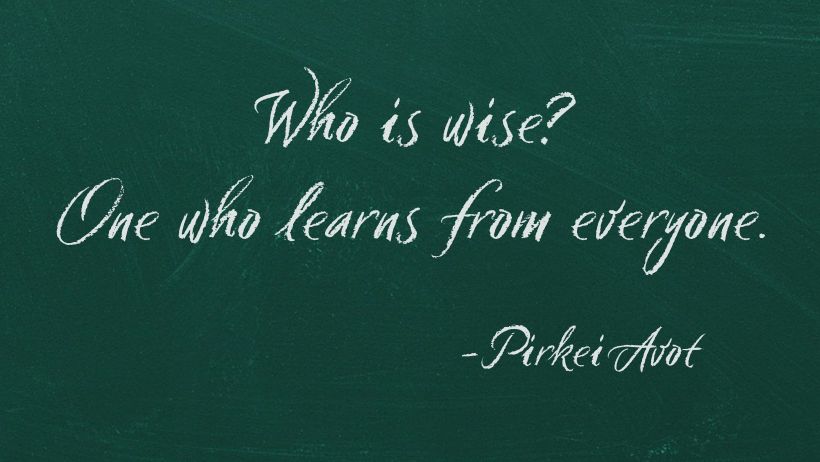
There is so much to be learned from others who are outside of our small Jewish community. Parshat Yitro calls loudly to all of humanity to open our minds and learn from one another. It doesn’t mean that we have to share all aspects of belief, but it also doesn’t serve a purpose to close ourselves off from one another and miss the opportunity to grow. As Ben Zoma teaches in Pirkei Avot, “Who is wise? One who learns from everyone.”

Asking for Help – Parshat Yitro 5783

I am terrible at asking for help. I almost always accept it when offered, but it takes me a really long time to actually ask for what I need. I’m sure part of it is my innate stubbornness, feeling like I can do it all on my own, and part of it is a desire to not inconvenience anyone. Neither of these are healthy habits, and over the years, I have had to learn how to accept help, and how to ask for what I need so that I won’t become so overwhelmed I can’t function. And I know that when I can’t function at my usual capacity, I’m not just letting myself down, I’m also letting down family, friends, and coworkers. 

The central piece of Parshat Yitro, this week’s Torah portion, is the giving of the Ten Commandments by God to Moshe and the people Israel. We now have a set of laws to live by, a guide to being a free people outside of slavery. But before the Torah shares these laws, it reminds us of the familial relationship Moshe has with his father-in-law and how he sets up a legal system. 

The end of the portion encapsulates the intensity of the experience at Sinai, but in an odd way. Moses is exhausted, and there’s an endless line of people needing his counsel and judgment. He’s alone as the leader; he doesn’t have an assistant or anyone else who is allowed to make those decisions. In walks his father-in-law, Yitro. Seeing the situation, Yitro, a “priest” (leader) in his own community, suggests a way to support Moses to lessen the burden and spread out responsibility for problem-solving. 

What’s odd is that throughout the parshah, it becomes almost comical the number of times Yitro is called “father-in-law.” The text goes to great lengths to emphasize that the person who Moses accepted help from was his partner’s father. Even in the best of family relationships, in-laws are not often the first people you might go to for advice. The Torah conveys this repeatedly because it’s important to know that even Moses, the leader of the Israelites chosen by God, needed and accepted help.

Perhaps there’s a lesson or two here for all of us. If Moses can ask for guidance, so can you and I. And I’m not just saying this because my own partner’s parents read these weekly writings, but maybe – just maybe – in-laws have good advice to offer too.

I Swear, I Promise – Parshat Yitro 5782

How many chances are too many chances for someone to learn a lesson or make a change? On the one hand, I want to believe a person when they say, “I swear, I’ll never do that again.” On the other hand, experience tells me that for some people, keeping these types of promises is a struggle that’s deep and not easily overcome. 

It’s harder for children to grasp the concept of lasting behavioral change, but we hope and anticipate that it comes with maturity. How many times do parents hear the plea, “I promise I’ll listen this time,” only to have the promise broken again? 

Promises, and the consequences of breaking them, are outlined in the Torah. As early as Abraham’s time, promises were made between nations. These promises were usually sworn upon a man’s thigh, the direct link to his future. Abraham didn’t “swear on his mother’s grave,” but he did make promises based on the future of his progeny. This is likely why our Torah portion this week, Parshat Yitro, includes promises and swearing on God’s name in the ten central commandments of our nation. 

The giving of the 10 Commandments by God to Moshe and the people Israel means we now have a set of laws to live by, a guide to being a free people outside of slavery. Specifically in chapter 20, verse 7, we read in the fourth commandment, “You shall not swear falsely by the name of the Lord your God; for the Lord will not clear one who swears falsely by His name.” Another translation suggests that you shouldn’t resort to using God’s name to make your lies more plausible. Either way, the commandment is clear that using God’s name as proof that you’re telling the truth is not something we’re supposed to do.

I can almost imagine the Israelite nation at the mountain, receiving the commandments, knowing that God, their God, was stronger than all the others and formulating plans to use that to their advantage when other nations threatened them. God understood this human instinct and so put this commandment in place for us.

This particular commandment reminds us of both the power of our words and the strength of our convictions. Is it worth swearing or promising if there’s a chance you can’t keep that promise? And is there a better chance of keeping the promise if you know that you, and you alone, are responsible? Perhaps the reason that changes in behavior are so challenging is because when we swear to or on God, we remove the burden from ourselves to keep the promise. Parshat Yitro, among its many famous lessons, teaches that there is only one person responsible for making the changes we want to see in ourselves.

Snow Plow Dreams – Parshat Yitro 5781

I have been traumatized by snow ever since moving to Portland. I grew up in Michigan where snow wasn’t really a big deal. It snowed most of the winter, but since that was the norm, the city was built to deal with it. We had ample snow plows and systems in place to keep roads safe. At 3:00 a.m. on snowy mornings I’d often be woken up by the sound of the plows clearing driveways and streets, knowing we’d have school that day.

When it snows in Portland, the city shuts down. We don’t currently own a car with all-wheel drive, and we live at the bottom of two slightly sloping hills in our neighborhood, so when it snows, we’re stuck until it melts. The longest we’ve stuck at home was seven complete days, back when we had a 3-year-old and 3-month-old. To say it was traumatizing is an understatement. Now every time they predict snow, I run to the store to stock up on essentials (and then some) so we won’t be stuck without. My stomach ties in knots just thinking about the first flakes falling to the ground. The weird thing is on the few snowy days we have, I’ll still wake up in the middle of the night because I think I hear a snow plow whisk through our street, pushing a path to freedom.

Why do our brains do this? Why do certain smells or sounds trick us at our most vulnerable moments? I can’t explain the biology of it, but I can tell you this happens in the Torah too, especially in our parshah this week, Yitro.

The central piece of the portion is the giving of the Ten Commandments by God to Moshe and the people Israel. We now have a set of laws to live by, a guide to being a free people outside of slavery. But before the Torah gives us these laws, it reminds us of the family relationship Moshe has with his father-in-law and how he sets up a legal system. And the end encapsulates the experience of intensity of being at Sinai, but in an odd way.

Chapter 20, verse 15 reads, “All the people saw the thunder and the blare of the horn.” Why is the wrong verb used here? We don’t see thunder and hear lightning, we hear thunder and see lightning. Why the reversal? A common interpretation is that the experience was so intense and so overwhelming that their senses were all in a tizzy and they experienced something beyond what they knew as reality. And the key is it doesn’t matter if the thunder was actually visible in some miraculous way, only that it seemed that way to the Israelites. It’s not necessarily that the scrambling of the senses caused an intense experience, but perhaps that the intense experience caused the scrambling of the senses.

What a fitting reminder about this past year – the pandemic has our sense of reality and time all confused. How many times have you heard someone joke about not knowing what day it is or feeling like it’s the same day over and over again? The human mind is amazing at adapting and solving problems, but it can also trip us up and cause even more problems. Your trigger might not be snow flurries, but we can still rely on each other for the mental and emotional support we need as we plow ahead together.