The Art of Enough

In a world that constantly tells us we need more—more success, more space, more stuff—it’s hard to know when we’ve reached enough. New phone models and operating systems are released before we can learn the current ones, our homes get fuller even as we run out of closet space, and our social media feeds suggest that everyone else always has a little more than we do. What does it mean to be truly content with what we have?

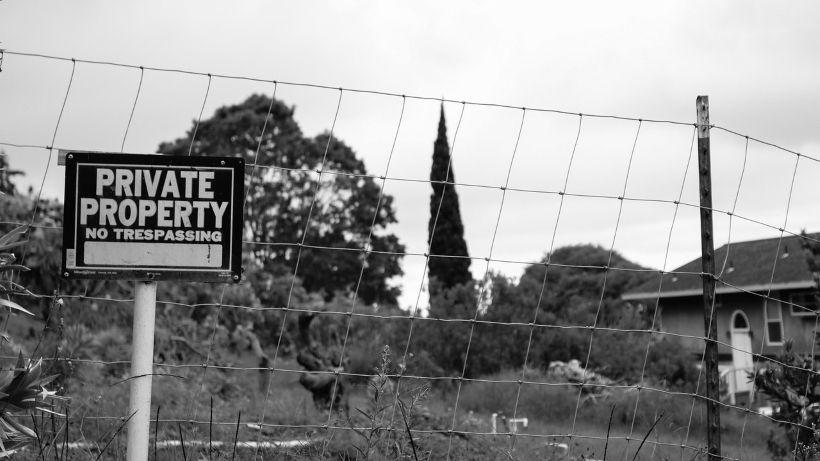
Parshat Shoftim is known for its famous call to justice: Tzedek, tzedek tirdof. “Justice, justice shall you pursue.” (Deut. 16:20). But among its many laws governing leadership and society, there’s a more subtle commandment that speaks volumes: “You shall not move your neighbor’s boundary marker…” (Deut. 19:14)

This verse may seem mundane, but it’s deeply ethical. It safeguards not just property, but the principle that what is mine is mine, and what is yours is yours. It’s about honoring sacred space, whether physical, emotional, or communal.

Each morning, we say a series of Birkot HaShachar—blessings for waking up and stepping into the day. One of them is: Baruch atah … she’asah li kol tzarki. “Blessed are you … who has provided me with all I need.”

This simple blessing is a daily reminder to embrace sufficiency. When we internalize that we have enough, we are less likely to covet what belongs to others, less tempted to cross boundaries, and more inclined to respect the space and needs of those around us.

The Torah’s prohibition against moving a boundary marker is not just about land; it’s about a mindset of enoughness. It challenges us to build a society rooted in fairness and gratitude, not greed.

This week, consider: where in your life do you need to redraw a boundary, not to take more, but to better honor what already is? Can you approach your home, your work, and your relationships with the quiet confidence that you have enough? By living with gratitude and respecting the sacred boundaries of others, we turn the morning’s simple blessing into a daily act of justice.


To Come In Peace – Parshat Shoftim 5784

It’s hard to look at this week’s Torah portion and not think about what we as a Jewish people have gone through in the past week or what peace-loving people everywhere have endured over the 11 months since October 7th. Parshat Shoftim primarily focuses on the legal system, on justice, and on understanding context for rulings, but amid these laws, we read about going to war. Especially prescient is chapter 20, verse 10: “When you approach a town to attack it, you shall offer it in terms of peace.” It’s in this section that we are guided by what most of us would argue is the basic code of humanity, which prohibits hostage-taking, rape, and murder, atrocities that have been all too present on our minds thousands of years later.  

As more hostages are murdered, as the conditions in Gaza worsen, and as hundreds of thousands of Israelis line city streets in protest, the future is unclear. Over the past year, it has become normal for regular conversations to include an almost daily reflection on the morality, necessity, and effectiveness of military strategy. Each of us has an opinion of Israel and how the country’s leaders have responded to Hamas’s attack on October 7th and the way in which this response has been carried out. But these opinions do us no good, because here we are, still stuck and unable to end the horror. 

Though we’re not engaged in war on American soil, what makes things difficult for Jewish people on this side of the world is that the past year has thrown the values and ethics of being Jewish into question. As Jews we’re asked to defend our right to a homeland or the right to exist at all. The word Zionist has become a pejorative. Fear and misinformation refuse to loosen their grip on the world. 

Let me back up to say that broad strokes are not helpful in any of this conversation; there is far too much nuance to cover meaningfully in this short writing. However, it is in these moments when I feel frozen in this destructive cycle that I turn to the Torah as the guide for what to do. Even in horrific times, the text tells us that our initial instinct should not be violence, but peaceful negotiation and discussion first. Peace is the preferred option, always.  

I’m not naïve enough to believe that this is how the world works. It’s true that the Torah is also filled with examples of war as a necessity, which seem to go against this commandment. But I do believe that peace, however long it takes, is the best way forward. The Torah is our Tree of Life, a living history from which we learn, grow, and one day become the society it prescribes. May it be soon in our day that peace will embrace our whole world and nation will not threaten nation.  

Two Seasons – Parshat Shoftim 5783

Growing up in Michigan I remember (fondly?) people saying, “There are two seasons: winter and road construction.” And the only reason they didn’t overlap was because almost all construction on the roads had to be stopped during the freezing winters, which then made summer travel incredibly frustrating. Perhaps these early experiences in my formative years made me the somewhat grumpy driver I am today. Just to be clear, I’m not an angry driver, I simply get frustrated when the roads are closed for construction, when someone isn’t following the rules of the road, or when something else causes a trip in the car to take much longer than it should for whatever reason. 

What matters in these moments is not that I have feelings of frustration, but what I do with those feelings. Frustration is an acceptable and natural emotion, as long as I’m able to recognize that road construction serves an important purpose. I might have some internal road rage dying to get out, but I also know the importance of keeping our streets safe for everyone. We learn a similar lesson from the Torah portion this week. 

Parshat Shoftim is a section of Torah that completely focuses on the legal system, on justice, and on context. This text includes the commandment to establish judges and officers, as well as a listing of punishments for certain transgressions against mitzvot. We also learn about the laws surrounding false witnesses and murder. 

In chapter 19, verse 10 we read: “Thus the blood of the innocent will not be shed, bringing bloodguilt upon you in the land that the Lord your God is allotting you.” The Talmud derives from this verse that society is responsible for public safety, such as keeping the roads in good repair. In other words, despite the annoyance that comes with road closures and having to go slowly through construction zones, the obligation is upon each individual to create a safer community and while doing so, to respect those around them who do the work. 

As you know, I’m a planner, so when things take longer because we’re creating a safer road, there are two voices battling in my head: one that says “Yay, safety!” and one that screams “NO, I HAVE PLANS!” This week’s Torah portion reminds us that we are to find the balance between the frustrations of changes in plans (or detours, if you will) and the purpose in creating a community that works for everyone. 

Punishment Fits the Crime – Parshat Shoftim 5782

One of the parts of parenting that Duncan and I struggle with the most is giving reasonable and logical consequences. We’ve gotten better at it now as the children are older and are a tiny bit more rational than when they were in preschool, but it still isn’t easy. It’s much easier, in the frustration of a slower than necessary bedtime routine, to demand, “If you don’t get out of the bathtub right now, there’s no iPad time tomorrow.” This consequence is threatened in the heat of the moment, and it’s not at all logical or relevant to bath time. Plus, enforcing it often causes more pain to us than to our children because we need those 30 minutes of screen time while we’re making dinner as much as they do.

Even God struggles with determining logical consequences throughout the Torah. Remember, Moses isn’t allowed into Israel because he didn’t listen to God, who instructed him to talk to the rock, but Moses instead remembered and acted on an earlier instruction to hit the rock to get the result he wanted. Seems like an outsized punishment for Moses’s mistake, doesn’t it? As a parent figure, it seems that God has to learn about logical consequences too. And in fact we finally have some workable guidance in this week’s Torah portion. 

Parshat Shoftim is a section of Torah that completely focuses on the legal system, justice, and context for the laws. This text includes the commandment to establish judges and officers, as well as a listing of punishments for certain transgressions against mitzvot. We also learn about the laws regarding false witness and murder. 

In chapter 19 God reiterates a lesson that has been shared before in the Torah (twice, actually). You may know it as “eye for an eye,” but a more complete reading includes “Life for life, eye for eye, tooth for tooth, hand for hand, foot for foot.” These are not meant to be taken literally, but as an instruction to have the punishment fit the crime, and neither more nor less harsh than the original transgression.

It’s easy to go on consequence overload when you’re in an emotional moment. The Torah is itself, however, a grounding resource. Reading these same texts year after year is what grounds us emotionally and spiritually, and it reminds us, especially in this week’s portion, that only when we’re in that grounded space can we act justly.

The Danger of a Single Story – Parshat Shoftim 5781

Chimamanda Ngozi Adichie at TEDGlobal 2009, bonus session at the Sheldonian theater, July 23, 2009, in Oxford, UK. Credit: TED / James Duncan Davidson

A few years ago I was introduced to novelist Chimamanda Adichie through a TED Talk. In the video, Adichie tells the story of how she found her authentic cultural voice, and warns that if we hear only a single story about another person or country, we risk a critical misunderstanding. Specifically, the author relays a story of her experience going to university. Her roommate was startled to learn that she, a girl from Africa, could speak English and also know how to use an oven and stove. Chimamanda Adichie says, “What struck me was this: She had felt sorry for me even before she saw me. Her default position toward me, as an African, was a kind of patronizing, well-meaning pity. My roommate had a single story of Africa: a single story of catastrophe. In this single story, there was no possibility of Africans being similar to her in any way, no possibility of feelings more complex than pity, no possibility of a connection as human equals.”

The danger of a “single story” is that we so often let one person’s narrative color our entire understanding of the issue or situation and don’t stop to take the time to actually look at all angles and facts about the story.

The concept of a single story and the problem behind it are not new; in fact they are very present in this week’s Torah portion, Parshat Shoftim. This is a section of Torah that completely focuses on the legal system, on justice, and on context. This text includes the commandment to establish judges and officers, as well as a listing of punishments for certain transgressions against mitzvot. We also learn about the laws surrounding false witnesses and murder.

As these laws are articulated, the rabbis worry about a single story narrative. While judicial matters are being discussed, the Torah puts out rules for how a case can be decided. In chapter 19, verses 15-21, they lay out a plan. “A single witness may not validate against a person any guilt or blame for any offense that may be committed; a case can only be valid on the testimony of two witnesses or more.” It goes on to talk about false testimony and the need for a thorough investigation.

The Torah is clearly trying to work against the single story narrative. Our text is instituting a protection against a “he said, he said” situation where there is no research or effort to back up statements or experiences. 

Throughout history the narrative of a single story has plagued minorities especially. From the evil of Haman in our Purim story, to the horrific genocide and displacement of the Maya people in Guatemala, to the Rohingya refugee crisis, when only one viewpoint matters, it can have unimaginable results. One single story or one single stereotype of a people can bring epic destruction and lasting consequences. In a world where misinformation and falsehoods are easier than ever to spread, Parshat Shoftim teaches us to investigate, to get a second, third, or fourth opinion, and to remember that single stories aren’t the whole story.