How do you handle criticism? Our Torah portion suggests that a rebuke has inherent value if you can use it to learn and grow.
Ki Tavo
The Not-So-Fast Lane – Parshat Ki Tavo 5775
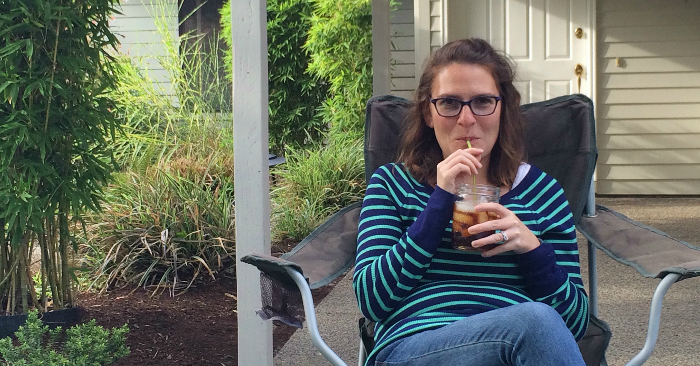
I am a suburbanite through and through. While other people live and die by the big city and the need to be part of it, as Steve Perry knows, I’m just a small town girl. I like being big-city-adjacent. I feel much more at home in my personal vehicle than taking public transportation. Crowded cities like New York throw me completely out of my comfort zone, and to this day I still don’t like having to drive somewhere that doesn’t have ample parking.
The environments where we were raised and those where we feel most comfortable say a lot about us. The rush of downtown life and having everything conveniently accessible by subway (or Uber) is right for some people, and others prefer large open spaces with miles and miles between neighbors. City or country, suburb or village, every type of place in which to live comes with its own blessings.
This week we read parshat Ki Tavo, the section of the Torah that reminds us again of the blessings and curses that come to us as we choose to follow or ignore the laws of the Torah. Specifically, we learn of the requirement to make an offering of “first fruits” for the priests in the Beit HaMikdash, and the different ways in which we are supposed to thank God and give praise (before prayer was a daily activity). Finally, the text reminds us of how we’re supposed to take time to rebuke one another when we’ve taken a misstep and the ways in which we can do so with compassion and kindness.
Within this list of blessings comes several examples of where we should be blessed. Chapter 28 reads:
“All these blessings shall come upon you and take effect, if you will but heed the word of the Lord your God. Blessed shall you be in the city, and blessed shall you be in the country . . . blessed shall you be in your comings and blessed shall you be in your goings.”
The bottom line is God will reward you for your service to the community, whichever community that is. What the Torah doesn’t say is what each type of blessing might look like. In the city perhaps a blessing is to live in a good neighborhood with good schools. Perhaps we should be blessed to live near resources or luxuries that enrich our lives. In the country perhaps the blessing is a plentiful crop, or wide open space to meditate and enjoy.
The Torah is distinctly vague in what this blessing might be to remind us to discover those blessings ourselves. What feels like a blessing to me (plentiful parking) might be a curse to you because you see paradise paved to create my parking lot. And your urban jungle might feel like a blessing to you, but to me, crowded trains and one-way streets are the worst. At the Pesach seder when we remove drops of wine from the second cup to recall the plagues, I like to take out one extra drop of wine for one-way streets.
Anyway, the Torah reminds us that the choice of where we settle brings its own blessings. And the blessing itself is individual and what we make it. This is the perfect little note-to-self that a blessing is that little pause for a minute to simply look around and recognize the good we have found in our own space.
Daily Gratitudes – Parshat Ki Tavo 5773
Did you know ancient Jewish texts thought of sleep as 1/60th of death? I must confess that while our daily prayer requires us to begin every morning by thanking God for waking up, it can often be difficult to thank God so early in the morning. At 5:30 when that alarm clock goes off, I usually just want to roll over and go back to sleep. Nevertheless, somehow I pull myself together and face the day. Modeh ani l’fanecha (I am thankful before you) are the words we are asked to speak before stepping foot into a new day. But what does it mean to be grateful for a day that you have yet to discover?
This week we read from parshat Ki Tavo, which is filled with the final narrative of the Israelites getting ready for their entry into the Land of Israel. We read about the gifts the Israelites are to bring to the Beit HaMikdash as well as the blessings and curses that come to the land and to those who observe Torah and God’s commandments. The parshah begins and ends with the requirement to recognize and give gratitude for the good that comes to us.
Chapter 26 reads like an instruction manual for those expecting to enter and participate in the Israelite community. Specifically, verse 3 requires a person giving a gift that blesses God to say “I acknowledge this day before the Lord your God that I have entered the land that the Lord swore to our fathers to assign us.” While this serves as what we might consider a verbal receipt of gift giving, it actually goes much deeper. This statement requires the individual to acknowledge and make clear that they see the blessing in both the fruits that they have grown and the ability to give a gift in the first place. In this case, the gift cannot be given until the person who gives it is able to acknowledge the blessing and meaning of the act.
Think about your morning. How often do you greet something with a “good morning” and actually mean “I hope you have a good morning”? How often are these just empty words we speak out of habit? Gratitude doesn’t often come naturally to most people. It’s not because we’re heartless or even ungrateful. It’s because the routine of the act has superseded the meaning of the act. In a sense, our text this week, not to mention our daily prayers, teaches us to be grateful for being grateful. May we use that lesson as a reminder to add a little bit of ourselves back into everything we do. Good morning.
Inch by Inch – Parshat Ki Tavo 5772
Since Duncan and I have now lived in Dallas for just over two years, I’ve grown accustomed to Dallas life. Most of the transition was easy to accept; our Jewish community is thriving, Tex-Mex food is delicious, and a two-mile round trip commute is fantastic. The biggest difference coming from Los Angeles to Dallas is the idea of land ownership. Owning a piece of land in LA is a dream, in Dallas it’s a reality.
Now that we are able to own a home, our dream is of starting a garden with our favorite vegetables. At the moment, we’re proud of ourselves if we remember to water our backyard once a month. But owning land is about more than having a house. When you own land, it’s yours to take care of, whether it’s the land your house is on, the community garden you might be working in, or simply enjoying the gift of our earth. We have a responsibility to the future generations to take care of it.
Parshat Ki Tavo, this week’s Torah portion, teaches the laws of bringing offerings to God, specifications for fruits and animals, blessings and curses that come into the land, and the mitzvahof giving tochechah, rebuke. But before all of these laws, it teaches us the lesson of land ownership and responsibility. In the first verse of the Parshah it states: “And it shall be, when you come in to the land which the Lord your God gives you for an inheritance, and possess it, and live in it;” teaching us what our duty to the land is for our entire lives.
First, the text teaches that the land is an inheritance, meaning that it comes to us from earlier generations and goes from us to the next generation. While the text is speaking directly about the land of Israel, let’s broaden the conversation to our earth. This means we should leave our land better than when we found it, creating a space that is inhabitable and enjoyable to the next generation.
Next, the text tells us to possess the land. Possession means making something your own. Dogs mark their territory to show others that this space is taken. Humans acquire lots, maintain lawns, and build structures. Perhaps the Torah is also reminding us that we must take ownership over what happens to the land. We must treat it with love and respect as we do our other possessions.
Finally the text tells us to live in the land. To live in the land means to enjoy it, to use it and to make the best of it. Backyard gardens and community gardens are a growing trend (pun intended) because of benefits like cost savings and knowing where your food comes from. People are focusing more on the distance between farm to table and whether the energy gained from the crop is greater than the energy used to grow it. More than sustainability, there’s also the joy of cultivating something from seed to flower.
Judaism is all about inheritance in every sense. We inherit the Torah from our parents and grandparents just as the Israelites did when they first received it. We inherit traditions, from the smell of latkes frying to those favorite seats in the sanctuary. And we inherit possessions, whether it’s money, land, or Zadie’s old Haggadah that still has his notes and dog-eared pages. Just as the earth’s rich, vibrant land must be cherished and protected, Judaism’s rich, vibrant tradition must be passed on to survive. The question is will you leave our land and our religion better than how you found it?
THIS TOO IS TORAH: I recently read The Omnivore’s Dilemma by Michael Pollan, which details the ins and outs of our current food system. As I read the verse from this week’s parshah, Pollan’s words came to mind. He posits that the dilemma we’re facing is one that we’ve made for ourselves by industrializing a food system to offer the same foods year-round and ultimately reducing sustainability. He doesn’t offer easy answers to solving these problems, but he does remind us that we have a responsibility to do our part to sustain our earth, to take care of our land while it is in our possession so that it can be inherited and lived on by many generations in the future.
It Takes Two. Or Three, or Four… – Parshat Ki Tavo 5771
When she was First Lady, Secretary of State Hillary Clinton promoted the concept that “it takes a village” when it comes to caring for the needs of children. After the terrible tragedy this summer in Houston with the Berry family, we have seen that a village of supporters can come together to help out in the greatest time of tragedy. On a day to day basis, it also takes a village to keep a society working smoothly. Each of us has our own strengths and weaknesses; we strive to find partnerships that complement one another and offer peaceful co-existence, relying on one another to complete our lives. For instance, I can offer spiritual guidance as a rabbi, but when it comes to numbers, I’m lost. For my CPA, numbers might be second nature, while religion might seem foreign and complicated.
As the Torah inches towards the end of our yearly cycle, we find the Israelites preparing to enter the promised land; learning about what they’re supposed to do now that their once migrant society is settled. The Torah makes no secret that each person has their own purpose, the priests to bless and offer sacrifices, the Levites to help the priests, the Israelites to farm the land so the community can eat. Each of these elements works together to create a society that functions.
Parshat Ki Tavo teaches us about rebuking one another when one has wronged someone, about bringing the gifts of our labors as an offering to God, and about the consequences of obedience and disobedience. These consequences are actually framed as blessings and curses. The text teaches that if one were to follow all of God’s laws, blessings would come to them. As we teach our children, when you eat your vegetables, you can have ice cream for dessert. Or, the reward for a dog who is finally house trained is a treat (a treat for the dog, and certainly a treat for the owner). But the same child learns there will be time out when she doesn’t follow directions, and our text also teaches of the consequences, the curses that befall a nation who disobeys God’s laws.
What strikes me in this parshah is the fact that the text recognizes that we all have something to teach or share with our community. In chapter 27, verse 26 the text teaches: “Cursed be he who will not uphold the terms of this Teaching and observe them. And all the people shall say, Amen.” Observing and learning Torah is an obligation on every Jew. But, the commentators recognize that not everyone will be cut out for sitting and learning all day, so they remind us in the Talmud Yerushalmi that this applies even to those individuals who never studied and never taught Torah, but can give financial support to those who do. The Torah tells us that it is a curse, a negative, when we don’t share our gifts with the community. When we withhold our gifts – educational, financial and otherwise – we take away a piece of the community, a piece of God’s Torah that we are commanded to share.
It takes a village. We must share our gifts with one another in order to create and sustain that village. Whether you can give financially, or offer services, if you can design the T-shirt forZimriyah, or help build a sukkah, or even just greet with a smiling face, each and every member of our Levine Academy community, our Dallas community and our Jewish community is an integral part of making our village work. What will you share?
ללמוד To Learn: ללמד To Teach: Find someone to teach you something new, and offer to share your wisdom with them. Creating a partnership in learning, a chevruta, is the essence of Jewish study.
לשמור To Keep לעשות To Do: When you celebrate Shabbat and other holidays with your close or extended family, do certain people always have certain roles? How does the family work together to get everything done?

