Grand Spectacles and Small Miracles

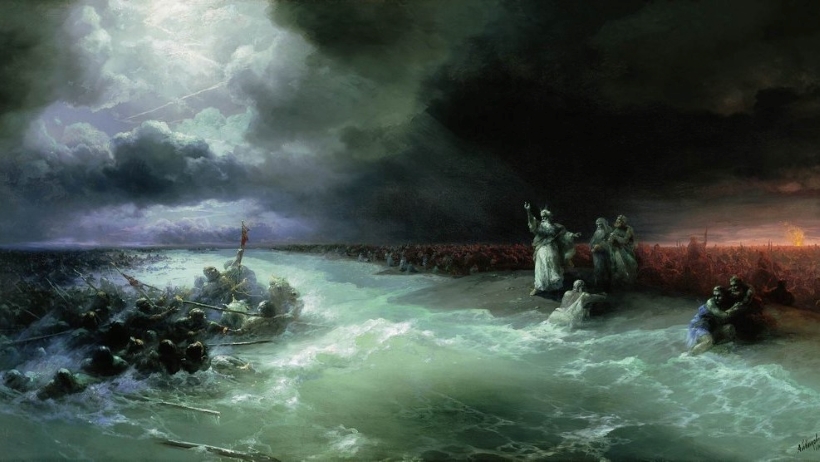
Imagine the scene—towering walls of water, dry land underfoot, and an entire nation walking through the sea as if it were a pedestrian footpath. It’s no wonder that this miraculous event is considered one of the foundational moments of Jewish history.

In this week’s parshah, Beshalach, we encounter one of the most awe-inspiring moments in the Torah: the splitting of the Red Sea (or Yam Suf in Hebrew, often translated as “Sea of Reeds”).

After crossing to safety and witnessing the Egyptians’ defeat, the Israelites burst into song, praising God for this incredible act. The Shirat HaYam, the Song of the Sea, is filled with imagery that celebrates God’s power over nature. It’s a Wow! moment if ever there was one.

These days, we don’t often see seas splitting or manna falling from heaven. But that doesn’t mean the wonders of creation are any less miraculous. In fact, Jewish tradition gives us a tool to recognize these everyday marvels: the blessing Oseh Ma’aseh Bereshit or “[Blessed is God] who makes the works of Creation.”

This blessing reminds us to pause and appreciate the beauty and wonder in the world around us. It’s typically recited when we see something extraordinary in nature, like a majestic mountain range, a stunning sunrise, or a rainbow after a storm.

But here’s the catch: What counts as “extraordinary”? If you think about it, the splitting of the sea wasn’t the only miracle in Beshalach. God provided manna, a food that appeared out of nowhere. The Israelites received fresh water from a rock. Even the way nature was manipulated to allow their survival in the wilderness was miraculous. Yet, the Torah teaches us that recognizing miracles isn’t just about seeing the extraordinary; it’s about noticing the divine in the ordinary.

Was the splitting of the sea just about the moving water? Or was it also about the Israelites having the courage to step into the unknown, trusting that the path would open before them? Perhaps the real miracle wasn’t just in God’s actions, but in the partnership between God’s actions and human faith.

When we recite Oseh Ma’aseh Bereshit, we’re invited to cultivate this same perspective. It’s not just for grand spectacles; it’s for the small miracles too. The chirping of a bird, the smell of rain, or even the crunch of snow underfoot—all these moments are invitations to marvel at the works of creation.

A Time to Pray, a Time to Act – Parshat Beshalach 5784

Baruch dayan ha’emet.” Blessed is the true judge. These are the words that we’re told to speak upon hearing of a death. It’s a short, quiet prayer that simultaneously notes that life is fleeting and often not in our own hands, and at the same time, asks for blessings upon the life that has ended. From there, our tradition teaches us that there are steps to take in order to fully honor and respect the body and spirit of the one who has died.

As Jews, we simultaneously take the time to acknowledge our grief as we step into the ritual actions of burial. This is a call to both pray and to act. This one mitzvah (commandment) sums up so much of Judaism; we are people of prayer and we are people who must work to bring forth change. However, when you consider the breadth of our narrative and our subsequent legal texts, those two verbs aren’t necessarily in the same order every time.

Moses learns this lesson in our Torah portion this week. Parshat Beshalach is notable for showing the power of song. We find the children of Israel on their journey out of Egypt into the wilderness. The Egyptians go after them, but God intervenes and saves them. The Israelites continue through moments of bliss and wonder at the new, free world around them as well as moments marking the occasional temper tantrum at God because the journey through the desert isn’t perfect. God provides manna, and the people want more. God provides water, and the people complain that it doesn’t meet their standards.

On their way out of Egypt, the Israelite people are understandably scared. They see the Egyptians following them, there is a sea in front of them, and they freeze in fear. Moses begins to pray, but God stops him. Why? God explains to Moses that there is a time to act and a time to pray. This moment at the sea is a time of action, not prayer. And we know what Moses does: he lifts his arms, and the sea parts. It is only after he takes direct action that it is the appropriate time to pray. It wouldn’t have worked the other way around. 

How many times do we see people offering “thoughts and prayers” after tragic events? The Torah this week reminds us that perhaps it should be “actions and prayers.” Yes, we can have both a belief in something greater than ourselves and the imperative to take action to create a world that is a picture of justice and mercy. 

Supported – Parshat Beshalach 5783

As clergy, I do a lot of supporting other people. It might be through a lengthy phone call, a quick text, or an email exchange. It might come in the form of a hug or a gentle hand on the back. Support comes in the form of MealTrains and coffee dates, walking and talking. To be supported at a basic level means being seen. But as any leader will tell you, the support provided by the leader can only happen if the leader is in turn supported. Exhaustion is not a badge of honor. When I’m worn out and in need of rest, Duncan is there to pick up the slack. At various times, I’ve had generous offers of meal deliveries when I’m stressed, or a bag of chocolate to brighten my mood. 

Returning from a month of sabbatical, I’ve been blessed to be supported by others during this time away. From service and lifecycle duties, to program coordination, to even just remembering that I’ve been officially “offline,” colleagues, congregants, and friends have helped me make the most of this rejuvenating time by lifting me up in various ways.

It’s fitting that we see this in our Torah portion this week, as Moses tirelessly leads the Israelites across the sea. Parshat Beshalach is notable for showing the power of song. We find the children of Israel on their journey out of Egypt into the wilderness. The Egyptians go after them, but God intervenes and saves them. The Israelites continue through moments of bliss and wonder at the new, free world around them, as well as moments marking the occasional temper tantrum at God because the journey through the desert isn’t perfect. God provides manna, and the people want more. God provides water, and the people complain that it doesn’t meet their standards.

After the Israelites cross the sea, they end up in a battle with Amalek near Rephidim. The text conveys that every time Moses lifts his arms, the Israelites are successful in their battle, and every time he puts them down, they’re taken over by Amalek. As you can imagine, Moses’s arms get tired. Aaron and their companion Hur from the Tribe of Judah notice this; they see his exhaustion and help him rest on a rock. When that isn’t enough, they even hold his arms up to support him. 

Is there any more relevant connection to what dedicated leadership looks like? I feel for Moses, being put through so much for the sake of community without the ability to really rest, but of course that’s the work of so many leaders. And like other leaders, Moses relies on the support of those around him to hold him up while he serves others, albeit literally in his case. While I’m certainly not Moses, I do feel the strong support of those around me when you hold up my arms to allow me to carry on, and I’m grateful for it every day.

Hold Your Peace – Parshat Beshalach 5782

As some of you may know, hiding my feelings on any topic doesn’t come naturally. When I’m passionate about a cause, a belief, a topic, I tend to go all in. It’s been a life-long process learning how to hold back the fire, while allowing the passion to come through and be heard. So far, the benefits are clear. I get so much closer to my end goals when I’m able to keep the big emotions in check and channel my energy into calm, well reasoned arguments, while keeping my listening ears open.  Maybe you’ve found this to be true too, that simply stepping back and allowing others voices to be heard often gets you further than impassioned pleas ever will.

The Israelites also had to learn this lesson on their life-changing journey out of Egypt. Parshat Beshalach, which we read this week, is notable for showing the power of song. We find the children of Israel on their journey out of Egypt into the wilderness. The Egyptians go after them, but God intervenes and saves them. The Israelites continue through moments of bliss and wonder at the new, free world around them, as well as moments marking the occasional “temper tantrum” at God because the journey through the desert isn’t perfect. God provides manna, and the people want more. God provides water, and the people complain that it doesn’t meet their standards.

As the Israelites are leaving Egypt and approaching the sea, they find themselves in a panic. The Egyptian army is behind them, water in front of them, and they’ve never been in this situation before. They scream and complain and channel all their anger at Moses, pleading with him to just stop the journey and let them go back and do their own thing. While they rage, Moses remains calm and says to the entire stressed out nation, “Have no fear! Stand by, and witness the deliverance which the Lord will work for you today; for the Egyptians whom you see today you will never see again. The Lord will battle for you; you hold your peace!”

Can you hear the powerful reassurance in that final verse? Moses is explaining, “God has got you, take a breath.” The Israelites, who had never heard FDR say the only thing they had to fear was fear itself, needed to learn that their reaction to the stressful situation was actually going to cause more harm. Moses imploring them to take a breath and let God do the fighting was his way of reminding them that quiet action is usually more powerful than noisy reaction.

Parshat Beshalach is a lesson that still carries merit today. Staying cool in the face of any situation is made that much harder when things are out of your control, and there’s nothing you can really do to change it. The pandemic has given us plenty of examples of this, when we needed to make plans to move forward but every obstacle was being put in the way. When we’re too emotionally charged, sometimes taking a breath and trusting in the process gets you across the gaping sea and onto safe, dry land much faster.

Carry You With Me – Parshat Beshalach 5781

There are certain items I take with me wherever I go in life. I have a small siddur that lives in my backpack. I wear a necklace daily with my children’s initials on it so that they are always near my heart, and often my father’s Jewish star necklace accompanies me for special and important occasions. I even have voicemails saved from my mother and father that I don’t delete off my phone so I can always hear their voices. There’s something comforting about carrying with us these tangible items that connect us to our past, or to a moment of strength. Perhaps you carry a special picture or letter in your wallet or wear a loved one’s jewelry every day. Whatever it is, the object or sentiment probably brings you a similar strength, connection, and comfort.

This concept isn’t new; as far back as the Torah, communities maintained physical representations of their connection to those who came before them. We see it especially in this week’s Torah portion, Parshat Beshalach. We find the children of Israel on their journey out of Egypt into the wilderness. The Egyptians go after them, but God intervenes and saves them. The Israelites continue through the highs and lows of moments of bliss and wonder at the new, free world around them, as well as moments of toddler-like exasperation at God because their journey through the desert is less than ideal. God provides manna, and the people want more. God provides water, and the people complain that it doesn’t meet their standards. Parents, you know how this goes.

Back when Moses and the Israelites are preparing to leave Egypt, they start packing their belongings, organizing their flocks, and gathering the things they might need on the journey. Moses’s packing list is shared explicitly in chapter 13, verse 19. “And Moses took with him the bones of Joseph, who had exacted an oath form the children of Israel, saying, ‘God will be sure to take notice of you: then you shall carry up my bones from here with you.’” Yes, Moses goes to get Joseph’s bones so he can carry them out of Egypt with the nation.

Why the bones? For one thing, it was Joseph’s dying wish, so that surely gives the act veracity, but what was the reason behind it? Why not an article of clothing or a tool of some kind? Perhaps the bones, which are connected to human physical strength and structure, symbolized strength of character as well. To be a proper leader in Israel, Moses needed to acquire the strength of Joseph, who dealt with similar circumstances. As a leader in Egypt, Joseph protected the region from starvation and thirst, and Moses knew the Israelites’ journey ahead might lack food and water. Joseph also forgave his brothers for their terrible treatment of him, and perhaps Moses wanted those bones as the reminder of what forgiveness might look like.

Most importantly, and maybe most obviously, through memories and objects, we carry with us those who came before us as a reminder of who we are and where we’re from. And carrying Joseph’s bones was just about the most literal way for Moses to carry his ancestor with him. These things we carry are really more about the people we carry and those they carried before us.