Self Preservation – Parshat Lech Lecha 5778

self-preservation.png

We all do things out of self-preservation. It’s the first law of nature, says Samuel Butler. Self-preservation as a parent means that sometimes you turn off the sound on toys or take out batteries so you don’t lose your mind over that one song that plays over and over again. Other acts of self-preservation for the sake of sanity might be avoiding Facebook during political high tide, or staying away from the mall around Christmas (or perhaps anytime after Labor Day, since that’s apparently the start of the season now). Been there, done those.

Granted, not all self-preservation is as benign and banal as these examples; sometimes it’s literal. We have to find ways to prevent ourselves from getting into dangerous situations, and that can be a matter of survival.

We see a prime example of the self-preservation mode in this week’s parshah, Lech Lecha. Parshat Lech Lecha brings us finally into the narrative of Abraham and Sarah and the beginning of the rest of our history as the Jewish people. The text begins with Avram and Sarai leaving their land, the land that they knew and felt comfortable in, to go to Egypt and follow God’s command. The text continues with their ongoing problems in Egypt and ends with their name changes from Avram to Avraham and Sarai to Sarah.

Upon their arrival in the new land, Abraham fears for their lives. He’s afraid his beautiful wife Sarah might be taken from him and that he might even be killed in the process. Like any of us might do, he shifts into self-preservation mode and tells Sarah to lie about her identity. She is to be his sister, not his wife. Unfortunately the plan ends up backfiring, but there is Abraham, our forefather and first leader of the monotheistic movement, and the first words he utters in the Torah are a lie for self-preservation.

We teach our children that lying is never OK, but there are situations that might force us to walk that line when it comes to the lives of loved ones. Of course taking the batteries out of a toy or hiding a book you’ve read a thousand times are certainly not actions taken in life and death situations. On the other hand, they do illustrate the occasional necessity of sacrificing a little emet bayit (truth in the home) for the sake of shalom bayit (peace in the home).

A Place to Go – Parshat Noach 5778

a-place-to-go

As the parents of two young children, Duncan and I have had our fair share of conversations about the use of space in our house, from the perspectives of safety, storage, and purpose. What areas are safe for the kids? Where do we need to be more careful? How much space is allotted for toys, and how much space might be designated as “parents only”? We try hard to make sure Shiri and Matan know that they each have places to go in our house when they’re ready to play and also when they’re feeling overwhelmed, tired, or just need some downtime. We also try to reserve adult space so Duncan and I can enjoy those few minutes of respite and relaxation when we can get them.

The need for room to spread out, be yourself, and let loose is a basic human desire and one that was felt well before our modern, technology-fueled times. This week we read Parshat Noach, which tells of the evil impulses running rampant in society, Noah’s building of the Ark, a covenant with God through a rainbow, and later the building of a tower to approach God.

Throughout the whole ordeal, Noah is the man in charge. He alone receives God’s call to build the Ark and to put his family and pairs of animals on this vessel. And, when the flood waters have subsided, he is charged with repopulating the earth as part of the covenant with God. If anyone needed a place to retreat, a space to call his own, it was Noah.

However, when you think about it, it’s God who expresses the big emotions here out of frustration with the degenerate society. Needing a space to let loose and simply be free of those God-sized emotions that go along with caring for others, the world becomes God’s room to “scream” into, and the flood is the ultimate temper tantrum.

Creating a place where you can feel both free to let go or safe to go into yourself is part of the framework for a healthy family and even a healthy society. Reading this parshah is always a reminder that it helps to be aware of our emotional responses, or at least aware enough to take a breather for our own sake and for the sake of those around us. It’s during this Torah portion that God goes back to a blank canvas, and in the same way for us, taking away those distractions and simply giving ourselves room to breathe makes all the difference.


Organized Chaos – Parshat Bereshit 5778

organized-chaos

I have an organizational system that I’m guessing many of you are familiar with. It’s often referred to as organized chaos. I have piles and piles organized throughout my workspace, and to the untrained eye they might just look like piles, but to me it makes complete sense. I have my “deal with right now” pile and my “recycle me” pile. I have a “for Duncan to deal with” pile and a “never look at again but don’t want to throw out” pile. Sometimes the items get moved from pile to pile until they end up in their permanent home (either an actual folder or the recycling bin) and my life feels organized and manageable. Every once in a while I get fed up with the size of the piles, go through them all, and whittle them down to the bare essentials. And then the process starts all over again.

Organized chaos is not a new management system. In fact, this week’s Torah portion, Bereshit, originates this concept. As the Torah begins anew we start with the very act of creation itself. We begin again with our familiar story and move quickly from the days of creation through the narrative of Adam and Eve in the beautiful Garden of Eden to the first time someone challenged God. From there we witness the first explosive sibling rivalry with Cain and Abel. The end then careens us forward in time to the line of Noah.

As the story of creation begins, “In the beginning God created the heavens and the earth. And the earth was Tohu Va’Vohu.” A modern translation could read this as “organized chaos.” When I read this I always picture God looking around at various piles trying to figure out what goes where. Sort of like the sorcerer in Disney’s Fantasia, I imagine God moving a wand around, organizing the heavens, the earth, the waters, the plants, and the animals and people until they are in just the right place to work together in harmony.

So often we think of God as being this perfect entity who fashions a perfectly deliberate creation with everything in the right place and placed in an orderly fashion, yet here we are reading the first few sentences of our Torah, telling us that even God has piles all around.

This notion of “organized chaos” is comforting to me. It’s a little counterintuitive to think of comfort in chaos, but life is full of chaotic moments. Whether it is my piles all around or running from activity to activity, it’s easy to feel like the world is whizzing by, However, we read Parshat Bereshit this morning and are reminded that from the chaos we create order. Just please excuse the mess.


Body of Water – Yom Kippur 5778

when-it-rains

I’ve been staring at the edge of the water

Long as I can remember, never really knowing why

I wish I could be the perfect daughter

But I come back to the water, no matter how hard I try

Ready to sing with me yet?

Every turn I take, every trail I track

Every path I make, every road leads back

To the place I know where I cannot go

Where I long to be

If you haven’t heard the soundtrack to Moana, I highly recommend it. The music is by Lin-Manuel Miranda, so what’s not to like? Sadly I haven’t seen Hamilton yet, but if it earns me any street cred, I’ve been a fan since In the Heights.

When it comes to the movie, I was late to the Moana fan club. I don’t usually succumb to the movie musical hysteria at all, but with a four-year-old in the house, it was inevitable. And surprise – I found myself deeply moved by the lyrics and the storyline, especially the theme of the power, mysteriousness, and beauty of water. The ocean is actually a silent character in the movie. If you want to compare it to other Disney films, water plays sort of a Jiminy Cricket/Fairy Godmother type of role. You might describe it as a gentle, guiding conscience.

This got me thinking. Few things symbolize Yom Kippur quite like our relationship – as Jews – with water. Water is actually used in many ways in Judaism, from something as simple as ritual hand washing, to something as powerful as the Israelites crossing the Red Sea, marking their transformation from a tribe of slaves into a free people.

However, the two most prominent uses of water deal with our rebirth into a new stage of life via the mikveh, and our physical body’s final earthly experience with taharah, the ceremonial cleansing of a body before burial. Death and rebirth. In a sense, they are opposites, but this cycle is the essence of Yom Kippur.

In Jewish tradition, the body (met or meta) is never left alone from the moment of death until burial. Shmira is the ritual guarding of the met/meta during this period. In ancient times, the guarding of the body served as physical protection from predators and desecration. In our day, when physical protection is not as necessary, shmira serves the spiritual purpose of guarding the soul. It has been said that when the soul, neshama, departs from the body it has been united with for so many years, it yearns to return to the body, and so must be comforted.

In Jewish tradition, we come into the world pure and are to leave it pure. Tahara is a purification ritual for both the body and soul (neshama) of the deceased. We know this practice goes back at least to its codification in 1626, and the essential form of the tahara is similar throughout the world. It’s performed by three to four members of the Chevra Kadisha  or Chevra Kavod HaMet in our community who are the same gender as the person who has died.

It’s a very intimate process. After initially addressing the deceased by name, the designees then wash the body from head to toe as corresponding verses from the Song of Songs are read. For example, as the head is washed, one recites:

His head is like the most fine gold; his heaps of curls are black as a raven.

And as the body is washed, one recites:

Her body is as polished ivory overlaid with sapphires.

Next is the pouring of purification water over the body, preceded by a quote from Rabbi Akiva, which in part says:

And I will pour upon you pure water and you will be purified of all your defilements and from all your abominations I will purify you.

Using pitchers, water is poured in a continuous stream over the entire body, while simultaneously saying, tahora hee (she is pure) or tahora hoo (he is pure). The met/meta is then carefully dried with cloth and, following a concluding prayer, is ready to be dressed in the ritual garments.

These acts of tahahra ensure that each individual is treated as equal and the same. And there is a striking parallel to our experience on Yom Kippur. Though we live on and mature and grow older, the yearly cycle dictates that the previous year must, in some way, die. TV writer Megan Amram always uses the same joke on Twitter every secular New Year’s Eve. It says “R.I.P 2016” and then in parentheses, in classic headstone style, “2016 to 2016.”

Kol Nidre is, in a sense, the final purification of the year as we wrap ourselves in traditional garments and use our beautiful liturgy to cleanse and guard our souls.

Our other primary water-based ritual, immersion in the mikveh, has its own parallels to the holiday.

Ritual immersion is an ancient part of Jewish tradition, noted in the Torah and in later rabbinic commentaries. Today, there are only a few cases where immersion is still designated as a mitzvah, or an act required by Jewish law: for those converting to Judaism, for brides, and for women observing niddah, which is the practice of immersing monthly following menstruation.

But the mikveh has also been used for other purposes throughout Jewish history. For example, it was used by men prior to Shabbat and other holidays and by women in the ninth month of pregnancy. A mikveh is so important that we just built a beautiful, new community mikveh as a partnership between the Jewish Federation of Greater Portland and the Oregon Board of Rabbis for our community called Rachel’s Well.  

Rabbi Akiva in Mishnah Yoma says:

Happy are you, Israel! Who is it before whom you are able to cleanse yourself and become renewed? And who is it that renews you? It is your God, as it is said: I will pour renewing water upon you and you shall be renewed. And it further says: O hope (mikveh) of Israel, O HaShem – just as a mikveh cleanses, so too does He, Holy One, blessed be He, cleanses Israel.

Mikveh is a fascinating Jewish ritual. It’s a relatively brief experience, yet it is intended to symbolize and even bring about profound change for the individual. The mikveh pool recalls the watery state that each of us knew before we were born; the ritual of entering and leaving mayim chayim, living waters, creates the time and space to acknowledge and embrace a new stage of life.

So too, Yom Kippur is a relatively brief moment in time, a short 25-hour blip in the year. Yet during this short time, the splendor of the liturgy and the heightened awareness from fasting are meant to bring about momentous change. We are reborn; our souls are refreshed. In a time when cleanses are still the rage, this is the ultimate cleanse, a cleansing of body and mind.

I could spend an entire sermon comparing death and rebirth in Judaism – there are seven steps into the mikveh and seven days of shiva, and in each case we are naked and vulnerable – but I keep coming back to this one aspect.

The funny thing is I am a terrible swimmer, yet I love being in and near water. You can tell from old home movies my mom has that I clearly loved bath time. Those will not be posted on the Neveh Shalom Facebook page, in case you’re curious.

Water has just always drawn me – except for my time in Dallas, every place I’ve lived has had relatively easy access to large bodies of water. It has been a source of calm, of comfort. Whether it’s a refreshing shower after a long walk or a summer rainstorm, I love it.

And, perhaps not so coincidentally, Yom Kippur has long been one of my favorite holidays. In both cases, there is something about the majesty and the power, both creative and destructive. In the case of water, you don’t have to reach any further back than the last few months, when we saw how destructive water and wind together can be. At the same time, water is essential to creation; we must have it to survive, and it’s one of the keys we look for to try to determine if there’s life elsewhere in the universe.

Yom Kippur, our day of atonement, is in its own way both creative and destructive. As we see the past year destroyed and put to rest, the new one is created. It is both uplifting, bringing us to the highest high of the year, and purposefully, excessively humbling.

May we use this brief moment in time to tap into – pun intended – the essence of the holiday. For this is our most naked and vulnerable celebration. There are no decorations on Yom Kippur. There is no sukkah, no etrog. No grogger, no spiel.  No dreidels, no candles, except for that of Yizkor, the flame of memory. There is only this moment right now, pure as water. G’mar hatima tova.
Loud Action, Not Silent Prayer

loud-action

4:30 a.m.

My 13-month-old cries out. Because of pain? A bad dream? I’ll never know for sure, but his cries pierced the air and I was jolted awake. I jumped up to comfort him, held him in my arms, kissed his soft cheek, and nursed.

Then while he was comforted, snuggled up close to me, I was jolted awake again. Apparently while we were having a peaceful moment before sunrise, the rest of the world was restless, startled, and inconsolable because of the darkness spread over us by yet another senseless act of gun violence.

Las Vegas, the bright light city, was dark.

We just finished the High Holiday season. We were just sitting in services, engaged in deep introspection on ourselves, wondering how we can change for the better in the coming year. We read Unetaneh Tokef (who will live and who will die), and as we read about the fire, water, wind, and earthquakes, the unrest, thirst, and hunger, we acted by collecting food and water to distribute to lessen the decree.

But when events like those in Las Vegas and Edmonton become commonplace, we have no choice but to add the decree “who by senseless gun violence and who by baseless hatred?” I sat in deep prayer for days working to find my better self, praying to God that the world would be a better place. Sadly, thoughts and prayers may be the first step, but they alone are not enough. It’s only with the full complement that any change is made.

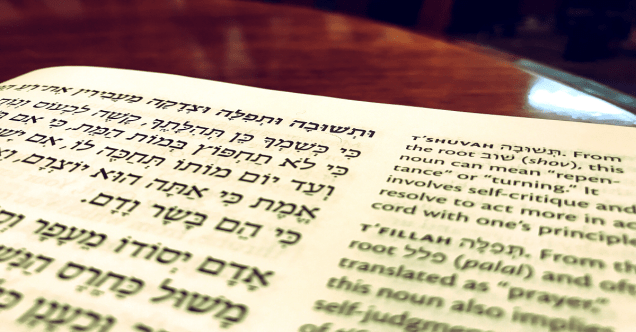
Teshuva, tefillah, tzedakah ma’arivin et ro’ah ha’gezerah. “Repentance, prayer and giving will lessen the weight of the decree.” It is a trifecta that will make change.

Teshuva: we must return. We must identify the problem, express out loud the harm we’ve caused. Maimonides teaches that this is how teshuva is done. Today, we must stand up and stand strong and say out loud to anyone who will listen that we will not sit idly and watch senseless violence happen. We must not allow loose gun laws and loopholes to cause terror, loss of life, and heartbreak again. We must not let our elected leaders find rest until they move beyond “thoughts and prayers.” We must demand action of them and of ourselves.

Tefillah: we must pray, together as a community. Though it is not the solution itself, we must all turn inward to heal. In one voice we must cry out that this problem is beyond any one group, beyond any denomination, faith, or skin color, but a communal problem that our combined voices will work to solve.

Tzedakah: we must give. We must give of our time, our voices, our resources. Whether it is a donation to an organization working to end gun violence or one supporting those with mental illness, every giving act counts. We must give back to our communities that continue to support us through these dark days, and we must in turn support those who work towards bringing light.

5:10 a.m.

My baby is snuggled sweetly with his lovey. Safe, warm, and peaceful in his bed. I am not. I have been awakened from my slumber. I am agitated, alarmed, scared, and ready to scream at the top of my lungs. Together, let us switch from silent prayer to loud action. We must make our voices heard. We all must be wide awake.