This is the drash I delivered at Congregation Neveh Shalom on the first day of Sukkot, 2025.
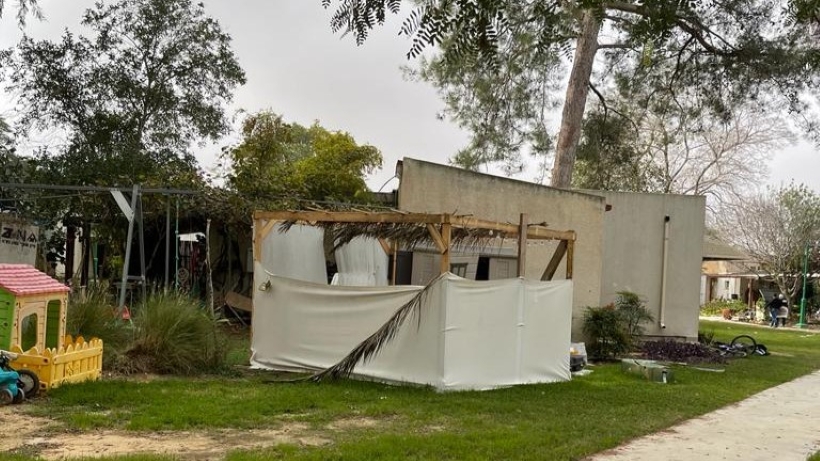
Each year when we step into the sukkah, there’s that first moment when the air hits differently. The roof of branches lets in sunlight by day and stars by night. We feel exposed and vulnerable, yet held. It’s an intentional fragility, a reminder that the sturdy walls we build around ourselves are never what truly keep us safe. This year, as we mark two years since the October 7, 2023 Hamas massacre, that feeling of fragility carries deeper weight. The world changed that day. The illusion of safety was shattered, not only in Israel, but for Jews everywhere who felt the tremor of that brutality echo through our souls.
On the first day of Sukkot, we read from Leviticus 22–23, where God commands us to dwell in sukkot so that future generations will remember that the Israelites lived in temporary shelters when God brought them out of Egypt. The Torah insists that we celebrate in a festival of joy, z’man simchateinu, even while sitting in a structure so impermanent that a strong wind could knock it down. We are called to hold joy and fragility together. The sukkah teaches us with its flimsy walls that safety is never guaranteed, and at the same time, the command to rejoice reminds us that resilience and gratitude are also sacred obligations.
On October 7, 2023, the fragility of our people’s sukkah was made unbearably real. Over 1,200 lives were taken in an act of pure terror, and even as we condemn the monstrous brutality that would deliberately target civilians and hold hostages to this day, stories of courage and compassion emerged. Stories of neighbors protecting neighbors, of Israelis and Jews worldwide rushing to support one another, of hope refusing to die. Amid the devastation, the sukkah stands for hope. It is fragile, yes, but it’s also full of the light of the stars shining down from slivers in the roof. Each branch or bamboo pole laid across the top is an act of faith that the world can still be repaired, that humanity can still choose compassion over cruelty.
As we sit beneath the stars this Sukkot, may we let the sukkah’s openness remind us of our shared responsibility: to protect life, to reject violence, to hold fast to hope even when it flickers. May the memories of those murdered sanctify our commitment to peace. And may the fragile walls around us become a testament not to what was lost, but to the enduring strength of a people who still choose to dwell in joy, faith, and love.
This is the sermon I delivered at Congregation Neveh Shalom on Yom Kippur day, 2025.
Let’s talk about Sukkot. As a rabbi, I like to stay a little ahead of the game, so let’s address the elephant in the sukkah. By the way, that’s the real title of a PJ Library book, no kidding.
Sukkot is not my favorite holiday. Of all the Jewish rituals—wonderfully weird, occasionally random, but always deeply meaningful—the ones related to the holiday of Sukkot are the most cringeworthy to me.
Why, you might ask? What’s wrong with a sukkah? And the answer is, nothing actually. I love building the sukkah and decorating it with paper chains and the fake fruit that once hung in my Nana and Papa’s sukkah. I love the open tent symbolism. I love inviting in our ancestors. It’s the lulav and etrog that make me want to just skip over this holiday and go straight to Simchat Torah.
I know not everyone feels this way, but to me, this particular tradition feels pagan and out of place in a religion that forbids the worship of objects. I didn’t always feel this way. It started when I was in rabbinical school in Los Angeles and the minyan moved outside to the sukkah. When you take the lulav and etrog and then add in a drum circle with students dancing and drumming and chanting a rhythmic beat, shaking said lulav and etrog, suddenly it felt different. This was not my Zayde’s Judaism, and I’ve never been able to shake that feeling, pun totally intended.
Again, this is in no way me telling you to share in my discomfort. I’m willing to bet that each of you has a moment in your life—specifically in your Jewish life—when you’ve felt out of place or off-kilter. Have any of you ever witnessed kaparot, the swinging of a chicken overhead before Yom Kippur to transfer your sins? A bris is a meaningful ceremony, but maybe not the most comfortable for everyone in the room. Well, particularly one person in the room. Or maybe there’s merely a ritual you didn’t grow up with, so it’s not second nature.
Each of us has our own individual comfort level in Jewish living. And each of us has places of discomfort. But here is my Yom Kippur message: discomfort, especially in Judaism, isn’t something to be avoided—it’s something to be explored. And today, on the day that confronts us with mortality, vulnerability, and deep spiritual reflection, it’s the perfect time to talk about it. So let’s get uncomfortable.
There’s a teaching in Pirkei Avot—the Ethics of Our Ancestors—where Rabbi Eliezer says, “Repent one day before your death.” His students respond, “But Rabbi, how can we know what day that will be?” And he replies, “Exactly. Therefore, repent today.”
Yom Kippur, in a way, is that day. Not literally, but it’s the day we symbolically prepare for our death, wearing white like burial shrouds, fasting, removing ourselves from physical pleasure. It’s not meant to be morbid, it’s purposeful. Yom Kippur invites us to be uncomfortable so that we might grow.
The psychiatrist Rabbi Dr. Abraham Twerski was not only a prolific author, his online videos also generated views in the hundreds of millions. In one of his more well-known videos, he muses that we can learn a lot from lobsters. I know, Jews learning from shellfish, it’s weird. But the lobster, whose hard shell protects its soft tissue, cannot grow without the discomfort of pushing against a shell that has become too small. You don’t have to push yourself out of your comfort zone, but if you don’t, you risk missing out on opportunities for personal growth.
Discomfort, in Judaism, has often been the catalyst for transformation. Think of our biblical ancestors. Abraham left everything he knew. Jacob wrestled with an angel. Moses stood up to Pharaoh with shaking hands. None of that was comfortable. But it was holy.
Leaning into discomfort gives us the opportunity to examine our lives without pretense. It forces us to consider how we spend our time, how we treat others, and whether we’re living in alignment with our values. Let’s be real; that kind of honest introspection doesn’t happen on a Tempur-Pedic mattress with a Pendleton Merino throw. It happens in the quiet of fasting, in the ache of regret, and in the uncertainty of change.
With Yom Kippur as our symbolic acknowledgement of mortality, there’s a particular kind of discomfort that’s especially relevant for reflection today, the discomfort of attending shiva.
If you’ve ever walked into a house of mourning, you know the feeling. You fumble for the right words. You wonder if you should attempt to say something profound or say nothing at all. Maybe you didn’t know the deceased. Maybe grief makes you anxious. Shiva offers a variety pack of ways to feel uncomfortable.
However, the mitzvah of nichum aveilim—comforting mourners—is not about saying the right thing. It’s not even about having a close relationship with the person who died. It’s about showing up.
The discomfort we feel walking into a shiva house is a sacred discomfort. It reminds us that presence matters. Our tradition teaches that when we visit a mourner, we remove a fraction of their sorrow. Not all of it, just a little. But that little bit can make all the difference.
Shiva is not designed to be comfortable for the participants. It’s designed to hold grief so that we can process it without distraction, without escape from the sadness. And in that honesty, that rawness, there is deep holiness. Sitting with someone in their grief, even in silence, is one of the most powerful things we can do as Jews and as human beings.
And in many ways, Yom Kippur functions like a communal shiva. A shiva for the soul. A sacred time set aside to grieve our missteps, our losses, and our mortality. We sit together, stripped of distractions, focused on what truly matters.
Just as we would never say to a mourner, “You should be over it by now,” Judaism doesn’t ask us to rush past the discomfort of Yom Kippur. We’re not meant to skip ahead to the break-fast. We’re meant to sit in the stillness. To cry if we need to. To say the hard things, to ourselves and to each other.
You’d think an uncomfortable ritual like this is meant to break us somehow. Not at all. It’s meant to open us. The discomfort of Yom Kippur is not about shame or punishment. It’s about potential. It’s about asking, “What kind of life do I want to live? To whom do I need to apologize? What type of person do I want to be when I exit the synagogue doors?”
We’re not promised comfort in this life. But we are promised meaning. And meaning comes from doing the hard things. From leaning in and showing up when it’s uncomfortable.
That’s why we attend shiva. That’s why we fast on Yom Kippur. That’s why we reflect on death—not to dwell in fear, but to live more fully. We show up for each other in our darkest moments because we know that’s what community is for. And we show up for ourselves on Yom Kippur because we believe that every soul can shine again.
It takes courage to lean into discomfort. To walk into a house of mourning or to walk into a synagogue on Yom Kippur and say, “I’ve messed up. I want to do better.” It takes courage to face the parts of life or the parts of ourselves we’d rather ignore.
But the reason we do it is because we believe it can change us. We believe in teshuvah—in return, in repair, in rebirth. So today, I invite you not to rush past the discomfort. Don’t numb it. Don’t flee it. Sit with it. Learn from it.
Ask yourself: What parts of my life need tending? Who have I avoided showing up for because it felt awkward or hard? Where have I played it safe when I was called to step forward?
And maybe today, as the hunger pangs persist or the confessional prayers grow repetitive, you’ll remember that these moments, too, are holy. They are tools for transformation. They are our people’s way of saying: Life is short. Make it count.
May we each find the strength to be uncomfortable. And in doing so, may we write ourselves into the Book of Life—not only for another year, but for an entire life of meaning, compassion, and connection.
This is the sermon I delivered at Congregation Neveh Shalom on Kol Nidre, 2025.
There’s a story told about a rabbi who once traveled from village to village, sharing words of Torah. In one small town, he asked the people why they came to synagogue.
“To pray,” they answered. “To listen to the cantor,” said another. “To learn Torah,” said a third.
The rabbi shook his head. “No. You come to synagogue to learn how to listen. To listen to the sound of your own soul. To listen to the pain of your neighbor. To listen for the still small voice of God.”
The people protested: “But surely action matters more than listening?”
The rabbi replied, “True. But if you do not first learn to listen, how will you know what action is required?”
This folktale gets to the heart of why we’re here. Kol Nidre begins our most solemn day not with action, but with listening. Listening to haunting melodies. Listening to words that dissolve the weight of rash vows. Listening for God’s presence. But there’s a second part; the liturgy also insists that we do something with what we hear. Kol Nidre reminds us: teshuvah is both hearing and doing, reflection and action, silence and resolve.
This year our congregational theme is taken from Exodus 24. After Moses recounts God’s words, the people respond with one voice: Kol asher diber Adonai na’aseh — “All that God has spoken we will do.”
Moses writes the words, builds an altar, and offers sacrifices. Then he reads from the Book of the Covenant, and the people answer again: Kol asher diber Adonai na’aseh v’nishma — “All that God has spoken we will do and we will listen.”
That phrase — na’aseh v’nishma — has puzzled commentators for centuries. “We will do and listen.” Shouldn’t it be the other way around? Don’t you listen first, and then do?
But our ancestors flipped the order. They placed action before understanding, but they knew both were critical. They trusted that doing would lead them toward hearing more deeply. At Sinai, Israel pledged not only obedience but relationship: to step into covenant first and allow insight to follow.
The medieval text Sefer HaChinuch explains why this matters: “A person is influenced by their actions, and the heart and thoughts follow the acts, whether good or bad… Even if one begins by acting without pure intent, the actions themselves will draw the heart toward the good. For after the actions, the heart is pulled.”
It’s a radical claim, in a way. We often assume that the heart guides the deed — that belief shapes behavior. But Sefer HaChinuch insists the opposite: behavior shapes belief.
We might not feel ready for mitzvot. We might not feel like forgiving or apologizing or showing up for someone else. But if we act, or at the very least try to act, our hearts will follow. Did you think “fake it till you make it” was a modern cliché? It’s Torah! And it’s psychology. It’s the way human beings are wired.
And believe it or not, Yom Kippur is about “fake it till you make it.” We don’t wait until we feel holy in order to live as though we are holy. We practice holiness through action. We fast, we pray, we confess, we bow, we abstain, and in the doing, the listening opens. The heart softens.
Kol Nidre itself expresses this dynamic. It’s listening through doing. We recall the vows we spoke, the promises we failed to keep, the words that still bind us.
But how do we actually experience Kol Nidre, this legal declaration of annulment? With the physical. We hear the music. We feel the tears. We stand together and sit together and knock on our hearts together. You likely knew the tunes we hear tonight before you knew the words.
The heart is challenged and changed first by what we do, then by what we allow ourselves to hear. Kol Nidre is a covenant of listening through doing and sometimes vice versa. Throughout Yom Kippur, our prayers swing between these poles of action and listening, and they go both directions.
In Al Chet, we strike our chests. Action. Yet we also listen to the litany of sins — some personal, some communal. Listening.
In the Avodah service, we recall the high priest performing elaborate rituals in the Temple. Action. Today, we replace those deeds with words — we listen to the story, and we imagine ourselves entering the Holy of Holies.
In Unetaneh Tokef, we listen to terrifying imagery: “Who shall live, and who shall die.” But we are not left paralyzed. We are called to act: u’teshuvah, u’tefillah, u’tzedakah ma’avirin et roa hagezeirah — “repentance, prayer, and righteous giving temper the severity of the decree.” In this case, listening compels doing.
Jewish liturgy refuses to let us stay in one mode. It demands a certain rhythm: doing and hearing, embodying and reflecting, enacting and listening.
What is so special about that balance this year? Our world is dangerously tilted.
We live in a culture drowning in words. Tweets, posts, headlines, slogans. Promises made and broken before the ink dries. Kol Nidre resonates because it reminds us that hollow words are not enough.
At the same time, we live in a culture addicted to action — instant responses, immediate judgments, performative outrage. Do something, anything, now. And often without listening first. Kol Nidre resonates because it reminds us that empty actions are not enough.
Yom Kippur interrupts these cycles. It tells us words matter, actions matter, and the covenant requires both: na’aseh v’nishma. Act and listen. Do and understand.
Think again of Exodus 24. The people did not simply say na’aseh v’nishma once. They first said na’aseh — “we will do.” Moses wrote the words, built an altar, offered sacrifices. Only then, after hearing the Book of the Covenant read aloud, did they add nishma — “we will listen.”
The order is important. They acted first. They listened second. And in doing so, they discovered the secret of Jewish life: that deeds lead to understanding, that covenant is not about waiting until we feel ready but about stepping forward together, trusting that meaning will follow.
Sefer HaChinuch puts it simply: acharei hape’ulot nimshachim halevavot — after the actions, the hearts are drawn.
The rabbi in the folktale told his people: “You come to synagogue to learn how to listen.” On Kol Nidre, that becomes our truth.
We listen to the pain we have caused and the pain we carry. We listen to the weight of broken promises and the yearning for repair. We listen for God’s forgiving presence, whispered between the notes.
So tonight, as we enter these sacred hours together, I offer this charge:
Practice na’aseh v’nishma v’na’aseh. This covenant is more than a “first this, then this.” It’s a cycle in which we embrace action in order to learn through listening, and then practice what we’ve learned.
When you rise for the Amidah, yes, do the reciting of it, but also listen for the one phrase that catches your soul, and then act on it.
When you beat your chest during Al Chet, yes do the motions of it, but also listen for the sin that is yours, then commit to one step of change.
When you sit in silence tomorrow afternoon, don’t rush to fill it; listen for what arises within you, then carry it into the year ahead.
We don’t have to feel ready for teshuvah in order to begin it. We just have to act. And if we act, our hearts will follow.
May this Yom Kippur be for us a day of deeds that draw our hearts closer. A day of listening that moves us into covenant. A day when we stand together, with one voice, and say again: Na’aseh v’nishma. We will do, and we will listen.
And in doing and listening, may we be sealed for a year of forgiveness, of courage, of compassion, and of return.
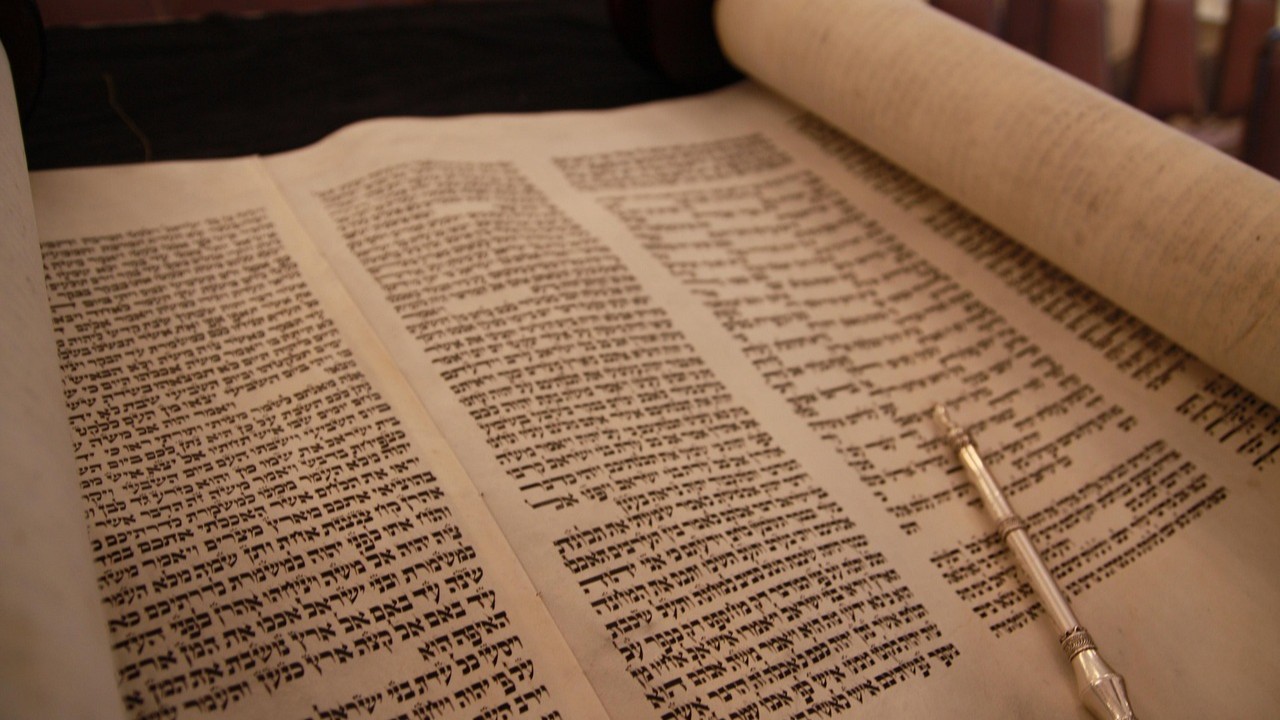
The study of Torah is such a fundamental part of Judaism that there’s not just a blessing for the act of Torah study, there’s a blessing for encountering someone whose life is shaped and guided by Torah study. Whether it’s a scholarly figure with critical insight or a community elder whose wisdom is drawn from years of learning and living the law, our tradition teaches us to pause and offer a blessing. In doing so, we acknowledge that the wisdom before us is not theirs alone, but a spark of the divine shared with us through them.
Parshat Ha’azinu offers us a similar encounter. This parshah is often called the “Song of Moses.” Nearing the end of his life, Moses does not simply offer final instructions or laws. Instead, he sings. His words cascade as poetry: heaven and earth are summoned as witnesses, history is remembered, and God’s faithfulness is proclaimed. The tone is at once stern and tender, filled with warning and with hope.
What makes this song extraordinary is that it distills the essence of Torah into music and memory. Moses, the greatest of teachers, transforms his final teaching into a form that will live on beyond him. It is as though he becomes the embodiment of the blessing we say upon seeing someone distinguished in Torah study: he channels God’s wisdom, not for himself, but for the people who will carry it forward.
When we hear Ha’azinu, we are invited to see Moses not only as a leader or lawgiver but as a vessel of divine wisdom. And we, in turn, are called to recognize that Torah wisdom is not locked away in the past. It can appear in a teacher who explains a verse in a new light, in a friend whose insight guides us through a hard choice, or in a child who asks a question that reframes everything we thought we knew. Each of these moments is worthy of blessing, for each reveals God’s wisdom refracted through human lives.
The charge for us is clear: to cultivate the eyes and the humility to see divine wisdom when it appears in scholars, in neighbors, and even in ourselves. And when we do, may we always respond with gratitude, blessing both the opportunity to learn and the source of our learning.
This is the sermon I delivered at Congregation Neveh Shalom on Rosh Hashanah day, 2025. For more on Dr. Lisa Miller’s book The Awakened Brain, visit: https://www.lisamillerphd.com
I want to pose a question you may have never been asked. When was the last time you let awe interrupt you? These are the Days of Awe after all, so what is this “awe” we’re talking about? The kind I mean doesn’t have to be earth-shattering; it just has to wake you up from wherever your mind is.
Here’s an example to get you thinking. This summer I found myself on a walk. That’s not the awe-inspiring part. None of you should be surprised that I relish my walks. It was my typical mode: headphones in, multitasking between an audiobook and thoughts of work – in this case it was this very sermon that needed writing. Before it had even really registered with me, I was passing a toddler in a stroller who was pointing to the sky and shouting, “Moon! Moon!” Her eyes sparkled with awe, not only at the idea that the moon could be visible during the day, but in the childlike wonderment that our planet has a moon at all.
I looked up. There it was—a full, glowing moon still visible in the early morning sky. And I realized: I hadn’t noticed it at all. I was too busy being productive. That little girl saw something bigger, something sacred. She was awake to wonder, and I was just trying to get through my day.
That moment stayed with me. It reminded me that being awake—truly awake—is more than just getting up in the morning. It’s about how we show up to our lives. That’s what the sound of the shofar does, and that’s what Rosh Hashanah itself is about: awakening to our truest selves, our relationships, and the sacred pulse that beats behind it all.
What prompted this connection for me and led to this sermon was Dr. Lisa Miller’s powerful book The Awakened Brain, in which she explores how awakening isn’t just a spiritual metaphor—it’s a biological and psychological necessity. She identifies three types of awakening that help us live richer, more meaningful lives: Personal Awakening, Relational Awakening, and Transcendent Awakening. And on this Rosh Hashanah, as we begin 5786, these three awakenings offer a roadmap for how we might renew our lives.
Dr. Miller’s first kind of awakening is Personal Awakening, the internal shift that comes when we confront challenge, loss, or profound insight and begin to see ourselves differently.
We all have these moments. They often come when life throws something unexpected our way—a diagnosis, a breakup, a loss, a new career. In a flash, the world feels unfamiliar. But it’s in those cold-water-on-your-face instances that we’re invited to truly wake up.
The shofar we hear today is the ancient sound of that personal awakening. Maimonides wrote that the shofar calls to us: “Awaken, you sleepers, from your sleep, and you slumberers from your slumber! Examine your deeds and return in repentance.” We don’t call it the “gentle nudge” of the shofar. We call it the “blast” of the shofar! It’s a divine alarm clock.
Dr. Miller calls these moments of personal awakening “the doorways to transformation.” Her neuroscience research shows that people who embrace these turning points with open eyes and hearts, rather than retreating into fear or denial, actually rewire their brains for greater resilience and emotional health.
And wouldn’t you know, Judaism teaches the same thing: that teshuvah—return—is not about guilt. It’s about growth. When we reflect deeply on our lives, we can return to who we were always meant to be.
So I ask: What is your shofar blast this year? What is asking you to wake up?
Maybe it’s a health scare, although I hope it isn’t. Or a job transition. Or the dream you’ve delayed. Maybe it’s a loneliness you’ve managed to push down and cover up that suddenly finds itself staring you in the face. Listen closely. The sound is there. This year, don’t hit snooze. Let yourself be jolted awake.
The second kind of awakening Dr. Miller explores is Relational Awakening, the understanding that we individuals are hardwired to connect. That our healing, our hope, and our humanity depend on each other.
We learned this the hard way during the pandemic, when distance became our new normal. We longed for hugs, for shared meals, for singing side-by-side. And even now, years later, many of us are still finding our way back into community.
There’s plenty in our Jewish tradition that can be done solo or as a family unit in the privacy of your home. But Rosh Hashanah is a communal holiday for a reason. We pray Avinu Malkeinu—Our Parent, Our Sovereign. We gather as a people, not just as individuals. Even the most personal of prayers are recited in the plural, because our tradition knows something Dr. Miller confirms: we are not meant to go it alone.
Her research shows that people with strong relational networks—family, chosen family, spiritual community—are more resilient in the face of life’s challenges. They’re more grounded, and yet also more hopeful. Why? Because being seen and known and loved heals us.
This is the heartbeat of synagogue life. I hope you’re not tired of hearing this, because I’m never going to stop preaching that we are more than a building to house services. We are the Meal Train you sign up for after someone has surgery. We are the embrace when you see someone who has just started saying Kaddish after they’ve lost someone close to them. We are the joyful chaos of kids running through the halls. We are every time you say “Shabbat shalom” because it doesn’t just mean “Shabbat shalom,” it means, “I see you. You matter.”
But this kind of awakening takes a little more effort than the first kind. It means showing up for each other. Not perfectly, just honestly. It means reaching out when you’d rather stay in. Forgiving when you’d rather forget. Saying yes when it feels easier to say no.
This year, I challenge you: reawaken your relationships. It’s easy for the rabbi to stand up here and invite you to attend services more often. I’m here anyway. No, what I’m really asking of all of us is to say hello to someone you don’t yet know. Invite someone new to your table. Open your sukkah. Rebuild the sacred web that holds us together, because if you’ve been anywhere near the news or social media recently, you know we need it.
The final awakening Dr. Miller describes is Transcendent Awakening—when we realize we are part of something greater than ourselves. This is the dimension of the spiritual, the sacred, the holy.
I know that not everyone here in the room uses the word “God” comfortably. Some of us picture a divine being. Others connect through nature, music, or quiet moments of reflection. But I’d guess all of us, at some point, have felt awe, whether it’s watching a newborn open their eyes, hearing the final blast of the shofar, or just gazing at the moon during the daytime.
That’s transcendence. That’s what awakens your spirit.
Rosh Hashanah means that kind of awakening. We call it Hayom Harat Olam—today the world is born. We remember that we are part of something vast and mysterious. We relinquish the illusion that we control everything and lean into trust and humility.
The Unetaneh Tokef prayer stirs us: “Who shall live and who shall die?” These words are hard. They’re real. They ask us to take stock of what we can and cannot control. But they don’t leave us in despair, they do the opposite. They offer us a roadmap: teshuvah, tefillah, and tzedakah—returning, praying, and acting with justice—can transform our destiny.
Guess what Dr. Miller’s research shows about people who cultivate a sense of the sacred through prayer, gratitude, and awe. It’s not that they need to cut down on sodium. It’s that they live with more meaning and less fear. They have what she calls “an awakened brain”—a mind attuned to love, beauty, and hope.
This year, how might you cultivate transcendence? Light candles. Say Modeh Ani in the morning. Say thank you. Start small, and let awe interrupt you. Let holiness sneak in.
Now that we’ve talked about what my hope for your Rosh Hashanah awakening is, I feel I should also mention what it isn’t. It isn’t about striving for perfection. And it isn’t about some universal awakening that applies to everyone. It’s yours.
This is your invitation:
First, wake up to your own life. Listen for the shofar calling you back to your truest self.
Second, wake up to each other. Reach out, reconnect, rebuild what has been broken.
Third, wake up to the sacred. Let yourself be awed. Let yourself be moved.
Dr. Miller says it plainly: “Spiritual awareness is not an add-on. It is foundational to our well-being.”
And Judaism says: You were made for this kind of awakening. You were created b’tzelem Elohim, in the image of God. You are worthy. You are needed. You are part of something beautiful and enduring.
This year, may we not sleepwalk through our days. May we wake up—in body, mind, heart, and soul. Shanah tovah u’metukah. May it be a sweet, sacred, and awakened new year for us all.
 Rabbi Eve Posen