Building and Rebuilding

Parshat Pekudei marks the completion of the Mishkan, the sacred space where B’nei Yisrael would connect with the divine. After weeks of meticulous construction, the Torah describes how Moshe saw all the work that had been done and blessed the people for their efforts. The Mishkan was not just a structure; it was a home for holiness, a place where God’s presence could dwell among the people.

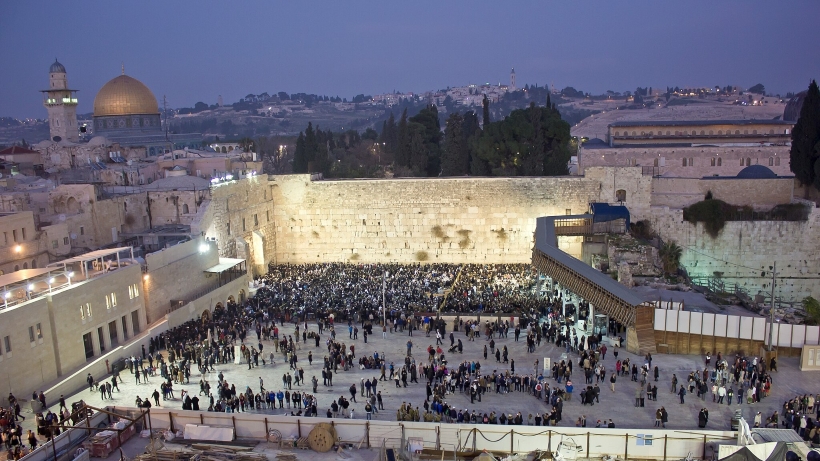
This moment is echoed in a powerful blessing that we recite upon seeing a restored synagogue or place of worship: Baruch atah Adonai, Eloheinu melech ha’olam, matziv gvul almana. “Blessed are you, our God, sovereign of the universe, who sets a boundary for the widow.” At first glance, this blessing seems unusual. Why compare a rebuilt synagogue to a widow? The answer lies in understanding the deep loss that comes when a sacred space is destroyed. A widow is someone who has lost her partner, her foundation of stability. A community that loses its synagogue or beit midrash experiences a similar grief—a sense of displacement, a rupture in its spiritual life. The rebuilding of that space is a restoration of hope, a reconnection to what was lost.

This idea feels particularly relevant today. Across the world, we see communities striving to rebuild after destruction—synagogues targeted by antisemitic attacks, towns recovering from war, or regions devastated by natural disasters. Just as the Israelites found their spiritual anchor in the Mishkan, modern communities seek to restore their sacred spaces as symbols of resilience and faith.

The joy of reopening the doors, of placing a Torah back in the aron kodesh, is akin to the moment when the Shechinah filled the Mishkan in Pekudei. The blessing of matziv gvul almana reminds us that while destruction can be devastating, restoration is always possible. The widow, once left vulnerable, finds strength again. The community, once displaced, returns home.

May we all work toward a world where sacred spaces are not only protected but also cherished, where every place of worship stands strong as a beacon of divine presence. And may we never lose hope that what is broken can one day be rebuilt.

A Generous Heart

One of the most striking aspects of Parshat Vayakhel is the Israelites’ willingness to give. When Moses calls for materials to build the Mishkan (Tabernacle), the people respond with overwhelming generosity. The Torah tells us that “every person whose heart was uplifted and whose spirit was willing” brought gifts (Exodus 35:21). In fact, they gave so much that Moses had to tell them to stop! This outpouring of generosity was not out of obligation but a deep desire to contribute to something greater than themselves. It is this lev nadiv, this generous heart, that transforms individual offerings into sacred purpose.

But generosity alone is not enough; it must be directed toward meaningful action. Vayakhel teaches that each person had a unique role in building the Mishkan—some spun yarn, others crafted wood, and still others wove intricate designs. The Mishkan was not built by one leader or a small group but by the combined efforts of the entire community. Our own lives reflect this lesson: holiness is not only found in prayer but in the work we do with our hands, in the ways we uplift others, and in our everyday contributions to the world.

The very name of this parsha, Vayakhel, means “he gathered.” Before any work could begin, Moses brought the people together. This reminds us that no holy endeavor is accomplished in isolation. The Israelites, who had once been a nation of enslaved individuals, became a unified people working toward a shared mission. Today, we are reminded that when we come together as a community—with open hearts and willing hands—we can create holiness in our world.

Parshat Vayakhel opens with Moses gathering the entire community of Israel and instructing them about Shabbat and the construction of the Mishkan. The parsha emphasizes the themes of communal unity, generosity, and sacred work—values beautifully captured in the blessing:

בָּרוּךְ אַתָּה יְיָ, אֱלֹהֵינוּ מֶלֶךְ הָעוֹלָם, שֶׁנָּתַן לָנוּ לֵב נָדִיב לַעֲשׂוֹת מְלֶאכֶת הַקֹּדֶשׁ וּלְהִתְקַהֵל בְּאַחְדוּת

“Blessed are you, Adonai, our God, sovereign of the universe, who has given us a generous heart to do holy work and to gather in unity.”

The blessing we recite affirms that God has given us the ability to be generous, engage in sacred work, and unite with others. As we reflect on Vayakhel, may we cultivate a generous heart, use our talents for holy work, and find strength in community. In doing so, we build not just a physical space, but a world infused with holiness and purpose.

Scents and Sensibility

Which smells are the ones that evoke specific memories for you? Perhaps it’s the waft of chicken soup that brings you back to your grandmother’s kitchen, or a trace of the cologne that reminds you of an old boyfriend. It’s amazing how strong the sense of smell is connected to memory. 

Parshat Ki Tissa introduces us to the ketoret, the sacred incense offering, which played a central role in the Mishkan. This fragrant blend of certain spices was burned daily, filling the space with a holy and unique aroma. More than just a pleasing scent, the ketoret symbolized connection, transformation, and spiritual elevation.

Scent is one of the most powerful triggers of memory and emotion, and just as a familiar fragrance can instantly transport us back in time, bringing comfort, joy, or even inspiration, the burning of the ketoret reminds us that holiness is not just about ritual action but about engaging all our senses in sacred service.

This idea has a direct parallel in modern Jewish practice: the blessing that ends “borei minei besamim” (“who creates various kinds of spices”). We say this blessing during Havdalah when we transition from Shabbat into the week ahead. The spices serve as a sensory reminder of the sweetness of Shabbat, lingering with us as we re-enter the mundane world. Just as the ketoret sanctified the Mishkan, the fragrance of Havdalah spices sanctifies our memories, helping us carry holiness into our daily lives.

But why the emphasis on this tie-in to smell in the first place? Why does it play a role in both the Mishkan and our weekly ritual practice? Midrash (Bamidbar Rabbah 18:8) teaches that while other senses—sight, hearing, touch, and taste—were affected by human sin, smell remained spiritually pure. When Adam and Eve ate from the Tree of Knowledge, they saw, touched, and tasted the forbidden fruit, but smell was not involved. This may explain why the ketoret, and by extension the Havdalah spices, have a unique spiritual power—they remind us of a state of purity and closeness to God that transcends human imperfection.

As we read Ki Tissa and reflect on the power of the ketoret, we’re reminded that holiness isn’t just something we encounter in grand moments—it can linger with us, just like a sweet scent. May we each find ways to carry the fragrance of sanctity into the week ahead, allowing the echoes of Shabbat, Torah, and divine connection to guide us forward.

Clothing as a Sacred Act

When I was a teenager, my parents used to tease me lovingly about my bedtime routine. They called it the “fashion show.” Each night I would try on different outfits to determine what I would wear the next day. I would come walking into their room, the location of the only full-length mirror in the house, and check out what I’d put together. Some nights I would ask (multiple times) for their opinion to figure out what the appropriate outfit was for the next day based on what activities were planned. 

Each morning, as part of Birkot HaShachar, we recite the blessing Baruch atah Adonai, Eloheinu melech ha’olam, malbish arumim. “Blessed are you, Lord our God, king of the universe, who clothes the naked.” At first glance, this blessing seems simple: a statement of gratitude for the basic necessity of clothing. But in Parashat Tetzaveh, we see that clothing is not just a physical necessity—it is also a spiritual one.

This parshah is unique to the book of Shemot in that it does not mention Moshe by name. Instead, its focus is on his brother, Aharon, and the other kohanim, who are given detailed instructions about their sacred garments. The bigdei kehunah, the priestly vestments, are described in exquisite detail: the ephod, the breastplate, the robe with bells and pomegranates, the turban, and the tzitz (golden headpiece) inscribed with the words Kodesh L’Adonai—“Holy to God.” These garments are not just decorative; they serve a higher purpose. The Torah tells us, “And you shall make holy garments for Aharon your brother, for honor and for beauty” (Shemot 28:2).

Why does the Torah devote so much space to describing these garments? Clothing, in Jewish thought, is not just about covering our bodies—it’s a reflection of our dignity, our responsibilities, and even our relationship with God. The priests could not perform their sacred service without these garments. The clothing elevated them, transforming them from individuals into representatives of the people before God.

This idea extends beyond the bigdei kehunah. Every morning, when we say Malbish Arumim, we recognize that God not only provides us with clothing but also imbues us with dignity. It’s a reminder that just as God clothes us, we must ensure that others have their dignity preserved as well. Providing clothing to those in need isn’t just an act of charity, it’s an act of holiness.

Parshat Tetzaveh teaches us that what we wear matters—not because of status or fashion, but because clothing has the power to sanctify. The Kohen Gadol’s garments set him apart for holy service; our clothing, too, can remind us that we are all created b’tzelem Elohim, in the image of God, and that every act—even getting dressed in the morning—can be one of sanctity and gratitude.

God’s Home

Where does God live? It’s a question I hear from time to time from our Foundation School students. We often talk about God being everywhere, which is an abstract concept to the very literal mind of a 3-year-old. If everything has a “home,” then God should too. 

In Parshat Terumah, God instructs the Israelites, “Let them make me a sanctuary, that I may dwell among them.” (Exodus 25:8) This command begins the construction of the Mishkan, the portable sanctuary that traveled with the Israelites in the wilderness. More than just a physical structure, the Mishkan served as a sacred meeting place between God and the people. But what does it mean for God to “dwell” somewhere? Can we truly build a space for the divine?

Interestingly, the Mishkan shares a deep connection with another temporary sacred structure in Jewish tradition—the sukkah. Both the Mishkan and the sukkah are impermanent, yet they serve as places where holiness can be felt. In the blessing for dwelling in the sukkah, we say:

“Baruch atah . . . asher kid’shanu b’mitzvotav v’tzivanu leishev basukkah.”
(Blessed are you . . . who has sanctified us with commandments and commanded us to dwell in the sukkah.)

The word leishev—”to dwell” or “to sit”—is key. It implies more than just entering a space; it suggests presence, intention, and a sense of belonging. When we dwell in a sukkah, we engage with the space in a meaningful way, just as the Israelites did with the Mishkan.

The parallel between the Mishkan and the sukkah teaches us something powerful: holiness is not about permanence; it’s about intention. The Mishkan was temporary, yet it brought the people closer to God. A sukkah is fragile, yet it’s a space of divine protection. Similarly, in our own lives, we don’t need grand, lasting structures to create sacred moments—we need mindfulness, openness, and a willingness to invite God in.

Here’s the question Parshat Terumah asks us: How do we create sacred space in our own lives? It might be through setting aside time for prayer, making our homes places of kindness and learning, or building relationships infused with holiness. Just as the Mishkan and the sukkah remind us that God’s presence is not confined to a building, so too can we bring holiness into every space we inhabit.

May we approach our own sacred spaces with the same kavanah—the same intentionality—as when we say leishev basukkah, recognizing that wherever we invite God in, holiness can dwell.