Aluminum or Glass – Parshat Vayishlach 5778

aluminum-or-glass

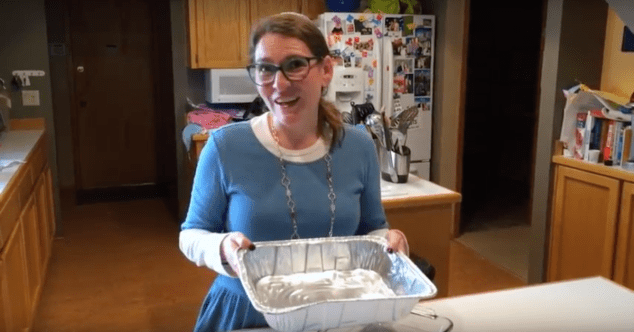
Seemingly incompatible temperaments can work together. My husband Duncan and I are a prime example of this. We could not be more different when it comes to our emotional response and tolerance. We compare ourselves to the way different materials react to heat. I tend to be like aluminum: I get frustrated very easily, but then I usually calm down and relax very quickly. I don’t hold on to my frustration for long periods, except on rare occasions. On the other hand, Duncan is like glass: he’s very patient, and it takes a lot of heat to really frustrate him and get him to combust, but once he’s there, it takes just as long if not longer for him to cool down. This means that when we have a disagreement, we’re often on opposite sides of the emotional spectrum. I’m already on my way to cooled off as he’s just reached his hottest point. I’m ready to forgive as he’s ready to blaze.

In our Torah portion for this week, Parshat Vayishlach, we read about Jacob preparing for his meeting with his brother Esau after their estrangement. Jacob struggles with an angel during his dream before their meeting, and then their meeting is uneventful. Jacob and Esau meet, they hug, they forgive, and they move on. The parshah ends with Jacob’s daughter Dinah having an incident in Shechem and a list of the final events in the life of his family before the Joseph storyline begins.

Earlier in our story, Jacob and Esau anger each other, they have some time apart, and in the buildup to this moment it appears that Jacob is not so sure whether his brother is glass or aluminum, whether he is ready to forgive or might need some more time. These twins are clearly as different as siblings get, and Jacob is fearful of a war being waged, so he prepares himself physically by separating his children to avoid mass casualties. His restless behavior shows his distress. Is he himself ready to forgive? Perhaps he’s not so sure of that either.

It turns out they were both ready to forgive. The brothers meet, they run to each other and embrace, and they forgive and move forward. Yes, for the time in between they carried the grudge, the fear, the concern with them, and it clearly messed with Jacob’s psyche, manifested in his crazy dreams. But in the end, it was family that really mattered to them.

These brothers carried around a lot of baggage leading up to this point. Their family dynamic changed dramatically when Jacob won the birthright, and then again when their parents picked favorites. They were estranged as they entered into adulthood. There was no obvious reason to forgive, but they discovered forgiveness simply felt right and helped them let go of the burden they carried for so long.

Vayishlach means “and he sent.” What is being sent away is not a person or an object, but rather anger and fear. The emotional baggage is being discarded in favor of love. Oddly enough, the more we can learn to let go of certain things, the more we can hold on to each other.


We Have Awoken – Parshat Vayetzei 5778


we-have-awoken

Something has awoken in us. In the past four weeks we’ve heard an outcry that was previously silenced. Those in positions of power are being held accountable for their actions, and victims who felt vulnerable and threatened are speaking out against their abusers. This is not to say that every instance of sexual misconduct is the same, or even that every instance happened exactly as reported. But one thing is for certain: the curtain is being pulled back, and a pervasive predatory culture is being exposed for what it is.

We’re not often shaken awake in such a deliberate way, but when something happens that rocks you to the core, either individually or societally, you take notice. In this week’s Torah portion, Vayetzei, we read about such a shock. Our forefather Jacob has an experience which, according to the text, literally shakes him. We begin with Jacob’s dream of the ladder while he’s on his way to meet his uncle, and continues with Jacob’s marriage to the older sister of the woman he thinks he is marrying. The rest of the parshah contains the birth of Jacob’s many children and Jacob and Lavan working out their father-in-law/son-in-law relationship.

There are actually several moments throughout the text in which Jacob has an encounter that changes or shakes him in some way. Specifically in chapter 28, verses 16-17, we read:

Jacob awoke from his sleep and said, “Surely the Lord is present in this place, and I did not know it!” Shaken, he said, “How awesome is this place!”

It is so incredibly easy to fall into a trap of sameness, of status quo. We assume that things simply are the way they are, so we don’t try to change them or speak out against them. Occasionally, like Jacob, we need to be shaken awake. We need something to remove the blinders. This is true if we want to change a social attitude or if we want our relationship with God to go beyond just picking up a siddur or putting on a tallit. It is in those moments when we are most deeply shaken out of ourselves that we can actually make a change or even encounter the divine.

What Doesn’t Kill You – Parshat Toldot 5778

what-doesnt-kill-you

“What doesn’t kill you makes you stronger.” Like a lot of clichés, the literal reading is completely false. Something that almost causes your death doesn’t make you stronger; it makes you weaker, and likely significantly weaker. Instead, it’s the figurative interpretation that is meant to resonate with us. We have the power to take the things that nearly destroy us emotionally and spiritually and use them to our advantage later in life. Living and learning through these types of moments and events is difficult, no question, but the building up of character, will, drive – ultimately that strengthens us.

Believe it or not, this notion didn’t start with the lyrics in Kelly Clarkson’s song “Stronger.” All of the biblical figures who are known to us as the matriarchs and patriarchs have moments when they struggle with God and with the paths their lives take. Adam and Eve had to answer to God after going against their instruction and eating from the tree. Cain had to answer to God after he killed his brother. Abraham was tested by God on multiple occasions. This week we learn Isaac and Rebekah are no different.

This week we read from Parshat Toldot, which literally means “generations.” We read the story of Isaac and Rebekah, their struggle with infertility, and the subsequent birth of their twins. The text continues with the sibling rivalry which began in utero and continues throughout the boys’ lives. Ultimately, Jacob and Esau are no longer able to even live in the same house as the trickery, fighting, and intolerance for one another escalates. Jacob is sent away for his own safety by his mother as this section of the narrative comes to an end.

When Rebekah finds out she is pregnant, she not only feels the typical baby movements most mothers feel, but also endures the fighting her twins appear to be engaging in inside her womb. She asks out of desperation, “If this is so, why do I exist?” And God answers, “Two nations are in your womb, two separate people shall issue from your body; one people shall be mightier than the other, and the older shall serve the younger.” This is Rebekah at her most vulnerable, grasping to understand how motherhood could possibly be worth all of the pain and suffering she is enduring. Rather than do something to relieve the suffering, God responds by charging her with the responsibility of nurturing two nations. It was perhaps not the answer she was hoping for in the moment, but certainly one that would have strengthened Rebekah emotionally, if not physically.

It doesn’t feel helpful when you’re in the middle of a crisis and someone attempts a reassuring tone to say, “This will only make you stronger.” We simply can’t see the world through that lens until the trying time has passed. However, the Torah reminds us this week that our job is to learn from our experiences and to be able to transition from the painful “Why me?” to the more purposeful “Now what?”

A Piece of Land – Parshat Chayei Sarah 5778

piece-of-land

I have a very vivid memory of my parents and grandparents discussing the locations of their future graves. My immediate family is all buried in the same cemetery in Detroit, which makes it convenient to “see” relatives when I go back for a visit. My Nana and Papa are at the front as you drive in. Walk a few sections down and you arrive at my Grammy and Zayde. Then come around to the other side of the front section, and my dad is resting there. My Nana chose her plot because of the peaceful location; there was a big tree providing shade. Unfortunately, that tree has since been cut down, but her spot still serves the purpose she had hoped: she wanted her final resting place to be both close to family and somewhere peaceful and beautiful. To this day, I find comfort and even a little pride in going to visit my family there.

There is a peace of mind that comes with knowing in advance where you or your family will be buried. Part of that peace of mind is financial. A burial plot is often the only piece of property people can claim to own outright, and the purchase in advance offers some stress-relieving stability. But it’s also reassuring that you’ll be able to connect in a physical way to loved ones even after their bodies have been returned to the earth.

The desire to have a final resting place confirmed is not a new phenomenon. In this week’s Torah portion, Parshat Chayei Sarah, we learn about Abraham and Sarah and their continued journey to raise their son Isaac to the chuppah and a life of good deeds. Our reading begins with the death of Sarah and with Abraham looking for a proper place to lay her body to rest. Immediately after Sarah’s burial, Abraham sets out to find a life partner for his own son, hoping to ensure that Isaac has comfort and support as he mourns his mother. The text continues with Isaac and Rebekah meeting, marrying, and falling in love (because that was the order then), and it ends with the death of Abraham.

As Abraham is in the process of burying his wife, his grief is not from the struggle of moving on after his loss, but rather how he will find a proper resting place for himself and his family. Sarah dies, and he works out a deal to inherit the Cave of Machpelah for just that purpose, and in this moment, Abraham begins a tradition that many of us continue today, that of family burial plots.

As a religion, Judaism excels at offering clarity and purpose for difficult subject matters and events. Death and the mourning process are prime examples of that. The Cave of Machpelah represents a re-gathering, a reunion of Abraham’s family. In modern times too, the idea that you’ll be buried in the same place as other family members can bring a certain ease and a level of comfort to a topic that’s rarely easy or comfortable.


Mother of Two – Parshat Vayera 5778

mother-of-two

It was about a year ago when our lives were turned upside down by the addition of our sweet Matan to our world. Duncan and I had planned for his arrival; we prepared ourselves as best we could for the inevitable changes that would come as we welcomed a second child in our lives. In particular, we tried to make things as easy as possible for Matan’s older sister Shiri by reading books to her about becoming a big sister, role play with baby dolls, play dates with friends’ babies, and anything else we could think of to help create a smooth transition for her from only child to sibling.

As other parents of multiple children already know, this planning went well until the planning became reality. Sprinkled in with the moments of joy and blessing of the new baby came many moments of anxiety and insanity. There were times we all – including Shiri – wanted to run and hide. (Three-year-olds need private space too.) It turns out you can plan all you want, but bringing another child into your home and into your lives is anything but easy.

This week we read Parshat Vayera, in which Abraham and Sarah contemplate the son that will be born to them in their old age; Sodom and Gomorrah fall as Abraham bargains with God to save Lot’s life; and Isaac is born, causing a rift in Abraham’s house with Ishmael. Abraham moves forward in making a deal with King Avimelech, and we end with the Akeidah, the test of Abraham as God asks that he offer up his son, Isaac.

Abraham, Sarah, Hagar, Ishmael, and Isaac have the incredibly difficult task of trying to build a family after what must have been a crazy adjustment period. It could not have been easy to blend this family with one dad, two moms, and now two brothers all trying to figure out how they each fit in. Sarah, the new mother, appears to be at her wits’ end, attempting to protect her new baby when she insists that Abraham send Hagar and Ishmael away.

Now a year into motherhood with a second child, I know that feeling. It is overwhelming to balance an older child and a newborn while dealing with other family members, jobs, and everything else that comes with adulthood. I’m not saying Sarah was right to banish them, but I certainly understand where she was coming from as a mother.

On the face of it, this part of our story might be difficult to digest. It sheds a cold and rather harsh light on Abraham as a father. However, it also reminds us that being a parent means there are countless decisions to make, and not all of them are straightforward. Adjustments are hard, but resilience and adaptability are part of what makes us human. And perhaps no one teaches us that lesson better than our children.