Raise Your Voice – D’var Torah for June 13

These past 14 weeks have been hard. First we were totally focused on controlling the spread of a global pandemic, while somehow trying to keep our economy from imploding. And then just when we thought things were starting to slow down to the point where we could see glimpses of normal through the thick fog of COVID-19, we found ourselves in the throws of a different disease, one with a much longer and more insidious history.

Throughout time human beings have been constantly trying to contain outbreaks of infection and disease, not just epidemiological but also ideological. Of course the Torah has rules for dealing with leprosy and other contagious diseases. In fact, in Leviticus we learn about quarantine and cleaning, never more useful than now.

But the Torah also deals with other issues that plague society, just as we still do today. Racism, bias, hate, and homophobia – these are all woven in at various points in our ancient text. And this week is one of those key moments that brings them together.

Last week we read Parshat Beha’alotcha. It begins with instructions for the purification of the Levites as they do their holy work in the Tabernacle. Makes you wonder what their hand-washing song was, right? We read about the first Passover sacrifice in the wilderness and how to celebrate Passover if we miss it the first time around.

Then the text turns to the Tabernacle, the Mishkan, and teaches us that God’s presence hovers over it in a cloud. Finally, Moshe’s family – his father-in-law, wife, and children – return to join him and the rest of the Israelite nation on their journey through the wilderness.

It’s a time of desperation. The Israelites are confused and lonely, beyond ready to leave the uncertainty of the wilderness behind. Hmmm – a feeling of desperation due to uncertain times? I wonder what that’s like. Yet they rally, again and again. Moses, their leader, is himself confused and upset. He doesn’t know where to turn, so he turns to God. And God sends him right back to the people to help them move forward together. There’s a lesson within a lesson: leadership mean not running from our problems or blaming someone else, it is returning and working together.

However, even Moshe’s siblings Aaron and Miriam have had it with their baby brother as the leader, so they try to cut him down. In chapter 12, Miriam and Aaron are having a private sibling meeting, and Miriam says, “He married a Cushite woman!”

Let’s be clear. This isn’t like my dad, who went to University of Michigan, marrying my mom, who went to Michigan State. Miriam is pointing out that Tzipora likely came from Ethiopia or Nubia. Later commentators suggest that Miriam was chastising her brother for marrying someone with a darker skin tone. It’s not just a comment on skin color that’s the issue here; it’s that Miriam is judging Tzipora based on her skin color. But whatever Miriam’s intentions are, God isn’t pleased with the bias Miriam and Aaron show toward to their sister-in-law, especially in calling her out as “other” based on appearance and nothing else.

As punishment for this prejudice, God afflicts Miriam with leprosy. A contagious physical disease as a consequence for a contagious societal disease. Prejudice spreads like a disease – quickly and deeply. And like leprosy or COVID-19, it takes systems and study, research and action, to contain, to change, to eradicate. It is not something that simply disappears after time.

Sometimes it even takes rising up. Look no further than Pride Shabbat. Lest you think riots are not the answer, the first Gay Pride marches were scheduled to mark the anniversary of the Stonewall riots. Sadly when peaceful protests are no longer enough, what’s left?

Imagine Miriam and Aaron, standing before God, being called out on their privilege for being a part of the leading family of a chosen people, being called out for their racism. Miriam and Aaron must have been terrified, hurt, maybe ashamed, and they had no choice except to own it. Miriam is a prophet; she’s a leader among her people, and she’s forced to confront her bias – albeit in a very physical way – in order to continue to lead. She had to own it, and so do we.

How does Moses react to his sister’s affliction? With thoughts and prayer. Apparently Moses was all over Facebook back then. After he sees her looking sick and ashen, he prays “Please God, pray, heal her.” But as we all know, thoughts and prayers alone don’t cut it. The prayer isn’t what heals her. God comes back at Moses and says “No!” She must be contained, she must be shut out, seven days in quarantine, a place to regroup, to confront her ills and make a commitment to change. That’s what God prescribes.

I don’t know if you’re aware, but there are six specific events in the Torah that we are commanded to remember every single day of our lives, and this is one of them. Each and every day we are commanded to remember that good people, righteous people like Miriam even, are susceptible to the disease that is racism. If it can happen to a prophet of God, it can happen to anyone, and maybe not in the form of racial prejudice, but sexism, agism, homophobia, just to name a few. Who among us is immune? Who among us can say they’ve been vaccinated against any prejudice at all? No one is completely without bias, but we can challenge ourselves to find those biases we may harbor and at least acknowledge their existence so we can work to be better. We can try really hard at this because it’s that important.

In this time of unrest, in this time where we face our own uncertain wilderness, we must hold onto this story. The reminder from God – FROM GOD – that thoughts and prayers alone won’t heal our world, but actions will. Calling out injustice will. Confronting our own biases will. This is how we heal the disease. This is how we return from isolation and quarantine to a community that is healed.
Second Chances – Parshat Beha’alotcha 5780

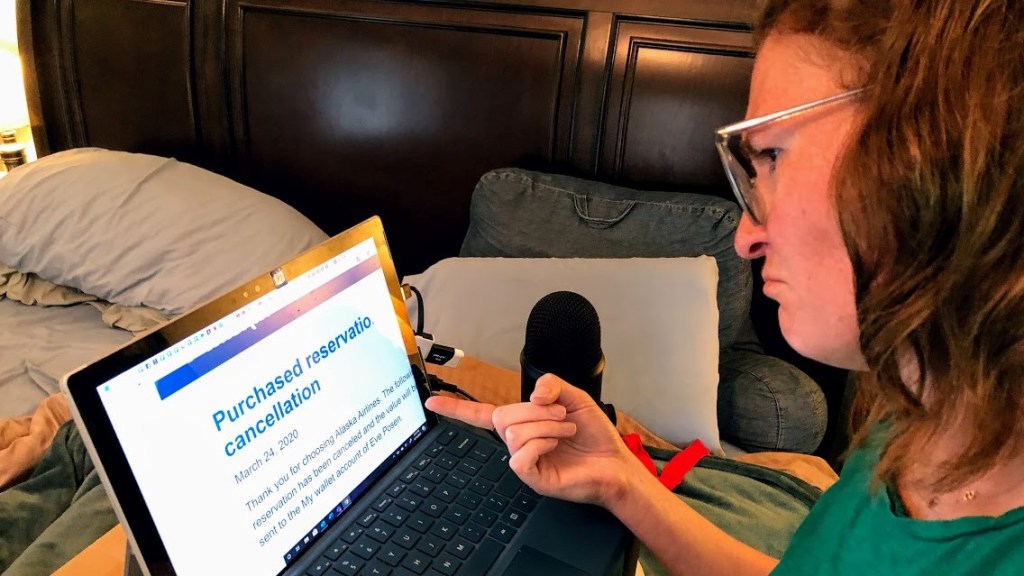
Event organizers all around the world have been facing the same dilemma for months: to cancel or to reschedule. If an event is canceled, what does that mean for attendees? Do they receive a full refund? For charitable events or nonprofit organizations, are they offered the opportunity to consider previous payments a donation? And if an event is rescheduled, how far into the future does it need to be? Do you even bother trying to schedule it for the fall, or simply wait until the same time next year?

Sadly, COVID-19 has either delayed or canceled countless plans and events, which of course is to be expected if we’re going to try to lessen the toll it takes on human life. However, in many cases what COVID-19 has given us is a chance for a redo on things we may have missed out on. 

Interestingly, there’s a direct parallel in the Torah this week about postponing or extending celebrations because of illness. This week we read Parshat Beha’alotcha, a turning point in our narrative. This section of text begins with instruction for the purification of the Levites as they do their holy work in the Tabernacle. We read about the first Passover sacrifice in the wilderness and how to celebrate Passover if we miss it the first time around. Then the text turns toward the Tabernacle, the Mishkan, and teaches us that God’s presence hovers over it in a cloud. Finally, Moshe’s family – his father-in-law, wife, and children – return to join him and the rest of the Israelite nation on their journey through the wilderness. It is in the return of his family to the camp where we learn about what unrealistic expectations have been levied against Moshe. 

The Torah, in elevating the Israelite nation, recognizes that life sometimes gets the best of us and a second chance is needed. Chapter 9, verses 6-12 describe a second Passover observance that happens exactly one month after the first Passover. Not everyone celebrates this one because it exists specifically for those who were unable to celebrate actual Passover because of sickness or impurity. The Torah argues: why must these people miss out on a great opportunity to honor God and join their community?

So, second Passover, or Pesach Sheni, is born. The Torah reminds us that missing out because of another major obligation doesn’t mean that we don’t care. And not every holiday or event can be made up in its entirety, but if we can create an opportunity for everyone to be included, we should. 

Unfortunately, sometimes when you have to pick and choose, there are no second chances to make up what you missed. This week’s Torah portion reminds us of how meaningful those second chances can be, and perhaps this year is an opportunity to reexamine our priorities to make sure we don’t take first chances for granted.

The Man Behind the Curtain – Parshat Naso 5780

I remember seeing The Wizard of Oz as a kid and coming to grips with the reality that the wizard was just an ordinary man behind a curtain making it all happen. Most people had nightmares about the Wicked Witch of the West. Me? I had nightmares about a non-magical “wizard.” What scared me more than Margaret Hamilton in green makeup was the possibility that there was a man behind a curtain deciding my fate or possibly that the world had been created in the dream of some giant head that had control over our lives. I feared that if the giant woke up (or the man grew bored) life would cease to exist. This was my earliest foray into philosophy, and it was enough to leave a terrifying impression. No one likes the feeling of being manipulated; it’s our nature to want to be fully aware and fully in control. 

Belief in God runs the gamut – some envision that God is the giant, and we are all being manipulated by God’s every whim, while some believe that human fate is decided by individual free will and God is more like an observer, watching but not pulling the strings every moment.

Our Torah portion this week, Parshat Naso, leads us deeper into the question of where can we find God. In the Torah portion, we read about the Israelite society trying to move forward after leaving Egypt and about the establishment of a successful community. The narrative picks up with a second counting of the people; laws about how we are to treat one another and the property that we own; the blessing of the priests to the people; and the laws of the Nazir, detailing how we might dedicate ourselves directly to God. Among these laws is the notion of connection to a community, to God, and to the greater “people.” 

The text of the parshah ends in the following way: “When Moses went into the Tent of Meeting to speak with Him, he would hear the Voice addressing him from above the cover that was on top of the Ark of the Pact between the two cherubim; thus He spoke to him.” Above the cover on top of the Ark? Is God literally behind the curtain, sharing rules and regulations with Moses?

We don’t get more details because this is where the text ends. We know from other moments in the Torah that Moses is not allowed to see God’s face. In fact, none of us are. But the specific nature of the imagery in this section is striking. Perhaps the “curtain” is another test to see if Moses will continue to follow dutifully the words of God. Or perhaps it is the reminder to us all that sometimes faith means believing without having all the answers.

Tears, Fears and Mad World

Every Friday night Cantor Bitton, my clergy partner, leads the prayer Hashkiveinu set to “Mad World” by Tears for Fears. I hear this echoing in my head anytime the world feels out of control. “Hashkiveinu l’shalo-om.” God, let us lie down in peace. This is the Torah I shared on Friday night in response to the mad world we live in.

This morning my 3.5-year-old son woke up and told me he had a nightmare about “a police officer putting his knee on the man’s neck.” Here are the things I took from this: we can no longer watch the news with our children, and I’m even more compelled to teach this Torah, to preach peace, justice, and mercy, and to work to end racism in our world.

Pasted below is the outline of my drash; hopefully audio or video will be available shortly. To paraphrase Hashkiveinu, may we be able to create a world where ALL PEOPLE can lie down in peace every night.

Role Call – Parshat Bamidbar 5780

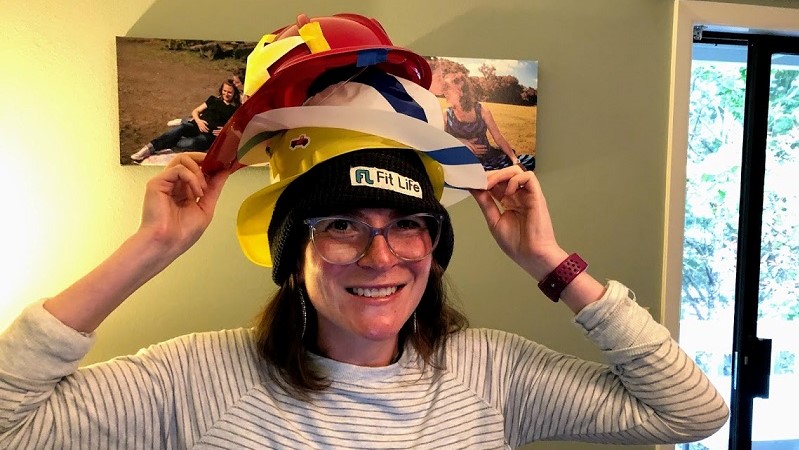
Like most people, I wear many different hats in different situations. I’m a mother, rabbi, friend, youth director, sister, daughter, wife, avid walker, just to name a few of my roles. Where I get in trouble is when I’m wearing one hat while others are expecting me to wear another. Some time ago, my daughter came down with a fever while at school, and it happened to be in the middle of a terrible day for me. This extra weight was the straw that broke this mother’s back. To make my already grumpy mood worse, I took her temperature again when we got home, and it was normal (of course). And later that day when I needed to be wearing my rabbi hat, I was still wearing my frustrated mom hat, and this led to confused feelings and some mismatched expectations all around. The truth is, I’m all of these people all the time, even if I don’t feel like acting like it.

These days, it’s even more confusing, since I’m doing most of my job as a rabbi from home. The lines have further blurred between work life and home life. When am I a rabbi? When am I a mommy?

The Torah this week teaches us a similar lesson as the Israelites learn what it is to be a free society. This week we read from Parshat Bamidbar, the beginning of the fourth book of the Torah. This text brings us to an accounting of the people, showing us who each of the tribes are and what numbers they held at this moment. Each tribe is denoted with a flag which marks their territory. This is the beginning of an organized and well thought out society, a change from the free flow and uncertainty they faced leaving Egypt, and also a change from the tight restrictions they had while in Egypt. 

The text begins with a list of the ways in which the Israelites are to march through the desert and set up their camps. In chapter 2, verse 17 we read, “Then, midway between the divisions, the Tent of Meeting, the division of the Levites, shall move. As they camp, so they shall march, each in position, by their standards.” Logistically, this means that the Levites are broken into two units during the march, but the Israelite troops remain intact at all times.

However, another interpretation of “As they camp, so they shall march” could be that individuals should be the same person at home as away from home, in private as in public. True, my home and my family provide a safe space for me to let down my hair and let off some steam, but I’m still a mother and a wife when I leave the house, just as I’m still a rabbi everywhere. This is especially true now, when I’m doing much of my work as a rabbi from my home. That’s not to say I can’t express my emotions or vent now and then. The important thing to remember is that one hat doesn’t define you or anyone else. To be a well-rounded individual, you will naturally take on a variety of roles, but parts of you shouldn’t disappear just because you’re in a different environment or talking to different people at any given time. In other words, instead of removing one hat to put on another, wearing all of them (using all of your experience and expertise in daily life) means you’re truer to your authentic self.