What Difference Does It Make? – Parshat Vayeshev 5784

I often find myself trying to answer the question, “How does my individual act actually make a difference?” I’m not talking about whether my smile impacts someone else’s day. We already know kindness is contagious, and we’ve seen the stories of kindness that spread, like paying it forward in the coffee line (though not necessarily a great example because of the complicated work it makes for the baristas).

I ask this question more about the small acts that we put toward really big problems. Does my small contribution do anything? Whether it’s a donation to a fundraiser, or biking to work instead of driving, these things have minimal impact on my daily life, so how in the grand scheme of the universe does my little action make a difference? On the one hand, I know enough to realize that I’m not doing it alone, and when enough people join forces, real change can happen. On the other hand, why do these little steps feel so inconsequential?

It turns out that this dichotomy between tiny modifications and giant changes we hope to see is as old as the Torah itself. Parshat Vayeshev has us in the thick of the Joseph story. Joseph has two dreams that he shares with his brothers, both of which make them angry with him. The brothers go out to pasture, Joseph finds them, the brothers decide to sell him, and their father Jacob mourns the loss of his favorite son. After this, the story takes a turn to focus on Joseph’s brother Judah and the betrayal of Tamar before turning back to Joseph’s life in Egypt, which ultimately lands him in jail.

As the brothers are figuring out what to do with Joseph, the little snit who made them angry, they come up with a variety of ideas. Kill him? Leave him? Hide him? Judah and Reuben are the two brothers who are the most vocal against killing Joseph, Reuben in the background and Judah in the forefront. Reuben suggests that they throw Joseph in the pit, Judah suggests that they sell him to others, and in the end, a little bit of both happens. 

Later, Reuben wonders and even despairs that despite his best efforts, Joseph may have died anyway. He goes back to the pit to check on his brother only to find him gone. His real concern for his brother and his fear that he didn’t do enough are very human reactions. However, his suggestion of throwing him in a pit without shedding his blood likely saved Joseph’s life, as strange as that may sound. Often we despair that the tiny work we might try to do is not enough to make any significant difference, but we rarely know which of those decisions will end up being the one that changes history.

Israel Solidarity Mission – Day 2

Today was the reason I came on this trip. I came to bear witness to the atrocities of Black Shabbat, October 7. I came to hear the stories of survivors and to see, with my own eyes, the devastation and carnage in the Western Negev region, which is often called the Gaza Envelope.  

Our day began early, on the bus by 7:40 a.m. so we could meet our security window for our visit to Kibbutz Nir Oz, the site of one of the 22 communities targeted on October 7. The kibbutz was founded in 1955 and was a community of 400 people. One in four people on the kibbutz were murdered, taken hostage, or have been missing since October 7. Nir Oz is a business for paint manufacturing, potato crops, and a dairy farm. Many Gazans had work permits as employees of the factories. And still, they came on October 7 to destroy rather than to create.

Our group receives ballistic vests and helmets. We’re told to wear these and duck if the siren goes off while we’re on the bus. You’ve got 10 seconds at most. On October 6, all you needed to go to the kibbutz was a friend. People sat in the fragility of the sukkah sharing wine and joy. But to visit on October 8, you needed protective gear and a soldier.  

Our tour guide walked us through house after house of those who were murdered, burned alive, stabbed, and shot. Houses blackened with soot. Safe rooms covered in blood and bullets. A bottle of wine left on the table outside from a last sukkah party the night before. In this house, a friend, in that house, a young family. Doors with a “Bring Them Home” poster of their owner taped to the door.  

BOOM, BOOM, BOOM. We jumped. “Oh, that’s our IDF. They are now in the city directly across from us.”  At first, my thought was, “Did I miss the lightning? How far away was the storm?” But of course, for this type of “thunder” in Israel, the siren gives you 10 seconds – that’s as long as you have.

Shattered glass and ransacked rooms. A sukkah left up. A jungle gym and toy house in a backyard which we heard “belong to the Bibas family. This was their home.” Those fiery red-headed children, the boy who at nine months old has disappeared.  

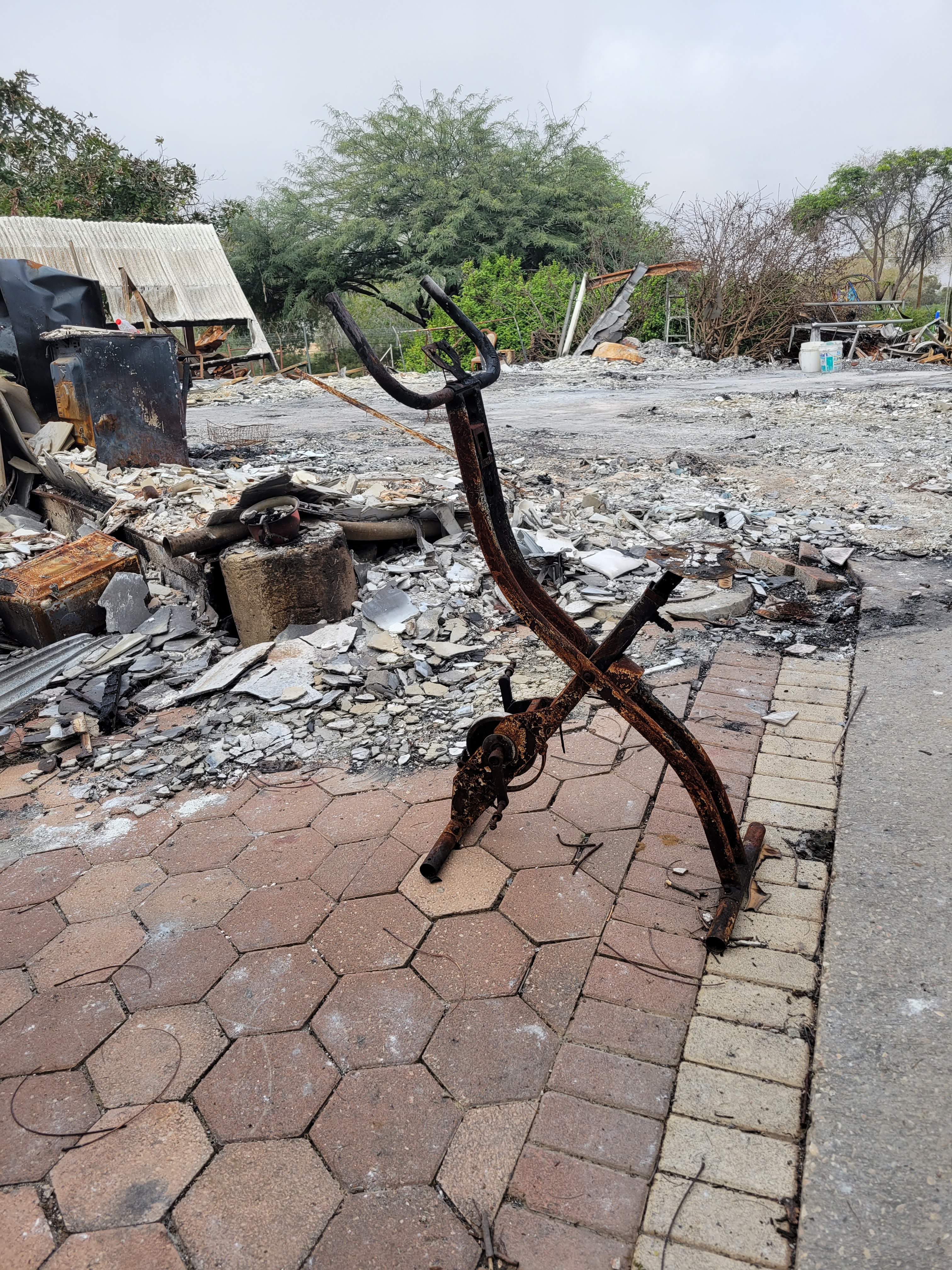
This resident used to brag he had the best view from his balcony. His charred exercise bike sits outside the footprint of his home. Come, let’s look. The raised porch is all that remains of his home. SIREN SIREN SIREN. Ten seconds, GO! We rushed to find the safe room, as mortar shells fired from Gaza to Nir Oz. ALL CLEAR.

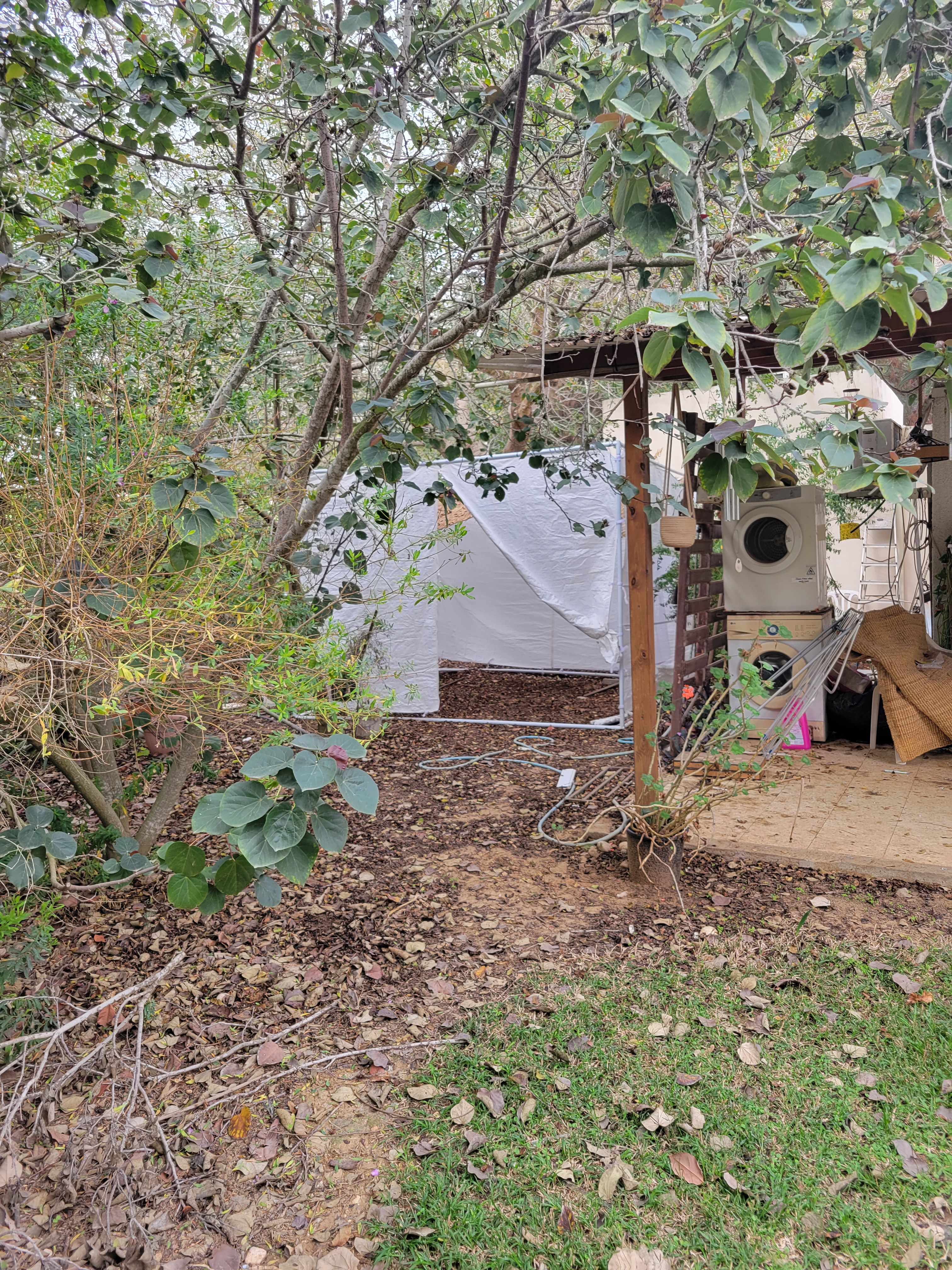
To another kibbutz 50 minutes away, a kibbutz that has absorbed 400 new residents, doubling their size.  An outdoor laundry room was created. People were displaced from their homes because their beds were too close to danger, not knowing when they would return. Families in one-room apartments, trying to live. They fled under fire. They lived their dream life, then faced the worst nightmare possible.

The rain begins. A flash of light and BOOM! Iron Dome? There was no siren. No, that was actual thunder.  The rains have begun. We stand in the temporary section of a cemetery in Revivim, created for those murdered at Kibbutz Be’eri because they can’t be buried in their home cemetery just yet, or maybe it isn’t there anymore. El Malei Rachamim – we prayed for their souls to be bound up in eternal life. As we reach “amen” a 15-second-long rumble of thunder. Maybe God is crying too.  

Today I was present to bear witness to the aftermath of horrid hatred. We smelled death. We saw homes not only burned and blown up but ransacked for loot after the murders. Today, I saw what evil can do.  

And I also saw the good. We have found the helpers, as Mr. Rogers said we would. The community of Israel has come together in strength and unity to make sure Am Yisrael chai. The nation of Israel will live.  

There’s more, but my words aren’t ready yet.

Israel Solidarity Mission – Day 1

And it feels like home. That’s what kept going through my mind on the El Al flight to Israel. It was rowdy and full, like the Israel I used to know. I settled in, seeing the tefilat haderech (traveler’s prayer) on the screen, realizing I belong.  

A few hours into the flight, right after I had fallen asleep, the flight attendant woke me to tell me that the empty middle seat in our row would be filled by an ultra-Orthodox man who needed a new seat because the young mother beside him was singing to her baby, thus violating his prohibition against hearing a woman’s singing voice. In true Israeli fashion, my seatmate argued with two flight attendants and saved our cramped legs from having a third person join us.

We landed in Israel, and within three minutes of touchdown, a rocket siren went off, but we were still on the plane with nowhere to go. We could only pray that the Iron Dome would do its job, and it did.  

Arriving in Jerusalem, it didn’t feel like 16 years since my last visit. It felt simultaneously like returning home, and yet like a strange new city. The streets aren’t clogged with honking cars, there aren’t tourists wandering around. Birds seem scarce.  

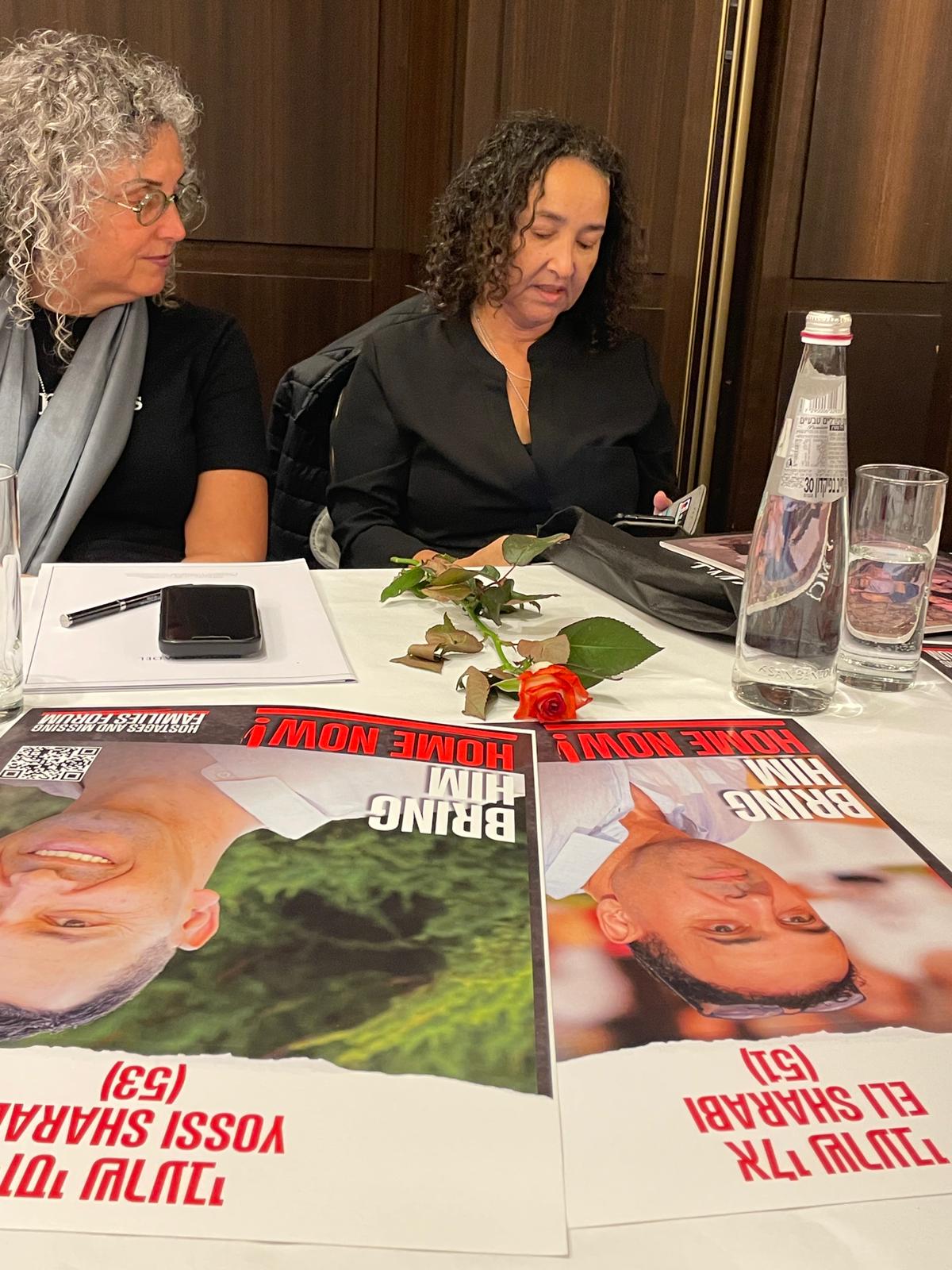
In the span of three hours, we heard from the sister of two hostages about the hope and prayer she carries for her brothers in Gaza and about the pain over her nieces and sister-in-law who were murdered. We heard from a member of Kenesset. We heard from an author. We ate.  

All in all, I’ve been awake for nearly 40 hours, so I’ll sleep before tomorrow, a day of witness. The wisdom from today from Osnat Sharabi, sister of hostages, rings in me: “I believe in good. I do acts of kindness with the prayer, the belief that ripples will come into the world and bring my brothers home. Bring them ALL home.” So, please, let us all go start a wave of kindness.  

Call Me Maybe – Parshat Vayishlach 5784

As technology continues to grow, shift, and change, so do the ways in which we connect with one another and the ways we’re able to communicate. With so many message format options, sometimes I wonder if it might be better to send a carrier pigeon, just to do something unique that would get the message seen amidst the overload of emails, texts, chats, messages, and other apps we use. These days, the format is everything. You can often tell the importance of a matter by what form it arrives in. If you receive a piece of certified mail, you know that’s important, whereas a text message is the more casual end of the spectrum, and a hand-written thank-you note is somewhere in between (and a nice surprise). Rarely do I pick up the phone when I have a quick question for someone when I can simply text them and get an immediate reply, especially while I’m trying to accomplish five other tasks simultaneously. 

Believe it or not, the Torah also teaches us about the decorum of sending a message and the different media we should use. This week’s parshah, Vayishlach, brings the twin brothers together again. The last time these two were together, Esau didn’t care much for his birthright blessing until it had been given to Jacob, and Jacob didn’t care much about his brother’s right to the blessing until his brother threatened to kill him. Now, 20 years or so later, we find the brothers on a path to meet again. Both are now married and are fathers of large clans, and both have large flocks with them.

Throughout this narrative, there are multiple messages sent. If we go back to the beginning of Jacob’s lineage, we see God giving a message to Abraham in the form of a ram stuck in a thicket so that Isaac is not sacrificed. Jacob is often sent messages from God via dreams. Then, there are messages sent via gifts from Jacob to his brother before they reunite. Finally, there’s the person-to-person message interaction announcing that their mother’s nurse has died, which implies that their mother Rebekah has died as well. 

Although the types of messages in the Torah are different than those of today, you can imagine what ancient messages might have looked like with today’s technology. Perhaps the visual cue of the ram in a thicket would come as an animated GIF on Abraham’s iPhone. Maybe Noah would have been alerted about the flood with an emergency broadcast system notification. 

From the Pony Express to FaceTime to physical face-to-face interactions, humans have always found ways to communicate and ways to show how serious a message is. For each of these moments in the Torah and beyond, the ways in which we communicate remind us how we strive for connection, especially when we’re apart. So . . . write, text, message, email, or maybe even call. Interacting is the important part. 

Staying Grounded – Parshat Vayetzei 5784

I might have an online shopping problem. At first, when everyone was on lockdown, online shopping was a necessity. That’s how our family got the things we needed, like clothes, shoes, and art supplies and still felt safe from contracting COVID-19. We’re fortunate to be able to have done a lot of online shopping. Despite supply chain issues, thanks to expedited delivery systems, we all got used to the instant gratification of click, order, receive. The dopamine rush of waiting for a package to arrive and then opening it was both addicting and short-lived. These days, if something takes longer than a day or two to arrive, we all start to twitch in frustration just a little. 

It makes sense that we eventually take for granted whatever technology makes things easier and faster, and we simply become accustomed to getting what we want, when we want it. On the other hand, over the years we also risk losing our tolerance for a slightly slower pace of life. There’s a balance between acquiring the things we need in a timely fashion and having the patience to wait for them. To stay grounded requires that balance in our lives, and Jacob, the main character in this week’s Torah portion, learns this lesson . . . and without the benefit of Amazon Prime. 

Parshat Vayetzei is the beginning of the vivid dream sequences that lead us through the next phase of our Torah cycle. The text picks up with Jacob on his journey away from his parents’ house to meet his cousin, Lavan, and the strange dreams and encounters he has with godly creatures along the way. He ends up falling in love with Rachel, and he works for her hand in marriage, but ends up being tricked into marrying Rachel’s older sister Leah. Fast forward a few more years of work, and the prize of having Rachel as his wife is realized. The text continues with the birth of Jacob’s large family and Jacob’s journey away from his father-in-law Lavan to a new home. 

We knew Jacob was a dreamer. At the beginning of the Torah portion, he dreams of a ladder that connects the heavens to the earth. This dream is the one from which he awakes and proclaims, “Wow! God is here and I wasn’t aware.” Jacob is deeply connected at this moment to the gratitude of being safe and present. Later, however, Jacob dreams about increasing the number of sheep and goats that he owns. An angel comes and reminds him of who he used to be. Under the presence of Lavan, his father-in-law, Jacob was corrupted by power and material resources. He lost the connection to his humble roots and his faith in God’s providence. 

This Torah portion is a humble reminder not to get carried away by newfound leisures or conveniences. We might not all get such revelatory messages in our dreams, but it’s just as important that we remain grounded. Of course it’s only human to have desires and wants, but it’s also human to find and remain in balance with the world around us. We too can be dreamers, as long as we don’t forget our reality along the way.