Instant Gratification – Parshat Terumah 5773

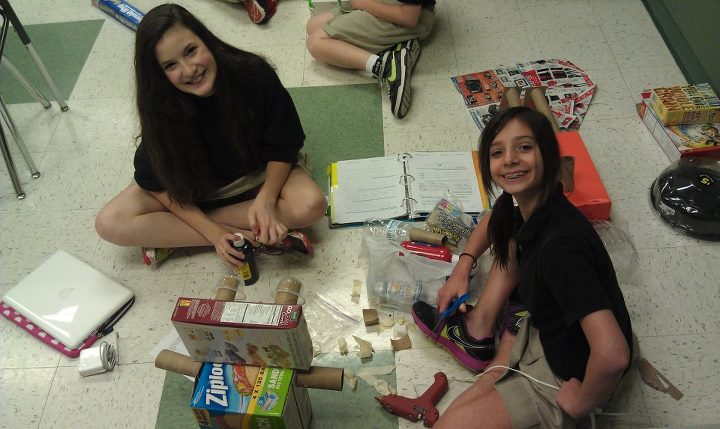
Plenty of us have had this experience.  You’re setting up a new game or toy with (or for) a child.  As you near the end, you realize that one of the important pieces is missing.  The piece is most likely mixed in with another puzzle or toy and the chances of finding it are slim to none.  Without this piece the game won’t work.  It’s frustrating to be in this situation.  If you take a piece from another game or toy to try and work out a solution, you know you’ll find yourself in a similar predicament the next time you go to use that toy.  You have a choice to make: you can either risk the frustration you’ll feel later for the satisfaction you’ll feel now in completing the game, or you can try to come up with another creative solution that doesn’t take away from any other toys.    

Parshat Terumah, the Torah portion this week, tells us of the thousand-piece puzzle the Israelites are building known as the Tabernacle.  The text lists all the materials needed for the building, including gold, silver, copper, fabrics, dyes, and of course wood.  Throughout the process it seems that the Israelites are generous with their gifts.  If you read closely, you’ll note two odd materials.  The first is the mention of dolphin skins in chapter 25, verse 5.  The Israelites are in the middle of the desert, so finding dolphins is a bit of a stretch.  Linguists tell us that the Hebrew word for dolphin actually used to refer to dyed sheep or goat leather. 
The other odd material is acacia wood.  These trees are not native to the Sinai wilderness and would have been difficult to find and schlep all this way.  The Tanchuma, a 4th century collection of commentary, suggests that these were planted by Jacob on his way to Egypt, foreseeing that one day his grandchildren would need them.  He did this act with no immediate benefit to himself, but for the future generations. 
Furthermore, the acacia tree is not a fruit bearing tree.  God’s commandment to use this wood meant that the immediate need of building the Ark would not destroy future fruit harvests.  In building the Ark, the Israelites could have used the readily available wood of fruit trees, and the job would have been done.  Instead of the easy way out, they were commanded to take the extra step and use a tree that would not cause harm to future generations. 
The building of the Ark is a model for building our communities now.  We have the choice daily to do what is best for only us and our immediate needs or to invest in the future.  Like the Tabernacle we too are made up of many parts but form one harmonious community when we add our own piece of the puzzle.  Parshat Terumah reminds us that we must look at the bigger picture and make decisions not based on instant gratification, but ones that will endow future generations with Jewish living, learning, and love.
THIS TOO IS TORAH: Acacia, which can help in land reclamation and erosion control, is known for its resilience.  I can’t help but compare this plant family to the Jewish people, who survive and flourish through our resilience.

photo credit: echerries via photopin cc

The Choice is Yours – Parshat Misphatim 5773

When I was in high school, our principal would start everyday by reading from “Project Wisdom,” a series of quotations about specific values.  You might remember these from Levine and Friday morning Shabbat celebrations.  Each one ends with the line: “With something to think about, this is Rabbi Posen. Make it a great day or not, the choice is yours.”  Ultimately, while teaching about values and responsibilities, these little moments of wisdom reminded us each day that we all have a choice to make.  We can choose to have a great day, or we can chose to dwell on the negative.  We can choose to let go of resentment, or we can choose to let it fester.  Choice is a freedom we are afforded as Americans, and as we learn when we mature, we are held accountable for each choice we make.
Parshat Mishpatim, our parshah this week, shifts from the narrative of Moshe and the Israelites in the desert to a steady stream of laws and rules for living in the world.  The substance of thisparshah deals with criminal matters, humanitarian considerations, divine promises, warnings against assimilation, and the ratification of the covenant between God and the Israelites.  These laws come as a continuation from the Decalogue given in last week’s parshah and aim to teach the newly freed nation of Israel about their responsibility as a society.
The first set of laws focuses on laws of workers, referred to as “slaves” in the Torah.  These are not the same as slaves kept under Egyptian rule, but rather those who work for a fixed period of time to repay a debt or as a result of bankruptcy.  This model set forth beginning in chapter 21 of sefer Shemot tells us that workers are to be treated as human beings, and in these laws we read that consideration must also be given to a worker’s family.   
The Torah also provides us with a term limit for a worker, “A worker should serve six years; in the seventh year he shall go free without payment.”  This verse teaches that emancipation is the right of the slave and that no compensation is due to the master.  At this time, a worker may decide whether or not they wish to remain with their master.  Some might be intimidated by the prospect of freedom; others would embrace it.  The choice is theirs. 
Just as the newly free Israelites were given boundaries by God with our calendar in parshat Bo, so too a worker is given the choice to decide a future after servitude.  The Torah teaches that to be fully human, people must take responsibility for their own lives.  Our “Project Wisdom” quote for the week:  Today, take the time to make a list of the principles you believe in, your own special rules for how you want to be the best person you can be.  Then think about how those principles help you make better choices.  With something to think about, this is Rabbi Posen.  Make it a great day…or not.  The choice is yours. 
THIS TOO IS TORAH: Pirkei Avot (Chapters of the Fathers) is our tradition’s original Project Wisdom. With familiar sayings like “The world stands on three things: Torah, service, and acts of loving kindness (1:2),” this part of the Mishnah is made up of a series of ethical principles that are less concerned with legal opinions than with aphorisms for how to live good lives.

Never Any Time – Parshat Yitro 5773

I grew up watching “Saved by the Bell,” that classic afternoon sitcom featuring tanned California teens as they navigated those troublesome – and endlessly comical – teenage years.  Ask any adult of my generation which episode comes to mind first, and the answer will likely be the episode in which Jessie, the perfect, straight A head of student council, feels overburdened by the pressure to get everything done.  She becomes addicted to caffeine pills and has a nervous breakdown in which she professes “There’s no time, there’s never any time!”  Jessie struggles with the familiar problem of having so much to do and no time to do it.  I think this episode stuck with me all these years because it’s easy to relate to the out-of-control feeling that comes when there are overwhelming deadlines to meet.  And we tend to punish ourselves by skipping a meal, staying home instead of going out with a friend, and just driving ourselves mad with frustration.

We often get so caught up in the hustle and bustle of life, of wanting everything to get done, that we forget to take care of ourselves.  Our parshah this week, Yitro, sends us this important reminder.  We read about Moshe, the leader of the Israelite nation, struggling to do it all on his own.  Just when Moshe appears to be dealing with – among other things – time management issues, God sends down the Ten Commandments.  When God gives us the ten holy utterances, they serve as a blueprint for our own lives.  They focus on balancing belief and spirituality with physical needs and relationships with our neighbors. 
Specifically, commandment number four reminds us of the importance of taking a break.  Chapter 20, verses 8-11 instruct us to have Shabbat: “Remember the Shabbat day, to keep it holy.  Six days you should work, and do all your work; but the seventh day is the Shabbat of God your God; in it you shall not do any work…”  God commands us to take a break, and ends this commandment by teaching that even God, the all-powerful creator of the world, needed a break once a week. 
We are often striving for more: to do more, be more, learn more, but we forget to reflect on the cost of trying to pack our lives with wall-to-wall activity.  It’s especially tough when we reach new stages in our lives to find the balance.  As a first year rabbinical student, I struggled with getting all of my work done and getting good grades, along with staying on top of my personal life.  I was pretty much a wreck until one of my teachers sat me down and taught me Rashi’s comment on the 6th commandment: everyone needs a day of rest.  Rashi teaches us that the work we get done is the work we are meant to finish.  If it isn’t done, then we weren’t meant to get there.  Rashi urges us beyond our fear of losing control and asks us to recognize our imperfect mortality.  Shabbat is a time not only to kindle Shabbos candles, but to rekindle the relationships, traditions, and connections that truly make us human.
THIS TOO IS TORAH: Some people and communities support “commerce-free days” to encourage people to take a short break from shopping and digital life in order to recharge and refocus. Sounds a lot like Shabbat, doesn’t it?

photo credit: Ma Got Sole via photopin cc

Don’t Just Sit There, Do Something – Parshat Beshalach 5773

I can tell when students aren’t really in the mood to tackle the learning at hand.  Distractions and tangents happen on occasion, and the students know I have a soft spot for encouraging and answering their questions about Judaism and religion.  The “why” questions are the exception and often my biggest challenge.  The problem comes when we have specific material to cover, and when one “why” question is asked, I can be sure ten more are on the way.  It’s inevitable that “why” questions lead to more questions, not to satisfactory answers.  If I’m feeling particularly creative, I’ll find a way to tie the answer to a why question back to what we’re learning, even if indirectly.  Ultimately, I want the students to understand that asking will only get them so far; eventually they need to take on the responsibility of doing.
This week’s parshahparshat Beshalach, begins the Israelites’ journey from the land of Egypt to their own land and their destiny.  We find a tired and hungry people, wanting to take more than they should when God provides manna, and a thirsty people when the water does not meet their standards.  Exodus is a roller-coaster of emotions; the Israelites are excited one minute and disappointed the next.  They long for their time in Egypt where slavery was harsh, but simple and predictable. 
On the third day of their journey, after the miraculous crossing of the Red Sea, the Israelites are thirsty, having had no fresh water since they left.  When they finally find a place with water, they are bitterly disappointed to find that the place is called “marah” (bitter) and that the water lived up to the name.  Frustrated, the Israelite people demand Moshe to find them water.  And Moshe, equally frustrated, calls out to God. 
The text explains that God tells Moshe to throw a piece of wood into the water, and it will be sweet.  However, a midrash explains the interaction differently.  The midrash envisions Moses asking God, “Why did You create brackish water in Your world, a liquid that serves no purpose?” God replies, “Instead of asking philosophical questions, do something to make the bitter waters sweet.”  Do something.  Take action to solve the problem.
The principles of activism have always played a large role in what makes us human, and we live in an age where the message of acting for a cause is prevalent.  We’ve seen it in the campaign to “Get out the vote,” the Occupy movement, and elsewhere.  We take a stand for our beliefs by writing letters to our representatives, boycotting or supporting certain businesses, and raising money for organizations.  Asking why is the first step, but we don’t just ask why.  We’ve learned we have to take action to solve the problem.
In parshat Beshalach, Moshe demonstrates the power of action.  The waters could not become sweet on their own; they needed a catalyst for change.  So too, we learn that our questions help us identify the space for change, but only our actions can take what’s bitter and make it sweet.
THIS TOO IS TORAH: “There are those who look at things the way they are, and ask why… I dream of things that never were, and ask why not?”  Do you ask why things are the way they are? Or, like Robert Kennedy, do you dream big and ask why not? Is there merit to both?

Child’s Play – Parshat Bo 5773

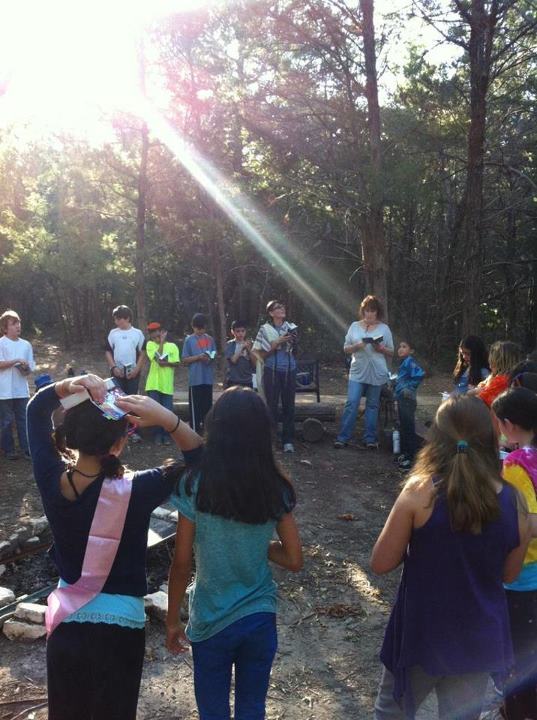
People often look at me like I’m nuts when I tell them that I love the week I spend traveling through Texas on a bus with 20-30 6th graders.  As most adults can attest, traveling with children for any distance can be a trying experience.  “Are we there yet?” “I need to go to the bathroom.” “Are we there yet?”  And on a bus there are the every-five-minute reminders to sit down, turn around, stop yelling, and stay two per row.  On the other hand, traveling with children can also give you a unique perspective on the world you’re traveling.
The Israelites are a traveling people beginning with our parshah this week, Bo.  In parshat Bo, the Israelites are steps away from leaving Egypt.  Pharaoh refuses again to allow the Israelites to leave, and each of the three refusals brings with it the three final plagues.  The narrative continues with the procedures for leaving Egypt by putting the lamb’s blood on the doorpost, packing up, and then celebrating Passover in future generations.  As Pharaoh is deciding whether to let the Israelites go or not, he asks many questions.  “What will you be doing in the wilderness?  How will you live?”  And, in chapter 10, verse 8, Pharaoh asks, “Who are the ones to go?” Moshe responds “We will all go, young and old: we will go with our sons and daughters, our flocks and our herds…”
Pharaoh’s response does not disappoint: “The Lord be with you the same as I mean to let your children go with you! Clearly, you are bent on mischief.”  You can almost hear the laughter that must have accompanied this line.  Moshe seemed crazy, wanting to go out into the barren desert without the stability of city life, for an unknown period of time with all of those children. 
Modern Torah commentators also questioned this inclusion of children.  The verse would have been clear had it just stated that everyone was going to go; why did Moshe need to add “young and old”?  One commentator shared that it’s “because no celebration is complete without children.”  This road-trip was not your average trip; it was a journey, a celebration of freedom.  While the journey might have involved more mischief, pit stops, or questions, it was meant to celebrate the future, the future embodied in the children.
Too often we become like Pharaoh and immediately see the negative of a situation, and that blinds us to the beauty of what we are about to experience.  Children view the world through unbiased and clear lenses.  Even though participation might result in a few extra questions to answer, or even a headache at the end of the trip, nothing can compare to seeing the joy, wonder, and awe on a child’s face when experiencing something new for the first time. 
THIS TOO IS TORAH: Many of our holiday traditions have become specifically children oriented: dreidel, the four questions, the afikomen, the flags on Simchat Torah. As parents (or older siblings of younger children) what differences do you notice between the way young children celebrate and understand holidays and the way adults do?