The You That I See – Parshat Devarim 5775

The You I See

When I was 13 years old and celebrating my Bat Mitzvah, somehow it was clear to everyone that I would become a rabbi.  As for me?  I was a typical teenager, so of course I thought they were completely nuts.  Ok, yes, I loved being in the synagogue.  Sure, I wanted to push the boundaries of what women were allowed to do in my shul.  Alright fine, I was a natural Torah reader and thrived standing on the bimah.  Well now that I think about it, I guess the signs were pretty clear.

But at that age, in my mind there was no way I was going to be a rabbi.  This continued to be my train of thought as I worked through high school, despite the fact that I lived in Israel for a semester and, upon my return, wanted only to study Hebrew, Israel, and Judaism.  In college I was also active in Hillel, leading the conservative minyan and basically acting as a one-person religious life committee.  Then there was my job as youth advisor and Hebrew school teacher at the conservative shul in town.

I mean come on!  Who I was on the outside screamed “Rabbi!”  Except inside, I didn’t believe that was my path.  How could I have totally missed these obvious clues?  Part of the reason is because I fully expected to use my college degree in Judaic Studies towards Jewish communal work, or perhaps Jewish education.  That is until Rabbi Abby Treu, who then worked at University of Michigan Hillel, finally opened my eyes.  She convinced me that more than anything, I was hiding from my own insecurities, my own disbelief that I could be a rabbi.  She saw something in me I didn’t see – that I couldn’t see – and I am so grateful for that push of enlightenment.

This week in our parshah, the Israelites follow a story not so different from mine as we enter into the final book of the Torah, Devarim (Deuteronomy).  Devarim stresses the covenant between God and Israel and looks toward Israel’s future in a new land as they build a society that pursues justice and righteousness.  The central theme of this section of text is monotheism, the belief in one God, and building a society around the laws we’ve been given over the course of the four previous books.

The book begins “These are the words that Moses addressed to all Israel on the other side of the Jordan.”  Addressing words to all Israel?  How is this possible?  Isn’t this the same Moses who at the beginning protested this leadership role, stating that he was not ish devarim, a “man of words”?  Know anyone who’s afraid of public speaking?  Moses started that.  And yet, here he is years later confidently sharing his message with the people.  Moses didn’t take speech classes or join the Mount Sinai debate team.  His speaking ability didn’t necessarily improve, but he did accept that this was his calling, and he embraced it wholeheartedly.  In doing so he led a nation and was true to himself.

Had Moshe not had the nagging voice of God pushing him to move forward, to speak, to assume his role as leader, he never would have grown into himself, and he never would have made such an impact on our people and our history.  Let’s face it, our story as we know it would be completely different.  And had my friend Rabbi Treu not pushed me to consider the obvious evidence before me, I never would have had the courage to apply to rabbinical school, and I doubt I’d have found as much satisfaction in my career choice.  Now I can say with certainty that being a rabbi feels like exactly what I want to do with my life.

We begin the final book in the Torah by understanding that our success in life comes from growing into our own selves.  Sometimes it’s hard on your own to recognize what makes you truly happy, but when the right person can help reflect that back to you, it makes all the difference.  In this Shabbat of Hazon, this Shabbat of Vision, we are inspired to envision ourselves as we want to be, with all the potential others see in us.  This is your push.  Shabbat shalom.

Do You Solemnly Swear – Parshat Matot-Masei

Solemnly Swear

As Duncan and I began our journey into parenthood, we had all sorts of grand notions of the type of parents we would be.  Like other parents we know, we swore to each other that we would be the best possible role models. We promised to have all the best qualities we loved in our parents and none of the worst ones. We vowed to be fun, honest, and fair 24/7.  And then Shiri was born.

I’m not saying we went back on every promise, but we found out it was a lot harder to uphold those promises when we were living the reality of parenthood.  Limiting our own screen time to after the baby was asleep in bed was great in theory; however, being up at all hours of the night with a newborn almost always meant a 4:00 a.m. Facebook check.  We wanted to teach Shiri to be a healthy eater and to set healthy examples for her with our food and exercise choices, but some days just demand fries and a milkshake.  We had vowed to act one way, and hard as we try, we still aren’t always in line with those expectations we set for ourselves.

The problem with broken promises to ourselves is they often don’t have enough of an impact to really change our behavior.  Think of New Year’s resolutions or simply trying to change a bad habit.  The problem with broken promises to others is there’s often too much of an impact because of the resulting loss of trust in the relationship.

This week we read the final sections of text from the fourth book of the Torah, Bamidbar.  Parshiyot Matot and Masei begin with the discussion of the different vows Israelites might make, and then they detail the requests of the various tribes as they get ready to enter the Promised Land.  The chapters end with the final placements of all the tribes as they prepare to divide their land inheritance.

Promises play a role in both of these sections. In Matot, certain types of vows are identified and explained, including vows of married couples to God and each other. In Masei, the tribes make requests of Moshe, and Moshe responds, vowing to give certain parcels of land to certain people.  These are verbal agreements, once again showing the power of words.

From the creation of the world through God’s word alone, to the myriad laws on how we use our words to create or destroy, the power of speech is identified as one of the unique gifts of a human being.  More specifically, our human communication, when combined with our memory and our empathy, gives us the unique ability to create and enact self-imposed legislation.  Put another way, our speech can represent not only the exchange of words, but the exchange of tangible, touchable things.

The parshiyot this week remind us that our words have this power and that whether or not we can feel it, there is weight to the promises we make to ourselves and each other.

A Balancing Act – Parshat Pinchas 5775

Conservative Judaism Balance

You know those movies that tell multiple independent stories and then bring them together at the end? There’s a teenage romance, a community golf tournament, and a jewelry store that’s filing for bankruptcy. It’s not until the last third of the movie that you find out the teenage boy’s family owns the jewelry store, and the teenage girl’s grandfather is a retired pro golfer who rescues the other family by buying the jewelry store and turning it into a golf shop. This sounds like a ridiculous all-over-the-map storyline . . . until you hear what happens in this week’s parshah.

Our parshah this week, Pinchas, bounces from event to event; you’ll get dizzy trying to keep up. We begin with the story of Pinchas (identified as Aaron’s grandson) and the extreme action he took against those that defied the prohibition of idolatry. Then we move to the daughters of Zelophechad (Joseph’s great-great-great-grandson), who want to inherit land after their father’s death because he had no sons.  Then Joshua is appointed Moshe’s successor, and we end with the sacrifices we are to make for Rosh Hodesh and the holidays.

Looking individually at each of these events, they might seem disparate. Looking at the text as a whole, they actually are tied together by a search for balance in the Israelite nation.  Pinchas reacts to the idolatry out of anger, allowing his emotions to get the best of him and his rage to take over.  For this reason, the commentators teach that the yud in his name is written smaller than the other letters because by acting rashly he diminished God’s name.  However, Pinchas is appointed a priest, a designation which requires responsibility and an even-tempered leadership, helping Pinchas balance his emotions.

By reading the situation and speaking up at the right time, the daughters of Zelophechad have their inheritance needs met. In doing so, they are able to strike a unique balance between tradition and modernity, one of the first instances of this in the Torah.

Joshua is described as Ruach Elohim, the spirit of God.  As the incoming leader, he is calm and gentle, and just as Moshe needed Aaron to balance out his insecurities, Joshua will serve as the counterbalance to Pinchas.

Finally, we receive instruction about the variety of sacrifices we are to make for holidays and Rosh Hodesh.  Each instance where we learn about how to distinguish our celebratory times is a reminder to find balance between work and play.

Is the idea of striking an appropriate balance sound familiar? The balance depicted in Pinchas isn’t just a message for the Israelites; it’s also a guiding principle of conservative Judaism. The USCJ’s vision statement invites us to create a “dynamic Judaism that is learned and passionate, authentic and pluralistic, joyful and accessible, egalitarian and traditional.”  There’s balance across the board.

May each of us this Shabbat discover new ways to strike the right balance in our lives. That’s how our myriad stories will come together.

Curse Words – Parshat Balak 5775

Curse Words

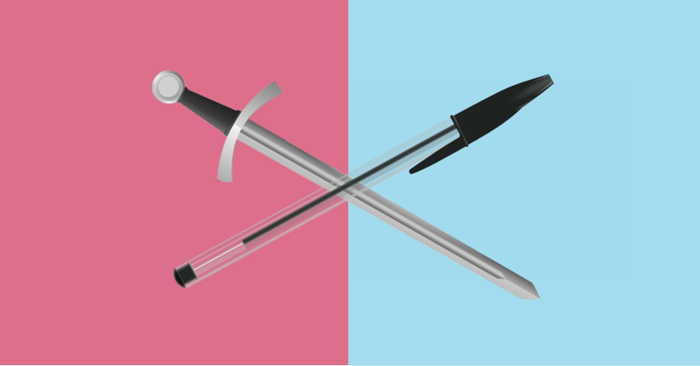
We get mixed messages when it comes to the power of words versus actions. Do we believe the pen is mightier than the sword, or do we believe sticks and stones may break my bones, but words will never hurt me? Do we believe that actions speak louder than words, or do we believe that loose lips sink ships?  Which is it, words or actions?

This week we read a narrative filled with opportunities to do the right or wrong action and say the right or wrong words. Yes, you’re remembering correctly. This is the parsha with the talking donkey.  Parshat Balak is the story of Balak, son of Tzipur and king of Moav, who solicits Balam the “prophet” to curse the children of Israel.  God allows Balam to go to the land of Moav, but only if he will speak what God tells him to say.

On the way there, Balam finds himself frustrated with his donkey, who refuses to move.  As it turns out, the donkey sees an angel of God in the road. The donkey can see the angel; Balam cannot.  So Balam gets angry at his stubborn animal and beats the donkey.

The donkey, in a voice I have to assume sounds remarkably like Eddie Murphy, since that’s my only other point of reference for talking donkeys, cries, “What have I done to you that you have beaten me these three times?”  Balam says to him, “You have made a mockery of me!  If I had a sword with me, I’d kill you.”  The donkey responds, “Look, I am the donkey that you have been riding all along until this day!  Have I been in the habit of doing this to you?”  Balam can only respond, “No.”  Actually, in the old JPS translation, Balam doesn’t say “No,” he says “Nay,” which adds a nice new layer to the meaning when you think about it.  At this point God opens Balam’s eyes so he too can see God as the roadblock.

Once he arrives in Moav, Balam is greeted by Balak with great honor, which changes to anger when Balam praises rather than curses the Israelites, as Balak had instructed him.

A talking donkey, a mystical sorcerer, war – it’s a complicated, dramatic parshah, to say the least.  But at the heart of it is the power of words.  Rabbinic commentary points out that Balam had set out to destroy an entire people simply by cursing them.  If that was possible, parents of teenagers all over the world would be in trouble.  Why is it that Balam sought to destroy a nation by cursing, but felt the threat of a sword was the only way to get a single donkey to move?

The problem with our “words versus action” debate is that it’s a two-sided concept, when it really should have three sides.  What completes that triangle?  Thought.  Words, actions, and thoughts are what move us forward.

Balam is too quick to jump into action, beating and threatening the donkey, not because he doesn’t speak first, but because he doesn’t think first.  Our challenge is to move from empty words and actions toward those of substance.  And the way to do that is through thought, through intention, through an understanding of the situation before anything else.  Only then will our words and actions carry the meaning they need to enact change.

Just Add Water – Parshat Chukat 5775

Just Add Water

I’ve lived in very different climates with a wide variety of weather conditions. I’ve had snowy Michigan winters, California mudslides, scorching Texas summers, and the typically wetter Portland, despite this year’s dryness. This year in particular has been a roller coaster of water activity in my former states of residence. California is experiencing one of the most severe droughts on record, while Texas is flooding. Water – and the lack of water – can signal destruction and devastation just as easily as it can be a symbol of purity, life, and sustenance.

Water in the Torah shares the same distinction. The world was only created after God was able to separate the waters and create dry land. Following that, water is arguably the central character in the story of the flood, as God uses torrential rain to wipe out the earth before starting over again. Water then comes to us again as a barrier between freedom and slavery when the Israelites leave Egypt, and throughout their entire journey in the desert, the Israelites are particularly worried about the amount and even the taste of the water they have.

This week we read parshat Chukat, which is full of plot twists and new experiences for the Israelites. The lands of Sichon and Og are conquered, both Miriam and Aaron die, and we learn that Moshe will not be allowed to enter into the land of Israel. When Miriam dies, we are given one more water miracle on her behalf, with water flowing from the rock. We also learn that the reason Moshe and Aaron are not allowed to enter the land of Israel is because of the incident in which they struck the rock out of frustration instead of speaking to it as God had commanded. The text concludes with praise and thanks being sung to God for the water of the well.

Chapter 20, verse 11 states, “The community and their beasts drank.” At face value, this verse tells us simply that when the water appeared, those who were thirsty drank. However, the Hebrew lends itself to a slightly more colorful interpretation when it’s read as “The people drank like beasts,” meaning each person was concerned solely with easing his or her own thirst. It is yet another illustration of how just the fear of lack of water affects the community. Again, water is sustenance.

Parshat Chukat reminds us of the significance of perhaps our greatest sustaining force. May we strive to always act with conservation and future generations in mind, and may those who have been so severely impacted by too little and too much water find some comfort and rest this Shabbat.