Life with a “threenager” (or a child of just about any age) means rebellion is all too familiar. But parenting, like Parshat Korach, is about boundaries as much as anything else.
Author: Eve Posen
See For Yourself – Parshat Shlach Lecha 5776
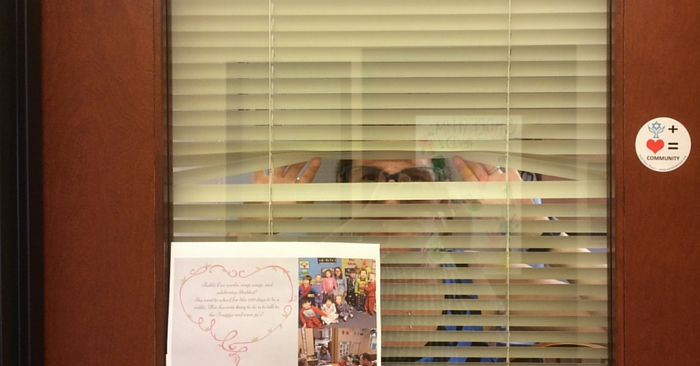
One of the areas where I struggle the most as a parent is holding myself back in order to let Shiri explore the world on her own. It’s much faster to climb a flight of stairs when I pick her up, but she needs to be able to take each step, one by one, to truly learn how to do it. The same is true of trying new foods or engaging in any other new experience. Sometimes she even learns lessons on her own despite my guidance. Sure, I can tell her the macaroni and cheese is hot and she should blow on it before digging in, but she still may insist on putting it in her mouth, only to scream that it’s too hot. Discovery is how we learn to be in the world.
There’s a big difference between experiencing the world and being told about the world. There’s a reason that experiential and project-based learning are the trends in education. Reading about solar energy could be interesting on its own, but it can’t compare to building a solar-powered kit and then charging a battery from your creation. Education excels when we do more than read the facts, we internalize them and use them in a way that opens the mind to retain the information. We see a similar pattern in the Israelites’ behavior after they leave Egypt. Upon leaving they feel strongly that life was better in Egypt. Until they actually engage with the world around them (instead of simply projecting their feelings), they’re not able to see the beauty of opportunity.
We read parshat Shlach Lecha this week, detailing the new nation’s approach to the land of Israel. The text begins with the sending of spies, one from every tribe, into the land and continues with the report they bring back. Ten of the spies return in fear, and that fear spreads throughout the rest of the nation, causing them to question even trying to enter the land. God becomes angry with the people and their inability to accept new situations, but hopes that Joshua and Caleb, the two spies bringing positive reports, can turn this attitude around.
The text may be familiar, but there’s still a puzzling reversal from how change was viewed many generations before. Earlier in the Torah in another instance when venturing into a new land is necessary, Abraham is happy to leave his home and go where God tells him. Here though, the Israelites appear afraid. This week’s text begins “Shlach l’cha,” meaning “send for yourself.” God is saying to the Israelites the trip into the land is for their own purposes, not for God’s purposes. God, as the parent, is saying, “I already told you the land was good, but you don’t seem to trust me. So go on your own and see for yourself.”
Sometimes the only way to believe is to see it with your own two eyes. Whether it’s a toddler trying to explore and learn the world around her, or a grown-up searching for some meaning in new information, understanding the world often requires active investigation, not just thoughtful consideration. Our parshah this week is the perfect reminder that there are moments to put your faith and trust in God, and there are moments when we must go out and do and see (and spy) for ourselves.
Parenting by the Parshah – Shlach Lecha
Whether it’s a giant sand dune or a strange, foreign land, new experiences are all about perspective. In Parshat Shlach Lecha, this too is Torah.
Also, I’ll be live streaming on Facebook with an “Ask a Rabbi” segment Thursday, June 30th mid-afternoon PDT (early evening EDT). Have a question that needs a rabbinical answer? Join me! Check the page for more details: https://www.facebook.com/RabbiEvePosen
Meet Me Halfway – Parshat Beha’alotcha 5776

Life is often about making compromises. Sometimes we compromise because it’s the easiest solution. I work on one side of town, you work on the other, and we pick a place in the middle for coffee. Other times compromise means one person bends a little bit further than the other to make the situation work. The key is for each party to know what they want and how far they’re willing to bend, as well as recognize that pleasing only yourself won’t lead to a workable solution.
This week we read parshat Beha’alotcha, a turning point in our narrative. This section of text begins with instruction for the purification of the Levites as they do their holy work in the Tabernacle. We read about the first Passover sacrifice in the wilderness and how to celebrate Passover if we miss it the first time around. Then the text turns to the Tabernacle, the Mishkan, and teaches us that God’s presence hovers over it in a cloud. Finally, Moshe’s family – his father-in-law, wife, and children – return to join him and the rest of the Israelite nation on their journey through the wilderness. It is in the return of his family to the camp that we learn about what unrealistic expectations have been levied against Moshe.
As God is conversing with the Moshe, God tries to understand both the mood of the people and the situation at hand. In chapter 11, verse 17 God says, “I will come down and speak with you there, and I will draw upon the spirit that is on you and put it upon them; they shall share the burden of the people with you, and you shall not bear it alone.” The people are angry about their food situation and generally about being in the desert, and they take it out on Moshe. God realizes that in these circumstances and with this state of mind, it is unrealistic to ask the people to elevate themselves. And so, God will “come down.”
Samson Raphael Hirsch, a 19th century German commentator on the Torah, reads this verse as God predicting that given the mood of the people, they shouldn’t be expected to rise toward God. Instead, God will come down to shorten the distance between them. In other words, well before we started talking about things like relational Judaism and the outreach potential of social media, God understood the need to address the people where they were and help elevate them by meeting them halfway.
Too often we demand compromise as if it’s one-sided. We expect others to “rise to the occasion.” But parshat Beha’alotcha reminds us that sometimes we have to meet in the middle in order to move forward together. This is the blessing this week, the blessing of walking with each other, of accepting each other where we are at in every circumstance and working to move forward together.
[Watercolor by Frits Ahlefeldt]
Parenting by the Parshah – Beha’alotcha
Don’t you kind of wish you had a protective cloud like the one described in Parshat Beha’alotcha following you and ushering in one phase after the next? Toddler phases too are Torah.
 Rabbi Eve Posen