Holier Than Thou – Parshat Tzav 5778

You’ve heard the phrase, “What doesn’t kill you makes you stronger.” I simultaneously love and hate this saying. I love it because we can come out of obstacles and challenges in life stronger and wiser. On the other hand, when you’re in the thick of the challenge itself, these words can often discourage more than they encourage. It’s not comforting in the midst of any challenging situation to hear someone tell you basically, “Don’t worry, there’s a reason for everything.” Reassurance is such a natural human tendency, but sometimes we just don’t want to be reassured. Sometimes we just need someone else to confirm that life can be a struggle and to let us learn the lesson ourselves.

This week we learn in Parshat Tzav that there is a reason behind how we grow through adversity. Parshat Tzav begins with the instructions for the priests in regard to various sacrifices. After discussing the need for the eternal flame, the text continues by teaching the prohibition against eating milk and meat together and then offers up a final review of the sanctification ceremony of the priests and their roles.

In the beginning of the text in chapter six, verse ten we read, “It shall not be baked with leaven; I have given it as their portion from My gifts; it is most holy, like the purification offering and the reparation offer.” I am struck by the notion of “most holy.” We’re talking about offerings to God here, and it would seem that an offering is an offering. In fact, sacrifice was meant to be the great equalizer, in that all offerings were accepted if given from the heart. So why the superlative? What does “most holy” mean?

According to a commentary in the Etz Hayim chumash, this is because a “greater degree of holiness is ascribed to the person who has struggled with sin and overcome it than to the person who has never been tempted.” In other words, those who have faced a challenge in life and stepped through it are “most holy.” Thus we have yet another way to look at adversity. In essence, Parshat Tzav is reminding us that we are holy from the start, but we become holier based on the lives we lead, the challenges we face, and the ways in which we rise to meet them.

Close Encounters – Parshat Vayikra 5778

close-encounters.jpg

There are times when I feel like I’m floating in a chaotic abyss. These are usually moments when there is so much going on that I don’t have time to sit down, take a breath, and center myself on the work I need or want to do. Or I feel like I haven’t seen my kids for days, and my relationship with Duncan feels like it’s made up entirely of texts and online chat sessions. In a way these times are helpful, because they encourage me to actively devote time to hunker down with the family, snuggle up tight, and share a few special “I love you” moments before heading back out to face the world again. Sometimes it’s the sacrifices we make that actually bring us closer.

The idea of returning to our close communities, our families, and our core selves is essential to maintaining focus, and it’s as old as the Torah. This week we read Parshat Vayikra, the first portion in the third book of the Torah. This book is filled with rules and laws about gifts we should be making to God: gifts of well-being, gifts of thanks, gifts of apology. It also has within its chapters the text known as the Holiness Code, which directs us in how our relationships with others should be created and managed. But the first portion of the book, which we read this week, focuses mostly on the types of offerings we will make to God as both individuals and a community.

The idea of sacrifice seems foreign to us, given that we don’t sacrifice animals these days. However, sacrifice in the Torah is anything but foreign or even negative. The Hebrew root for the word sacrifice is karov, which literally means “to bring close.” A sacrifice is meant to bring us closer, a gift to be given and received. It’s not some kind of bribe. The only purpose it serves is to build a relationship.

Understanding this notion of karov, of coming closer through the giving of ourselves, reminds us that there is a greater purpose to the personal sacrifices we make. In the same way that an animal sacrifice was designed to build a closer relationship with God, a sacrifice of time or money or energy is because of our devotion to those we’re sacrificing for. Something to think about the next time things start to seem a little too chaotic again.

Better Together – Parshat Vayakhel-Pekudei 5778

better-together

For the last 18 months or so, Mel Berwin, Neveh Shalom’s Director of Congregational Learning, has been working on the “Better Together” program, with the goal of more intergenerational programming and community building. As part of this initiative, Leah Conley, our Foundation School Director, and I have also started to partner and look for ways in which our congregants, while spanning varied ages and stages, can find ways to engage with one another.

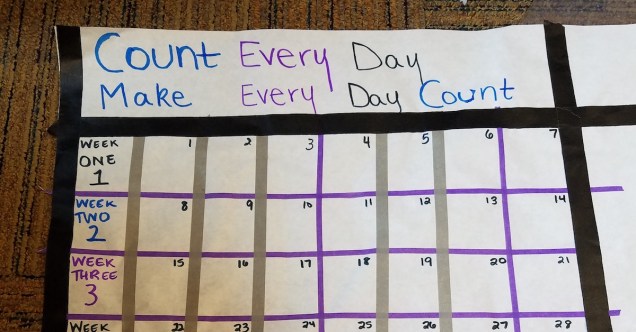
One way we’ve done this is through last year’s counting of the Omer. Our Shoreshim families created and decorated an Omer counter; our daily minyan members counted the Omer using the very same chart; and Aliyah joined in twice a week marking off the days. While none of these individual groups necessarily interacted with each other in person, they still had a shared experience, a collaboration.

The double portion we read this week, Vayakhel-Pekudei, includes the final portions of Sefer Shemot, and it teaches about the work of building the Tabernacle. Moshe, the great leader of the Israelite people since leaving Egypt, is given enormous responsibility. He is asked not only to lead the people and be the emissary between the Israelite nation and God, but also to handle the accounting of the materials needed to build the Tabernacle and all that goes with it.

The building of this communal resource is only possible, however, when the community works together and builds together. Construction projects don’t usually involve an entire community working hand in hand, but in the building of the Mishkan, each person is responsible for something in order to arrive at the beautiful finished product.

Whether or not we’re literally building together, this idea holds true for our community. Each act, each component is valuable. From the smile of a new infant coming to Tot Shabbat to the wisdom of our oldest members, we each have something to teach and something to learn from one another. Our Torah this week from these two portions reminds us that although we may not see each other in the synagogue building every day, we thrive when we connect and collaborate and build our beautiful Mishkan together.

Comfort Object – Parshat Ki Tissa 5778

comfort-object.JPG

As a new parent I had mixed feelings about “lovey” usage in our house. I myself was a lovey kid. In fact I still like to hold my old Snoopy whenever I’m home in Detroit, and I feel an immediate sense of calm. Selfishly, I didn’t want to be responsible for looking for and keeping track of a precious stuffed animal day and night. I had nightmares about it getting lost at school or leaving it on an airplane or in a restaurant, never to be seen again. I was adamant against a lovey.

Of course I quickly saw that Shiri had an attachment to one particular blanket material animal and knew we were going to be a lovey family. One secret (don’t tell Shiri) that eased my mind was having two identical loveys: one lives at school, the other at home, and they’re never seen in the same place.

When the world feels out of control, when things just don’t feel safe, children want their lovey to bring them back to calm. Whether it’s a tangible object or a mantra we repeat, it is human nature to have something that brings us calm and connects us to our most patient self. The Israelite nation is no exception. This week we read Parshat Ki Tissa from within the story of the Exodus. The Israelites are in the desert, they have received the 10 Commandments, and they are now set to continue on their journey, learning from Moses and God. Moses is on top of the mountain, and he is delayed in coming down. The Israelites are scared, unsure of this God that they have yet to trust. They gather their gold, make an idol, and turn their attention to something tangible.

The Israelites needed comfort. They needed their lovey. Moses, the only leader they have ever known, the one who has the connection with God and who took them out of Egypt, is gone. They have no tangible, physical way of understanding that God is with them. They badly need to know that there is something that grounds them, keeps them connected, and so they remember in Egypt the power of gold and idols. Hence, the golden calf is built. Despite the emotion of the moment, it wasn’t out of malice or anger or even rebellion that they built it. They simply needed a physical connection to God, and this was the only way they knew how to do it.

In my case, my “lovey” is ritual. I find myself most comfortable living a life of routine and regularity, which is perhaps part of what has always drawn me to the yearly cycle of Jewish tradition. Hearing the melody of the Kiddush for a holiday or singing Yedid Nefesh on erev Shabbat puts my heart and soul into a calm, cool, and collected place.

Parshat Ki Tissa reminds us that for better or worse we crave familiarity. May our lesson be to recognize this need so that when it is in fact time to step out of our comfort zones, we’re ready.