7 Days, 7 Blessings

You might be surprised by how much I’m asked about the meaning of numerical values in Judaism. Whatever power you might or might not ascribe to them, there are certain numbers whose repetition bears noting. The number 7, for example. There are 7 days of creation, 7 colors of the rainbow, 7 days of the week, 7 patriarchs and matriarchs. The number 7 is also prominent in the Jewish wedding ceremony. Traditionally, the bride circled the groom 7 times before going under the chuppah (the wedding canopy), or in modern times the couple circles each other 3 times each and then walks once together in a circle. In either case, it’s a nod to that moment of creation, and the creation of a home together.

In addition, our Torah portion this week, Parshat Vayetzi, focuses twice on the number 7: first as the number of years Jacob works for Rachel (which he has to repeat), and the 7 nights of the bridal chamber. This tradition of the “bridal week,” which is the week Jacob spent with Leah as a private time after their marriage, is still in existence today and is symbolized by the Sheva Brachot, the seven blessings. There are 7 blessings recited under the chuppah at a wedding ceremony and added to Birkat Hamazon, the prayer after meals, for the week following a wedding when the bride and groom are present. 

You can find the Sheva Brachot with translation, transliteration, and the original Hebrew here: 

https://www.myjewishlearning.com/article/the-sheva-berakhot

Do you notice any themes spanning multiple blessings? Perhaps harkening back to the theme of creation again? 

There is one significant milestone not marked by the number 7. As we learned in the Torah portion a few weeks ago, the bris, the covenant of circumcision, takes place not on the 7th day, but the 8th day of life. Why this variation from the magical number? It’s thought that 7 is a number of completion or a number representing a cycle. That would make 8 the next step forward.

Staying Grounded – Parshat Vayetzei 5784

I might have an online shopping problem. At first, when everyone was on lockdown, online shopping was a necessity. That’s how our family got the things we needed, like clothes, shoes, and art supplies and still felt safe from contracting COVID-19. We’re fortunate to be able to have done a lot of online shopping. Despite supply chain issues, thanks to expedited delivery systems, we all got used to the instant gratification of click, order, receive. The dopamine rush of waiting for a package to arrive and then opening it was both addicting and short-lived. These days, if something takes longer than a day or two to arrive, we all start to twitch in frustration just a little. 

It makes sense that we eventually take for granted whatever technology makes things easier and faster, and we simply become accustomed to getting what we want, when we want it. On the other hand, over the years we also risk losing our tolerance for a slightly slower pace of life. There’s a balance between acquiring the things we need in a timely fashion and having the patience to wait for them. To stay grounded requires that balance in our lives, and Jacob, the main character in this week’s Torah portion, learns this lesson . . . and without the benefit of Amazon Prime. 

Parshat Vayetzei is the beginning of the vivid dream sequences that lead us through the next phase of our Torah cycle. The text picks up with Jacob on his journey away from his parents’ house to meet his cousin, Lavan, and the strange dreams and encounters he has with godly creatures along the way. He ends up falling in love with Rachel, and he works for her hand in marriage, but ends up being tricked into marrying Rachel’s older sister Leah. Fast forward a few more years of work, and the prize of having Rachel as his wife is realized. The text continues with the birth of Jacob’s large family and Jacob’s journey away from his father-in-law Lavan to a new home. 

We knew Jacob was a dreamer. At the beginning of the Torah portion, he dreams of a ladder that connects the heavens to the earth. This dream is the one from which he awakes and proclaims, “Wow! God is here and I wasn’t aware.” Jacob is deeply connected at this moment to the gratitude of being safe and present. Later, however, Jacob dreams about increasing the number of sheep and goats that he owns. An angel comes and reminds him of who he used to be. Under the presence of Lavan, his father-in-law, Jacob was corrupted by power and material resources. He lost the connection to his humble roots and his faith in God’s providence. 

This Torah portion is a humble reminder not to get carried away by newfound leisures or conveniences. We might not all get such revelatory messages in our dreams, but it’s just as important that we remain grounded. Of course it’s only human to have desires and wants, but it’s also human to find and remain in balance with the world around us. We too can be dreamers, as long as we don’t forget our reality along the way.

Slow Down, You Move Too Fast – Parshat Vayetzei 5783

When I was a child, my mom used to play Simon and Garfunkel in the car on the way to preschool. I have vivid memories of singing along with those words, “Slow down, you move too fast” from “The 59th Street Bridge Song.” I don’t think at the time either of us was aware of the moment and the message it held in it, but now, as the parent of a 6- and 9-year-old, I can’t help but think, “Goodness, slow down!” Time is moving much too fast.

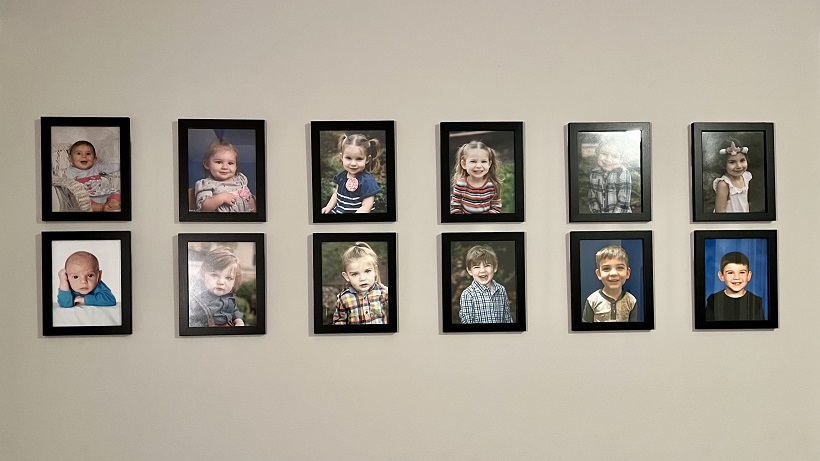
I glance up at their school pictures hanging in the hallway upstairs, wondering how time has continued to move at such a pace. It isn’t that I didn’t know time was moving, it just feels as though they’ve grown in the blink of an eye. They were just babies yesterday, and now, they’re big. What is it about time and our living in it that makes it both simultaneously slow and fast?

This week’s Torah portion perhaps gives us a peek at the reasoning. Parshat Vayetzei begins with Jacob on the run from his angry brother, fleeing his home and the mess that has become of his family dynamic. Exhausted, he lies down and has this crazy dream in which God comes and speaks to him. God gives Jacob marching orders, a legacy to hold and create, and a full sense of his mission in life.

As we read this week’s Torah portion, we see Jacob in pursuit of Rachel. As time goes on, it is explained by Jacob as a feeling that “seemed but a few days.” Certainly years of labor and stress did not fly by. What Jacob apparently means is that his love, the desire he felt in those moments, simply made the time pass faster.

When we look forward to something, when we’re fully present, time has a way of both standing still and moving faster than we realize. Parshat Vayetzei reminds us that those moments allow us to see clearly all that has passed and perhaps the immediacy of the future. Time never actually stands still, which is why it’s often annoying when anyone tells you to “enjoy the moment because you’ll miss it” as if there was anything we could do about it. Time is finite and fleeting, but, if we’re lucky, we’ll be able to carry and pass on the memories of the times that meant the most.

Finding Home – Parshat Vayetzei 5782

I love finding family. For a bit of background, I grew up around lots of cousins on my mom’s side, including first, second, and third cousins. You could practically call it an entire family tree. We were so close that I never really distinguished between degrees of cousinhood; we were just cousins.

On my dad’s side, however, there were many cousins I never met. That’s because they were from a generation before me, since I have no first cousins on his side. This makes it all the more surprising and exciting that three times since I moved to Portland, I’ve had opportunities to connect with relatives. The first time happened when I accepted my position at Neveh Shalom. After the official announcement went out, I received an email from a cousin who lives nearby who was excited to hear I was coming “home.” (Hi, Ruby!) Then, a few years ago, I was officiating a wedding, and after the ceremony a guest came up to me and introduced herself as a cousin. She looked just like my sister, and we actually knew each other in passing when we were much younger. (Hi, Lindsey!). And most recently after our Covid-19 High Holiday services, I received an email from another cousin who just moved to Vancouver, WA and whose father actually delivered me when I was born. (Hi, Jeff!) That connection was made through watching our live streamed services. In each instance I was grateful for the moment of connection and the deep feelings of family bonds, despite reconnecting after a long time or for the very first time.

I’m not alone in this desire to be connected to family near and far. It’s actually expressed quite beautifully in this week’s Torah portion. Parshat Vayetzei begins with Jacob fleeing his home, on the run from his angry brother and the mess that has become of his family dynamic. Exhausted, he lies down and has this bizarre dream in which God comes and speaks to him. God gives Jacob marching orders, a legacy to hold and create, and a full sense of his mission in life. Much like his father Isaac, the journey is into the unknown. But unlike his grandfather, Abraham, Jacob finds family almost immediately. 

Jacob sees his cousin Rachel and once he sees her, he’s so overjoyed to recognize her, he embraces her with a kiss. While I didn’t kiss any of my cousins on the first meeting, I do relate to Jacob’s joy and jubilance at finding family in a new place when he’s feeling all alone. For Jacob, seeing Rachel was finding connection to his past and knowing that there was someone who was like him. That was enough for Jacob to feel at home, to feel safe after he’d run from his brother, and to feel like God was really with him.

When I’ve examined these verses with students, they’re usually quick to ask what it means in Jacob’s dream that God “will not leave you until I have done what I have promised you.” Perhaps one of the best lessons we learn from this parshah is that feeling a sense of home, of family, is a powerful way of feeling God’s presence. As we enter the darker part of our year, may we be embraced by light and warmth and that comfort of home whenever possible.

Fully Dressed – Parshat Vayetzei 5781

Has anyone reminded you to make sure you’re wearing clean underwear? If you’re like me, you’ve had it drilled into you that no matter what, when you leave the house, always make sure you’re covered for any eventuality. If there’s an accident or an emergency, you want to be not only prepared, but presentable.

A few months ago, I had an experience that made me recall this advice and regret not heeding it. I was driving home from CNS after dropping off my tiny human for school. The sun was shining, the world was beautiful, and then another driver ran a stop sign and hit my car. My first instinct (after I made sure the other driver and I were both OK) was that it was very warm out, and I was dressed for a quick jaunt to CNS for dropoff before heading home to change. Instead, I spent two hours outside in the beating sun in running leggings and had to choose between a warm fleece that provided too much coverage or a tank top that didn’t provide enough coverage. While my car was filled with enough snacks (and crumbs) to feed me for months, I did not go out with enough clothes for every occasion.

This week, as we read our Torah, we’re reminded what we need to bring as we leave our homes. Parshat Vayetzei begins with Jacob on the run from his angry brother, fleeing his home and the mess that has become of his family dynamic. Exhausted, he lies down and has this crazy dream in which God comes and speaks to him. God gives Jacob marching orders, a legacy to hold and create, and a full sense of his mission in life. 

The question from this Parsah for me is, how are we supposed to go out into the world? How much emphasis and preparation should we put into being presentable at all times? In other words, what matters more: what’s underneath the surface or what people see? For so much of our lives we’ve been taught to look beyond the surface and not judge a book by its cover. But when you’re stressed, angry, or frustrated, you’re not putting your best foot forward, yet the surface level is all people see because they don’t look beneath. So when it comes down to it, is it more important to look prepared even if you’re not, or be emotionally prepared even if you don’t look it? 

I think what we’re supposed to take to heart from Parshat Vayetzei is that when we go out into the world, the best we can do is approach life as prepared as we can be with the information we have. We shouldn’t be completely internally or externally focused; rather, we should be willing to receive each moment and each individual as we encounter them. And hopefully they’re wearing underwear too.