Healing Words and Healing Actions

“Sticks and stones may break my bones, but words will never hurt me.” We know this isn’t true. Words can wound deeply—and also heal. In this week’s double portion, Tazria-Metzora, the Torah offers a layered exploration of both the power of words and the potential for healing, inviting us to reflect on speech, gratitude, and the journeys—physical and spiritual—we take toward wholeness.

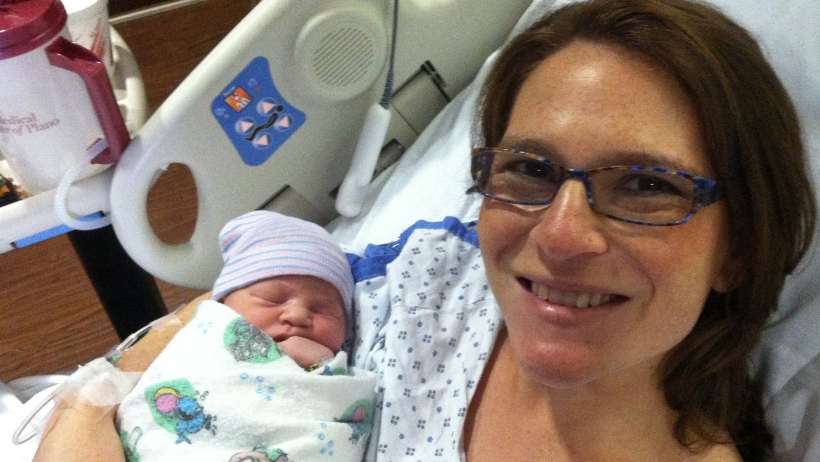
Parshat Tazria opens with a woman’s recovery after childbirth, detailing a ritual of purification and offerings. In ancient times, childbirth was not only spiritually significant, but perilous. The Torah’s acknowledgment of that danger—followed by the mother’s eventual reintegration into communal and spiritual life—echoes a profound truth: survival itself is sacred. Today, when a parent safely delivers a child, we still carry this awareness. It’s reflected in the blessing of Birkat HaGomel, recited by those who emerge from danger: “Blessed are you . . . who bestows goodness upon the undeserving and has granted me all good.” It’s a powerful reminder that recovery calls not only for relief, but for gratitude.

Later, the parshah transitions into a discussion of tzara’at, a skin affliction often interpreted by the rabbis as a spiritual consequence of lashon hara—harmful speech. This theme continues into Parshat Metzora, where the afflicted person undergoes not only physical inspection and quarantine, but ultimately, a ritual of release and renewal. A live bird is set free, symbolizing reintegration and new beginnings. Like the mother after childbirth, the metzora is welcomed back into community—restored, renewed.

Though tzara’at may no longer appear on our skin, its lessons linger. Harmful speech still isolates. Gossip still wounds. But just as the body can heal, so too can relationships, when we take responsibility and seek repair. And just as we recite Birkat HaGomel for physical healing, perhaps we might imagine a blessing for the restoration of our words—when our speech turns from tearing down to building up.

Our siddur offers us such a model. Each morning, we begin Pesukei d’Zimra with Baruch She’amar—“Blessed is the One who spoke, and the world came into being.” God’s speech is not destructive, but creative. It builds worlds. If we are made in the divine image, then our words, too, can create. They can comfort, connect, and bless.

So this week, what if we treated our words and our health as equally sacred? What if we offered gratitude not only for physical healing, but for the chance to speak kindly, to start fresh, to repair what was broken? In doing so, we echo both Birkat HaGomel and Baruch She’amar—giving thanks for survival, and honoring the creative holiness within every word.

May our speech be life-giving, our gratitude expansive, and our healing—physical and spiritual—a source of blessing for ourselves and others.

Pure Connection – Parshat Tazria 5784

Parshat Tazria is known for its discussion of childbirth and related rituals. There’s talk of bodily fluids, circumcision, and prescribed “purification.” And like many Torah portions, there’s an inherent contrast in the text we read this week. If the time following childbirth requires a certain period of purification, that implies that giving birth is an impure act in some way. Yet could there be a more God-like experience than childbirth? Many mothers point to that moment as a time when they felt God’s presence. However, as usual, I think there’s a deeper meaning to what the Torah offers.

One of the central themes of Parshat Tazria is the importance of awareness of our words and actions. In the context of the laws we receive about “impurity,” this means being mindful of the ways in which we can unintentionally cause harm to others. For example, if someone were to spread rumors or gossip about a person with a skin disease, they would be contributing to that person’s isolation and stigmatization. Similarly, if we fail to support and care for women after they give birth, we risk contributing to their feelings of vulnerability.

But the lesson of Parshat Tazria goes beyond just awareness. It also calls on us to actively seek out opportunities to bring healing and connection into the world. This is reflected in the detailed rituals of purification that are described in the Torah portion. These rituals require not only the participation of the person who is “impure,” but also the active involvement of others in the community. For example, in the case of someone who has given birth, it is the community’s responsibility to provide support and care to help them regain their strength and return to a state of purity.

This message is particularly relevant today. Though most of what we consider normal activity has resumed following the pandemic, we continue to grapple with the effects of the isolation we experienced. We’re finding that we have to rededicate and recommit ourselves to the values of community and what it looks like to care for one another, whether it’s through acts of everyday kindness or simply taking the time to listen and connect with others.

As we reflect on the lessons of Parshat Tazria, let us remember that our words and actions have the power to either cause harm or bring healing into the world. May we strive to be agents of healing, and may we continue to work towards building a world that is characterized by kindness, compassion, and connection. Shabbat shalom.

Uncommon Cold – Parshat Tazria-Metzora 5783

How many of you have had the experience over the last four years of looking at someone who was coughing or sneezing (or had any signs at all of being under the weather) and pulled back just a little because “Oh no, Covid”? How many times did you have to excuse your seasonal allergies so that you weren’t shunned for “Covid-like symptoms?”

In a pre-Covid world, we might have assumed the best, if you can call a cold or allergies “the best.” In our post-Covid world, we have to do extra work to decipher what’s a cold, what’s the flu, what’s allergies, and what’s a potentially life-threatening virus we can spread to others. That’s not to say these other illnesses can’t be deadly or highly contagious, but simply that we have a whole new understanding of how to recognize and classify symptoms.

The truth is, our Torah has been guiding us on quarantining and recognizing ailments since the very beginning, and it kicks off in this week’s double Torah portion of Tazria-Metzora. The text of these parshiyot tell us of the laws for the purification of our homes and our bodies after disease or death has occurred. The laws remind us that our bodies and our places of residence need to be treated with the utmost respect. We also have the obligation to help one another maintain healthy lifestyles and support one another when we find ourselves with impurities. 

It’s interesting, in our modern, post-Covid world, to read laws about how we purify ourselves (sanitizer, anyone?) and about quarantines well before modern medicine and our current support systems were in place. What it comes down to is the human connection we feel when we care for one another. Illness doesn’t mean that you’re somehow morally flawed; it means that we have work to do to bring healing. As we read this week’s double portion, we’re reminded just how important it is to be both aware of our own bodies and respectful enough of others to keep our fellow community members safe. 

The Little Things – Parshat Tazria 5782

I like to think of myself as a pretty observant person. I take in small details and notice when something has changed, whether it’s a haircut, landscaping, or new jewelry. I’m pretty sure I’ve been like this for most of my life. In fact, I like noticing little changes, and it can make other people feel good and feel very seen when someone notices those little changes. Not only that, but being aware of tiny changes can actually save lives.

About 18 months ago, I found a small lump in my armpit. I was doing my monthly self check and noticed something small, like a ball rolling around. I did my best not to panic, but inside I was going through every worst case scenario I could think of. I scheduled a virtual doctor visit to get some clarity and then ended up with a quickly scheduled mammogram and ultrasound. Turns out, it was just a harmless little cyst that I then had removed. Being aware of my body’s tiny changes was enough for me to catch something that could have been a lot worse. 

Our Torah portion this week is a call to notice those small changes so we can take care of ourselves. This week we read from Parshat Tazria, one of two portions in the Torah that deal explicitly and fully with transitioning in and out of states of purity. The text begins with the notion of “impurity,” specifically the transitional states after childbirth, and continues with the treatments and prescriptions for what to do when a person needs cleansing of both body and material items in order to reenter the world.

As the Torah lists all the different ailments to watch out for – and there are many – it draws great attention to noticing change: hair that once had color but is now white, or skin that was pink and is now ashen or dry. Each of these little changes might be a sign of a different ailment. And the awareness of these changes can be lifesaving for the person infected and even the community around them.

Consider this your reminder to schedule that annual physical, go to the dentist, get a haircut, and get to know yourself. Like that postcard from the dermatologist, Parshat Tazria is our biblical yearly reminder to pay attention to our bodies. The Torah is not suggesting we be hypochondriacs, but simply to be knowledgeable and aware so that we can take the best possible care of ourselves and others.  

In the Heat of the Moment – Parshat Tazria 5779

heat-of-the-moment.jpg

I’m in that category of women who have never actually experienced a contraction or labor pains. Because of a fluke eye hemorrhage, I was required to have my daughter via C-section and subsequently chose to deliver my son that way as well. I didn’t go into early labor in either case, so clearly both of my children were perfectly content to remain where they were. Both arrived at full term on their due dates via the skilled hands of my medical team.

It may sound like I ended up with the easier option, avoiding labor, but a C-section is no picnic either. There was plenty of pain and discomfort involved, especially in the recovery process. In fact, I’m sure when I took those first few steps in my hospital room after Shiri was born, I vowed I would never go through that again. But then of course I did. And I’m certain I’m not the only woman to have sworn off childbirth while in the pain of labor or the recovery after a C-section. Even our ancient texts cover birth in a variety of ways besides just the ancestry side.

This week we read from Parshat Tazria, one of two portions in the Torah that deal explicitly and fully with transitioning in and out of states of purity. The text begins with the notion of “impurity,” specifically the transitional states after childbirth, and continues with the treatments and prescriptions for what to do when a person is in need of cleansing of both body and material items in order to reenter the world.

The text begins with the offerings a woman must make after she gives birth. This is seen primarily as an offering of gratitude for having survived the experience of childbirth; however, a commentator from the Talmud in Tractate Niddah teaches that this offering is to annul a vow of “never again” that a woman might make after the pain of giving birth. The creation of new life is powerful, spiritual, and painful, and the text in this week’s parshah is aware of this enough to understand that in the heat of the moment we might make statements we don’t mean to uphold.

Whether in regard to childbirth or any physically or emotionally draining experience, the Torah gives us the ability to atone for our poor choices, even our choice of words. While we always want to choose our words carefully, this is a helpful reminder that no one is perfect. The best we can do is acknowledge our shortcomings and our unintended vows so we can move on and do better.