Two Years Since October 7

This is the drash I delivered at Congregation Neveh Shalom on the first day of Sukkot, 2025.
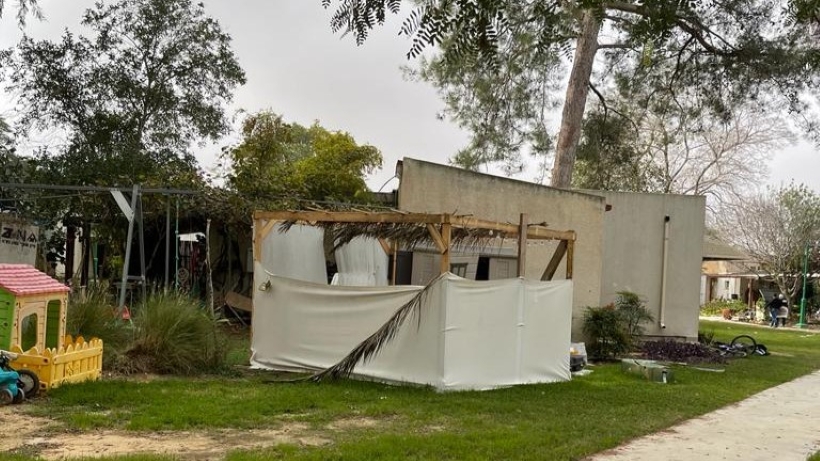

Each year when we step into the sukkah, there’s that first moment when the air hits differently. The roof of branches lets in sunlight by day and stars by night. We feel exposed and vulnerable, yet held. It’s an intentional fragility, a reminder that the sturdy walls we build around ourselves are never what truly keep us safe. This year, as we mark two years since the October 7, 2023 Hamas massacre, that feeling of fragility carries deeper weight. The world changed that day. The illusion of safety was shattered, not only in Israel, but for Jews everywhere who felt the tremor of that brutality echo through our souls.

On the first day of Sukkot, we read from Leviticus 22–23, where God commands us to dwell in sukkot so that future generations will remember that the Israelites lived in temporary shelters when God brought them out of Egypt. The Torah insists that we celebrate in a festival of joy, z’man simchateinu, even while sitting in a structure so impermanent that a strong wind could knock it down. We are called to hold joy and fragility together. The sukkah teaches us with its flimsy walls that safety is never guaranteed, and at the same time, the command to rejoice reminds us that resilience and gratitude are also sacred obligations.

On October 7, 2023, the fragility of our people’s sukkah was made unbearably real. Over 1,200 lives were taken in an act of pure terror, and even as we condemn the monstrous brutality that would deliberately target civilians and hold hostages to this day, stories of courage and compassion emerged. Stories of neighbors protecting neighbors, of Israelis and Jews worldwide rushing to support one another, of hope refusing to die. Amid the devastation, the sukkah stands for hope. It is fragile, yes, but it’s also full of the light of the stars shining down from slivers in the roof. Each branch or bamboo pole laid across the top is an act of faith that the world can still be repaired, that humanity can still choose compassion over cruelty.

As we sit beneath the stars this Sukkot, may we let the sukkah’s openness remind us of our shared responsibility: to protect life, to reject violence, to hold fast to hope even when it flickers. May the memories of those murdered sanctify our commitment to peace. And may the fragile walls around us become a testament not to what was lost, but to the enduring strength of a people who still choose to dwell in joy, faith, and love.

The Anatomy of a Blessing – Sukkot 5785

Shannah tova! Here we are at the very beginning of a new year, which means it’s an opportunity to look back at the year(s) past and look forward to what lies ahead. It’s almost hard to believe I’ve written a weekly divrei Torah for 14 years straight. In other words, I’ve written my own version of commentary on the Torah 14 times over.

Over this time, my weekly and yearly practice has been to look at the Torah through the lens of our present world and relate it to contemporary life in some way. This year our congregation is focusing on the concept of blessings and the ability to respond with “amen.” A blessing is a way to mark a moment in time or an experience, and saying “amen” affirms and confirms that these moments and the people in them are seen and noticed. 

I was inspired by this year’s theme to offer a slight twist on my weekly writing. This year I will do my best to relate each parshah, each portion of the Torah, to a relevant blessing that can be said in our daily lives. 

On the High Holidays, Mel Berwin talked about the anatomy of a blessing. Each blessing begins with the words “Baruch Atah” (Blessed are You) reminding us that blessings are between God and the individual. But the next set of words “Adonai Eloheinu” (Adonai/HaShem our God) expands the blessing from a one-on-one relationship with God to the communal with the addition of first person plural. And finally “Melech HaOlam” (Ruler/creative energy of the universe) broadens this connection even further to the whole universe, the bigger picture that ties us to the past and future as well. 

As we begin Sukkot and say a variety of blessings to usher in the uniqueness of the holiday, from leisheiv basukkah (sitting in the sukkah) to al n’tilat lulav (shaking the lulav) to the Shehecheyanu, may we use these blessings as opportunities to find and recognize other blessings in our lives and hopefully tap into some much-needed joy along the way.

Shelter of Peace – Sukkot 5776

shelter-of-peace

Yesterday was a difficult day.  Even’t if I hadn’t been accidentally woken at 5:30 am by an ill-timed Siri alarm, it still would have been a day filled with emotional extremes.

I attended the funeral of a beloved man in our community, and with those touching moments still fresh on everyone’s minds, we learned of the horrid terror attack in Israel against an innocent family and the baseless gun violence that happened in my own state of Oregon at Umpqua Community College.  I was in tears watching the news when my daughter walked in the door from playing.

“Mommy,” she called as she walked in. “Let’s eat in the sukkah.” I gathered my tears and my strength for this beautiful two-year-old so she shouldn’t know my pain.

Ufros Aleinu sukkat shlomeicha.  My favorite line of our liturgy. God spreads over us a shelter of peace.  I meditated on this line as I joined her for a quick dinner in our own sukkah of peace.

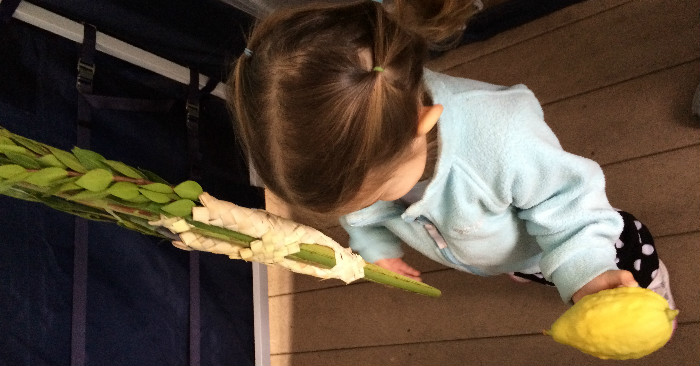
I thought about the symbols of this holiday. While I love the sukkah, I’ve always been uncomfortable with the lulav and etrog.  They feel pagan, phallic, and foreign to me.  But I was determined to show my sweet, innocent two-year-old a world in which our discomfort pushes us to accept, to look beyond.

There is a rabbinic teaching that gives each of the four species of the lulav and etrog a body part, and this teaching helped me to find meaning even in my least favorite part of the holiday.

Hadas:  the myrtle is for our eyes.  I am grateful to raise my child with eyes that can see past discomfort and difference.  I want to raise her with eyes that can see injustice and work to fight it, eyes that see human beings as valuable and worthwhile.

Aravah: the willow, the mouth.  My daughter, and all of our children, should be blessed with mouths that speak love, truth, justice, and kindness.  May her mouth be filled with words of peace, with words that are stronger than violence.

Lulav: the tall, strong palm, and the spine.  May our children grow to be strong, upstanding human beings. May they stand firmly against injustice and violence, and only for peace, love, and what is good in our world.

Etrog: the citron.  This is the heart.  May we raise our children to let their hearts shine through. A world filled with love, passion, and understanding is a world that fulfills God’s promise of a shelter of peace.

This year, may your sukkah represent growth and understanding, peace and listening.  The lulav and etrog represent the foundation on which we must raise future generations so that we may someday see an end to gun violence and hatred of all kinds.  This is the blessing of our holiday.