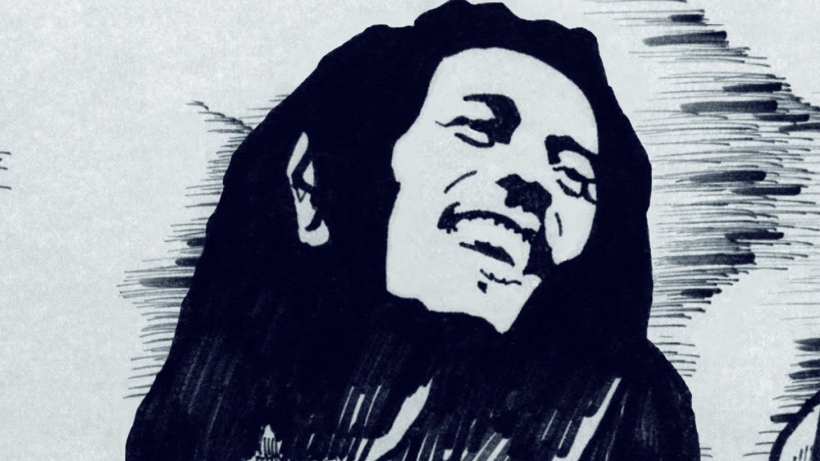
Redemption Song

As Cantor Bitton knows, I love the use of contemporary melodies matched with ancient liturgy. It’s one way of making prayer more accessible, something Jewish composers have been doing for hundreds of years. One of my favorite mashups is Bob Marley’s “Redemption Song” sung as the melody for the Mi Chamocha prayer. The original lyrics to this song are often on repeat in my head. They speak of being redeemed from the “bottomless pit” which is the mental and physical pit of slavery in US history, but also paints a picture of the story of Joseph, who was thrown into a pit, escaped those bonds to fame in Egypt, and brought us to this moment in our Jewish narrative, as the Israelites have been thrown once again into the bottomless pit with a new pharaoh. 

Parshat Shemot marks the beginning of the Exodus and redemption of the Israelite nation from Egypt to the story of their own nationhood. The themes of redemption and sacred human dignity repeat again and again throughout the book because redemption is both a human experience and a partnership with the Divine.  

As part of the weekday Amidah we recite the following blessing, which is one powerful connection to the idea of redemption:
“בָּרוּךְ אַתָּה ה’, גּוֹאֵל יִשְׂרָאֵל”
“Blessed are You, God, Redeemer of Israel.”

Additionally, a meaningful personal blessing inspired by Parshat Shemot could be:
“May you be blessed to recognize your sacred mission, like Moses, and to act with courage and humility in partnership with God to bring freedom and justice to the world.”

This blessing encapsulates the idea of Moses’s journey from self-doubt to leadership and God’s call for human action in the pursuit of redemption.

Are We Worthy? – Parshat Shemot 5784

Here’s a question to ponder about our biblical narrative: what would have happened if, at any point, God had decided that the Jewish people were not worthy of redemption? Or worthy of receiving the Torah? It’s a question without an answer because it hypothetically negates the existence of Judaism altogether. However, at certain times in the Torah, we see what happens when God seems to consider the worthiness and the future of the Israelites.

This week we begin the book of Shemot with the parshah of the same name. Shemot leads us quickly through the change in leadership in Egypt as a new Pharaoh, one who isn’t so keen on the Israelites, decrees that all males born should be put to death. Thankfully the midwives ignore this decree, and Moshe is kept alive. As an adopted Egyptian, Moshe joins the palace, but later learns he’s an Israelite. He flees out of fear for his life, marries a Midianite woman, and starts his own family.

In chapter two, we learn how God observed the Israelite nation: “God looked upon the Israelites.” This verse implies that God was checking on the people to see exactly how they were handling this latest stumbling block in their journey. An ancient commentator conjures the image of God observing the Israelites to see the choices they make. Were they fighting and competing with one another? Or, were they working together? Despite their misery, God sees the Israelites trying to help one another instead of each person only looking out for themselves. When one finished a task, that person would help another finish their job. Therefore, it’s because of this teamwork that God sees the Israelites as worthy of being freed from Pharoah’s harsh labor.

Imagine being an Israelite in Egypt with the new king who enforced harsh physical labor on the community. There were quotas to fill and deadlines to be had. They could have easily adopted an “every person for themselves” mentality, but the Israelites knew the best way – perhaps the only way – forward was to work together. Yes, God provided the circumstances and the leader for their redemption, but this unity of purpose is what led the Israelites out of slavery and into the world where Judaism became our religion.

As they say, teamwork makes the dream work. As a community, we support one another, even when it might not always be the easiest of work. The survival of our people has always hinged on knowing when to support one another, putting aside competition, and instead standing together. That’s how we continue to prove we are indeed worthy.

When No One Is Around – Parshat Shemot 5783

It has been said that the test of true character is how you behave when no one is around or watching you. I’m not talking about picking your nose in the car or looking around before adjusting your underwear. Do you pick up lost items in the street and try to find their owner? If you see a piece of trash on the beach, do you throw it away? Throughout the Torah we see examples of individuals making choices, believing no one will see them. The second book of the Torah begins with one such story. 

This week’s parshah serves as the turning point between the leadership of Abraham, Isaac, and Jacob to that of Moshe. Shemot leads us quickly through the change in leadership in Egypt as a new Pharaoh, who isn’t so keen on the Israelites, decrees that all males born should be put to death. Thankfully the midwives ignore this decree, and Moshe is kept alive. As an adopted Egyptian, Moshe joins the palace, but later learns he’s an Israelite. He flees out of fear for his life, marries a Midianite woman, and starts his own family.

As Moshe is enlightened to the injustice around him, he has a decision to make. Does he act? Does he risk his position? When Moshe sees an Egyptian beating a Hebrew slave, he “sees no one is around” and then chooses to act. Why does he look over his shoulder? Could it be because he knows he’s about to do something that would forever change the way he’s seen by Egyptians? Is it because he thinks he can get away with it? Or, perhaps because he’s hoping someone else will step up, and he only acts when he knows he’s the only one who could step in?

One of my favorite teachings in Pirkei Avot is from Hillel: “In a place where there are no people, strive to be a person.” I like to believe that Moshe stood up because if he didn’t, no one else would. It’s important to know that each of us has a voice, even if there’s not a chorus of other voices joining in.

Please Remove Your Shoes – Parshat Shemot 5782

We renovated our house more than four years ago, and part of the renovation included adding a mudroom. So why, after all this time, do my kids still forget to put their shoes in their cubby in the mudroom when we come in? The joy of having a mudroom (and individual cubbies) is that each family member has their own space for things, and the rest of the house stays cleaner and relatively free of mud. However, to be fair to them, the “shoes off at the door” policy wasn’t mandatory year round when I was growing up. In our house we had a bench by the garage door that was mostly used in the winter months for taking off shoes caked in mud and snow (and probably soaked). Needless to say, I didn’t always remember to take my shoes off at the bench either. 

As an adult, on the other hand, I can’t wait to remove my shoes. I love nothing more than a cozy pair of slippers in winter and the cool floor on my feet in summer. Both of those feelings connect me to the feeling of being home, in my own space. As much as I’d love to be barefoot at work or wear slippers in the office some days, I don’t, and having that separation is helpful. Although there are exceptions in some cultures and religions, the removal of shoes is usually reserved for private spaces. But that’s not the case in this week’s Torah portion.

This week’s parshah, Shemot, serves as the turning point from the leadership of Abraham, Isaac, and Jacob to that of Moses. Shemot leads us quickly through the change of rulers in Egypt as a new Pharaoh who isn’t so keen on the Israelites decrees that all males born should be put to death. Thankfully the midwives ignore this decree, and Moses is kept alive. As an adopted Egyptian, Moses joins the palace, but later learns he’s an Israelite. He flees out of fear for his life, marries a Midianite woman, and starts his own family.

As Moses is out tending to the flocks of his father-in-law Jethro, he happens upon a special place, the mountain of God, Horeb. He sees an angel of God in a blazing fire that is engulfing a desert bush, but somehow not consuming it. Moses is mesmerized. As he’s contemplating what is happening before his eyes, God calls out to Moses and makes a peculiar request for someone standing in the middle of the desert. “Remove your sandals from your feet, for the place where you stand is holy ground.”

Why on earth would God ask Moses to take off his shoes? Yes, the presence of God is pretty significant, but why here and not at some of the other holy sites previously visited in the Torah? Perhaps this is a moment when Moses needed to be grounded, literally. After all, this is the moment God calls out to Moses and informs him that he’s going to be the one to lead the entire Israelite nation out from Egypt. Feeling the earth on his feet is a reminder that God is connected to him and the line of creation from Adam to Abraham to Moses. 

When we take off our shoes, it’s not just that the space we’re in is holy and sacred; it’s that we ourselves are holy, and making a direct connection – holy to holy – is one small way we can connect ourselves to everyone and everything that came before us.

But the Fighter Still Remains – Parshat Shemot 5781

I am a fighter. Not in the boxing ring, and not even with other people usually; I’m a fighter for justice, for what I believe in, and for what I want to accomplish. Like lots of kids, I had my own obstacles early on in life. I struggled to make friends easily, and I often felt on the outside of large groups. I always seemed to be on the periphery instead of experiencing those tight connections others were making. This also manifested itself in my grades and school performance. In my pre-college academic career I was a B average student, and my high school guidance counselor didn’t think I’d get into the University of Michigan.

At some point I realized that each time one of these obstacles came at me, I had a choice. I could let the internal and external negativity affect me. I could let it get me down and stop pushing myself forward. Or I could fight hard, learn coping strategies, and work my way into the place where I wanted to be. This wasn’t easy, and there were and still are plenty of times when I feel like throwing in the towel, when I feel like I don’t have any fight left in me. Somehow there’s always a new spark of energy, a new drive to fight.

This week we read Parshat Shemot. This parshah serves as the turning point from the leadership of Abraham, Isaac, and Jacob to that of Moshe. Shemot leads us quickly through the change in leadership in Egypt as a new Pharaoh, one who isn’t so keen on the Israelites, decrees that all males born should be put to death. Thankfully the midwives ignore this decree, and Moshe is kept alive. As an adopted Egyptian, Moshe joins the palace, but later learns he’s an Israelite. He flees out of fear for his life, marries a Midianite woman, and starts his own family.

In the wilderness, Moshe comes across an odd sight. He sees a blazing fire coming out of a bush but not consuming the bush. As Moshe takes note of this spectacle, God calls out to him to remove his shoes, respect the sanctity of the moment, and hear God’s promises.

Plenty has been said about the fire, but what about the shrubbery itself? Interestingly, the exact plant is often understood to be a thorn bush. Why would God choose a type of bush which by nature pushes others away? Why not an olive tree or a sycamore? Ancient philosopher Philo teaches that the bush burning and not being consumed symbolizes the Jewish people, perpetually attacked and endangered, but perpetually surviving. The thorn bush, the humblest bush, is just doing what it needs to survive, and it comes back, it is not consumed.

Parshat Shemot is just the first in a long line of narratives about the Israelites (later the Jewish people) in which we will be met with fire, yet not consumed. The call of God from the bush is the reminder to us all that the earth we stand on is holy because we are holy, and the fire of others cannot consume us.