Recurring Covenant

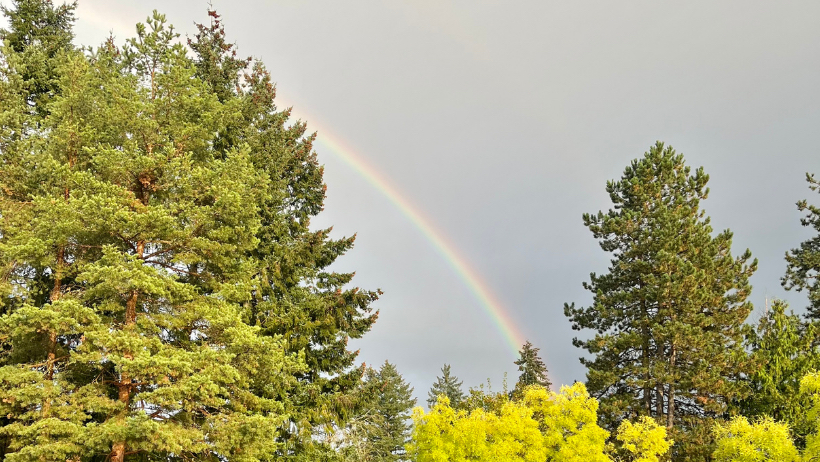
Parshat Noach, our Torah portion this week, is famous for the two central accounts that take place: first, the flood of the earth to drown out those who were not righteous, second the Tower of Bavel and the subsequent spreading out of the nations and languages. These two narratives are bridged together by the expectations for humankind to behave in an honorable and righteous manner and the covenant established between God and the generations to come, symbolized by the rainbow. 

In our parshah, chapter 9 verses 12-16, the rainbow officially takes new meaning. The text states: “God further said, “This is the sign that I set for the covenant between Me and you, and every living creature with you, for all ages to come. I have set My bow in the clouds, and it shall serve as a sign of the covenant between Me and the earth. When I bring clouds over the earth, and the bow appears in the clouds, I will remember My covenant between Me and you and every living creature among all flesh, so that the waters shall never again become a flood to destroy all humankind. When the bow is in the clouds, I will see it and remember the everlasting covenant between God and all living creatures, all flesh that is on earth. That,” God said to Noah, “shall be the sign of the covenant that I have established between Me and all flesh that is on earth.” 

Rambam, the great medieval commentator Rabbi Moses ben Maimon, teaches that the rainbow is a sign of God’s covenant not to destroy the world again, a sign of peace. This sign is the only phenomenon that had already existed in the world that becomes invested with a new symbolic significance. The rainbow, in Hebrew keshet, represents all of the different shades and colors of our world bound together in a single instance. It stands as a reminder that while each of us has our differences, those differences should never push us apart. And just as importantly, it sets an example of how we should keep our promises to each other, as God did to us. 

When we see a rainbow, we are obligated to say the following brachah:

בָּרוּךְ אַתָּה ה אֱ לֹהֵֽינוּ מֶֽלֶךְ הָעוֹלָם, זוֹכֵר הַבְּרִית, וְנֶאֱמָן בִּבְרִיתוֹ, וְקַיָּם בְּמַאֲמָרוֹ.

Blessed are you, Adonai our God, ruler of the world, who remembers the covenant and is faithful to it and stands by his word. 

Even today, every rainbow we see is a reminder of God’s relationship with humankind. More than that, when we take the time to take in the rainbow, to pause and remember that the covenant God made comes with expectations of humanity to treat one another with kavod, respect, we renew our covenant with God and create a kehillah kedosha, a holy community.
The Lion and the Lamb – Parshat Noach 5784

There’s a well-known fable about a frog and a scorpion. The scorpion wants to cross a river but cannot swim, so it asks a frog to carry it across. The frog hesitates, afraid that the scorpion might sting it, but the scorpion promises not to, pointing out that they would both drown if it killed the frog in the middle of crossing. The frog considers this argument sensible and agrees to transport the scorpion. Midway across the river, the scorpion stings the frog anyway, dooming them both. The dying frog asks the scorpion why it stung, despite knowing the consequence, to which the scorpion replies, “I am sorry, but I couldn’t resist the urge. It’s in my nature.” 

This parable is meant to teach that sometimes our instinctual or habitual ways win out, even when they’re not in our own best interest. The scorpion could not resist the urge to do what he always does, even if it meant that he would ultimately die along with the frog. At the same time, the frog, seemingly a natural helper, took a chance on the scorpion, knowing there was risk involved.

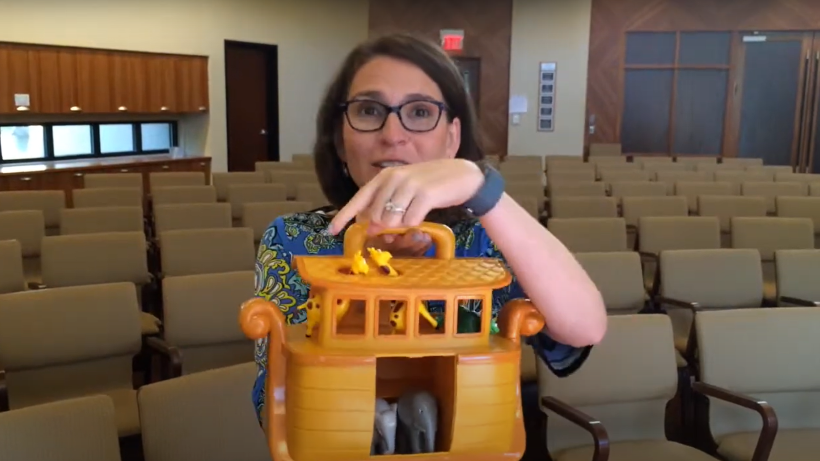
Whenever I hear this parable, I imagine what might have transpired on the ark that Noah built. After all, there were lambs and lions, scorpions and frogs, predators and prey, all crammed together. How could they coexist? 

This week we read that very story in Parshat Noach. As the second section of text in the entire Torah, this portion takes us through the story of the flood, including Noah building the ark, saving his family and the animals, sending out a dove, and God’s promise to never do this again. We learn of the generations of Noah and how humanity moved on to create the next piece of the narrative, the Tower of Bavel. After the Tower of Bavel, we see that the nations are scattered, and then the Torah quickly moves us through the 10 generations between Noah and Abraham, where the rest of our history as a people takes off.

So how did every type of animal live peacefully during their time on the ark? Our commentary suggests that these animals, unlike the society Noah was from, somehow recognized the dire situation and were able to put aside their natural enmity and cohabitate peacefully in the ark. It was only when the danger was over that they went back to their old habits. What do we make of this temporary change? Perhaps the pessimistic view focuses on the fact that the peacefulness they achieved was only temporary and that old habits and natural proclivities die hard. However, I choose the optimistic view, the one that focuses on the fact that change is possible, peace is attainable, and working together can make a difference, even if just for a short time.

Promises We Make – Parshat Noach 5783

As the parent of children who seem to have steel-trap memories, I have learned to be very careful about the kind of promises I make. They’ll remember that one time, six months ago when summer was a distant wish, that I promised we’d go tubing, and suddenly they’re asking me when that will happen or how come it didn’t happen and why I don’t keep my promises. Oy. 

On the one hand, I probably made that promise in a spur-of-the-moment attempt to try and move us forward from whatever tantrum or heartbreak we were in the midst of. On the other hand, I probably should’ve thought it through just a tiny bit more to make sure that promise was something we could actually fulfill.

This balancing act of expectations and being held accountable is as old as humankind, and it’s particularly noticeable in the Torah this week. This week we read Parshat Noach, the story of NoahThis second section of text in the Torah takes us through the story of the flood, building the ark, Noah saving his family and the animals, sending out a dove, and God’s promise to never do this again. We learn of the generations of Noah and how humanity moved on to create the next piece of the narrative, the Tower of Bavel. After the Tower of Bavel, we see that the nations are scattered, and then the Torah quickly moves us through the 10 generations between Noah and Abraham, where the rest of our history takes off.

As God walks Noah and his family out of the destructive flood, a rainbow serves as God’s promise that “water will never again become a flood to destroy all flesh.”  Beyond this, the rainbow is meant to signify an ongoing commitment to the covenant for all time that we go through this world with God, not apart from. And yet, just a few verses later the whole of “flesh” builds a tower to the heavens that enrages God, but God has to hold true to this promise if they are to maintain any sense of trust going forward.  

The promise of “never again” is much more serious than mine of a water park adventure, and yet both put the weight of follow-through on our words and actions in the future.  Promises are made more challenging than necessary if we’re not cognizant of all the possible ramifications.

What Parshat Noach teaches us is that as difficult as they may be to keep sometimes, promises do more than guarantee an outcome for one party. The promises we make hold us accountable and remind us that words matter. 

The Two of You – Parshat Noach 5782

The phrase “nature versus nurture” seems to imply that there’s a struggle between these two factors. It suggests that one needs to win out over the other. I disagree, though; I think we can be influenced by genetics and by our surroundings at the same time. I believe each of us becomes a mix of these two individuals: the one with innate traits and the one with learned behaviors. Take the story of Noah, for example.

This week we read Parshat Noach. This second section of text in the entire Torah takes us through the story of the flood, building the ark, saving his family and the animals, sending out a dove, and God’s promise to never do this again. We learn of the generations of Noah and how humanity moved on to create the next piece of the narrative, the Tower of Bavel. After the Tower of Bavel, we see that the nations are scattered, and then the Torah quickly covers the 10 generations between Noah and Abraham, where the rest of our biblical history takes off.

As the second parshah of the Torah begins, we’re met with a peculiar linguistic construct. The text begins, “This is the line of Noah. Noah was blameless in his generation.” The oddity comes with the repetition of the name Noah. After all, any English teacher would suggest it could’ve been more efficiently written, “This is the line of Noah, who was blameless in his generation.” However, as close readers of Torah, we understand that words – especially repeated words – are meant for emphasis and deeper meaning. So, why repeat the name Noah?

What if, in fact, the names refer to two people instead of one: the person who was born as Noah, and the person whom Noah chose to be? They aren’t literally two different individuals, but it’s the idea that Noah had to make a choice about who he would be, especially when you consider the world around him. He could be without morals or values, or he could be kind and upstanding. Based on the rest of the verse and what we know happens later, it appears that he made the choice to be an upstander.

Reading this parshah close after the High Holidays is our yearly reminder that how we act in the world is up to us and not where we come from. We are not fully defined by the generations before us. Instead, like Noah, we are fully capable of doing the hard work to change patterns, hold ourselves to higher standards, and make our example the one that future generations want to follow.

Cause and Effect – Parshat Noach 5781

One of the parts of parenting that I struggle with the most is when my children’s actions have negative consequences, and they don’t understand they’ve brought it upon themselves. Because they are not developmentally ready to make that connection, they have no understanding that they played a role in causing those results. Instead, they blame me.

For example, I’ll tell the kids it’s time to go up stairs and get ready for bed. We set a timer, knowing that if it goes off before they’re ready for bed, that means we’re out of time for stories. The idea is to beat the timer to ensure you get a story. But of course they play around, dawdle, complain, do anything but get ready for bed. I gently remind them that the timer has started and if they don’t start listening and moving, there will be no story. In my mind, the expectations are very clearly set, but inevitably the timer goes off without finishing bedtime preparations, and we don’t have time for a book. Cue the tantrum from the children and my “you did this to yourself” conclusion that they can’t quite internalize.

While we may have a better grasp of situations and our roles as we mature, we still do this to ourselves as adults. Yes, sometimes our struggles have outside causes, but sometimes we have no one to blame but ourselves. Parshat Noach, our Torah portion this week, carries this message with it. Parshat Noach details the misbehavior of the people who inhabit the earth in this pre-Judaism time. We read about Noah as a beacon of hope among the despicable people of his town. God instructs Noah to build the ark, put the animals on it, and escape destruction under God’s protection during the flood. Noah’s story is capped off with a covenant between God and humankind to never again destroy the world. Unfortunately, the beauty of the rainbow is quickly tainted as we learn of the misdeeds committed by a new civilization in trying to reach up closer to God. 

As we read the story of the flood, God is very clear about why the flood is necessary: “I have decided to put an end to all flesh, for the earth is filled with lawlessness because of them; I am about to destroy them with the earth.” In other words, God reminds Noah that civilization brought this on themselves. Their behavior, the lack of rule following, the unethical, immoral, and nasty actions brought on this flood.

The lesson seems clear: we reap what we sow. Displacement of peoples, pollution, the healthcare crisis – these issues are ones we’ve brought on ourselves, and we have to change them ourselves. While my 4- and 7-year-old may not be able to fully grasp this, Parshat Noach reminds us that as adults, we are responsible for our actions and what happens because of them, positive and negative.