Be a Channel of Blessing

Picking up the pieces following horrific event after horrific event, in D.C. and in Boulder and more and more places around the world, it can feel like there are no words. No time to let one wound heal before the next one is ripped open. But for thousands of years, in times of joy and in times of tragedy, we’ve found strength and comfort in being able to bless each other, using the words of our tradition. We all long to feel blessed — to know that we are seen, loved, and protected. And we all hope to offer blessings to others through our words, our presence, and our actions. Parshat Naso contains one of the most beautiful and enduring blessings in all of Torah, the Birkat Kohanim, the Priestly Blessing, which continues to echo through our tradition and our lives today.

Parshat Naso is the longest Torah portion, covering a range of topics. It continues the census begun in Bamidbar, detailing the roles of the Levites, describes the laws of the nazirite, and addresses the ritual for the sotah, the woman suspected of adultery. But in the midst of these detailed and sometimes difficult laws, we find a moment of pure light: God instructs Moses to tell Aaron and his sons how to bless the people. This blessing, just three short verses, transcends time:

Yevarechecha Adonai v’yishmerecha.
May God bless you and protect you.

Ya’er Adonai panav eilecha vichuneka.
May God shine God’s face upon you and be gracious to you.

Yisa Adonai panav eilecha v’yasem lecha shalom.
May God lift God’s face toward you and grant you peace.

The Priestly Blessing is much more than words — it’s a profound statement about the relationship between God, the people, and those who serve as conduits of blessing. Notice that the priests don’t create the blessing; they channel it. God is the source of blessing, but it is through human intermediaries — through people willing to lift their hands, open their hearts, and speak words of goodness — that blessing flows into the world.

Each line of the blessing builds: from physical protection (v’yishmerecha), to inner grace (vichuneka), to the ultimate aspiration of shalom — peace and wholeness. The blessing reminds us that God’s presence is not abstract. It’s felt when we experience safety, when we are shown kindness, and when we rest in the deep calm of peace.

While the priests were the official bearers of blessing in ancient times, today we are all called to be mamlechet kohanim — a kingdom of priests. We are all charged with being vessels of blessing.

What would it look like for each of us to act as channels of blessing this week? To offer protection to someone vulnerable, to show graciousness to someone struggling, to lift our faces and truly see those around us? And perhaps most importantly, to become builders of peace — in our homes, our communities, and our world?

A Fence Around a Fence – Parshat Naso 5784

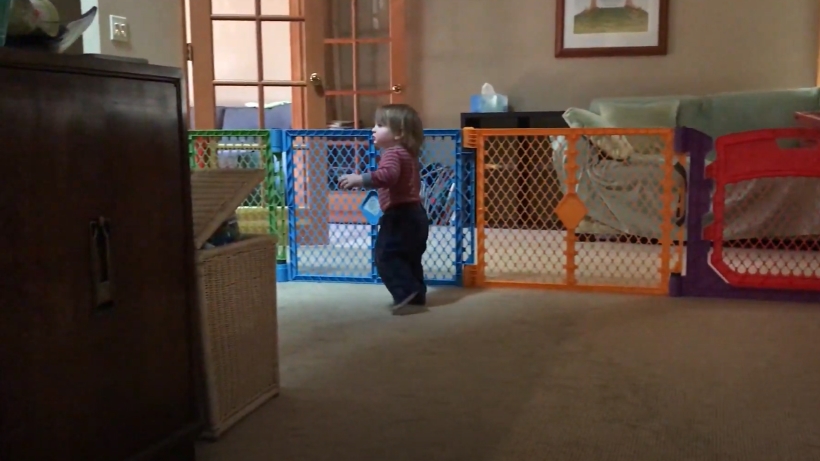
Back in 2014 when we moved to Portland from Dallas, we went from a single-story house to a house with stairs. We spent so much time trying to figure out how to babyproof for this new situation. How many gates did we need in order to keep our children and those who would play at our house safe? Did we need to lock the cabinets and have a gate blocking the bathroom, or would one or the other suffice? Were we going to be able to leave pieces of art out and at child level or did everything need to be up on a shelf so high even we couldn’t see it? My question is how much of this preparation was necessary for safety and how much was for our own peace of mind? At what point are we building baby gates around baby gates?

And, wouldn’t you know it? The Torah this week also shares some fences we might reconsider in our time as well. As we read Parshat Naso this week, we read about the Israelite society trying to move forward after leaving Egypt and about what it takes to establish a successful community. The narrative picks up with a second counting of the people, laws about how we are to treat one another and the property that we own, the blessing of the priests to the people, and the laws of the Nazir, those who took a voluntary vow to consecrate themselves to God.

Hearing the laws of the Nazirite, it’s clear how restrictive these restrictions were. No wine or vinegar of wine, and in fact nothing with any kind of grapes or even grapes near it at all. At first reading, the idea of avoiding “anything that is an intoxicant” makes sense. But then, the list of prohibitions gets longer and longer and seemingly farther and farther from the original intent of the rule against intoxication. In essence, a fence around a fence around a fence is built for the Nazirite in order to ensure that there’s not even the slightest risk of temptation. Just the mere idea of grapes might lead to wine. 

As farfetched as this sounds, we still use this notion today when it comes to Passover. Ashkenazi tradition prohibits eating kitniyot (legumes) not because it has anything to do with remembering our time in Egypt, but because there might have been, at some point, some kind of contamination of leaven, so therefore all legumes had to be banned. 

On the one hand, these limitations, these fences around fences, do offer a sense of protection when it comes to preserving our ancient rituals and more modern customs. They can even add an extra level of unique beautification, like the tradition of lighting candles 18 minutes before sundown so we make sure that we’re prepared without violating a law. On the other hand, a fence around a fence might offer fewer opportunities to learn self-control and restraint and leave less room for conscious engagement with our traditions if we’re so protected from mistakes. Perhaps the lesson we can take from Parshat Naso is that although providing a safety net is helpful, there’s much more to Jewish life than bubble-wrapping our bubble wrap if we want to act with intention.

Where You Fit – Parshat Naso 5783

I have a deep desire, like so many human beings, to belong, both in a communal sense and a personal relationship sense. If I feel a shift in a relationship that I wasn’t expecting or can’t explain, I start to panic a little bit. Last winter, a dear friend and I experienced such a shift, when texts went from multiple times a day, to once a day, to maybe once a week. As much as I know that relationships change, I struggled with a silence that was painful to my heart. In these moments of uncertainty in relationships, how do we find our footing and step forward, not knowing where we actually stand?

Knowing where you fit in, whether person-to-person or in society at large, is so human an experience that the Torah itself deals with that feeling in this week’s Torah portion. As we read Parshat Naso this week, we read about the Israelite society trying to move forward after leaving Egypt and about the establishment of a successful community. The narrative picks up with a second counting of the people; laws about how we are to treat one another and the property that we own; the blessing of the priests to the people; and the laws of the Nazir, detailing how we might dedicate ourselves directly to God. 

Naso has the distinction of being the longest Torah portion in the entire Torah. It doesn’t include the most number of commandments, but it goes into quite some detail with the ways in which community should be built. The first half of the portion deals with circumstances when one’s place in the community is in question because of their own behavior, and the second half deals with the offerings brought by each tribe as holy space is dedicated. 

Why do these things go together? Why does it take so many words to explain these concepts? Perhaps it’s because establishing protocols, and specifically establishing how to build holy relationships, is very detailed work. There are so many complexities when it comes to community and the individual’s place within it, especially today when we’ve got technology that makes it both easier to connect, and at the same time more difficult to really understand one another. These nuances might come across more easily in face-to-face interactions, but it takes many more words to try to express this in writing.

Parshat Naso reminds us that establishing holy community requires that we examine our communication and that we see one another, not just through siloed words or deeds, but through interaction. That’s how we truly find each other. That’s how we lift one another up and create a fundamentally whole society.

Do the Work, See the Results – Parshat Naso 5782

Wouldn’t it be nice to get results without putting in the work? Sometimes we call this “magical thinking.” I often wish I could find an easy way out of certain tasks. Whether it’s doing the dishes or changing the bed linens, I wish I could access my inner Samantha from Bewitched and simply wiggle my nose to have everything back where it goes. When I’m nagging the kids to clean their rooms, I wish the magic of Mary Poppins would somehow descend upon our house to get us to the finish line. And do I really have to work out and eat sensibly? Why isn’t healthy living easier? As we learn over the years, results don’t come by magic; they come by putting in the hard work, by gritting your teeth through that last mile, or by bringing in one more bag for trash in the almost clean room.

On the positive side, there’s much more satisfaction to be had from the end of hard work than if no work was required. There are also lessons that can only be learned through putting in the time to accomplish something. The accolades you receive for something you’ve completed feel even better when you know your participation helped get it done. We see this in the Torah too, including when Moses finally takes ownership of his leadership role and when the builders of the Tabernacle take pride in their artisanship. 

As we read Parshat Naso this week, we see the Israelite society trying to move forward after leaving Egypt and establish a successful community. The narrative picks up with a second counting of the people; laws about how we are to treat one another and the property that we own; the blessing of the priests to the people; and the laws of the Nazir, detailing how we might dedicate ourselves directly to God. 

In this section of the narrative, the Israelite nation is ready to move, and they’re working to situate the Tabernacle, the heavy ark constructed of gold and wood, which carries the tablets of stone that God inscribed. This was no lightweight piece of furniture. To move it required all hands on deck. The language suggests that the Levites, those non-land holders, the helper people of the nation not often described as physically strong, were to portage the Tabernacle on their shoulders.

This protected group, for whom the community is supposed to provide, is commanded to take on physical labor for the people. Noting how this physical labor contrasts with their normal roles of washing feet, the Kotzker Rebbe, the great Polish leader and scholar, comments, “One does not acquire the least spark of holiness without effort.” In other words, doing the work is what opens the Levites up to understanding the divine.

So too for us, doing the work allows us to find moments of sanctity, togetherness, and pride in a job well done. To achieve the reward of holy community, or perhaps even any reward at all, we’ve got to do the work. Get dirty, get a little bit sore, and don’t wish away the social and personal growth that’s just as gratifying as the finished product.

Bless You – Parshat Naso 5781

I have certain voicemail messages saved on my phones – ones that hold particularly special meaning to me. Two of them are from my father. He left them a week apart (on consecutive Fridays) about two months before he died. I was working as an intern in Chicago, and he called to ask how I was doing and what I was learning, and because it was Friday, he’d end with a word about Shabbat. Part of his Shabbat message was asking how I was celebrating Shabbat with my roommate and friends, and he ended each of the voicemails with the priestly blessing. 

Part of what makes these messages memorable is that growing up, my parents did not bless us each week at the Shabbat table. We had Shabbat dinner, complete with Kiddush and Hamotzi. We had friends over and celebrated Shabbat regularly, but for some reason that one small ritual wasn’t a part of our celebration. My mom later told me that my dad always regretted that decision, and so when I moved to Los Angeles for rabbinical school, he decided to send me an email blessing each week. I still treasure those emails, but the voicemails are prized possessions. I can still hear my father in his own voice and words give me a blessing anytime I need it.

I’ll admit it was especially hard to listen to those voicemails when I was in early grief. To hear my father say “May God grant you peace” while I was angry at God for my father’s death seemed incongruous. To hear him say “May God turn His face towards you and see you” when I felt so unseen seemed empty. But the blessings were still his to me.

As we read Parshat Naso this week, we read about the Israelite society trying to move forward after leaving Egypt and about the establishment of a successful community. The narrative picks up with a second counting of the people; laws about how we are to treat one another and the property that we own; the blessing of the priests to the people; and the laws of the Nazir, detailing how we might dedicate ourselves directly to God. Among these laws is the notion of connection to a community, to God, and to the greater “people.”

The most well-known piece of this text is the Priestly Blessing in chapter 6, verses 24-26. The blessing of the priest unto the people ends with the words “May God turn God’s face in your direction and put upon you peace.” The K’tav Sofer, a 19th century German commentator, remarks that peace begins in the home, then extends to the community, and finally to all the world. In other words, this moment of blessing one another is the locus of spreading peace, and it requires that we turn our heads toward each other first in order to start a movement of peace that radiates through our surroundings and into our community. 

Pay close attention to the words that describe the action in this blessing: “turn God’s face in your direction.” More important than the blessing itself is simply the idea that there is no peace unless all of us are seen. Just as God cannot grant us peace without first facing us as we are, we too cannot create peace among ourselves until we are all seen, until we are all heard. Just like those few minutes my father carved out for me in the beautiful messages I still have, granting someone that love and attention is perhaps the greatest blessing you can offer.