In a world filled with loud opinions and polarizing headlines, it’s easy to feel unmoored. The feeling of safety isn’t just about physical protection, but emotional and spiritual refuge. Whether it’s from rising antisemitism, social instability, or injustice in our systems, the need for compassionate leadership and safe spaces—a safe world—is more urgent than ever.
Parshat Matot-Masei, the final double portion in the Book of Numbers, bridges endings and beginnings. In Matot, we encounter laws about vows and tribal responsibilities. Masei recounts the Israelites’ wilderness journey with a list of 42 encampments—each a waypoint on the road to becoming a people ready for the Promised Land. Among the legal and logistical details, we find a remarkable institution: the Arei Miklat—Cities of Refuge. These were designated places where someone who had accidentally caused harm could flee for safety and await fair judgment.
The concept of Arei Miklat embodies the tension between accountability and mercy. It acknowledges that harm can occur unintentionally, and that a just society must differentiate between guilt and accident, between vengeance and justice. Embedded in the system is not only legal wisdom, but deep empathy.
This idea echoes through the Amidah: “Restore our judges as in former times … and reign over us in lovingkindness and mercy.” We pray not just for law, but for leadership tempered with compassion. The verse invites us to imagine a world where fairness and care coexist—a community where refuge is real.
We may not have cities of refuge today, but we can create sanctuaries of spirit and justice in our homes, synagogues, and institutions. This week, may we recommit to being a community of thoughtful leadership, where truth is spoken with kindness and justice is pursued with humility. Let us be known not only for what we build, but for whom we shelter.
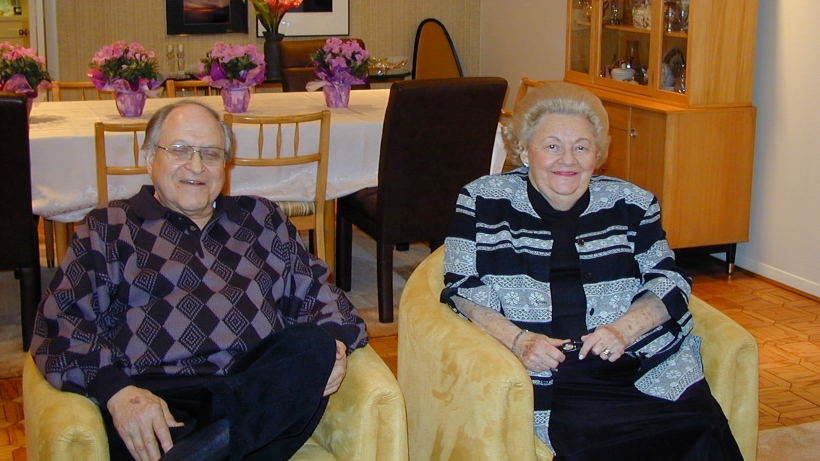
My paternal grandparents (a.k.a. Nana and Papa) were expert gardeners; they certainly had a green thumb that I sadly did not inherit. Papa always planted a beautiful flower garden in the backyard of their house every year and would invite me to help. Then Nana would plant the vegetable garden, and I’d tend the plants with her. We’d put up a fence to keep the deer and bunnies away from the bounty. While at the time I may have gone out of my way to avoid eating anything resembling a vegetable, I do remember planting and then watching them grow. The inside of their house was filled with plants too. They kept most of them on a beautiful window seat behind their dining room table, one of which was a potted cactus. One Rosh Hashanah lunch after services, my younger sister tried to squeeze between the edge of the seat where the cactus was and my Papa’s seat and ended up falling into the cactus. Ouch!
After calling poison control, my dad and uncle wrapped their hands in duct tape to extract the cactus needles from my sister’s arms and face. Unfortunately, the little spines were so tiny and thin that we were finding them for days. And that’s when I truly understood the meaning of “a thorn in your side.” We moved the cactus to a different spot, but our family never forgot the trauma of the incident, a lesson which is described symbolically in our Torah portion this week.
In our parshah this week we read the final sections of text from the fourth book of the Torah, Bamidbar. Parshiyot Matot and Masei begin with a discussion of the different vows Israelites might make, and then they detail the requests of the various tribes as they get ready to enter the Promised Land. The chapters end with the final placements of all the tribes as they prepare to divide their land inheritance. Along with this information are warnings about what it might be like to live within an area with a variety of customs and cultures. Not since leaving Egypt have the Israelites lived in a place long enough for God to worry about them acculturating and assimilating.
In chapter 33, verse 55 we read: “Those whom you allow to remain shall be stings in your eyes and thorns in your sides.” This warning is meant to illuminate for the Israelites that sometimes their adversaries will be in plain sight (a sting in your eye,) and sometimes they will walk beside you, with a false sense of camaraderie until they dig in their barbs (a thorn in your side).
Like avoiding the cactus with her unseeable needles, the Torah reminds us to use precaution as we journey through life. It’s easy to get caught up in the literal interpretation that we need to rid the land of certain people who might be against us, but the real lesson is to recognize and rid ourselves of the more insidious metaphorical needles of intolerance and ignorance. Those are the needles that do the most damage.
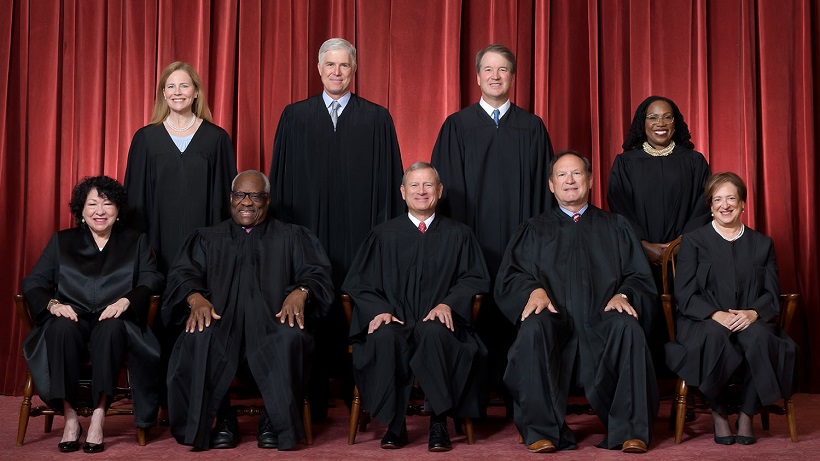
Is the Supreme Court an example of democracy in action? That’s not meant to be flippant; the recent slate of decisions handed down from our highest court prompts me to ask: Does the fact that one person is in charge of Supreme Court Justice appointments make the Court less democratic by nature? I think there are arguments for both sides. For example, you could say that because our president is elected through a democratic process, the Supreme Court is (indirectly) representative of the people, at least at a certain period in time. On the other hand, if a president loses the popular vote, meaning that the president’s party views may not necessarily represent the majority, does that contradict this idea?
Unanimity is rarely achieved in any setting where different opinions are represented. One side is almost always going to be the minority. Yet, putting the SCOTUS appointment process aside for a moment, even when there are “winners” and “losers,” there’s still something reassuring about being part of a greater deciding body. Making decisions on your own, in a silo, can feel like a pretty heavy burden to bear, while group decision-making provides support, reassurance, and safety in numbers. This is actually echoed in the Torah we read this week.
In our parshah this week we read the final sections of text from the fourth book of the Torah, Bamidbar. Parshiyot Matot and Masei begin with a discussion of the different vows Israelites might make, and then they detail the requests of the various tribes as they get ready to enter the Promised Land. The chapters end with the final placements of all the tribes as they prepare to divide their land inheritance.
As the land appointments are given out, there is a noticeable shift in verb forms. While so many of the instructions are given in the singular, at this moment, chapter 34, verse 18 switches to the plural: “And y’all shall take . . .” The word tikchu is second person plural. Who are “y’all” in this case? Up until now, this has been about one tribe or the other, so the sages say that this refers to both Eleazar and Joshua, a team who oversees this land distribution.
Governance is critically important, and it’s not a solo task. At the end of this turning point in the Torah, the text reminds us of the power of being in it together. Decisions are best made not in isolation, but rather in partnership, in which we can discuss the impacts and the future that will come from them. Eleazar was a priest, while Joshua was a different kind of leader, and together, their combined expertise offered the best outcome. That’s the lesson of community.
What do you do when you see a loved one making a bad or destructive decision? Do you intervene? Do you let it play out? Or when you can see two opposing views among friends, do you take sides? Do you try to remain neutral?
When your heart’s divided, it’s difficult to see the clearest path forward. What I know in the depths of my soul is that when this happens, especially to people who have supported and loved me through the years, I often try to step back as long as possible and stay out of it until I can’t any longer.
This is a lesson that’s tough to learn, and one that Moses finds himself in the middle of in this week’s Torah portions. The Torah we read today is still the same Torah inspired by God and interpreted through Moses, and in our parshah this week we read the final sections of text from the fourth book of the Torah, Bamidbar. Parshiyot Matot and Masei begin with a discussion of the different vows the Israelites might make, and then they detail the requests of the various tribes as they get ready to enter the Promised Land. The chapters end with the final placements of all the tribes as they prepare to divide their land inheritance.
As the Israelites continue on their journey to the land of Israel, they find themselves facing challenges against a multitude of nations along the way. Often, they act as one undivided unit in their attack, led by Moses and guided with clear principles and expected actions. That changes in this portion, though, as the conflict is with the Midianites.
Moses is whom the people look to, and it’s his job to lead the nation he loves deeply in this moment. At the same time, his wife Tzipporah is of the Midianites, and his father-in-law Yitro was a Midianite priest who saved Moses’s sanity when he didn’t know how to delegate. The Midianite people took Moses in when he left Egypt fleeing for his life. Moses finds his heart torn in two and decides to let the other leaders take on this battle. Moses takes a step back; he does not lead the charge. Unfortunately, what ensues is reckless behavior by the Israelites, without care for human life.
This portion is full of strange dichotomies. Moses stood back because his heart was torn, but doing that led to more heartache and violence. He returns to his position and rails at the army as a whole for their unthinkable choice to hurt women and children, innocent and weaponless, but still celebrates the triumph of his nation.
It’s hard to know what the right choice is when you feel torn between two places or people or ideas. However, that doesn’t get you out of making a choice. Moses makes mistakes, as all leaders do, and in this week’s Torah, we learn the hard way what happens when the worst choice is making no choice at all.
I recently saw a Facebook memory pop up. It was a very frustrated me as a rabbinical student when I woke up one morning to go to class and found my computer locked in the midst of an epic system update. It was 30% done, and that meant I wouldn’t have been able to take my computer with me for classes or finish my homework, and basically being without my computer felt like a type of mental paralysis. This was pre-smartphone, so there was no backup option of using my phone to get work done. However, my computer hadn’t crashed; it was making itself better. When I got home that night, I had an extremely awesome working computer that was all updated and ready to do the work I needed. And these days either the updates happen faster, or I’ve figured out how to time them appropriately.
More and more things in our lives receive regular updates: our phones, our TVs, even our refrigerators connect to the internet for firmware updates. We’re always finding ways to take something and make it safer or more secure. Think of the number of car safety features that have become standard over the last decade or so. Now there are back-up cameras, automatic brakes, passing alert sensors . . . despite the too frequent use of cell phones while driving, we’ve never been more informed and aware as drivers. We don’t just update our digital lives. As information changes, health recommendations change, languages change, and books get new, revised editions. All this is to say that as our world changes, so does the information we need to be a part of it.
There is one book, however, that does not receive regular updates or revised editions. The Torah we read today is still the same Torah inspired by God and interpreted through Moses. In our parshah this week, we read the final sections of text from the fourth book of the Torah, Bamidbar. Parshiyot Matot and Masei begin with the discussion of the different vows Israelites might make, and then they detail the requests of the various tribes as they get ready to enter the Promised Land. The chapters end with the final placements of all the tribes as they prepare to divide their land inheritance.
As the text begins we find ourselves in this section of laws dealing with vows. Chapter 30 specifically deals with the vows of women. Basically, the Torah tells us that if a woman makes a vow while she is still young, her father can decide to validate the vow or invalidate it. The same then holds true for her husband; he too can choose whether or not her words are valid.
This stated subordination is certainly problematic for the world we live in, but it was troublesome to the sages in the Talmud as well. Already at that time they tried to limit the applicability of this law by restricting the time one could annul another’s vows. And yet, the law still exists in the Torah, and we read it year after year.
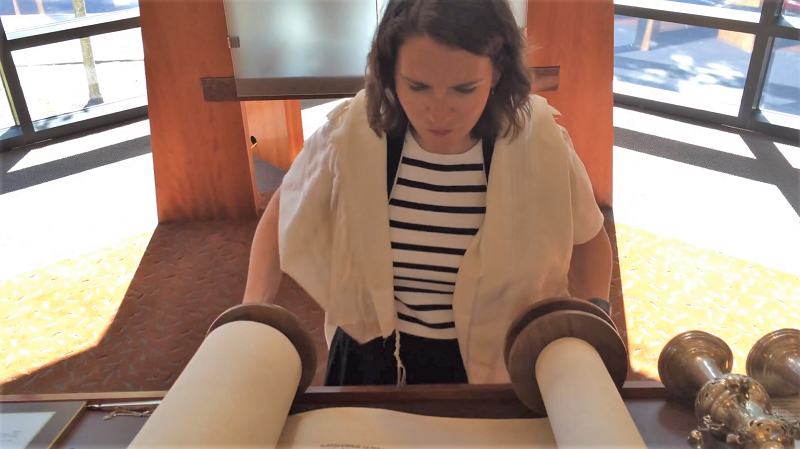
For better or worse, the scroll we call the Torah isn’t updated. We can’t change the words themselves because, as words of God, the story is static and unchanging. Fortunately though, we have rabbinic scholars who have worked for millennia and still work daily to understand the intent of the commandment, so that it can apply in a modern form to our lives today. In fact, this is the work of the Committee on Jewish Laws and Standards for the conservative movement.
While we might not change the main body of the United States Constitution, we have amendments that allow for new interpretations and even changes. In a similar way, the Torah is in a sense the first draft, and the Talmud (and even this drash) are the updates. That first draft is still critical. To update anything, we must start with a solid foundation. The Torah is our foundational document, and this week’s portion is a reminder that we continue to update it using the spirit and intention of the law in order to guide us in our lives today.


 Rabbi Eve Posen