Lech Lecha: Faith, Choice, and the Courage to Build Together

This is the d’var Torah I delivered at Congregation Neveh Shalom on October 31, 2025.


At the beginning of every year, we don’t just restart the Torah, we re-enter it. We step back into a narrative already in motion, one that invites us to ask not only what happened then, but what are we meant to learn now?

And this year, as our country feels increasingly fragile, politically divided, democracy strained, and trust frayed, the opening chapters of Torah offer a mirror for our civic and spiritual reality, and a call to moral courage.

In Bereshit, creation begins with separation, light from darkness, water from sky, chaos from order. God models that healthy distinctions are not the same as division. Boundaries create the possibility of life. Creation is not undone by disagreement; it is undone when violence replaces relationship. When Cain refuses responsibility for Abel and asks, “Hashomer achi anochi? “Am I my brother’s keeper? (Gen. 4:9), the Torah answers with a thunderous yes. Democracy depends on that same answer, on recognizing that we are accountable for the well-being of those beyond ourselves.

Then comes Noach. The world narrows, humanity collapses inward. Everyone becomes so self-interested that “the earth was filled with hamas, corruption, and moral violence.” The flood isn’t only a punishment, it is a consequence: when no one feels responsible for the commons, the commons collapses. A society cannot endure when empathy is eroded and truth becomes irrelevant. The rainbow that follows is not a sign of uniformity, but of shared human dignity, a covenant conditional on remembering one another’s humanity.

And in Lech Lecha, the narrative shifts from the universal to the particular, from the creation of the world to the creation of a people. God calls Avram:
“Lech lecha mei’artzecha… Go forth from your land, your birthplace, the house of your father, to the land that I will show you.” (Gen. 12:1)

It is the most uncharted of instructions. God does not say, “Here is the destination.” Instead: “I will show you.” The blessing comes after the walking, not before. Faith here is not certainty; it’s the courage to begin without a map.

Avram doesn’t know where he’s going. All he knows is that the life he is meant to build cannot be built from the pieces he already has. So he chooses movement. Not out of impatience, but out of conviction that something sacred awaits if he’s willing to step beyond the edges of what he has known. The Torah reminds us that our lives, and our societies, are not shaped by what we believe in theory, but by what we are willing to walk toward.

Avram’s story becomes a blueprint for democracy itself. Every step, from uncertainty to hope to moral courage, is part of covenantal life. Later, when offered the spoils of war, Avram refuses, saying: “I lift my hand to the Eternal . . . I will not take so much as a thread or a sandal strap.” (Gen. 14:22–23)
He teaches that righteousness is not won through victory, but through integrity. Faith is not passive belief; it is ethical courage. It is not enough to walk toward blessing; we must also refuse the shortcuts that undermine it.

The first three parshiyot, Bereshit, Noach, and Lech Lecha, together form a Torah of citizenship. They remind us that democracy is not a system that runs on autopilot; it is a covenant, sustained by relationship, accountability, and moral presence. We do not maintain it by silence or by watching from the sidelines. We sustain it by choosing, again and again, to be each other’s keepers, by naming corruption when we see it, by standing for truth even when it’s uncomfortable, by insisting that dignity belongs to all.

There is a moment in every life, and in every nation, when the question is no longer “Where am I?” but “Who will I become if I take this next step?”

Our task in this moment is not simply to hope for a better world; it is to build one together. To move, like Avram, toward justice even when we cannot see the ending. To resist the floodwaters of cynicism and cruelty by remembering that every voice matters. And to answer the Torah’s first great moral question, “Ayeka? Where are you?” by showing up for each other, for this country, and for the fragile promise of shared life.

May we, like Avraham, walk forward in faith, not because we know the way, but because we believe that our walking can still bring blessing into a world that desperately needs it.
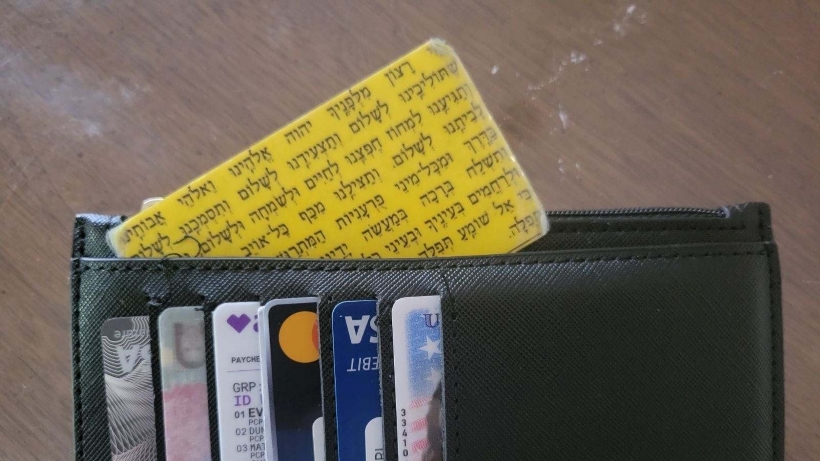
For Safe Travels

I can’t quite remember when, but sometime around 30 years ago my father made me a small business card with the traveler’s prayer on it. It was on laminated yellow cardstock and has resided in my wallet ever since, growing tattered over the years. At some point, it fell apart and Duncan, knowing how much it meant to me, made a new set for me. My attachment to this distressed and faded yellow card was as much about the fact that my father gave it to me as it was about the narrative of protection on our journeys.

This week we read Parshat Lech Lecha, where God famously beckons Abraham to travel from the only place he’s known as home to a new place that Abraham has never seen before. I can only imagine how terrifying this might have been, and yet Abraham agrees to the journey. Why? Because God promises that he will be a blessing.  

Whether it’s a short trip from your home to camp in the summer, or venturing out to explore the world, the traveler’s prayer can connect us to our hearts, and the grounding of home.  

If you’d like to print your very own copy of the traveler’s prayer, PJ Library offers a cut-and-fold version in English that’s easy to take along: https://pjlibrary.org/beyond-books/pjblog/december-2018/printable-travel-blessing

יְהִי רָצוֹן מִלְּפָנֶיךָ ה’ אֱ-לֹהֵינוּ וֵא-לֹהֵי אֲבוֹתֵינוּ, שֶׁתּוֹלִיכֵנוּ לְשָׁלוֹם וְתַצְעִידֵנוּ לְשָׁלוֹם. וְתִסְמְכֵנוּ לְשָׁלוֹם. וְתַדְרִיכֵנוּ לְשָׁלוֹם. וְתַגִּיעֵנוּ לִמְחוֹז חֶפְצֵנוּ לְחַיִּים וּלְשִֹמְחָה וּלְשָׁלוֹם וְתַצִּילֵנוּ מִכַּף כָּל אוֹיֵב וְאוֹרֵב וְלִסְטִים וְחַיּוֹת רָעוֹת בַּדֶּרֶךְ וּמִכָּל מִינֵי פֻּרְעָנִיּוֹת הַמִּתְרַגְּשׁוֹת לָבוֹא לָעוֹלָם וְתִשְׁלַח בְּרָכָה בְּכָל מַעֲשֵֹה יָדֵינוּ, וְתִתְּנֵנוּ לְחֵן וּלְחֶסֶד וּלְרַחֲמִים בְעֵינֶיךָ וּבְעֵינֵי כָל רוֹאֵינוּ וְתִשְׁמַע קוֹל תַּחֲנוּנֵינוּ. כִּי אֵ-ל שׁוֹמֵעַ תְּפִלָּה וְתַחֲנוּן אָתָּה: בָּרוּךְ אַתָּה ה’, שׁוֹמֵעַ תְּפִלָּה.

Ability to Change – Parshat Lech Lecha 5784

There’s a persistent question that’s likely been on all of our minds for decades, but which has been particularly nagging over the past three weeks. Looking at the war in Israel and the antisemitism here and elsewhere, how often do you ask yourself if things will ever change? Even if (hopefully when) terrorist groups are taken down and eradicated, does antisemitism go away? Does anti-Israel sentiment go away? Is peace achieved? 

Lately, I’ve been wondering about the ability human beings have to change, to adapt, and to accept changes in others. There are the somewhat superficial changes, like the ease with which my kids can go from having a favorite food to absolutely despising that same food in the blink of an eye. Then there are the more significant, impactful changes, like the ways in which my personal theology, values, and style have shifted and morphed over the years. The arc of my life story is one that shows how very different the human being I am today is from the one I was thirty, twenty, or ten years ago. I’d venture to say that may be true for you as well, and it’s certainly true for the first patriarch in the Torah, Avram, as we read in this week’s parshah.

In Parshat Lech Lecha, we are finally introduced to Avram and Sarai – later Avraham and Sarah – who become the great patriarch and matriarch of the rest of our narrative. We learn that Avraham follows God with full intent, without questioning, and that Sarah goes with him, both of them acting through their faith in God and each other. The text from last week ends with the genealogy of the generations starting with Noah. Very little information is given about this time period other than these highlights: Avram and Sarai were married, Sarai could not have children, and Avram’s father took him and his family, including his grandson Lot, on a journey toward a new land. We also know that Terach, Avram’s father, was 205 when he died, and this time-based fact leaves a few unanswered questions. How old was Avram? Did they all go willingly? What were they doing in Haran? Was Avram happy there? Why did they leave?

You’ve probably heard the story from midrash (commentary on the Torah) that tells of Avram taking a stand against polytheism and smashing the idols his father made. But that story’s not in the text. All we know is that Avram went on a journey with his father and family, they stopped before they got the their final destination, and then his father died. The next line of the text is the beginning of Lech Lecha, where God is speaking directly to Avram and pushing him to go to the promised land, the land to which his father was en route. 

The first 75 or so years of Avram’s life are passed over without mention. The main parts of his story are shared when he begins to act on his own, with his own convictions and beliefs. Perhaps the midrash of smashing idols is so prevalent in our storytelling because it signifies the change that Avram wanted to make in his life, and it helps us reconcile the gap in the narrative and in Avram’s apparent frame of mind. One of the messages of Parshat Lech Lecha is that change is possible, and it can have enormous consequences, but it only happens when, individually, we decide the journey is worth it.

When Enough is Enough – Parshat Lech Lecha 5783

At least once a week, I look around our house and wonder, “How do we have so much stuff?” It feels like as the kids get older and our lives get busier, we accumulate more and more stuff. Some of the stuff is reasonable: new toys, games, clothes. The problem with this is that we tend to fall behind on getting rid of the outdated, outgrown, unused items, causing clutter and stress for me. As I write this, I look out at a sea of old or half-finished art projects and toys that haven’t been played with for years.

It’s not that we’re hoarders (at least Duncan and I aren’t) but we do have packrat tendencies that make us yearn for more space. However, we can’t add on to our house every time we feel like we’re cramped. Instead, we have to make choices about what stays and what goes, and we have to figure out how to make the space livable for all four of us. 

This feeling certainly isn’t unique to our family. In fact, Avraham and Lot teach us about some of this in our Torah portion this week. This week we read Parshat Lech Lecha. In Parshat Lech Lecha, we are finally introduced to Avram and Sarai – later Avraham and Sarah – who become the great patriarch and matriarch of the rest of our narrative. We learn that Avraham follows God with full intent, without questioning, and that Sarah goes with him. God tells him to leave his home, leave the only house he’s ever known, and go to a place he knows nothing about. 

Following God’s voice and taking a leap of faith, Avraham goes on the journey with his kinsman, Lot. When they left for Egypt they had relatively few possessions, but as they made alliances and moved through Egypt they both amassed more “stuff” than they had originally intended. Their encampment together became crowded and unlivable. The clutter made the vast landscape feel small and cramped for the families, so they decided to part ways. 

As tensions rise between the two families, Avraham says, “Let there be no strife between us, you choose where you want to move.” Clearly, for Avraham and Lot, more space was the answer. They couldn’t have parted with all their assets, so they instead moved to different places and expanded the amount of room. Since that’s not a possibility for our family, I’ll have to accept the alternative for now and “expand” our house by getting rid of some of our “assets.” It may cause a little bit of strife, but in the end, shalom bayit (peace in the home) isn’t necessarily about making everyone happy. It’s about compromise and understanding everyone’s needs, which is precisely the lesson of Lech Lecha.

The Big House – Parshat Lech Lecha 5782

As a college student at the University of Michigan, some of my best memories were in the Big House. (The “Big House” is the nickname of Michigan Stadium.) Saturdays in the fall in Ann Arbor are an experience like none other. There is an electric energy around the city, and deep-rooted traditions abound. As a college freshman, I received a single ticket in the end zone about 50 rows up. I sat with a group of fans who had become family with one another, as they’d had the same seats for nearly three decades. This was “their house.” The stadium, while regularly the largest live crowd watching a college football game on a given Saturday, felt homey and familiar. It certainly is the “Big House” as it united each of us as Wolverines for those four quarters of play, unless you were rooting for the other team, in which case . . . boo!

With an attendance capacity of more than 100,000, it’s easy to see why it was nicknamed the “Big House,” but it always led me to wonder if this “house” was also a home. At what point does a house become a home? Is it enough to be a gathering place? Does one need to feel a connection to it? Is there some uniting cause that represents the house? While I certainly never slept in the Big House, I do still count it as one of the many homes in my life. 

In this week’s Torah portion, we are first asked to consider what makes a house. This week we read Parshat Lech Lecha. In Parshat Lech Lecha, we are finally introduced to Avram and Sarai – later Avraham and Sarah – who become the great patriarch and matriarch of the rest of our narrative. We learn that Avraham follows God with full intent, without questioning, and that Sarah goes with him. God tells him to leave his home, leave the only house he’s ever known, and go to a place he knows nothing about. He’s following God’s voice and taking a leap of faith.

As this parshah begins, we read the verse “Go, take yourself, from your land, from the place of your birth, from your father’s house to the land that I will show you.” I’m struck by the notion of the specifics in saying “from your father’s house.” Of course in the ancient world, people were identified as coming from this family or that family. And since families generally lived together, it would make sense to specify “from your father’s house.” But why from the “house” instead of simply “from your father” or “from your father and mother”? Later, we see the word bayt (house) used to talk about places of study, like “the house of Hillel” and the “house of Shammai.” What does it mean to use “house” as your identifier?

In recent years there’s been a shift in how we identify ourselves and others. For example, we’re normalizing the use of identifying pronouns like she/her or they/them on name tags and Zoom IDs. However, Hebrew is a gendered language, and as such, it makes it much harder to move into a non-binary identity system. One prominent example comes from when we use our full Hebrew names. The traditional formula is your name, then son or daughter of your parents’ names. We use this on Jewish legal documents for weddings, and we use it when we’re called to the Torah for an aliyah. But, what happens when something other than that binary distinction is preferred?

One way we’ve addressed this is by starting to use mi-bayt, which means “from the house of,” in place of “son of” or “daughter of.” What makes this an appropriate fix? For one, it goes back to the Torah; we are all from the house of Abraham and Sarah in one way or another. Also, your “house” is the one of your choosing. It can be the house or family you grew up in, or the house you’ve made with your own family. It can even signify a global house (a “big house,” if you will). Mi-bayt olam means “from the house of the world,” and that certainly applies to all of us. 

What you consider a home or house may look different from everyone else’s. This week’s Torah portion reminds us that we all come from somewhere, whether your “somewhere” is a specific block in a suburb or the whole planet, but even more important is the somewhere you make for yourself.