I’ve tiptoed around what I say and how I say it over the last two years amid rising antisemitism, anti-Zionism, and political unrest because I believe in dialogue, not bima (pulpit) politics. However, I cannot be silent as a friend, colleague, and reporter representing the Jewish community in Portland was summarily dismissed from an important event.
There is a growing temptation in public discourse to separate anti-Zionism from antisemitism — to suggest that one can delegitimize the Jewish people’s right to a homeland without also delegitimizing the Jewish people themselves. But history, lived experience, and the rhetoric unfolding around us make clear that the two are deeply, and often dangerously, intertwined.
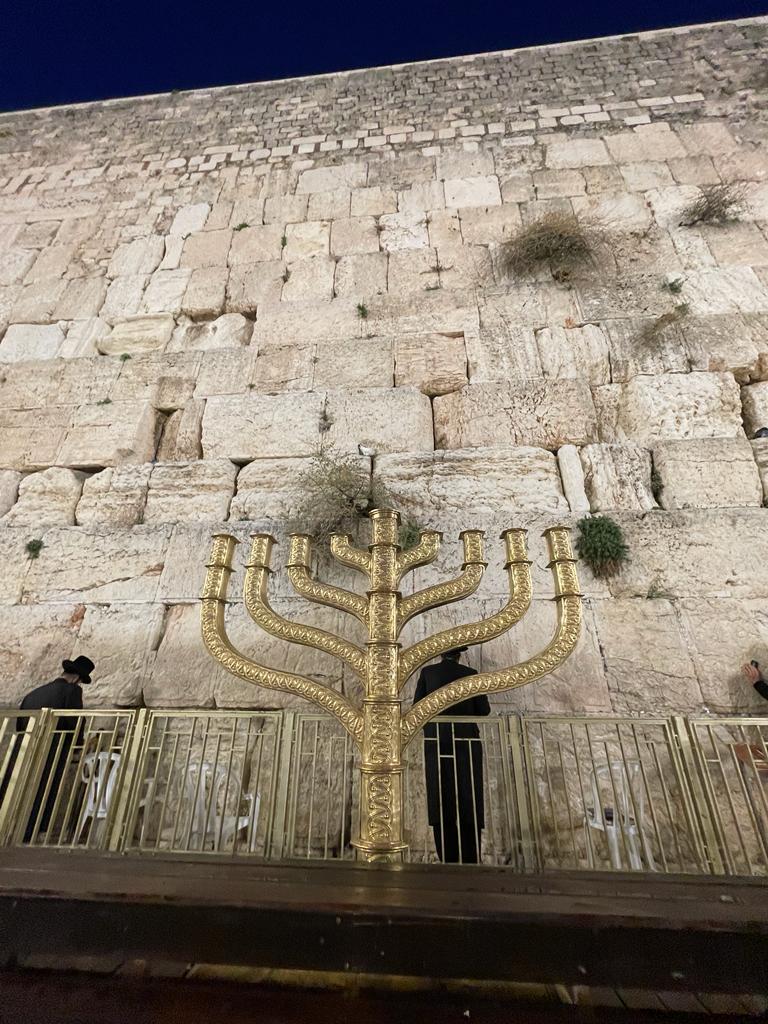
For most Jews, Zionism is not a political slogan. It is the belief that the Jewish people, like all other peoples, have the right to safety, self-determination, and belonging in their ancestral homeland. It is the story of returning home after centuries of displacement, persecution, and expulsion. For generations, the world told us, “Go back to where you came from.” Zionism answers: “We have.”
When public voices call for the dismantling of Israel — not for change in policy, not for critique of leadership, but for erasure of the Jewish state altogether — they are not critiquing geopolitics; they are calling for a world where Jews do not get to be secure anywhere. A world where every other group may claim a homeland, except us. That is antisemitism.
We are seeing this play out not only in demonstrations or online rhetoric, but in the chilling silence and silencing of Jews in civic spaces. Just last month, The Jewish Review here in Portland reported that journalist Rockne Roll was prevented from covering a city councilor’s discussion about ties to Israel — not because of bias, not because of content, but simply because the conversation itself touched on Israel, and the presence of a reporter who writes for the only Jewish publication in Portland was likely deemed “conflict of interest.” Imagine: a journalist representing the Jewish community barred from reporting on a public conversation because he represents the Jewish community. That is not neutrality. That is exclusion.
This is why speaking up matters.
When leaders use dehumanizing or delegitimizing language about Israel, it does not remain theoretical. It shapes the climate in which Jews live. It normalizes suspicion of Jews in the public square. It casts Jewish identity as inherently suspect. And when Jews are pushed out of conversation, the First Amendment becomes a privilege held by some, not a right held by all.
Silence is not an option — not for us, and not for our allies. We do this work not because we crave conflict, but because we understand what happens when antisemitism is allowed to masquerade as “political critique.” History has shown us, again and again, that societies rarely begin by attacking Jews physically; they begin by excluding Jews civically.
Our task in this moment is to insist — calmly, firmly, persistently — that Jewish identity is not a disqualifier. That Jewish connection to Israel is not a conflict of interest; it is a core piece of peoplehood. That it is not for the non-Jewish world to define what it means to be Jewish, for doing so strips Jews of the agency to define ourselves and perpetuates the very prejudices it claims to oppose. And that protecting free speech must include ensuring Jews are not pushed out of public discourse for daring to show up as Jews.
We speak because silence leaves the narrative to those who would erase us. We speak because our dignity requires it. And we speak because safeguarding Jewish belonging is not just a Jewish responsibility — it is a democratic one.




 Rabbi Eve Posen