Pushing Boundaries on Hanukkah

This is the d’var Torah I delivered at Congregation Neveh Shalom on December 19, 2025.


Sometimes the Torah portion and the calendar collide in ways that feel heartbreakingly on time. This Shabbat, as we read Miketz and kindle the lights of Ḥanukkah, our minds and hearts are pulled toward the shock of the antisemitic attack in Australia on the very first night of the holiday, and the steady rise in Jew hatred around the world. It would be easy to let fear define the moment. But our tradition refuses to let darkness have the last word.

Miketz opens with Yosef emerging from the depths, literally. After years in prison, after layers of betrayal and abandonment, he is suddenly lifted up to interpret Pharaoh’s dreams. The Torah signals the turning point with one small phrase: Miketz sh’natayim yamim. “At the end of two years.” But the medieval commentator Sforno notes that the word miketz also hints at something else: a boundary, the furthest edge to which suffering can extend. Yosef has reached the limit of his despair; a new chapter is forced open.

Ḥanukkah tells a similar story. The Maccabees didn’t begin their revolt because they were stronger than the empire. They began because they reached the ketz, the boundary. It’s the moment when hiding who they were was no longer bearable, when dimming their Jewish light felt like a greater danger than standing up to power. And then, the smallest flame became enough to push back a world of night.

This week, in the face of violence, threats, and the exhaustion that comes from being a visible Jew in a tense world, we might feel the weight Yosef carried or the fear the Maccabees knew. But our texts insist on something deeper: even when the world narrows, our story does not end there. Jewish history is a long arc of rising from pits, rekindling light, reclaiming voice, and insisting on hope when it is most countercultural.

So what is our charge on this Shabbat Ḥanukkah?

First: refuse to shrink. Light your menorah in your window — not as provocation, but as proclamation. Our presence is not a threat; it is a blessing.

Second: stay connected. Yosef’s redemption began when he used his gifts for others. The Maccabees prevailed because they fought as a community. We do not navigate fear alone.

And finally: trust that the boundary of this moment is not the boundary of our future. Darkness has a limit. Light does not.

May the flames we kindle lift us again into courage, resilience, and hope while they lead us toward wholeness.
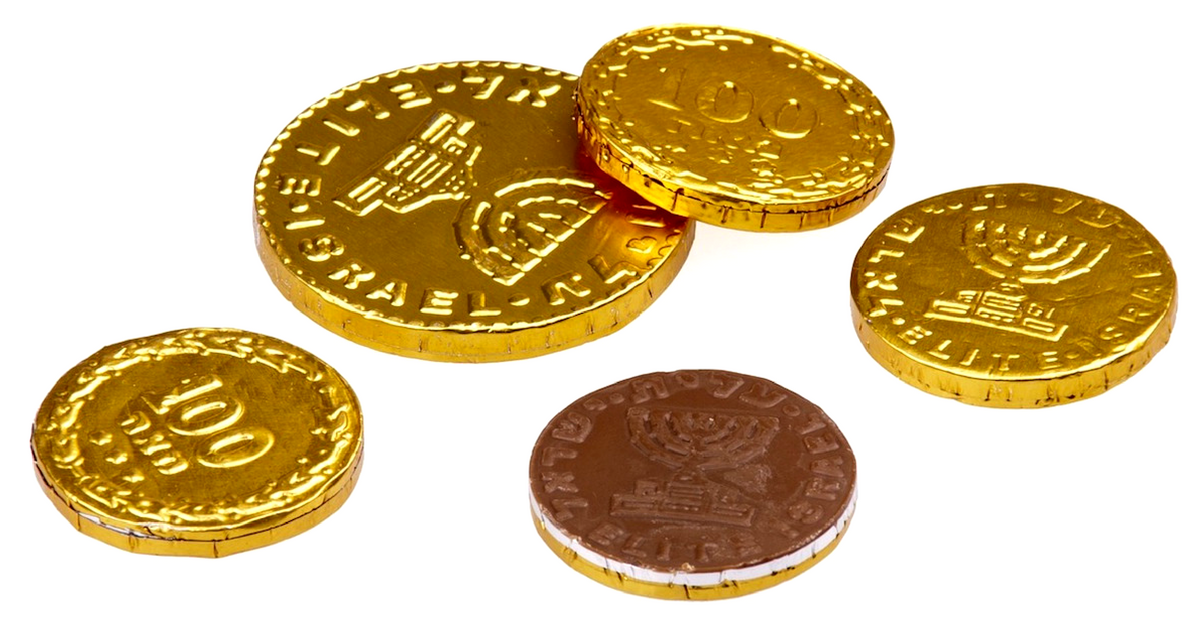
Hanukkah Is Fake News Too

hanukkah-is-fake-news.png

As we learned from the widespread propagation of “fake news” over the last several months, we believe what we want to believe. Fake news and sensationalized headlines are nothing new, but they rose to the forefront of our national dialogue during and immediately following the election.

What makes fake news so controversial is not that it exists. Anyone who has spent any time in a grocery store checkout line in the last 40-plus years has seen plenty of “published” fake news headlines. (Don’t you feel better knowing Elvis and JFK are alive and well in a bunker in Montana? I sure do.) What makes today’s fake news troubling is that social media, as pervasive as it is, is still a relatively new type of media. We’re still testing its limits and its trustworthiness.

Not only is fake news nothing new, so to speak, but the story of Hanukkah itself, which goes all the way back to 167 B.C.E., is fake news.

SPOILER ALERT: The rest of this article presents some information about Hanukkah that may be different than what you learned in Hebrew school or from singing “Hanukkah, Oh Hanukkah.” If you would like to continue living under this unspoiled illusion, you may want to skip to the final paragraph.

Most of us learned as children that the miracle of Hanukkah was that a little bit of oil lasted a full eight days, which is why we celebrate by lighting the chanukiah for eight nights. In reality, this headline that has been perpetuated since before “I Have a Little Dreidel” is one of the earliest fake news stories.

You see, while the Maccabees were fighting to save their society and their religion, they missed out on the fall celebration of Sukkot, an eight-day festival. So when the war ended and the Temple was rebuilt, it was the perfect time to “catch up” on the holiday they missed. Thus, they rededicated the Temple and celebrated for eight days. Hanukkah isn’t a miracle of oil, it’s just a late Sukkot.

But if you ask most people about the miracle of Hanukkah and why we light candles eight nights in a row, the only answer most people know is that the oil miraculously lasted that long. Why did we substitute the truth for something entirely made up? If we wanted to celebrate a miracle, wasn’t it a big enough miracle that the small band of Maccabees defeated the mighty Greek army?

One possible reason for the replacement story is that it’s not the simple truth; it’s provocative and inexplicable. Perhaps it is because in a time of darkness and destruction, the people needed to hold onto a miracle of light.

In the end, the “fake news” of Hanukkah was relatively harmless, and in fact quite the opposite. It created and sustained one of the most well-known Jewish stories within and outside of Judaism. But it also teaches us the power of our words and the power our convictions have over us. Confirmation of the opinions we hold, whether based in truth or not, makes us feel complete and safe. Although the consequences of fake news are not always as uplifting and miraculous as the new and improved story of Hanukkah, the reasons for fake news centuries ago and today are probably similar. We may not see as many miracles these days, but that doesn’t mean we aren’t looking.

On Miracles and Hate: Hanukkah 5776

Miracles and Hate

I’m not ready for Hanukkah. By that, I don’t mean that I got a late start shopping for gifts. I don’t mean that I lost my Nana’s latke recipe. What I mean is, how can I possibly go into a holiday of light and miracles when everything in the news is darkness and hate?

In the span of about a week, it’s as if we’ve been reading a twisted, despairing version of The Very Hungry Caterpillar. “On one day, a massive terrorist attack in Paris, but some people were still hateful. Another day, senseless murders in Colorado Springs, but some people were still hateful. And on another day, a massacre in San Bernadino, but some people were still hateful.”  

How do I celebrate nights of joy, hope, and freedom in the world that creates days like this? How can I sing Hallel, songs of praise for God, with horrific acts being perpetrated in the name of religion? When all around it seems so dark, how can lighting these lights possibly make a bit of difference?

The answer is right in front of me in the holiday itself: dedication. Hanukkah, Hebrew for “dedication,” embodies the will, the determination, the dedication of a people to survive in the face of insurmountable odds. It’s the spirit that is kindled and does not die, from the Maccabees fighting to preserve their lives and our sacred tradition, to the Parisian Jews being told not to light chanukiot out of fear of further attacks.  

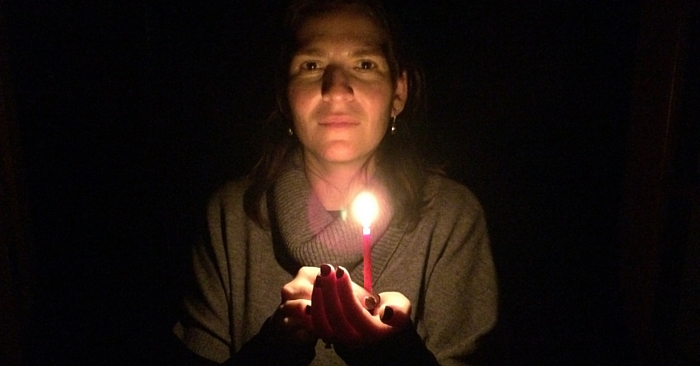
Join me, starting Sunday, and let us dedicate our eight nights of light against the hate and the desperation. For eight nights, let there be nothing but our combined glow around the world.

On Sunday I will light for hope.
On Monday I will light for understanding.
On Tuesday I will light for wisdom.
On Wednesday I will light for respect.
On Thursday I will light for acceptance.
On Friday I will light for dialogue.
On Saturday I will light for guidance.
On Sunday I will light for peace.

Now my holiday is dedicated. Now the flames have regained their purpose. Now I’m ready.