Counting Up

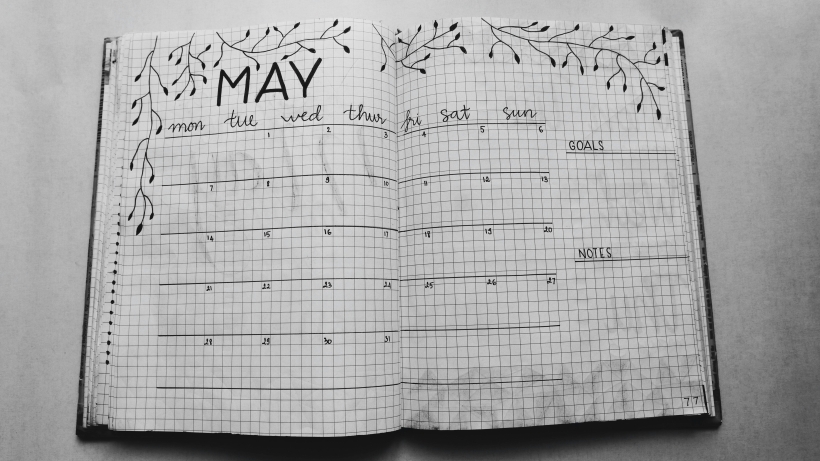
Every year between Passover and Shavuot, we count the days. While this act is based on a Torah commandment, it can often take on an additional meaning. There are years when that count leads directly to the last day of school, and other years when it might lead to a birthday of a loved one. In 2010, the year I was ordained, the count led directly to my rabbinic ordination, with the ceremony taking place the day before Shavuot. 

Parshat Emor covers a wide range of topics, but a large section focuses on the festivals of the Jewish year — Shabbat, Pesach, Shavuot, Rosh Hashanah, Yom Kippur, and Sukkot. It is here that the Torah lays out not only when we celebrate these holidays, but also why: to sanctify time, to remember our story, and to reconnect to God and one another. Among these mitzvot, we find the commandment of Sefirat HaOmer, the counting of the Omer — a mitzvah we’re engaged in right now, between Pesach and Shavuot.

Each night during this seven-week period, we say the blessing:

Baruch atah Adonai, Eloheinu melech ha’olam, asher kid’shanu b’mitzvotav v’tzivanu al sefirat ha’omer.

“Blessed are you, God, sovereign of the world, who has sanctified us with your mitzvot and commanded us regarding the counting of the Omer.”

This blessing teaches us something profound: the act of counting — something so simple, so ordinary — becomes holy when we do it with intention and blessing. It’s not about reaching day 49 as fast as we can. It’s about noticing each day as it comes, pausing, reflecting, and marking time with purpose. Through this small nightly ritual, we remember that holiness doesn’t always require grand gestures — sometimes it’s found in small, mindful acts repeated with care.

This week’s parshah, Emor, invites us to reflect on the power of sacred time and sacred action. When days blur together and we often rush from task to task, Emor reminds us that time is not just something we pass through — it’s something we can elevate.

Emor challenges us to look at the mitzvot in our lives — not only the big holidays or life-cycle moments, but the everyday acts of kindness, justice, and mindfulness. Can we bless these ordinary acts with intention? Can we find the sacred in a conversation with a friend, a meal with family, or even just a deep breath before the next busy day begins?

All Your Perfect Imperfections – Parshat Emor 5784

Sculpting with clay is expressive, cathartic, and just plain fun. Can I create anything artistic? Not really. Every ashtray (remember those?) or mug I tried to make at camp as a child came out a little wobbly and definitely would not have been safe for practical use. And yet, my parents still proudly displayed them in their respective offices as decorative tokens of my affection for them. This tradition continues in various ways with our children. Our seder table at Passover time is always filled with little knickknacks and school projects that the kids have made for us over the years that help enhance the Pesach story. The misspellings and wonky placement of eyes on a frog are the most perfectly imperfect treasures I own. 

This week we read Parshat Emor, and we once again find ourselves deep into the commandments surrounding Jewish practice. Parshat Emor focuses on the rules and regulations for the priests, along with the obligations of the Israelites. It covers the observance of certain holidays, including mentions about the holiness of Shabbat, other holidays we are to celebrate throughout the year, and the ways in which we are to treat one another and even animals. The majority of these rituals are meant to be done in public, with the entire community a part of them.

As we read these strict and precise regulations regarding animals for sacred sacrifice, we come to the section on the freewill offering. In essence, this is an offering made as a gift, and as such has no strictures on whether or not the animal has blemishes or imperfections. When there’s so much detail and precision included about laws for sacrifices, why does the Torah go to such great lengths to add in an offering of this kind without the usual requirements?

Perhaps it’s because when something comes from the heart, the meaning is one of love and connection, not necessarily about following certain rules. In other words, Parshat Emor teaches us the distinction between the offerings we make that must fit a need and those that fulfill a more abstract purpose.

These days, we don’t use sacrifice as part of our rituals, but the message still applies. You wouldn’t donate expired food to a food bank, but you might donate an incomplete set of dishes to a thrift store. Or you might create a piece of artwork to cheer up a friend who’s under the weather, even if your creations won’t ever appear in a gallery. As humans, we’re imperfect, so the work of our hands can be perfectly imperfect too.

Working on Shabbat – Parshat Emor 5783

A few months ago, as my ever-curious 9-year-old was chatting with me about Shabbat and what she was learning in school, she asked me the question I dread. “Mommy, if we keep Shabbat, why do YOU work on Shabbat?” This was after a particularly busy Shabbat with back-to-back services and programming, and it felt like I was gone the entirety of Shabbat. In our house, we’ve got some clear Shabbat boundaries. We don’t do art on Shabbat, and we don’t spend money or go shopping on Shabbat. We do spend time together whenever possible. However, Shiri learned in school that we don’t work on Shabbat. So, how do we reconcile the work that I do?

This week we read Parshat Emor, and we once again find ourselves deep into the commandments surrounding Jewish practice. Parshat Emor focuses on the rules and regulations for the priests, along with the obligations of the Israelites. It covers the observance of certain holidays, including mentions about the holiness of Shabbat, other holidays we are to celebrate throughout the year, and the ways in which we are to treat fellow humans and even animals. The majority of these rituals are meant to be done in public, with the entire community a part of them.

As the laws of holidays and Shabbat are introduced, the Torah uses the word melachah. This word is translated loosely as “work,” but a more precise definition would be “creative endeavors.” The notion is that God stopped creating to celebrate Shabbat, and so should we. That means that Shabbat is about the work of our souls, not the work of our hands.

The question remains: How do you explain this to a 9-year-old? The best answer is the honest one, which is yes, my job includes Shabbat, but I do all my preparation before Shabbat so that I too can be fully present in services and with our community. Being fully present requires preparation. There’s a reason we don’t mourn publicly on Shabbat or create new “things.” It’s because this allows us to live in the moment and actually experience our Judaism. We turn off the alerts on our phones and prepare our food in advance so we won’t stress about our weekday jobs or worry about our next meal. We need the comfort of having as much planned for as we can so we’re not checking off a list, not to mention the fact that checking things off a list would involve writing. 

Do I work on Shabbat? It depends on what you call work. Technically, my fellow clergy and I are all required to be present on Shabbat. However, I don’t consider it work to guide a congregation in spirit and prayer. That is a joy, that is a gift, and that is why I’m a rabbi. 

Chain Reaction – Parshat Emor 5782

Have you ever been in the middle of a “pay it forward” chain reaction? This occasionally happens in line at the local coffee drive-through, when the car ahead of you pays for your coffee, and then you pay for the car behind you. On Sunday mornings, when there’s no ALIYAH and I have no meetings, our family occasionally goes to our local coffee kiosk to grab coffee for the adults and hot cocoa for the kids. When the weather’s nice, we even walk. These mornings have been made extra special a few times when the car in front of us has paid for our order. The kids get super excited when this happens, and of course we then pay for the car behind us, and the chain of kindness usually continues on. There’s something contagious about a simple act that inspires others to help other people. 

When did you last experience a chain of kindness like this? It’s not limited to coffee shops. Whether it’s people taking turns holding the door open for the next person to walk through, or a Hebrew school class adding tzedakah to a class fund to donate, there are plenty of examples of chains of kindness. It might surprise you to learn that this action of inspiring kindness in others actually comes from this week’s Torah portion. 

This week we read Parshat Emor, and we once again find ourselves deep into the commandments surrounding Jewish practice. Parshat Emor focuses on the rules and regulations for the priests, along with the obligations of the Israelites. It covers the observance of certain holidays, including mentions about the holiness of Shabbat, other holidays we are to celebrate throughout the year, and the ways in which we are to treat one another and even animals. The majority of these rituals are meant to be done in public, with the entire community a part of them.

In the midst of these commandments, God offers a gentle reminder that our actions are often noticed by those around us. At the end of chapter 22, we’re warned against profaning God’s name in the “midst of the Israelite people.” Why this extra warning about how we behave in public?

Multiple commentaries reflect that public shaming, public abuse of power, or even public misrepresentation of tradition can be fairly damning and misunderstood by the masses. Nowhere does the Torah forbid us from being upset with, disagreeing with, or even arguing with God. Instead, we’re cautioned against doing so in public because of the repercussions to the individual, as well as the people they might be representing. This, we understand, could lead to the opposite kind of chain reaction: one of harmful rhetoric or misjudgments.

“A Jew is asked to take a leap of action rather than a leap of faith.” Rabbi Abraham Joshua Heschel’s words remind us that it’s our actions that make a difference and can influence others more than our faith. For better or worse, how we act is the clearest representation of ourselves, and who knows how far your chain of kindness will go?

I Can Almost Taste It – Parshat Emor 5780

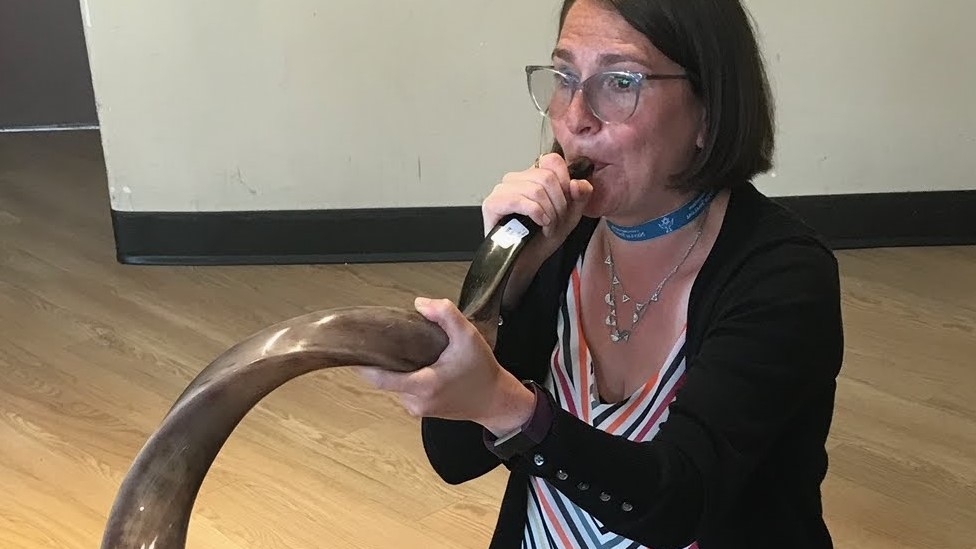
hear-the-shofar-blast.JPG

Life is about experiences, and some stick with us so vividly that certain smells, tastes, and even sounds can take us right back there. In fact, the sense of smell is known to have a big connection to memory. Sometimes I get a whiff of something like my father’s cologne at times, and it’s as if he’s visiting me somehow. And smells like chicken soup and chocolate chip cookies will thrust me right back into my mother’s kitchen preparing for Passover. In those moments it’s like I’m literally feeling the memory of warmth, an embrace, and family togetherness.

On the flip side, there are times when I am desperate to relive a memory and can’t find a way to evoke that tight connection. Those are the moments that make sad, and feel as if that familiarity is gone forever. 

Many of the experiences described in the Torah are also the kind that evoke memory long after the moment has passed. The sacrifices we learn of produced an array of aromas, and the sound of all of Israel gathering at the mountain and then hushing must have provided quite a contrast. Parshat Emor reminds us of all of this and more. We begin with the specific rules and regulations of the priests, as well as the laws about what we’re supposed to put into our bodies. The text continues with an in-depth look at the laws of our holidays and special times and concludes with the punishments that would be brought to those who break the mitzvot of trust in relationships. With the laws about the priesthood comes one of the defining mitzvot of Jewish community. 

In chapter 23, verse 24 we receive the laws of Rosh Hashanah. The holiday that now begins our year was actually the first day of the seventh month. The Torah describes the festival as a day of complete rest, a sacred occasion commemorated with loud blasts. You shall not work at your occupation (clergy excepted of course) and you shall bring a gift to God. Sounds pretty much like how we celebrate Rosh Hashanah today. We stop what we’re doing (which feels a bit like resting on Shabbat) and we blast the shofar, nice and loud.

However, this verse is also how we learn that we can’t blow the shofar on Shabbat. Why? Because Shabbat is a mikrah kodesh, a holy commemoration of its own, so there is no need for the additional sound. According to the Talmud, on this occasion we’re supposed to remember the sound of the shofar in our hearts, and since that sound is so vividly ingrained, we don’t need both.

The shofar pierces our ears and often our hearts with its loud and startling blasts, but memory is so strong, even the mitzvah of hearing those loud blasts can be fulfilled by recall if it happens to be Shabbat. 

What an important message this is about how we celebrate Jewishly, especially during a pandemic, when we might not be able to celebrate in the same ways as usual. Our memories are strong enough that we can recall the sound of the shofar, the sight of the Purim costumes, or the smell of kiddush lunch at shul, and it’s like we’re there.