Meaning in the Mundane – Parshat Eikev 5784

Hearing good news, seeing a head of state, and going to the bathroom. They all have one thing in common. No, they’re not random cards from a game of Apples to Apples. Our tradition has a blessing to follow all three. Blessings for everyday and ordinary situations are, in my opinion, one of Judaism’s subtle beauties. Sure, we have the ceremonial grandeur of the High Holidays and the weekly joy and recharge of Shabbat, but there’s something special about finding meaning in the mundane, and I’d extend this to include seemingly mundane commandments. 

Parshat Eikev contains a related, and powerful, message that connects mitzvot (commandments) and blessings. The portion begins with the word eikev itself, which is often translated as “because,” suggesting that the blessings we receive are a direct result of our actions. But eikev also means “heel,” hinting at those mitzvot that are often overlooked or taken lightly, the ones that we might not even notice as we step through our lives. This dual meaning is a reminder that our everyday actions, even those that seem small or insignificant, can have just as much an effect on our lives as the big milestone moments. Our mitzvot aren’t a checklist of to-dos; they’re individual and unique opportunities to bring good into our lives and the world.

The text this week promises that if we observe the commandments, we will be blessed in many ways—through fertility, abundant harvests, protection from enemies, and good health. These blessings aren’t just rewards; they are the natural outcome of living a life aligned with the values and principles that God has laid out. When we live in accordance with basic values—kindness, justice, humility—we create an environment where blessings can flourish.

What we have to remember is that blessings aren’t always immediate or obvious. Sometimes, the blessings come in forms we don’t expect, or they arrive in subtle ways. But Judaism isn’t about a one-for-one exchange of good deeds and rewards. It’s about having faith that our efforts to do good will ultimately bring goodness into the world, even if the results aren’t always abundantly clear. This is especially true with the “heel” mitzvot, the ones we might think don’t matter as much. It’s far too easy to focus on the big, dramatic acts (literally, the ten huge ones on the side of our building come to mind) and overlook the small, daily opportunities to do good.

Parshat Eikev teaches us that every action counts. We don’t just receive blessings, we create them through our actions and attitudes. There’s a reason the Jewish value of gratitude is hakarat hatov in Hebrew, or “noticing the good.” By paying attention to the small mitzvot, and by cultivating gratitude for the everyday, we can create a world where blessings abound. This week’s parshah calls us to recognize the power we have to bring blessings into our lives and the lives of others, one small act at a time. The small acts of kindness, the quiet moments of gratitude, the everyday decisions to do what’s right—these are the building blocks of a life filled with blessings.

To Plant Roots – Parshat Eikev 5783

The other day I had a conversation with someone about the point at which a person officially becomes a “native” of a place. In the literal sense, the word comes from the same Latin root that means “to be born.” By that definition, I’m a native of Detroit, Michigan; Duncan and Shiri are natives of Dallas, Texas; and Matan is our sole Portland, Oregon native. However, our family has lived in Portland now for nine years, and Shiri only spent the first 10 months of her life in Texas. So is Shiri also native to Portland? And will we ever be? 

For our family, Portland is the place we’ve lived the longest collectively, and we call Portland and CNS home because this is where everything feels familiar and where we’ve built a community. So perhaps, we’re a native family unit? And yet, plenty of Jewish families have been here for generations, so we don’t feel like natives in comparison. So when does that milestone moment occur? The Torah actually anticipates this question as the Israelites continue their journey toward a land they’ve not inhabited in multiple generations. 

Parshat Eikev, which we read this week, explores the notion that God might or might not respond to bargains. We learn of the blessing and reward you receive if you keep the laws of the Torah and of the consequences for those who don’t follow those laws. The Torah recaps the lessons learned from the Golden Calf, the breaking of the first set of tablets, and Moshe’s prayer for the people. We finally receive the second section of the Shema, followed by a clear warning to guard the Torah and its commandments.

In chapter 10, verse 19, the Torah commands us to befriend the stranger because we were strangers in Egypt. The word used in Hebrew for “stranger” is ger. In contemporary Judaism, this word is used for someone who has converted to Judaism, but in everyday modern Hebrew, the verb also means to live somewhere. Why does this word hold both meanings? Because someone who is new to a community should be welcomed as though they’ve lived there forever. To put down roots is to join in the way of life of a place as well as to embrace the traditions and values that sustain that place.

The conversation I described at the beginning lent itself to questions about the different ways in which one can be welcomed into a community and the sense of belonging that comes when you feel accepted and included. Parshat Eikev invites our communities to explore what radical hospitality looks like and how we might make every person in our congregational family feel not as a stranger, but as a native. 

Finding a Bargain – Parshat Eikev 5782

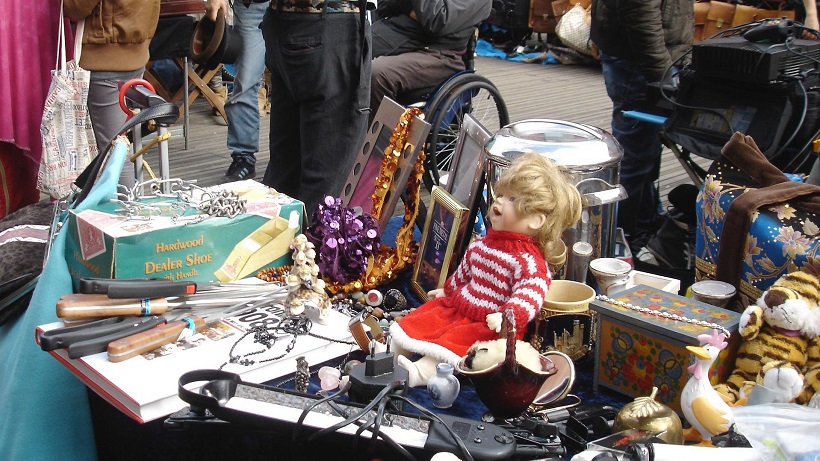
My Grammy, Muriel, was one heck of a shopper. She loved nothing more than finding an incredible deal on almost anything. She always knew the best time to go shopping for a deal on clothes, so an entirely new wardrobe could be purchased for a third of the actual price. But she was truly in her element at the flea market. Grammy could haggle like the best of them. I have vivid memories of visiting her in Scottsdale, Arizona, where she would winter, and going to the flea market with her. I’d fall in love with a ring or a trinket, and there was no way Grammy would let me pay the asking price. She’d haggle, walk away, and then somehow get it for a lower price. 

As helpful a tactic as bargaining can be in a flea market, it doesn’t work in all facets of life. Maybe you’ve had a loved one who fell ill, and you begged a doctor to do something perhaps beyond human capability. Maybe you’ve missed an important deadline and can’t get yourself or your kid into a program you were counting on or complete a project by a deadline. Bargaining doesn’t usually work in these more abstract cases, and that includes bargaining with God. Have you ever tried to bargain with God? “Just let me pass this test, and I’ll study for the next one.” “Let my loved one heal, and I’ll do a mitzvah.” Has it worked?

Parshat Eikev, which we read this week, explores the notion that God might or might not respond to bargains. We learn of the blessing and reward you receive if you keep the laws of the Torah and of the consequences for those who don’t follow those laws. The Torah recaps the lessons learned from the Golden Calf, the breaking of the first set of tablets, and Moshe’s prayer for the people. We finally receive the second section of the Shema, followed by a clear warning to guard the Torah and its commandments.

In the midst of these lessons we read in chapter 10, verse 17 that God “is supreme and Lord supreme, the great, the mighty, and the awesome God, who shows no favor and takes no bribe.” In essence, God is God, and unyielding when it comes to our desired outcomes in the world, whatever they may be. No matter how much we may want to change reality, bribing God won’t cut it. It is upon us to do the work. If only life were like a flea market and we could bargain our way in or out of any situation. But Eikev reminds us God is not that kind of creator.

The Path Before You – Parshat Eikev 5781

If you stay in one place long enough, your family becomes rooted and connected to that place in a deep way. Those of you with older siblings may know the feeling of walking into a new classroom at the beginning of the school year and having the teacher look at your last name on the roster and automatically associate you with any memories of your older sibling. It can even happen a generation or two apart, like when a grandchild who is working hard to start their own career, but in the same field as a grandparent, can’t escape the stories about living up to the legacy. In so many ways we find ourselves following paths laid years or decades before, and yet each human being is also their own person and thus different.

The Torah often follows this line of reasoning, including Parshat Eikev this week. We should trust God because Abraham, Isaac, and Jacob put their faith in God, and God’s promises were fulfilled. At the same time, we’re reminded of all the ways in which the Israelites choose a new path and not be like their ancestors.

This week we read Parshat Eikev. We learn of the blessing and reward you receive if you keep the laws of the Torah and of the consequences for those who don’t follow those laws. The Torah recaps the lessons learned from the Golden Calf, the breaking of the first set of tablets, and Moses’s prayer for the people. We finally receive the second section of the Shema, followed by a clear warning to guard the Torah and its commandments.

In the aftermath of the Golden Calf incident, which happened a while back, God and Moses are going back and forth on the merits of the Israelite nation. The concept of the “merit of ancestors,” or zechut avot, is often cited here. In other words, God should have mercy upon the Israelites because they come from meritorious people. They should receive mercy because they are the same as their ancestors, even in their differences. The thing is, Moses also makes the argument that it’s not just the “good” qualities that they have in common. They also share the same stubbornness, a stubbornness that has preserved them as a people through generations. 

We want to pass down only our best qualities, whether it’s older sibling to younger sibling, parent to child, or grandparent to grandchild. However, sometimes it’s not necessarily the “best” qualities that are the most important, but the ones that best serve us. 

Parshat Eikev reminds us that while the idea of zechut avot paved the way and may open doors for us, it’s up to us to go through the door and pave the way for those who will follow.

The Real Deal – Parshat Eikev 5780

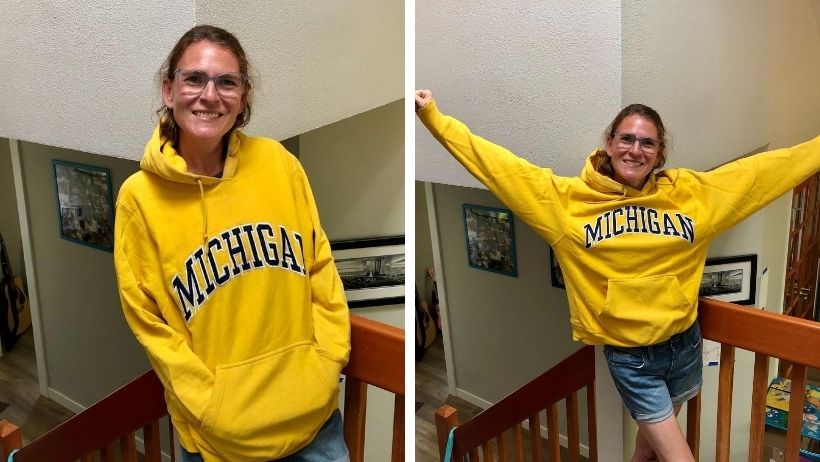
When I applied to the University of Michigan for undergrad, I didn’t expect to get in. I had low test scores and a low-ish GPA (3.3). The application process was cutthroat, and most people in my high school with above perfect GPAs and excellent AP scores were concerned about their futures, so what chance did I have? I was sure a rejection letter was heading my way, so you can imagine my surprise when the acceptance letter came in the mail. You can bet that in addition to the letter, I also received a few glares from fellow students in my graduating class who’d been wait-listed or rejected, yet reached higher academic achievement than I had. How had this actually happened? 

While I don’t know exactly what singled me out, I have a feeling it was the authenticity in my application. It painted a true picture of who I was and who I wanted to be. On my application I indicated I wanted to be a Judaic Studies major. I had spent six months in Israel during high school, my volunteerism showed a commitment to my synagogue, and my essay spoke about my Jewish identity. Plus, my grades told the story: high grades in classes on world religion, social studies, and history, and lower grades on math and science. It was clear that I meant what I said, and I have to believe that’s why I was admitted. 

The happy ending to this story is that I excelled at U of M. I was a Judaic Studies major, I took classes I loved, and it was clearly the right place for me. I mean, I became a rabbi, didn’t I?

This week we read Parshat Eikev. We learn of the blessing and reward you will receive if you keep the laws of the Torah and the obligation to remove those from the community who don’t follow the laws. The Torah recaps the lessons learned from the Golden Calf, the breaking of the first set of tablets, and Moshe’s prayer for the people. We finally receive the second section of the Shema, followed by a clear warning to guard the Torah and its commandments. 

As God is trying to give the final sets of laws and get the Israelite nation ready to enter into the land of Israel, God is also trying to figure out who the Israelite people really are. Chapter 8, verse 2 reads: “Remember the long way that the Lord your God has made you travel in the wilderness these past forty years, that he might test you by hardships to learn what was in your hearts: whether you would keep His commandments or not.” God tests the trust and loyalty of the Israelites.

Rashbam comments by asking, was this a test to their faith because they would never be sure the manna would appear the next day, or was the test to see if they would remain grateful to God even if they knew their food supply was assured?

When we’re true to ourselves and the journey we’re on, the path becomes clear. The Israelite journey had plenty of bumpy patches. Many times they thought about opting out and going back to Egypt, and yet they managed to hold fast to their belief in what could come next.  

Parshat Eikev is one of many reminders in the Torah to be true to your inner self. Be your most authentic self, rather than what you think other people want from you. And of course, go Blue!