Rooster’s Wisdom

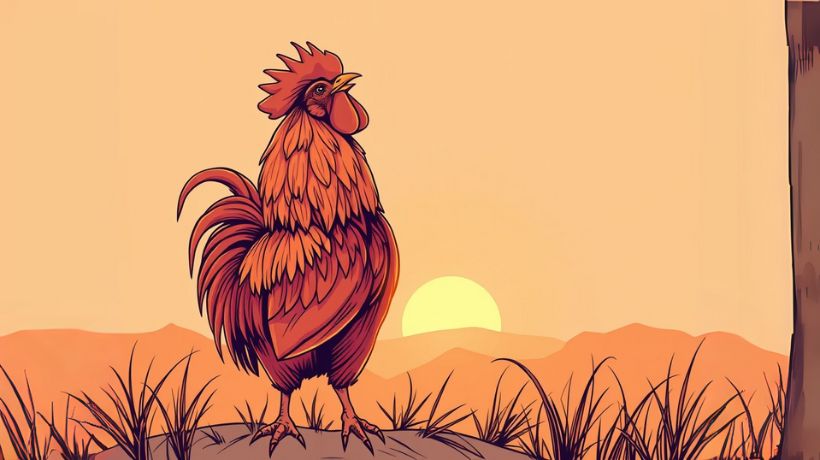
Every morning, Jews begin the day with a series of blessings called Birkot HaShachar—blessings for waking up, for breath, and for clarity. Among them is a rather curious line: Blessed are you … who gives the rooster understanding to distinguish between day and night.

On the surface, it’s about a bird crowing at dawn. But the deeper meaning is about discernment—the ability to tell the difference between what should be said and what should be left unsaid. In a world overflowing with voices and opinions, Parshat Balak reminds us that speech, especially when wielded by leaders, prophets, or influencers, holds immense power.

In Parshat Balak, the Moabite king Balak is terrified of the Israelites and hires the prophet Balaam to curse them. Balaam, though initially reluctant, agrees to go—but only speaks what God puts in his mouth. Each time he tries to curse the Israelites, blessings emerge instead. Ultimately, Balaam utters one of the Torah’s most poetic verses: “Mah tovu ohalecha Ya’akov…” “How good are your tents, O Jacob.” The people are blessed, despite Balak’s intent, and Balaam’s tongue becomes an instrument of holiness.

The daily blessing over the rooster’s discernment is a metaphor for human speech. The Talmud connects this blessing to the idea of binah—understanding when to speak and what to say. Balaam, though not an Israelite prophet, is held to a high standard: he must speak only what is true and just. His transformation from curse-bringer to blessing-giver mirrors our daily aspiration to use speech for good. In a world where lashon hara (harmful speech) is easily shared, Parshat Balak elevates the opposite: words that uplift, protect, and sanctify.

This week, consider how you use your voice. Are you contributing to light or deepening the darkness? The morning blessing about the rooster challenges us to begin each day with discernment—choosing speech that blesses rather than curses, that clarifies rather than confuses, and that reveals the light in others rather than their flaws. Like Balaam, may we find ourselves surprised by the holiness that emerges when we let blessing lead.
Location Location Location – Parshat Balak 5784

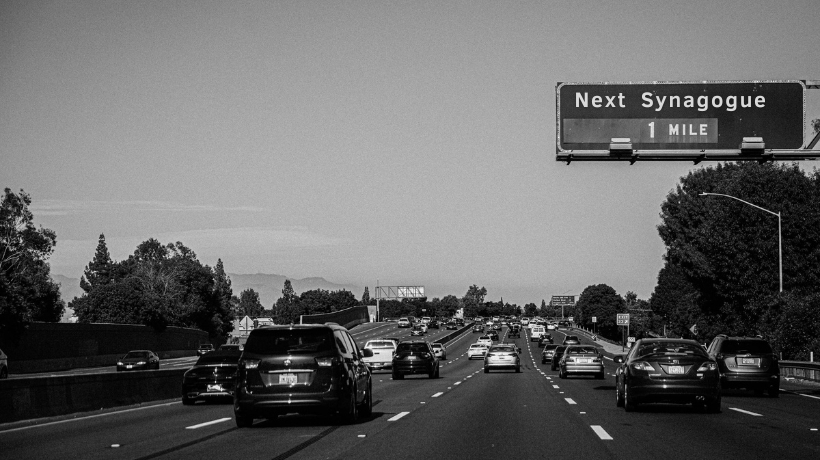
When we moved to Portland and needed to figure out where to live, Duncan and I had a lot of decisions to make. What was our price range? How walkable did we want the area to be? What was our ideal proximity to the synagogue? Would it be wise to buy a house that needed a lot of work done, or should we purchase a home that was move-in ready? What it came down to was building a community in which we could immerse ourselves, and that meant finding the balance between living as close to the synagogue as we could afford and having to do a minimal amount of work on our home (at least when we moved in). Here we are, 10 years later, and we certainly made the right choice for us. 

Specifically, we’ve found that living in the location we chose has meant that we’re able to be physically present with so many people with relative ease, and in moments of hectic chaos, we’re also able to have people easily jump in to help with carpool, dinners, or a quick hug. 

This week we read Parshat Balak, a narrative filled with opportunities for taking the right or wrong action and saying the right or wrong words. You know this parshah – it’s of course the one with the talking donkey. Parshat Balak is the story of Balak, son of Tzipur and king of Moav, who solicits Balam the “prophet” to curse the children of Israel. God allows Balam to go to the land of Moav, but only if he will speak what God tells him to say. On the way there, Balam becomes frustrated with his donkey, who refuses to move. As it turns out, the donkey sees an angel of God in the road. Balam cannot see the angel, only the donkey can, so Balam gets angry at his stubborn animal and beats the donkey.

A verse from this portion is perhaps one of the most famous verses in the Torah. Put to any number of melodies, you probably know it simply as “Mah Tovu.” It’s the curse-turned-to-blessing “How wonderful are the tents of Jacob, the dwellings of Israel,” which praises the Israelites for creating tight-knit and close neighborhoods. What Balam is really seeing (and commenting on) is how the Israelites are “set apart,” which he considers a bad way to live. However, the Torah reframes this to say that their intentional community building is actually how they preserved tradition and their identity, not unlike our close-knit communities today.

This could quickly turn into a drash on the pros and cons of assimilation and acculturation. We often focus on how this comes out sounding like a blessing, but just like in our Torah portion, there’s a version that can feel like a curse too, depending on how you view the benefits of “closeness.” Instead, I think the fundamental lesson is the power of community. By living in proximity to others who share our values and traditions, we’re able to connect more deeply and support more vibrantly. I’m grateful every day to live in community with you. 

Transition, Transition! – Parshat Chukat-Balak 5783

The scene in Fiddler on the Roof where Tevye and the rest of the town sing about tradition really resonates with me, but not for the reasons you might think. While I often accept tradition as the “why” for what we do as a Jewish people, I also question it. For me, this song always had a certain tongue-in-cheek element, satirizing a much bigger moment of “why.”

As Jews, so much of what we do falls under the “we do this because we’ve always done this” reasoning. In large measure, that’s true, but the ways in which we question and then change those traditions are also distinctly Jewish. Consider the example that, for many decades now, we have had women as clergy.

This week we read a double parshahParshat Chukat–Balak, which is full of plot twists and new experiences for the Israelites. In both of these stories, we see the Israelite people nervous about what comes next and concerned about what they are responsible for. The lands of Sichon and Og are conquered, both Miriam and Aaron die, and we learn that Moshe will not be allowed to enter into the land of Israel. Chukat details the significance of a month of mourning, with a focus on the passing of Miriam and Aaron. Balak asks us to examine our preconceived notions when we view others. And together, they teach us about transition.

Why is there this focus on processing death? Why is transition a necessary part of tradition? It’s partly because in this week’s double portion, the Israelites expose their grief, and God prescribes a way to deal with this loss and move forward. It’s the most human of emotions, with a very human way of responding attached to it. The Torah tells us that when someone dies, we have concrete actions to take. It’s a series of steps: do this, then do this, then do this. The Talmud continues this instruction by adding more specific laws to shiva, the first seven days of mourning, sheloshim, the first 30 days, and then the entire year.

The crux of each of these texts is how we respond to change, and specifically loss. The Jewish traditions of mourning we still practice today originate right here. To be honest, transition isn’t easy for me, and it’s these traditions that are why I love Judaism.

Open Your Heart and Mind – Parshat Balak 5782

I’m stubborn, I can admit that. And I was even more stubborn as a child. My family always joked it was because of my very auburn hair — maybe you know the reference. Regardless of the reason, I can get stuck in my ways, dig in my heals, and simply be unmoving when it comes to changing my stance or my way of doing something. I’ve also been “blessed” with two children who are strong willed, if you’ll pardon my euphemism, and that makes for some fun times in our household.

It’s not that I can’t change my mind. I have, in fact, become much better at opening my mind and my heart to new ideas and alternate ways of doing things. It’s just that I like my way, and sometimes we might need to agree to disagree.

“Agreeing to disagree” is a part of our vernacular, although if you spend any time on social media, this philosophical compromise has become far too rare. It’s used as a way to pleasantly end a contentious debate, or move on after a stalemate. Of course, there are also times in our world when the fight is worth it. These are times when we’re calling out injustice, when human rights and dignity are at stake. Somewhere in the middle of being wishy washy or complacent in our beliefs and being dug in and unmoving lies progress.

In our Torah portion this week, we see a prime example of the line between stubborn nature and the struggle for human dignity. This week we read Parshat Balak, a narrative filled with opportunities for taking the right or wrong action and saying the right or wrong words. You know this parshah – it’s of course the one with the talking donkey. Parshat Balak is the story of Balak, son of Tzipur and king of Moav, who solicits Balam the “prophet” to curse the children of Israel. God allows Balam to go to the land of Moav, but only if he will speak what God tells him to say. On the way there, Balam finds himself frustrated with his donkey, who refuses to move. As it turns out, the donkey sees an angel of God in the road. Balam cannot see the angel, only the donkey can, so Balam gets angry at his stubborn animal and beats the donkey.

Balam is meant to go and curse the Israelites. But on each attempted curse, God intervenes, and instead of Balam proclaiming how awful the Israelites are, his mouth, guided by God, speaks blessings about their beauty and wisdom. This purpose here is to show both Balam and Balak that they are misguided in their hatred; their desire to curse a nation they know nothing about is misplaced. 

After four futile attempts, they part ways. Chapter 24, verse 25 reads: “Then Balam set out on his journey back home, and Balak also went his way.” What a strange way to end — they agreed to disagree with God! They were each unaffected by this new information, unchanged by the encounter with God’s protecting love for Israel. Instead, they were closed minded and closed hearted, choosing to see what they expected to see and walk away.

Parshat Balak presents the notion that as human beings, being open minded is in our own hands. Information is available to us, but it’s up to us to open our hearts to internalize and interpret it. 

The Big Picture – Parshat Balak 5781

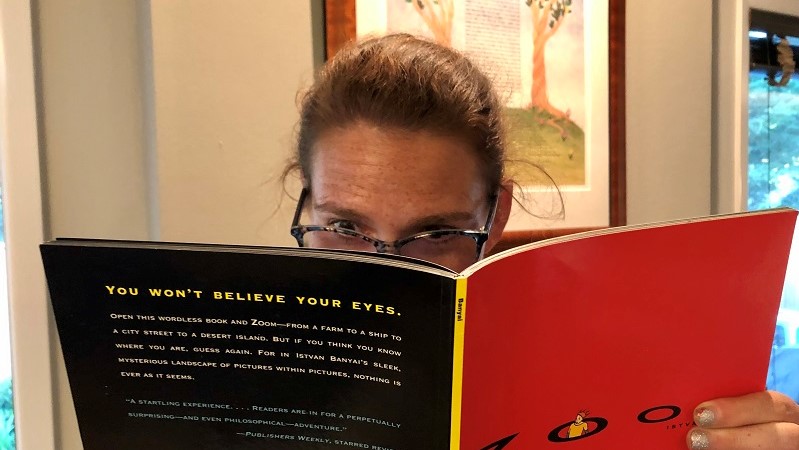
As a kid I used to love those brain teaser books that showed you one small part of a bigger picture, and you had to guess what the big picture was. These puzzles are a wonderful metaphor for our lives. What conclusions do we make based on just a small part of the picture? When you only hear one side or one snippet of a story, do you jump to conclusions on the assumption that you understand the situation in its entirety, when in reality you only know the smallest amount? This is also true about communities. Our community is made up of many individuals who come together to create something bigger than themselves. This is what makes a community beautiful. 

In a sense, we do this with the Torah by reading one portion at a time. Although we know the story after reading it over and over again each year, these small portions eventually add up to the story of the Israelite nation from birth to entry into the Land of Israel. The text each week gives us one deeper layer than the week before into understanding the bigger picture. Since we, the readers, are with the Israelites from beginning to end, we know them in their entirety, but when the Israelites encounter other communities on their journey, they’re only observed bit by bit. In other words, if you were to encounter the Israelite nation halfway through the Torah, you’d have no context for who they were or what they had been through. That happens in this week’s Torah portion. 

This week we read Parshat Balak, a narrative filled with opportunities for taking the right or wrong action and saying the right or wrong words. You know this parshah – it’s of course the one with the talking donkey. Parshat Balak is the story of Balak, son of Tzipur and king of Moav, who solicits Balaam the “prophet” to curse the children of Israel. God allows Balaam to go to the land of Moav, but only if he will speak what God tells him to say. On the way there, Balaam finds himself frustrated with his donkey, who refuses to move. As it turns out, the donkey sees an angel of God in the road. Balaam cannot see the angel, only the donkey can, so Balaam gets angry at his stubborn animal and beats the donkey.

In laying out the scenario to Balaam, King Balak says about the Israelites, “You will see only a portion of them.” One interpretation suggests that in order to curse them, Balaam had to see them with his own eyes, but Balak didn’t want Balaam to get the full view in case he ended up siding with them (which he eventually does). According to another theory, the purpose of this statement is to tell Balaam that while the small number of people he would encounter might not seem impressive, their numbers were actually much greater, and they needed to be fearful and on guard. But in either interpretation, Balak is acknowledging and even admitting that Balaam isn’t getting a complete picture of this nation of people. Instead, Balak is playing mind games and withholding his predisposed and misinformed beliefs.

This is what made these past 15 months truly difficult. For almost a year and a half, we’ve only been seeing a portion of each other at a time. Birnbach Hall wasn’t full of people on Rosh Hashanah. Families weren’t shoulder to shoulder at my house for Fourth Fridays. Even those times when we had a hundred or more people on Zoom together, you can only fit a certain number of people on the screen at a time. If you “only see a portion” of the people, it’s nearly impossible to get a sense for what this community really means.

As the world starts to open again and more restrictions are lifted, we’re almost at the point where we can once again see the big picture. And as one of the people who has been fortunate to have the vantage point of looking out at our community in its entirety, I can’t wait to have that view again.