
A Piece of Land – Parshat Chayei Sarah 5778

piece-of-land

I have a very vivid memory of my parents and grandparents discussing the locations of their future graves. My immediate family is all buried in the same cemetery in Detroit, which makes it convenient to “see” relatives when I go back for a visit. My Nana and Papa are at the front as you drive in. Walk a few sections down and you arrive at my Grammy and Zayde. Then come around to the other side of the front section, and my dad is resting there. My Nana chose her plot because of the peaceful location; there was a big tree providing shade. Unfortunately, that tree has since been cut down, but her spot still serves the purpose she had hoped: she wanted her final resting place to be both close to family and somewhere peaceful and beautiful. To this day, I find comfort and even a little pride in going to visit my family there.

There is a peace of mind that comes with knowing in advance where you or your family will be buried. Part of that peace of mind is financial. A burial plot is often the only piece of property people can claim to own outright, and the purchase in advance offers some stress-relieving stability. But it’s also reassuring that you’ll be able to connect in a physical way to loved ones even after their bodies have been returned to the earth.

The desire to have a final resting place confirmed is not a new phenomenon. In this week’s Torah portion, Parshat Chayei Sarah, we learn about Abraham and Sarah and their continued journey to raise their son Isaac to the chuppah and a life of good deeds. Our reading begins with the death of Sarah and with Abraham looking for a proper place to lay her body to rest. Immediately after Sarah’s burial, Abraham sets out to find a life partner for his own son, hoping to ensure that Isaac has comfort and support as he mourns his mother. The text continues with Isaac and Rebekah meeting, marrying, and falling in love (because that was the order then), and it ends with the death of Abraham.

As Abraham is in the process of burying his wife, his grief is not from the struggle of moving on after his loss, but rather how he will find a proper resting place for himself and his family. Sarah dies, and he works out a deal to inherit the Cave of Machpelah for just that purpose, and in this moment, Abraham begins a tradition that many of us continue today, that of family burial plots.

As a religion, Judaism excels at offering clarity and purpose for difficult subject matters and events. Death and the mourning process are prime examples of that. The Cave of Machpelah represents a re-gathering, a reunion of Abraham’s family. In modern times too, the idea that you’ll be buried in the same place as other family members can bring a certain ease and a level of comfort to a topic that’s rarely easy or comfortable.
 

Mother of Two – Parshat Vayera 5778

mother-of-two

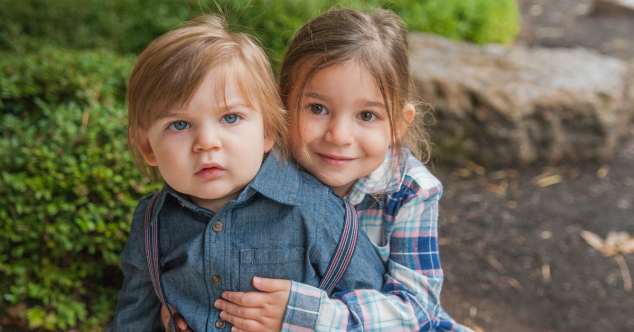
It was about a year ago when our lives were turned upside down by the addition of our sweet Matan to our world. Duncan and I had planned for his arrival; we prepared ourselves as best we could for the inevitable changes that would come as we welcomed a second child in our lives. In particular, we tried to make things as easy as possible for Matan’s older sister Shiri by reading books to her about becoming a big sister, role play with baby dolls, play dates with friends’ babies, and anything else we could think of to help create a smooth transition for her from only child to sibling.

As other parents of multiple children already know, this planning went well until the planning became reality. Sprinkled in with the moments of joy and blessing of the new baby came many moments of anxiety and insanity. There were times we all – including Shiri – wanted to run and hide. (Three-year-olds need private space too.) It turns out you can plan all you want, but bringing another child into your home and into your lives is anything but easy.

This week we read Parshat Vayera, in which Abraham and Sarah contemplate the son that will be born to them in their old age; Sodom and Gomorrah fall as Abraham bargains with God to save Lot’s life; and Isaac is born, causing a rift in Abraham’s house with Ishmael. Abraham moves forward in making a deal with King Avimelech, and we end with the Akeidah, the test of Abraham as God asks that he offer up his son, Isaac.

Abraham, Sarah, Hagar, Ishmael, and Isaac have the incredibly difficult task of trying to build a family after what must have been a crazy adjustment period. It could not have been easy to blend this family with one dad, two moms, and now two brothers all trying to figure out how they each fit in. Sarah, the new mother, appears to be at her wits’ end, attempting to protect her new baby when she insists that Abraham send Hagar and Ishmael away.

Now a year into motherhood with a second child, I know that feeling. It is overwhelming to balance an older child and a newborn while dealing with other family members, jobs, and everything else that comes with adulthood. I’m not saying Sarah was right to banish them, but I certainly understand where she was coming from as a mother.

On the face of it, this part of our story might be difficult to digest. It sheds a cold and rather harsh light on Abraham as a father. However, it also reminds us that being a parent means there are countless decisions to make, and not all of them are straightforward. Adjustments are hard, but resilience and adaptability are part of what makes us human. And perhaps no one teaches us that lesson better than our children.

Self Preservation – Parshat Lech Lecha 5778

self-preservation.png

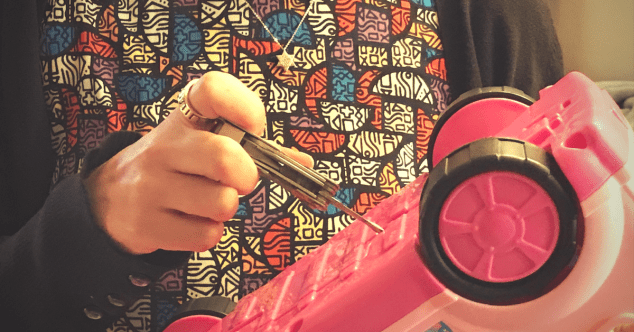
We all do things out of self-preservation. It’s the first law of nature, says Samuel Butler. Self-preservation as a parent means that sometimes you turn off the sound on toys or take out batteries so you don’t lose your mind over that one song that plays over and over again. Other acts of self-preservation for the sake of sanity might be avoiding Facebook during political high tide, or staying away from the mall around Christmas (or perhaps anytime after Labor Day, since that’s apparently the start of the season now). Been there, done those.

Granted, not all self-preservation is as benign and banal as these examples; sometimes it’s literal. We have to find ways to prevent ourselves from getting into dangerous situations, and that can be a matter of survival.

We see a prime example of the self-preservation mode in this week’s parshah, Lech Lecha. Parshat Lech Lecha brings us finally into the narrative of Abraham and Sarah and the beginning of the rest of our history as the Jewish people. The text begins with Avram and Sarai leaving their land, the land that they knew and felt comfortable in, to go to Egypt and follow God’s command. The text continues with their ongoing problems in Egypt and ends with their name changes from Avram to Avraham and Sarai to Sarah.

Upon their arrival in the new land, Abraham fears for their lives. He’s afraid his beautiful wife Sarah might be taken from him and that he might even be killed in the process. Like any of us might do, he shifts into self-preservation mode and tells Sarah to lie about her identity. She is to be his sister, not his wife. Unfortunately the plan ends up backfiring, but there is Abraham, our forefather and first leader of the monotheistic movement, and the first words he utters in the Torah are a lie for self-preservation.

We teach our children that lying is never OK, but there are situations that might force us to walk that line when it comes to the lives of loved ones. Of course taking the batteries out of a toy or hiding a book you’ve read a thousand times are certainly not actions taken in life and death situations. On the other hand, they do illustrate the occasional necessity of sacrificing a little emet bayit (truth in the home) for the sake of shalom bayit (peace in the home).

A Place to Go – Parshat Noach 5778

a-place-to-go

As the parents of two young children, Duncan and I have had our fair share of conversations about the use of space in our house, from the perspectives of safety, storage, and purpose. What areas are safe for the kids? Where do we need to be more careful? How much space is allotted for toys, and how much space might be designated as “parents only”? We try hard to make sure Shiri and Matan know that they each have places to go in our house when they’re ready to play and also when they’re feeling overwhelmed, tired, or just need some downtime. We also try to reserve adult space so Duncan and I can enjoy those few minutes of respite and relaxation when we can get them.

The need for room to spread out, be yourself, and let loose is a basic human desire and one that was felt well before our modern, technology-fueled times. This week we read Parshat Noach, which tells of the evil impulses running rampant in society, Noah’s building of the Ark, a covenant with God through a rainbow, and later the building of a tower to approach God.

Throughout the whole ordeal, Noah is the man in charge. He alone receives God’s call to build the Ark and to put his family and pairs of animals on this vessel. And, when the flood waters have subsided, he is charged with repopulating the earth as part of the covenant with God. If anyone needed a place to retreat, a space to call his own, it was Noah.

However, when you think about it, it’s God who expresses the big emotions here out of frustration with the degenerate society. Needing a space to let loose and simply be free of those God-sized emotions that go along with caring for others, the world becomes God’s room to “scream” into, and the flood is the ultimate temper tantrum.

Creating a place where you can feel both free to let go or safe to go into yourself is part of the framework for a healthy family and even a healthy society. Reading this parshah is always a reminder that it helps to be aware of our emotional responses, or at least aware enough to take a breather for our own sake and for the sake of those around us. It’s during this Torah portion that God goes back to a blank canvas, and in the same way for us, taking away those distractions and simply giving ourselves room to breathe makes all the difference.


Organized Chaos – Parshat Bereshit 5778

organized-chaos

I have an organizational system that I’m guessing many of you are familiar with. It’s often referred to as organized chaos. I have piles and piles organized throughout my workspace, and to the untrained eye they might just look like piles, but to me it makes complete sense. I have my “deal with right now” pile and my “recycle me” pile. I have a “for Duncan to deal with” pile and a “never look at again but don’t want to throw out” pile. Sometimes the items get moved from pile to pile until they end up in their permanent home (either an actual folder or the recycling bin) and my life feels organized and manageable. Every once in a while I get fed up with the size of the piles, go through them all, and whittle them down to the bare essentials. And then the process starts all over again.

Organized chaos is not a new management system. In fact, this week’s Torah portion, Bereshit, originates this concept. As the Torah begins anew we start with the very act of creation itself. We begin again with our familiar story and move quickly from the days of creation through the narrative of Adam and Eve in the beautiful Garden of Eden to the first time someone challenged God. From there we witness the first explosive sibling rivalry with Cain and Abel. The end then careens us forward in time to the line of Noah.

As the story of creation begins, “In the beginning God created the heavens and the earth. And the earth was Tohu Va’Vohu.” A modern translation could read this as “organized chaos.” When I read this I always picture God looking around at various piles trying to figure out what goes where. Sort of like the sorcerer in Disney’s Fantasia, I imagine God moving a wand around, organizing the heavens, the earth, the waters, the plants, and the animals and people until they are in just the right place to work together in harmony.

So often we think of God as being this perfect entity who fashions a perfectly deliberate creation with everything in the right place and placed in an orderly fashion, yet here we are reading the first few sentences of our Torah, telling us that even God has piles all around.

This notion of “organized chaos” is comforting to me. It’s a little counterintuitive to think of comfort in chaos, but life is full of chaotic moments. Whether it is my piles all around or running from activity to activity, it’s easy to feel like the world is whizzing by, However, we read Parshat Bereshit this morning and are reminded that from the chaos we create order. Just please excuse the mess.