We Go Together – Parshat Acharei Mot Kedoshim 5778

we-go-together.jpg

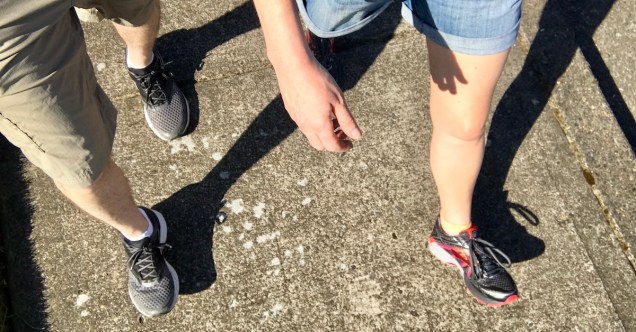
As most of you know, I like walking, and to be honest it’s usually walking alone that I enjoy best. It gives me time to silently take in the sights and sounds of nature and work through issues, thoughts, and ideas in my head. Here’s the problem with walking alone: I don’t always get the best exercise in when it’s just me. I tend to go a little slower and meander. On the other hand, when I have a partner, someone to push the pace or hold me accountable, I tend to do better. Studies show that having someone with you to cheer you on, whether in exercise (like I have found this year at Baby Bootcamp) or at work or even in your personal life, generally leads to a more fulfilling experience and a better end result.

We’re meant to work together, to find partners in all phases of our life so that we can learn from and with them. Our Torah portions this week, Acharei Mot and Kedoshim, support this notion. Parshat Acharei Mot deals with what happens after Aaron’s sons have offered up “strange fire” to God and with certain forbidden relationships between human beings. The structure of this section of text pushes us to look at our relationships with both God and others and see the boundaries and intimacies of each relationship. Parshat Kedoshim deals with what is known as the “Holiness Code,” which helps us to understand how we can walk in God’s ways and create a community of relationship and understanding.

As we get into the text about the offerings of a High Priest for atonement on Yom Kippur, we begin to read that the High Priest is to make an offering for “himself and his household.” This is interpreted to mean that the High Priest must have a partner. The High Priest’s job is to come before God as a representative of the entire community he serves, as a pious individual among the flawed community, all of whom aspire towards holiness. The question then becomes, how could he bear and carry the prayers of others unless he had learned to care for and share the hopes and dreams of at least one other individual?

One of my first rabbinic opportunities was a chaplaincy program during school. There was no hospital pulpit, just one-on-one spiritual care. Having that experience of praying with individuals one-on-one has made me a better rabbi leading large groups in prayer. Learning to work in partnership with someone allows a relationship to develop in an entirely different way. It means we then have the potential to sympathize with and support more people.

I choose to take the Holiness Code literally. To me, walking in “God’s ways” is actually about walking (or sitting or talking or laughing or praying) with others, because the more we understand each other, the more we understand God.


Pure and Simple – Parshat Tazria Metzora 5778

pure-and-simple.png

As you may recall when I spoke about the subject of water on Yom Kippur, I am a terrible swimmer. Nevertheless, there is something magical about water, and being near a body of water has always been a calming force in my life. For almost my entire life I have lived within a quick drive of the lakes in Michigan or the coast in California and Oregon, and it somehow soothes me to know that I can be near the water in a matter of hours. And although Texas has the Gulf of Mexico, being mostly land locked in Dallas never felt quite right. I missed the soft waves on the shore of the lake, the open expanse of an ocean, and the calming feeling of that ebb and flow with no end or beginning.

Although I’m not usually actively thinking about it, it’s also likely my strong feelings about water are due in part to the sense of purity and cleansing it provides. It both hydrates and cleans my body, and that relationship to water is one that’s fundamental to human existence. Our combined Torah portion this week, Parshiyot Tazria and Metzora, remind us of the healing properties of water as well. The text of these parshiyot tells us of the laws for the purification of both our homes and our bodies after disease or death has occurred, and the laws remind us that our bodies and our places of residence need to be treated with respect. We also have an obligation to help each other maintain healthy living and to support one another when we find impurities.

In chapter 14, verse 9 of Leviticus, we learn about the purification of the leper; we read that he should “bathe his body in water; then he shall be pure.” This is not referring to just any ordinary bath. This is a symbol of rebirth and recreation. The Seifer HaHinnukh teaches that the experience of illness and recovery has made the leper a new person. In other words, someone who now looks at life differently. While it is ultimately the experience that changes a person, the water symbolizes that moment of change. As infants we are born out of water. When we enter a new life phase, including converting to Judaism, we visit the mikvah. In fact, our entire world was created only as it emerged out of a giant body of water.

As the spring begins to give way to the first signs of summer, may we find refreshment in all that we do and take as many opportunities as possible to enjoy all the peaceful reassurance and calm our beautiful Pacific Northwest has to offer.

As a final note, I encourage you to visit our beautiful community mikvah located on the Mittleman Jewish Community Center campus. It’s closer than the ocean and cleaner and calmer than the river. We have been blessed as a community through the support of the Oregon Board of Rabbis and Jewish Federation to sustain a beautiful, tranquil place to refresh and transform ourselves.

Say Something

say-something.jpg

D’var Torah for Congregation Neveh Shalom – April 14, 2018

Just this week we observed Yom HaShoah, the day of remembrance of those who perished at the hands of the Nazis. Some news outlets mentioned the results of a recent survey conducted about the Holocaust. You may have seen it referenced online. This survey was commissioned by the Conference  on Jewish Material Claims Against Germany, and it looked at the awareness of the Holocaust in the United States.

I will say as a caveat, they only interviewed 1,350 adults. It’s helpful to keep in mind this is less than one thousandth of a percent of the population. But on the other hand, it’s the job of surveys to extrapolate and make assumptions based on the data, and this data is staggering. It points to a downward trend in the awareness of basic Holocaust knowledge, or what we think of as basic, including the fact that 45% of the adults surveyed could not name a concentration camp. If we assume this survey represents a balanced sampling of people, almost half of American adults did not have the name Auschwitz somewhere in their accessible memory. They couldn’t say Dachau. They couldn’t come up with Warsaw or Treblinka.

We condemn the silence of 80 years ago by saying “Never again.” So, what about the silence now? What are doing to condemn this silence and make sure when people say, “Never again,” they actually know what it is they don’t want to ever happen again?

Maybe this week’s silence in the Torah offers some advice. This week we read Parshat Shemini, which details priestly instructions, including the prohibition from drinking while on the job and the designations for various animals to be considered pure and impure. But somewhat hidden near the beginning is Aaron’s curious reaction to the deaths of his two eldest sons, Nadav and Avihu. Although the text goes on to discuss what will happen to his sons’ bodies and how the priests are forbidden from the same mourning rituals as the rest of the people, only two words are used to describe Aaron’s reaction to losing two children: vayidom Aharon. Aaron was still. Aaron was silent.

It’s at the installment of the priests as the leaders of the Jewish people where Aaron’s sons make the unfortunate decision to go beyond the celebration and sacrifice that God has commanded. And for that, Nadav and Avihu die. But what about Aaron? Certainly after the death of a loved one, especially children, emotions can take you by surprise. But Aaron is left speechless, and we are left to figure out why. Many commentators suggest that the silence might have been either in protest of God’s decision, in acceptance of this fate, or perhaps the anguish was too much for words.

It’s ok to be the strong, silent type. It’s ok to choose your battles. It’s ok to turn the other cheek, to borrow a phrase from a different testament. It’s ok . . . until it isn’t. It’s ok until those moments that demand of us to take our voices and use them strongly, loudly, and vibrantly.

There’s so much to speak out about, it’s both depressing and overwhelming. There are humanitarian crises happening everywhere. From the genocide occurring in the Sudan, to the plight of the Rohingya women who have been raped and forced to flee to refugee camps in Banghladesh, and then the genocide happening to the Rohignya who have remained in Burma. We hear daily about loss of life in Syria and senseless violence in our own country.

We live in a world where there is so much to do. We might not all be fighting for the same thing, but at least we’re moving the conversation forward. Nadav and Avihu perhaps didn’t have the best of intentions or the strongest cause to stand up for. But at least they made some noise. Aaron was silent.

Our Torah this week is the Torah of engagement. Parshat Shemini asks us to find the power to stand up for what we see as right. While we certainly cannot solve all the world’s problems in one fell swoop, we can use our voices. We don’t have to be silent.

Eating My Feelings – Parshat Shemini 5778

eating-my-feelings.JPG

Don’t think me morbid, but some of my most vivid memories of sitting shiva with my family are all about the food. We ate chocolate covered potato chips at my Zayde’s shiva. At my Nana’s shiva we found chocolate covered, peanut butter wrapped cherries in her freezer that she’d made, so we ate those. For my grandfather, it was fried chicken all the way, and for my father we had delicious cakes and treats from my favorite bakery, Zingerman’s. Each of these experiences is seared in my mind with the powerful senses of smell and taste. I will go so far as to say I probably overindulged, falling into the trap of gaining weight while grieving. It is not uncommon to either gain or lose significant weight after a loss. Things tend to fall to one extreme or another as we try to process our emotions and make some sense of the world when everything is so out of order.

The Torah provides interesting insight into the grieving process, and in particular in the portion we read this week, Parshat Shemini. The parshah begins with the words “On the eighth day” after the priests have been installed. The text picks up with the narrative of creating a holy leadership team of Aaron and his sons, who unfortunately make an offering without the appropriate directions or intentions and end up losing their lives. Following this tragic story are the laws for making time holy with sacrifices and laws for making our bodies holy by following the laws of kashrut.

What stands out in this text are the reactions to the death. Aaron is silent, though immediately following his silence we read about the rule to “drink no wine” in chapter 10, verse 9. On the surface you’d think that this prohibition has everything to do with the fact that Nadav and Avihu were “intoxicated” when they broke the rules and ultimately lost their lives. However, according to Rabbi David Tzvi Hoffman, a modern commentator, this resulted from the fear that the bereaved relatives would drown their sorrows in intoxicants and not be fit to carry on their responsibilities.

The Torah recognizes the very human reaction to loss or tragedy in overindulging in our vices, whether that’s the substance specified – wine – or chocolate cake. The Torah reminds us to find our balance. Furthermore, Simcha Bunem, an 18th century Hasidic leader in Poland, reminds us that while wine “cheers the heart” (Psalm 104:15), the Kohanim (priests) were to avoid it. When we come before God, our joy should stem from serving God, without the use of external stimulants.

Joy and sorrow are deep-rooted human emotions, and emotional changes cause us to behave differently in certain situations. As difficult as it can be to deal with emotional highs and lows, Parshat Shemini encourages us to embrace and experience these emotions rather than try to mask them with food, beverages, or other substances. The best coping mechanism we have is actually living these moments fully and allowing ourselves to learn and grow as a result.


Holier Than Thou – Parshat Tzav 5778

You’ve heard the phrase, “What doesn’t kill you makes you stronger.” I simultaneously love and hate this saying. I love it because we can come out of obstacles and challenges in life stronger and wiser. On the other hand, when you’re in the thick of the challenge itself, these words can often discourage more than they encourage. It’s not comforting in the midst of any challenging situation to hear someone tell you basically, “Don’t worry, there’s a reason for everything.” Reassurance is such a natural human tendency, but sometimes we just don’t want to be reassured. Sometimes we just need someone else to confirm that life can be a struggle and to let us learn the lesson ourselves.

This week we learn in Parshat Tzav that there is a reason behind how we grow through adversity. Parshat Tzav begins with the instructions for the priests in regard to various sacrifices. After discussing the need for the eternal flame, the text continues by teaching the prohibition against eating milk and meat together and then offers up a final review of the sanctification ceremony of the priests and their roles.

In the beginning of the text in chapter six, verse ten we read, “It shall not be baked with leaven; I have given it as their portion from My gifts; it is most holy, like the purification offering and the reparation offer.” I am struck by the notion of “most holy.” We’re talking about offerings to God here, and it would seem that an offering is an offering. In fact, sacrifice was meant to be the great equalizer, in that all offerings were accepted if given from the heart. So why the superlative? What does “most holy” mean?

According to a commentary in the Etz Hayim chumash, this is because a “greater degree of holiness is ascribed to the person who has struggled with sin and overcome it than to the person who has never been tempted.” In other words, those who have faced a challenge in life and stepped through it are “most holy.” Thus we have yet another way to look at adversity. In essence, Parshat Tzav is reminding us that we are holy from the start, but we become holier based on the lives we lead, the challenges we face, and the ways in which we rise to meet them.