On My Own – Parshat Beshalach 5780

on-my-own.png

One of the things I often hear when I meet with congregants is the fear that the way they believe in God is the “wrong” way. They feel that their belief in God doesn’t mirror or match that of their parents, friends, children, or the Jewish population in general, so it must be incorrect or uninformed. The conversation often follows the same formula: “Here’s the God I don’t believe in” or “Here’s the God my parents or friends believe in, and it doesn’t fit me.” I usually ask them to describe the God they do believe in, and that question is often met with silence. Then I then remind the person sitting in my office that the relationship with God is an individual one. Yes, there are laws and boundaries that religion puts up, but our relationship with God is primarily our own; it’s dependent on nothing other than our own sense of belief in something greater. I wonder, what is there to be gained by comparing our belief in God with another’s?

Parshat Beshalach, which we read this Shabbat, is perhaps more associated with water than any other parshah because it contains the crossing of Yam Suph, the Sea of Reeds, commonly referred to as the Red Sea. After the children of Israel leave Egypt, they journey with Moses through the wilderness until they reach the bank of the sea, stranded between the body of water and their pursuers, the Egyptians. After the Israelites safely cross to dry land, the water, which parted to save their lives, closes in on the Egyptians. 

As the Israelites are crossing the sea, they sing a song, which contains the lyrics, “The Lord is my strength and might; He is become my deliverance. This is my God and I will enshrine Him; The God of my father, and I will exalt Him.” It has always struck me as an odd line – that we exalt and honor God because our ancestors did, not because of our own experience with God. We know that’s the origin of faith for most people: our parents teach us their faith, and we develop a connection to it and then grow in our faith as we explore it as adults. Nevertheless, to praise God for only someone else’s experience feels out of place to me.

Instead, I think the Song of the Sea is a call to all of us to find that moment when we can sing out in God’s glory and have our own discovery of God in our own lives. Obviously we’re not all going to literally have a sea split and walk through it, but each and every one of us is likely to experience some moment of awe in our lives if we pay attention long enough. Each one of us is capable of having a Sinai moment.

Parshat Beshalach is the yearly reminder to open our eyes and understand our faith in God as individuals, not as one prescribed template. It’s a chance to remember that while our ancestors experienced this great big miracle and God moment, we can be just as receptive to wondrous experiences if we open our eyes to the possibility.
Distance Yourself – Parshat Bo 5780

distance-yourself.jpg

I have a love-hate relationship with Passover. This isn’t because of the cooking, cleaning, separate dishes, or any other preparation. But because Passover only comes once a year, past holidays stick out in my memory. My mind has this way of reliving the painful memories along with the joyous ones.

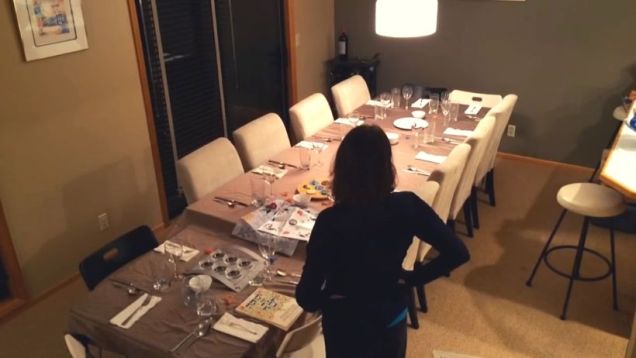
I have vivid memories of Passover, starting from when I was five and received a plastic toy camcorder, and I recorded Elijah coming into the house for his wine. Seders were a time of celebration and family coming together. We’d host as many as 35 of my relatives for a seder, and my father would spend months (literally) preparing a new game and working to make the seder fun. We’d laugh, sing out of key, and have the best time telling the story of our history.

As the years went by, my grandparents passed away, and the seder, while still fun, marked the years and the losses in our family. By far the most painful seder was the one the year after my father died. The seder was his gift to our family each year. No matter how ill he was in past years, somehow he managed to pull it together to create an experience that everyone looked forward to (perhaps even my mom, who still did the cooking and cleaning and preparation).  

But the year after he died, the seder was excruciating. A part of me wanted to cut myself off from the entire holiday. It’s hard to find personal space when the whole family is together, and I needed space from an experience I know would be raw, painful, and generally emotional. It turns out there’s a biblical precedent for this feeling, and it comes in this week’s Torah portion, Bo. Parshat Bo details the Exodus from Egypt. The Israelites are a traveling people, and in Parshat Bo the Israelites are steps away from leaving Egypt. Pharaoh again refuses to allow the Israelites to leave, and each of the three refusals brings with it one of the three final plagues. The narrative continues with the procedures for leaving Egypt, including putting the lamb’s blood on the doorpost, packing up, and recreating these events by celebrating Passover in future generations. 

Among the laws of Passover, chapter 12, verse 15 teaches, “For whoever eats leavened bread from the first day to the seventh day, that person shall be cut off from Israel.” This may sound like a harsh sentence for simply eating bread; however, Passover is the fundamental story of Jewish identity. Its celebration and the purpose behind it are what it means to be Jewish. To not celebrate is to cut yourself off from the narrative of our people, to disregard the experience of moving from slavery to freedom. 

Of course it’s important to note that everyone celebrates Passover in their own way. And, as was the case for me, personal emotions and situations may make the experience painful and make you want to step back from your community. What I’ve come to learn, especially now that I have children of my own, is that the celebration is so much bigger than me. Despite the challenges we may face, I’m part of a larger, longer narrative, and the celebration of that is what I want to pass on to the next generation.

From a Long Line – Parshat Vaera 5780

from-a-long-line.jpg

I love meeting people who knew my father or my grandparents. I take great pride in the work they accomplished in their lives and in their communities and the lasting relationships they made. And when I meet someone who knew or worked with a family member, it’s like I’m uncovering something new and special about them and about me. In fact, about a year and a half ago, I was getting ready to officiate a bar mitzvah service, and one of the guests stopped me in my tracks when he asked, “Are you Steven Posen’s daughter?” Apparently he’s known my father and my family for years. Here I was, clear across the country from my childhood community, and I was recognized for who I’ve come from.

When I was younger, I used to want to be completely my own person. I’d even get a little frustrated when people would link me to my family, because I thought it meant they were passing judgment or not taking the time to get to know me. Now that I’ve matured some and learned some, I take great pride in being connected to the people who came before me, and I relish the moments people are able to make that connection.

The Torah carries with it the story of our heritage and our Jewish “family” line, and we see that increasingly more clearly as the Israelite nation moves from slavery to freedom. This week we read Parshat Vaera, the second portion in the second book of the Torah. The Israelites are in Egypt, working for Pharaoh, and they’re having decrees levied on them daily, which control all aspects of their lives. 

When Moses rises as the leader of the Israelites, he is pressed by God to stand up to Pharaoh, in whose house he was raised, and ask for freedom for himself and his people. God partners with Moses and Aaron to send the first seven plagues and manipulate Pharaoh’s heart as a method of persuasion. 

As Moses is getting ready to go to Pharaoh and make his case for the release of the Israelites, he initially has trouble gaining the respect of the very Israelite people he is trying to redeem. Having grown up in the palace, the Israelites are quick to dismiss Moses as “other.” As a pep talk of sorts, the text interrupts the narrative with a genealogical list. Why this departure? Perhaps because this list of people reminds the Israelites that their leaders are not confronting Pharaoh as two anonymous strangers, but as the newest representatives of an illustrious ancestry.

While you cannot rely solely on those in your past to propel you into your future, there are plenty of times when it’s helpful, if not necessary, to remember where you’ve come from. Parshat Vaera is that reminder that you’ve got an entire nation of Israel with you.

Witness – Parshat Shemot 5780

witness.jpg

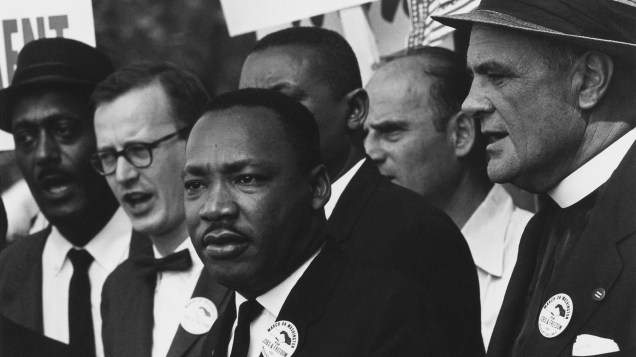
How do you really understand discrimination and oppression until you see it? With Dr. Martin Luther King, Jr. Day coming up on Monday, we celebrate his enormous work in civil rights, and at the same time awake to the sobering reminder that even to this day we forget our common humanity.

For better or worse, our view of the world is based largely on assumptions and second-hand information until we witness the world with our own eyes. And when you’re finally exposed to the facts, they might change the reality you’ve known up to that point. I didn’t fully understand the suffering of the indigenous people in Guatemala until I went and saw it in person on my trip a year ago. Up until then, it felt disingenuous to speak out about causes that I hadn’t verified first-hand. I’ll admit it’s partly because perhaps I didn’t want to imagine the cruel reality. In this way, we allow ourselves to be blind until the truth is staring back at us. 

In this week’s Torah portion, Parshat Shemot, we begin to see how miracles are going to play out in the text and what it takes to believe in them. First there’s a reminder that a new king has taken over Egypt, one who does not know the goodness the Israelite nation brought. The story continues with the fear this new king felt because the Hebrews seemed so different. But he doesn’t see them with his own eyes to confirm his suspicions. The king doesn’t engage one-on-one with the Israelites, he simply makes a xenophobic judgement call and then bans them from procreating without verification of any facts. Of course we know how the narrative continues – with Moses being rescued from the Nile, his life in the palace, and his rise to leadership.

When you think about it, it’s really Pharaoh’s daughter who is the savior of an entire nation. Why? Because she witnessed something with her own eyes. There are several conflicting viewpoints on how she may have felt about her father’s rule. Rabbi and Jewish mystic Isaac Luria believes that she went along with her father’s policies until, in chapter 2, verse 5, she comes down to the Nile to bathe and sees the endangered Hebrew child. Until that moment, the plight of the Israelites and these “foreign” people had all been an abstraction, so she was able to believe the worst in them. However, when she sees the tiny, helpless Moses in the river, she recognizes her common humanity with his people.

Pharaoh’s daughter acts because she sees the truth: people are people. As we once again approach Dr. Martin Luther King, Jr. Day, perhaps this is a reminder for all of us in all times. It’s easy to turn a blind eye to others when we see them as different. Instead, if you’re able to empathize and identify yourself in someone else’s story, you are instantly linked through your humanity. And by doing so, Pharaoh’s daughter does in fact change the world.

Imperfect – Parshat Vayechi 5780

imperfect.JPG

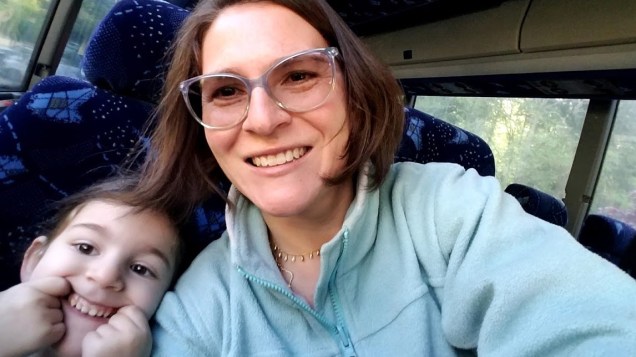
I’ll never forget the first time Shiri pointed out one of my flaws. This wasn’t the usual innocent jab about my squishy belly or tired bags under my eyes (thanks kids). This was at bedtime a few years ago, when after what was a really rough evening, she said, “Mommy, you’re a villain. You yell, and you’re mean and impatient.” My heart broke, not only because her words sounded so adult coming out of a four-year-old, but because they were true. I had lost my temper, I yelled, and I slammed the door. I certainly wasn’t the best version of myself. And with her teenage years on the way, I’m sure this won’t be the last time she’ll point out how I’ve failed her, but it stung.

The Torah is a prime example of this as we read the final portion in the book of Bereshit. This week, Parshat Vayechi, the final section of text in Sefer Bereshit (the Book of Genesis) tells of the death of Jacob, and later Joseph, and their final moments with their family. In the final moments, Jacob blesses Joseph’s sons and all of his own children. He promises in this blessing to tell them what will happen to them in the future; but instead, he shares with each child their special gifts and character. 

Jacob is supposed to bless his sons with his vision of the future and their special gifts. The task of this blessing starts off a little rocky as Jacob begins blessing Reuben. Chapter 49, verses 3-4 read, “Unstable as water, you shall excel no longer; for when you mounted your father’s bed, you brought disgrace – my couch he mounted!” This doesn’t seem to be much of a blessing as much as it seems like a curse. But perhaps the Torah is reminding us that the greatest blessing is to have someone who cares about you point out your missteps so that you have an opportunity to improve. 

There are things which only those closest to us can say. Just as my then four-year-old demonstrated, those who we love the most are often the ones who see our truest selves. At the same time, Parshat Vayechi also reminds us that Jacob lived on through his children, and it was because of his ability to tell the truth, to hold them up when they had failed, and hold them to their best selves. That too is how we must live: with compassion and honesty, as we bless each other with not only the truth, but with the ability to listen and to change.