Trading Up – Parshat Vayigash 5782

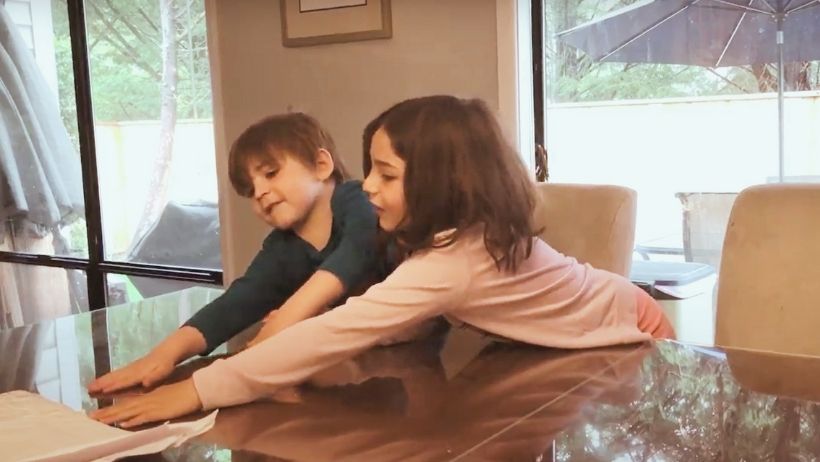
Why do children take advantage of each other? I’ve watched my children do this so many times. One has a toy the other one wants, and so the bribing and bargaining begins. They’re wiser now that they’re older, so it isn’t as easy for the younger one to be taken advantage of. To be fair to them, equitable trades become much more complex as you grow up. Gone are the days of “I’ll be your best friend” if such and such, and very real is the need for tangible results from our bartering and bargaining.

Perhaps there’s something inherent in our nature about trying to get the best deal or the most value. We see it as early as Jacob and Esau. Jacob wants the birthright, Esau wants food, a “fair” trade is made, and off they go with their lives. Except, that particular trade was anything but equal. It’s a theme we’re quite familiar with, and in this week’s Torah portion, we see a prime example of the dark side of wanting it all.

Moving on to Jacob’s sons, Parshat Vayigash reminds us of the different ways in which we see behavioral changes. In the parshah, Joseph’s brother Yehudah (Judah) tries to redeem himself by asking to be imprisoned instead of Benjamin, and Joseph reveals himself to his brothers and heroically invites the whole family to Egypt to save them from starvation in Israel. In addition, Joseph and his father Jacob are reunited, and Joseph is able to finally reveal his newfound position of power.

When it comes to Joseph overseeing the distribution of food in Egypt, we focus more on his dealings with his brothers, but this week’s portion reveals another side of his cunning (and problematic) leadership. The Egyptians, who had worked together to store food, are still hungry because the government had taken hold of the stores of food, and the citizens needed to pay or barter to take a share of it.

In chapter 47, verse 19 of Genesis, we read of the Egyptians coming to Joseph without anything left to trade. They’ve given all their livestock and fields as consignment to the leadership. They’re starving, and with nothing left to give, they offer up themselves in servitude, and Joseph accepts this offer. For me, this was a horrifying discovery. Joseph, the dreamer, the leader, allowed people to sell themselves for food? Didn’t he learn from what his brothers did to him? How could he be guilty of the same action?

Rest assured, the rabbis of old were bothered by this as well, and as a result, we have biblical laws requiring us to help the poor so that they should not have to sell themselves into slavery to repay a dept. Ours is not to own or outdo another. Our job is to respect and lift up one another.

Joseph could have kept control over a scarce resource without forcing people to sell themselves to survive, but he failed to strike that balance. Vayigash means “and he met.” But it wasn’t only his brothers whom he met. Joseph met himself at a crossroads, faced with deciding between a path of power and control over his brothers and the rest of the country, and a path to meet his brothers halfway. The lesson to take away is that perspective is everything; when we can approach any discussion, deal, or decision from the other party’s view, that’s what true humanity is about.


Hangry – Parshat Miketz 5782

I get hangry. If you’ve spent time with me, especially on a trip, then you’ll know that when my blood sugar dips, I get mean and grumpy until I’m able to grab a snack or sit down to a meal. Needless to say, this is not my own invention; I know plenty of people who tend to get hangry, namely my own children. When they haven’t had a solid meal in a few hours, their faces get scrunched, and the screaming begins. A well-timed snack can make the difference between an easy, fun day and an endless cycle of tantrums. It doesn’t matter what age we are, it’s important to be in tune enough with our bodies to recognize basic needs.

For better or worse, we seem to perpetuate the stereotype that Jewish mothers have a constant desire to feed people. However, you could make the case that issues of hunger, anger, and some combination of the two are as old as the Torah. In fact, hunger leads to trouble again in this week’s Torah portion. 

Our parshah this week, Miketz, brings us back into the story of Joseph. We pick up in part two of the life and trying times of Jacob’s favorite son. Our hero has had a few setbacks, among them being sold into slavery by his brothers and thrown into jail. However, Joseph gets his big break when Pharaoh has a startling set of dreams. When none of Pharaoh’s resident magicians are able to interpret his visions, Pharaoh calls on Joseph, and with God’s help, Joseph translates the dreams as a sign of an approaching period of fertility, followed by a period of famine. Joseph presents Pharaoh with a game plan and becomes Pharaoh’s right-hand man in preparation for these times that will certainly be difficult not only for Egypt, but also neighboring lands. 

Throughout the Torah, the Israelite nation has been moved from place to place, almost always going down to Egypt on account of famine. Jacob’s grandfather Abraham goes to Egypt because of a famine, and his father Isaac does the same. Now Jacob looks around and notices that there is famine in Israel, while Egypt has food. As a side note, the other times Israelites go to Egypt to get land almost always end in lying for protection. Abraham lies in saying that Sarah is his sister, and Isaac crafts a similar deception. Jacob is really the first to try and break this pattern.

Back to the subject of food, Jacob knows there is abundance in Egypt. He’s sad and hungry (sadry?) because he’s lost both his favorite son and favorite wife, and he just wants his people fed and taken care of. This time, he sends ten of his sons to Egypt to find food to bring back. There’s deception on this journey too, but interestingly, the deception is not from an Israelite to an Egyptian, but instead from an Israelite (Joseph) to his own brothers. 

Joseph recognizes his siblings instantly and gets plain old angry; he’s harsh in his speech and treats them like strangers. Joseph isn’t hungry because he’s already solved the problem of famine for Egypt. His pure anger comes from the original deception perpetrated by his brothers years earlier. Instead of food, Joseph hungers for connection, for reconciliation with his family. And his brothers are desperate in their quest to do something right for their father, possibly to try to make up for the grief they caused long ago.

When our needs aren’t met, we can’t be at our best, and often our emotional needs like family connections are just as important as physical needs like hunger. Parshat Miketz is a yearly reminder that we’re all searching for something to sustain us, and when we’re able to open our eyes and see the root of the desire, we’re much more likely to put aside anger and deception in favor of love and acceptance. 

Oldest vs. Youngest – Parshat Vayeshev 5782

I’m the oldest child in my family; my sister is around seven and half years younger. My husband Duncan is also the oldest of his siblings. There’s a lot of research into what it means to be the oldest child (and, for that matter, what it means to be the youngest or in the middle). However, if you’re an oldest child, you don’t need the research to know that being the oldest is hard work. First, your parents are brand new at parenting. They’re clueless when it comes to raising children themselves. Even the most prepared parents have never actually done this before, so the first child is sometimes jokingly referred to as the “practice child.” Oldest children have to wear down the strict rules of the parents, they’ve got to endure the solo attention, and they’re often the ones who have to help care for younger siblings. No easy task.

I’m an example of this myself. When I reached babysitting age, my parents thought it would be great to leave me home with my sister instead of paying someone else to watch us. It turns out it was a not so great idea. Instead of it being the economical choice, they ended up paying (bribing) me to watch my sister and paying (bribing) my sister to listen to me. This happened exactly once before they realized it was cheaper for them to hire a babysitter for my sister and let me just go babysit someone else’s kids for the night.

The struggles of the oldest child are very real, and we see them clearly in our Torah portion this week, Parshat Vayeshev. Vayeshev is in the thick of the Joseph story. Joseph has two dreams that he shares with his brothers, both of which make them angry with him. The brothers go out to the fields, Joseph finds them, the brothers decide to sell him, and father Jacob mourns the loss of his favorite son. After this, the story takes a turn to focus on Joseph’s brother Judah and the betrayal of Tamar, before turning back to Joseph’s life in Egypt, which ultimately lands him in jail.

Put yourself in the position of Joseph’s older siblings. What are they to do when their bratty baby brother is rubbing it in their faces how awesome he is, how their dad’s favoritism makes him special, and how his imaginative play accentuates his “golden child” status? Like typical older siblings, the group comes up with a plan to torment him, although their plan of tricking him, leaving him in a pit, and walking away to let him fend for himself is considerably worse and a lot more dangerous than your average teasing. 

And then there’s Reuben, the oldest child. No matter what his younger siblings decide to do, he knows that ultimately, as the oldest, he’ll be held responsible for all their actions. At the same time, Joseph isn’t just younger; he’s also a first born, the first born of Jacob’s favorite wife. This is rivalry on top of rivalry. To Reuben’s credit, he tries to talk his brothers out of their evil plan, but he also knows that they’re going to move forward no matter what he says. He tries to make the best decision he can in a place where he knows no matter what, he’ll be blamed.

Parshat Vayeshev is our yearly reminder about the responsibility we have toward each other, especially family members. Rueben straddles the line: he neither stopped his brothers, nor participated fully in the trickery. In the end, he’s still the one who had to own up to it and tell their father. 

Life is filled with hard choices and tough situations, whether you’re the oldest, the youngest, or somewhere in the middle. The lesson this week is about the way we respond, and how we don’t just sit (yashev), but instead stand up for those who matter to us most.

Monument To You – Parshat Vayishlach 5782

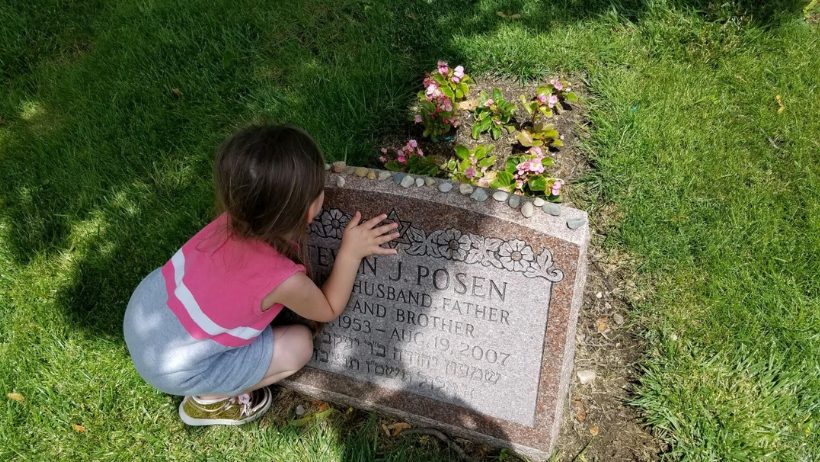
In my work as a rabbi I often have the honor of assisting families as they create the grave marker for their loved ones. In case you’re wondering, this is not something that’s taught in rabbinical school. This is an act that is unique to each family and, understandably, holds a lot of emotion. The creation of a marker stone is a finality in the process of loss and grief. Granite is final, the carving doesn’t change over time. This is the stone you’ll see every time you visit the cemetery.

These stones, though brief in their wording, often tell a story. We use descriptions both of character and relationships. Does the family prefer “beloved” or “loving”? How about “cherished”? Should we be generic in relationships and just say father, son, brother, grandfather? Or, should we use our personal terms of endearment like “Daddy” or “Zayde” or “Papa”? And what color should the marker be? Does it matter if the font is different from the other family members nearby or next to them? Should we put an image on it? Is it better to keep it simple? These are just a few of the many questions that go into the process of choosing this final marker for loved ones. It makes sense that there would be so many questions. After all, we get one shot to do this, and the honor and memory of our loved one is at stake. 

As we learn in this week’s Torah portion, Jews have been traditionally marking the resting places of family members since the time of the Torah. As an overview, our Torah portion this week, Parshat Vayishlach, reminds us of what it might be like to live fully as yourself, even as the world around you is changing. Jacob is preparing to meet his brother Esau after their fallout and struggles in his dream with the angel who changes Jacob’s name to Israel. The brothers meet and part in peace, and the story continues with the birth of more sons to Jacob and the different ways in which his children misbehave. 

In the middle of this section of text, Rachel dies in childbirth, and the Torah magnificently moves from death to life in the course of about three verses. Benjamin is born, but Rachel doesn’t survive, and as the clan is on the road, Rachel is buried along the way. In chapter 35, verse 20 we read, “Over her grave Jacob set up a pillar; it is the pillar at Rachel’s grave to this day. Israel journeyed on.” A simple, yet stunning tale of the burial of Rachel, Jacob’s beloved.

The Torah goes back and forth between calling Jacob by this name and using Israel, the one who wrestles with God. Interestingly, he is called both at the passing of his beloved wife. In this moment he is both the little boy who is born holding on to his brother, and the grown man wrestling with the reality of the world. It is somewhere between these roles where he sets the grave marker for his wife. 

Our markers are eternal, no matter how fleeting life is, and our portion suggests that this marker is one that is on her grave to this day. While we don’t read about the inscription upon the stone, we understand that Jacob knew that it was intended to forever symbolize his love for his wife.

Parshat Vayishlach is a reminder that there’s little that’s truly permanent, but establishing a permanent marker to know from where we’ve come and from who we’ve come is an essential part of our journey. The marker for Rachel happens in a blip in the Torah, just one verse. They didn’t agonize over the words, the color, the placement. Instead, the focus is on her legacy and the children who became leaders in our tradition. May we learn from Jacob how to both mark a moment and move forward, and may we do that knowing that while stone might last forever, our stories can outlast even the stone. 

Finding Home – Parshat Vayetzei 5782

I love finding family. For a bit of background, I grew up around lots of cousins on my mom’s side, including first, second, and third cousins. You could practically call it an entire family tree. We were so close that I never really distinguished between degrees of cousinhood; we were just cousins.

On my dad’s side, however, there were many cousins I never met. That’s because they were from a generation before me, since I have no first cousins on his side. This makes it all the more surprising and exciting that three times since I moved to Portland, I’ve had opportunities to connect with relatives. The first time happened when I accepted my position at Neveh Shalom. After the official announcement went out, I received an email from a cousin who lives nearby who was excited to hear I was coming “home.” (Hi, Ruby!) Then, a few years ago, I was officiating a wedding, and after the ceremony a guest came up to me and introduced herself as a cousin. She looked just like my sister, and we actually knew each other in passing when we were much younger. (Hi, Lindsey!). And most recently after our Covid-19 High Holiday services, I received an email from another cousin who just moved to Vancouver, WA and whose father actually delivered me when I was born. (Hi, Jeff!) That connection was made through watching our live streamed services. In each instance I was grateful for the moment of connection and the deep feelings of family bonds, despite reconnecting after a long time or for the very first time.

I’m not alone in this desire to be connected to family near and far. It’s actually expressed quite beautifully in this week’s Torah portion. Parshat Vayetzei begins with Jacob fleeing his home, on the run from his angry brother and the mess that has become of his family dynamic. Exhausted, he lies down and has this bizarre dream in which God comes and speaks to him. God gives Jacob marching orders, a legacy to hold and create, and a full sense of his mission in life. Much like his father Isaac, the journey is into the unknown. But unlike his grandfather, Abraham, Jacob finds family almost immediately. 

Jacob sees his cousin Rachel and once he sees her, he’s so overjoyed to recognize her, he embraces her with a kiss. While I didn’t kiss any of my cousins on the first meeting, I do relate to Jacob’s joy and jubilance at finding family in a new place when he’s feeling all alone. For Jacob, seeing Rachel was finding connection to his past and knowing that there was someone who was like him. That was enough for Jacob to feel at home, to feel safe after he’d run from his brother, and to feel like God was really with him.

When I’ve examined these verses with students, they’re usually quick to ask what it means in Jacob’s dream that God “will not leave you until I have done what I have promised you.” Perhaps one of the best lessons we learn from this parshah is that feeling a sense of home, of family, is a powerful way of feeling God’s presence. As we enter the darker part of our year, may we be embraced by light and warmth and that comfort of home whenever possible.