Israel Solidarity Mission – Day 1

And it feels like home. That’s what kept going through my mind on the El Al flight to Israel. It was rowdy and full, like the Israel I used to know. I settled in, seeing the tefilat haderech (traveler’s prayer) on the screen, realizing I belong.  

A few hours into the flight, right after I had fallen asleep, the flight attendant woke me to tell me that the empty middle seat in our row would be filled by an ultra-Orthodox man who needed a new seat because the young mother beside him was singing to her baby, thus violating his prohibition against hearing a woman’s singing voice. In true Israeli fashion, my seatmate argued with two flight attendants and saved our cramped legs from having a third person join us.

We landed in Israel, and within three minutes of touchdown, a rocket siren went off, but we were still on the plane with nowhere to go. We could only pray that the Iron Dome would do its job, and it did.  

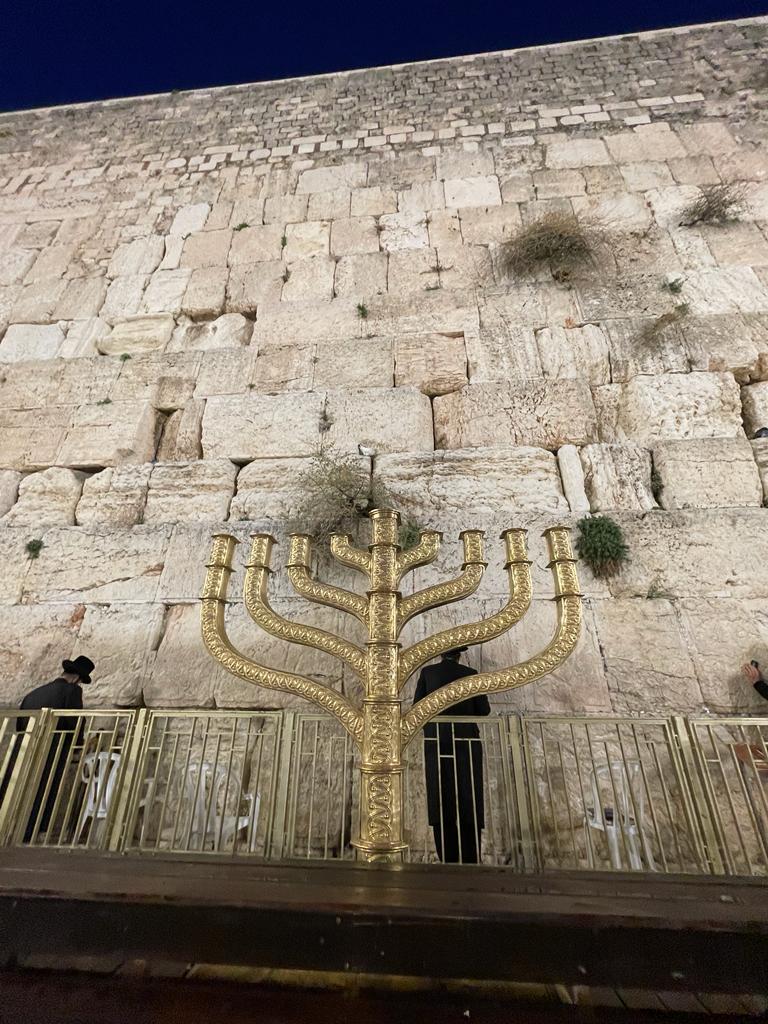
Arriving in Jerusalem, it didn’t feel like 16 years since my last visit. It felt simultaneously like returning home, and yet like a strange new city. The streets aren’t clogged with honking cars, there aren’t tourists wandering around. Birds seem scarce.  

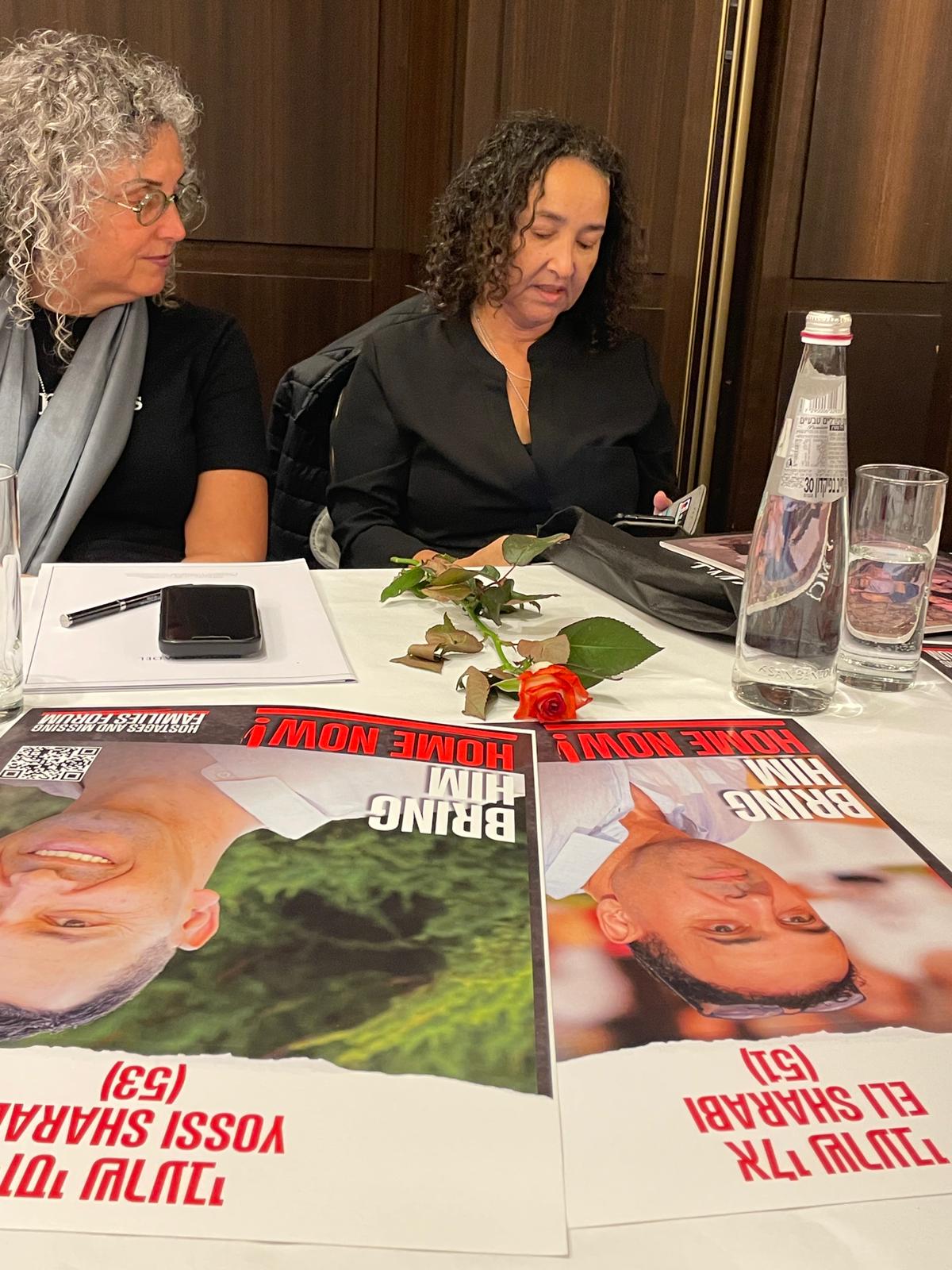
In the span of three hours, we heard from the sister of two hostages about the hope and prayer she carries for her brothers in Gaza and about the pain over her nieces and sister-in-law who were murdered. We heard from a member of Kenesset. We heard from an author. We ate.  

All in all, I’ve been awake for nearly 40 hours, so I’ll sleep before tomorrow, a day of witness. The wisdom from today from Osnat Sharabi, sister of hostages, rings in me: “I believe in good. I do acts of kindness with the prayer, the belief that ripples will come into the world and bring my brothers home. Bring them ALL home.” So, please, let us all go start a wave of kindness.  

Call Me Maybe – Parshat Vayishlach 5784

As technology continues to grow, shift, and change, so do the ways in which we connect with one another and the ways we’re able to communicate. With so many message format options, sometimes I wonder if it might be better to send a carrier pigeon, just to do something unique that would get the message seen amidst the overload of emails, texts, chats, messages, and other apps we use. These days, the format is everything. You can often tell the importance of a matter by what form it arrives in. If you receive a piece of certified mail, you know that’s important, whereas a text message is the more casual end of the spectrum, and a hand-written thank-you note is somewhere in between (and a nice surprise). Rarely do I pick up the phone when I have a quick question for someone when I can simply text them and get an immediate reply, especially while I’m trying to accomplish five other tasks simultaneously. 

Believe it or not, the Torah also teaches us about the decorum of sending a message and the different media we should use. This week’s parshah, Vayishlach, brings the twin brothers together again. The last time these two were together, Esau didn’t care much for his birthright blessing until it had been given to Jacob, and Jacob didn’t care much about his brother’s right to the blessing until his brother threatened to kill him. Now, 20 years or so later, we find the brothers on a path to meet again. Both are now married and are fathers of large clans, and both have large flocks with them.

Throughout this narrative, there are multiple messages sent. If we go back to the beginning of Jacob’s lineage, we see God giving a message to Abraham in the form of a ram stuck in a thicket so that Isaac is not sacrificed. Jacob is often sent messages from God via dreams. Then, there are messages sent via gifts from Jacob to his brother before they reunite. Finally, there’s the person-to-person message interaction announcing that their mother’s nurse has died, which implies that their mother Rebekah has died as well. 

Although the types of messages in the Torah are different than those of today, you can imagine what ancient messages might have looked like with today’s technology. Perhaps the visual cue of the ram in a thicket would come as an animated GIF on Abraham’s iPhone. Maybe Noah would have been alerted about the flood with an emergency broadcast system notification. 

From the Pony Express to FaceTime to physical face-to-face interactions, humans have always found ways to communicate and ways to show how serious a message is. For each of these moments in the Torah and beyond, the ways in which we communicate remind us how we strive for connection, especially when we’re apart. So . . . write, text, message, email, or maybe even call. Interacting is the important part. 

Staying Grounded – Parshat Vayetzei 5784

I might have an online shopping problem. At first, when everyone was on lockdown, online shopping was a necessity. That’s how our family got the things we needed, like clothes, shoes, and art supplies and still felt safe from contracting COVID-19. We’re fortunate to be able to have done a lot of online shopping. Despite supply chain issues, thanks to expedited delivery systems, we all got used to the instant gratification of click, order, receive. The dopamine rush of waiting for a package to arrive and then opening it was both addicting and short-lived. These days, if something takes longer than a day or two to arrive, we all start to twitch in frustration just a little. 

It makes sense that we eventually take for granted whatever technology makes things easier and faster, and we simply become accustomed to getting what we want, when we want it. On the other hand, over the years we also risk losing our tolerance for a slightly slower pace of life. There’s a balance between acquiring the things we need in a timely fashion and having the patience to wait for them. To stay grounded requires that balance in our lives, and Jacob, the main character in this week’s Torah portion, learns this lesson . . . and without the benefit of Amazon Prime. 

Parshat Vayetzei is the beginning of the vivid dream sequences that lead us through the next phase of our Torah cycle. The text picks up with Jacob on his journey away from his parents’ house to meet his cousin, Lavan, and the strange dreams and encounters he has with godly creatures along the way. He ends up falling in love with Rachel, and he works for her hand in marriage, but ends up being tricked into marrying Rachel’s older sister Leah. Fast forward a few more years of work, and the prize of having Rachel as his wife is realized. The text continues with the birth of Jacob’s large family and Jacob’s journey away from his father-in-law Lavan to a new home. 

We knew Jacob was a dreamer. At the beginning of the Torah portion, he dreams of a ladder that connects the heavens to the earth. This dream is the one from which he awakes and proclaims, “Wow! God is here and I wasn’t aware.” Jacob is deeply connected at this moment to the gratitude of being safe and present. Later, however, Jacob dreams about increasing the number of sheep and goats that he owns. An angel comes and reminds him of who he used to be. Under the presence of Lavan, his father-in-law, Jacob was corrupted by power and material resources. He lost the connection to his humble roots and his faith in God’s providence. 

This Torah portion is a humble reminder not to get carried away by newfound leisures or conveniences. We might not all get such revelatory messages in our dreams, but it’s just as important that we remain grounded. Of course it’s only human to have desires and wants, but it’s also human to find and remain in balance with the world around us. We too can be dreamers, as long as we don’t forget our reality along the way.

Impossible Choices – Parshat Toldot 5784

I am a terrible decision-maker. In fact, for my birthday and Mother’s Day every year, the one gift that’s always on my list is making absolutely zero decisions the entire day. My indecisive nature comes partly from not wanting to miss out on something and partly because I’m always worried about making the “wrong” choice. When it comes to big decisions, I can usually feel it in my gut and I trust that space. However, when it comes to daily decision-making, I’d just rather not. Please, don’t ask me what I want for dinner!

There’s one area where I feel simultaneously the most confident and the most indecisive: parenting. Little decisions like what clothes we’ll purchase or when to say yes to dessert aren’t the ones that cause stress. It’s the decisions that shape my children’s lives that give me pause. And as a mother of two children, I make different decisions for each child based on who they are and what they need. That means that while one might be wearing shorts when it is 30 degrees outside, I will insist that the other wears a jacket and gloves. They just need different things. 

Rebekah, the mother of twins Jacob and Esau, teaches us the value of recognizing individual needs and talents in our children and making choices that support them. This week we read Parshat Toldot, in which Isaac and Rebekah become parents. The pregnancy is not easy, and the twins are anything but calm. Jacob and Esau are very different, and each is feisty in his own way. Esau sells his birthright to Jacob for lentil stew, and Jacob tricks his father into getting the blessing his brother deserves. Esau finds out, and his outrage over the incident causes Jacob to flee for his life. The portion ends with Esau growing up and rebelling against the family in his choice of life partner.

At the end of this Torah portion, the text appears to emphasize a fact that we already know – that Rebekah is the mother of both Jacob and Esau. Isn’t this obvious by now? Why would the text repeat this? It’s to reinforce the idea that while Rebekah might address the brothers’ needs in different ways, she loved them both. There are few “easy decisions” for mothers, especially Rebekah. She chose to send Jacob away in order to save his life, but also to save Esau from becoming a murderer. In other words, she may have favored Jacob for the blessing and seen his strength as a leader, but she protected both her sons. 

Sometimes in our lives, the hardest choices are the ones that require a bigger-picture mentality. And when emotion is involved, like the love of a mother, that makes it even harder. Parshat Toldot reminds us that for generations to continue after us, we can’t just consider the future, we must actively make decisions that keep the reality of that future alive.

To Offer a Blessing – Parshat Chayei Sarah 5784

When I was in rabbinical school, I spent a summer doing an intensive unit of chaplaincy in a level-one trauma hospital in Michigan. Over that summer I learned about what it means to be with people in their highest of highs and lowest of lows, as well as how a multitude of religions approach healing and comfort. Our group of 10 clergy spanned six different faiths, and I was the only rabbi in the group. Every morning we would begin with a centering prayer, led by a different student. Some mornings we did meditation, others we studied text, and others we looked at liturgy. Then we’d break into our teams of two students each and go to our assigned floors and visit every patient.

It seemed almost every time we entered a room, someone asked the chaplain to pray for them. My chaplain partner Jen would then ask them what they’d like her to pray for, then they’d close their eyes and hold hands, and she’d offer an extemporaneous prayer. And I would stand there, terrified they’d ask me. I knew the Misheberach, the traditional prayer for healing in Judaism, but I had never been asked to offer a spontaneous prayer aloud. That summer, more than anything else, I learned the power of a unique, personal, unscripted blessing. 

Oddly, it took until graduate school for me to figure this out since the Torah is filled with extemporaneous prayers, including in our Torah portion this week. We read from Parshat Chayei Sarah, which makes the transition from one generation to the next. Beginning with Sarah’s death, we learn about Isaac and his courtship with Rebekah, the list of Abraham’s descendants, and the death of Abraham and his burial at the cave of Machpelah. Through it all, the family continues to carry themselves forward from experiences of loss and grief into the next chapters of life.

As Rebekah is preparing to go meet Isaac, her family asks her if she is willing to travel to meet him. When she agrees, they send her off with a blessing: “O Sister! May you grow into thousands of myriads; May your offspring seize the gates of their foes!” This wasn’t asked for or expected, it just happened. 

There’s a certain power in offering blessing one person to the other in moments of transition. While the siddur is a beautiful guide for the notion of prayer, the prayers are meant to be just that, a guide, not a set-in-stone limit to what we can offer. May we read this moment in the Torah as an invitation to open our hearts to others, to speak the words of our hearts, and to fully be present in everything we do.