Veggie Surprise – Parshat Behar-Bechukotai 5778

veggie-surprise.JPG

A while ago Duncan and I tried a farm share CSA. It became a fun little guessing game. Every week we’d wonder if we’d get vegetables we were willing to try. Would we know how to cook them? Would they all get cooked eaten before they went bad? We were living in this unknown Schrödinger’s carrot type of world with zero control over what we’d actually receive in our bag and whether or not it would actually be tasty. We spent the summer simultaneously excited and terrified about our fresh produce.

The element of surprise in relation to crops plays a role in our parshah. This week we read a double Torah portion, Behar-Bechukotai. These two portions of Torah make up the final chapters of the book of Leviticus. Parshat Behar focuses on letting the land rest. We learn about the return of land during the 50th year and the cycle of workers and loans. In Parshat Bechukotai we read about the blessings that God will bestow upon the Israelites in exchange for following the laws of the Torah and the rebukes and curses that will come if they don’t. Tied up in both of these narratives is the idea of security – both financial and physical.

Chapter 25, verse 6 leads us into a world of the unknown: “You may eat whatever the land during its Sabbath may produce.” The Torah teaches us that in the seventh year we let the land rest. To prepare for this you might save in whatever way you can from the sixth year so that you’ll have enough to eat in the seventh. But what will happen to the land during that year when you’re not touching it? Will it produce on its own like the wild blackberries of Portland seem to do? Or will nothing happen and you’ll be left with no fruit of the land like pretty much any garden I’ve ever planted and subsequently ignored?

This is the unknown. This seventh year is the great equalizer. Wealthy or poor, green thumb or black, no one has any idea or can predict exactly what will fill the land in the seventh year. We are to live this year expecting the unexpected and hoping that we won’t starve.

If you know me, you know I am a huge planner. I like to include all options and plan for all situations. I don’t like the unexpected because it throws me off my game. I live in a defined everyday routine, and in order to manage expectations in our family, we do a lot of planning for what might happen. Adjusting on the fly (a.k.a. “going with the flow”) is one of the most challenging parts of life for so many because as human beings, we have an innate desire to know and understand, and that means planning. The Torah this week reminds us that sometimes knowing isn’t always possible. The best we can do is manage our expectations and learn to work within the circumstances we’re given.


Always More Room – Parshat Emor 5778

always-more-room.jpg

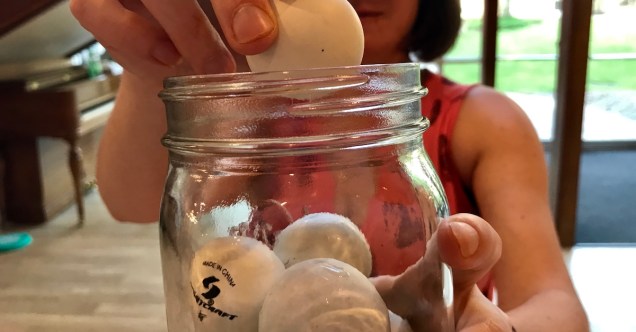
There is a famous classroom activity/demonstration that is used to teach decision making and prioritization of goals and resources. The teacher shows the class a glass jar full of ping-pong balls and asks the class if the jar is full. Most students answer that it is. The teacher then pours beads into the jar, which fill in the gaps around the ping-pong balls. Now is the jar full? The class acknowledges it is. The teacher adds sand, filling in all the visible empty space between the beads. Now is the jar full? Some students might still agree, and others are starting to catch on. Finally, the teacher adds water, which soaks into the sand.

Here’s the usual breakdown that comes with the visual. Ping-pong balls represent the big, important aspects of life like family and friends. The beads are the smaller necessities like education and career. The sand reminds us that we still have room for other personal endeavors and hobbies, and the water reminds us that even when we feel full, there’s room for new experiences we might not anticipate.

This exercise is made even more illuminating when you realize that if you did it in reverse, the little things would take up so much space that there would be no room for the important things like family and friends. The second message is to be aware of your priorities and how much space they take up in your life.

This is a wonderful little demonstration, and you could even argue that it has its roots in this week’s Torah portion, Parshat Emor. In this section of text, we are reminded about the laws for purification of the priests, the holidays we are to celebrate throughout the year, and the ways in which we are to treat each other and animals. The majority of these rituals are meant to be done in public, with the entire community a part of them. The time and manner in which each ritual is performed is delineated by the Torah.

The laws of the holidays and sacred element of time pose an important question in chapter 23, verse 7. “On the first day you shall celebrate a sacred occasion: you shall not work at your occupations.” Our holidays present us with a unique challenge in today’s world: How do we prioritize our time? Do we take a few hours to celebrate the holiday and then move back into our “regularly scheduled programming” or do we jump in and immerse ourselves in the sacred time prescribed to us? Or, as you might guess, perhaps there might be a happy medium.

There are a lot of holidays in Jewish tradition, which means a lot of time off from our secular world occupations (unless you’re clergy of course, when the holidays are your job). It is completely understandable that for some people, taking every holiday off just isn’t feasible. However, the Torah this week reminds us of our sacred obligation to those ping-pong ball sized values in our lives. What are the major ways in which you define yourself? How do you prioritize what’s important in your life? If you focus on your top values first, you’ll probably find there’s always room for more.

We Go Together – Parshat Acharei Mot Kedoshim 5778

we-go-together.jpg

As most of you know, I like walking, and to be honest it’s usually walking alone that I enjoy best. It gives me time to silently take in the sights and sounds of nature and work through issues, thoughts, and ideas in my head. Here’s the problem with walking alone: I don’t always get the best exercise in when it’s just me. I tend to go a little slower and meander. On the other hand, when I have a partner, someone to push the pace or hold me accountable, I tend to do better. Studies show that having someone with you to cheer you on, whether in exercise (like I have found this year at Baby Bootcamp) or at work or even in your personal life, generally leads to a more fulfilling experience and a better end result.

We’re meant to work together, to find partners in all phases of our life so that we can learn from and with them. Our Torah portions this week, Acharei Mot and Kedoshim, support this notion. Parshat Acharei Mot deals with what happens after Aaron’s sons have offered up “strange fire” to God and with certain forbidden relationships between human beings. The structure of this section of text pushes us to look at our relationships with both God and others and see the boundaries and intimacies of each relationship. Parshat Kedoshim deals with what is known as the “Holiness Code,” which helps us to understand how we can walk in God’s ways and create a community of relationship and understanding.

As we get into the text about the offerings of a High Priest for atonement on Yom Kippur, we begin to read that the High Priest is to make an offering for “himself and his household.” This is interpreted to mean that the High Priest must have a partner. The High Priest’s job is to come before God as a representative of the entire community he serves, as a pious individual among the flawed community, all of whom aspire towards holiness. The question then becomes, how could he bear and carry the prayers of others unless he had learned to care for and share the hopes and dreams of at least one other individual?

One of my first rabbinic opportunities was a chaplaincy program during school. There was no hospital pulpit, just one-on-one spiritual care. Having that experience of praying with individuals one-on-one has made me a better rabbi leading large groups in prayer. Learning to work in partnership with someone allows a relationship to develop in an entirely different way. It means we then have the potential to sympathize with and support more people.

I choose to take the Holiness Code literally. To me, walking in “God’s ways” is actually about walking (or sitting or talking or laughing or praying) with others, because the more we understand each other, the more we understand God.

Pure and Simple – Parshat Tazria Metzora 5778

pure-and-simple.png

As you may recall when I spoke about the subject of water on Yom Kippur, I am a terrible swimmer. Nevertheless, there is something magical about water, and being near a body of water has always been a calming force in my life. For almost my entire life I have lived within a quick drive of the lakes in Michigan or the coast in California and Oregon, and it somehow soothes me to know that I can be near the water in a matter of hours. And although Texas has the Gulf of Mexico, being mostly land locked in Dallas never felt quite right. I missed the soft waves on the shore of the lake, the open expanse of an ocean, and the calming feeling of that ebb and flow with no end or beginning.

Although I’m not usually actively thinking about it, it’s also likely my strong feelings about water are due in part to the sense of purity and cleansing it provides. It both hydrates and cleans my body, and that relationship to water is one that’s fundamental to human existence. Our combined Torah portion this week, Parshiyot Tazria and Metzora, remind us of the healing properties of water as well. The text of these parshiyot tells us of the laws for the purification of both our homes and our bodies after disease or death has occurred, and the laws remind us that our bodies and our places of residence need to be treated with respect. We also have an obligation to help each other maintain healthy living and to support one another when we find impurities.

In chapter 14, verse 9 of Leviticus, we learn about the purification of the leper; we read that he should “bathe his body in water; then he shall be pure.” This is not referring to just any ordinary bath. This is a symbol of rebirth and recreation. The Seifer HaHinnukh teaches that the experience of illness and recovery has made the leper a new person. In other words, someone who now looks at life differently. While it is ultimately the experience that changes a person, the water symbolizes that moment of change. As infants we are born out of water. When we enter a new life phase, including converting to Judaism, we visit the mikvah. In fact, our entire world was created only as it emerged out of a giant body of water.

As the spring begins to give way to the first signs of summer, may we find refreshment in all that we do and take as many opportunities as possible to enjoy all the peaceful reassurance and calm our beautiful Pacific Northwest has to offer.

As a final note, I encourage you to visit our beautiful community mikvah located on the Mittleman Jewish Community Center campus. It’s closer than the ocean and cleaner and calmer than the river. We have been blessed as a community through the support of the Oregon Board of Rabbis and Jewish Federation to sustain a beautiful, tranquil place to refresh and transform ourselves.