Doing Enough – Parshat Vayeshev 5781

Could I have done more? It’s one of those questions you ask yourself in moments of tragedy. It’s difficult to know which piece of advice, which kind word, which heroic gesture will make a difference, or if any of them will. So we’re often left with this feeling that there must have been more we could have done. We could have taken even more steps to prepare for this natural disaster. We could have seen more signs that this person was in need or in pain. We could have donated to just one more charitable cause.

Our Torah portion this week, Parshat Vayeshev, taps into this unique type of self-critique. We find ourselves in the thick of the Joseph story. Joseph has two dreams that he shares with his brothers, both of which make them angry with him. The brothers go out to pasture, Joseph finds them, the brothers decide to sell him, and father Jacob mourns for his “favorite son.” After this the story takes a turn to focus on Joseph’s brother Judah and the betrayal of Tamar before turning back to Joseph’s life in Egypt, which ultimately lands him in jail.

You may be familiar with how the brothers scheme against Joseph. However, Reuben, the eldest son, has a complicated role here. As Jacob’s first-born, Reuben must have known he would be held responsible for whatever happened to Joseph, yet Joseph was the first-born of Jacob’s favorite wife Rachel, and that likely set up Joseph and Reuben as chief rivals. We know Reuben doesn’t want to kill Joseph, like his brothers, and in fact he tries to step in and save him. And when he presumes that his interfering has been in vain because it appears that Joseph has died anyway, Reuben despairs. 

Reuben mourns Joseph and possibly feels he didn’t do enough to save him. We don’t find out until later that it’s because of this turn of events that Joseph is able to become a great leader in Egypt and eventually saves his family. The S’fat Emet, a late 19th century Polish commentator, shares “Often, we despair that the good deeds we have done have made no difference, when in fact they have made a great difference.”

Parshat Vayeshev and Reuben’s actions remind us that grand gestures and small acts have the same power in changing the trajectory of any situation. I’m not suggesting that all tragedies have to have a silver lining or that we shouldn’t feel sorrow or regret. What I’m suggesting is that ultimately time and perspective will win out. Was there more Reuben could have done in the moment? Perhaps. Looking at individual actions, it’s easy to dwell on mistakes and assume “too little too late.” In reality, though, each little contribution, no matter how big or small, can make a difference. 
Grudge Match – Parshat Vayishlach 5781

I admit I can be a grudge holder. Holding grudges requires so much mental and physical energy, and yet I just can’t let it go sometimes. My memory tends to hold on to incidents and moments like glue, so it becomes very difficult to forget something that has happened in the past, especially when it upsets me. 

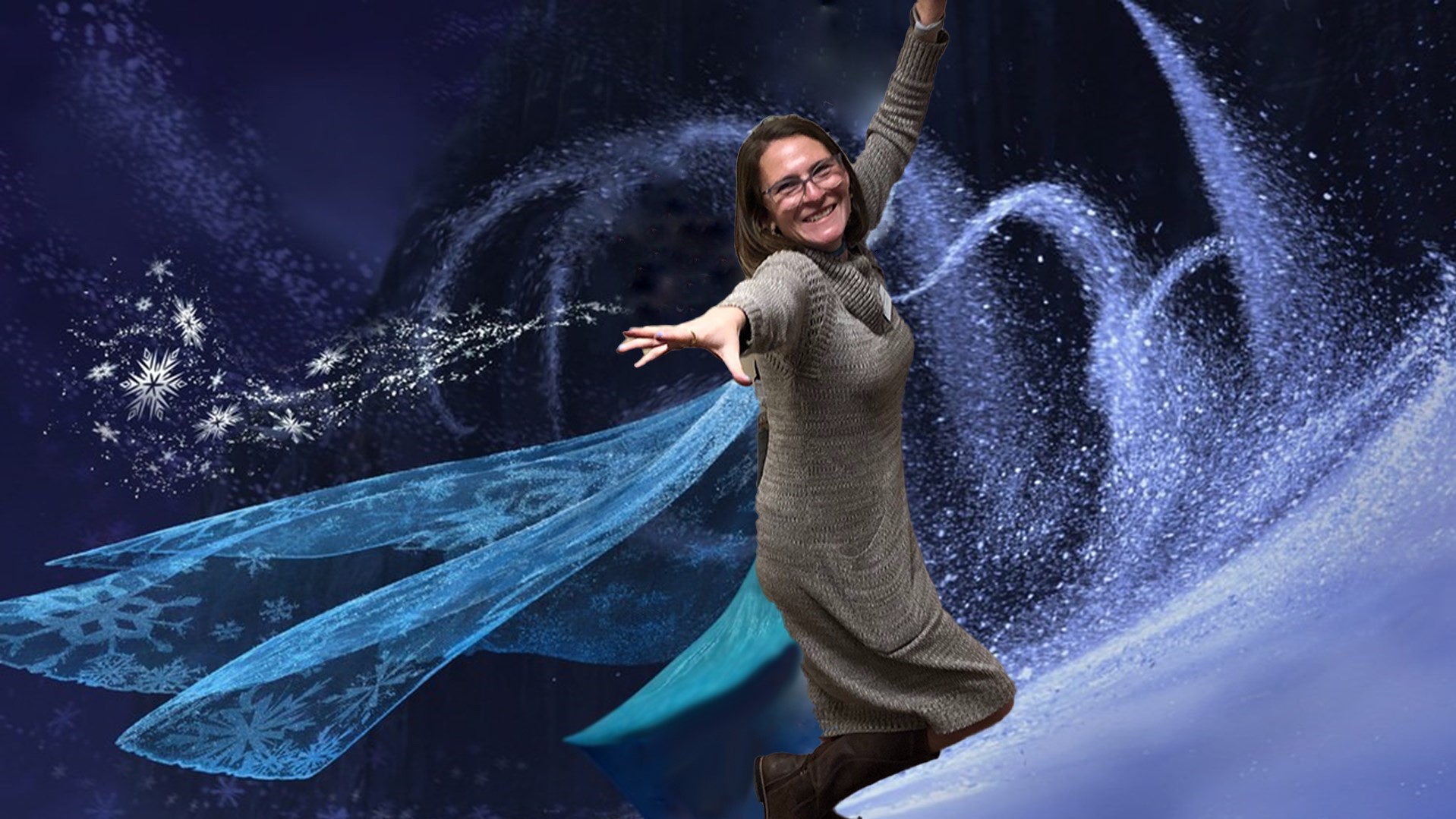
If there’s one thing that the countless viewings of the animated Disney movie Frozen have taught me, it’s to let it go. If you’re not blessed with the same intimate understanding of the film, the song “Let It Go” is the Oscar Award-winning turning point musical number, when Queen Elsa leaves home, now free of the secret that she kept hidden away for so long.

The song isn’t strictly about letting go of a grudge. It’s more about letting go of fear. But the lyrics still speak to me when I think about unburdening myself of whatever is weighing me down, whether it’s anger, fear, or insecurity. The lyrics also remind me of our Torah portion this week, Parshat Vayishlach. I recommend that you find a clip of the movie to listen to as you follow along:

Let it go, let it go
Can’t hold it back anymore
Let it go, let it go
Turn away and slam the door
I don’t care what they’re going to say
Let the storm rage on
The cold never bothered me anyway

It’s funny how some distance makes everything seem small
And the fears that once controlled me can’t get to me at all
It’s time to see what I can do
To test the limits and break through
No right, no wrong, no rules for me
I’m free

This week’s parshah, Vayishlach, again shows us interaction between Jacob and his brother Esau. The last time these two were together, Esau didn’t seem too attached to his birthright blessing until it had been given to Jacob, and Jacob didn’t care much about his brother’s right to the blessing until his brother threatened to kill him. Now, twenty years or so later, we find the brothers on a path to meet again. Both are now married and fathers of large clans, and both have large flocks with them. 

What I find most remarkable about this moment of reconciliation is that apparently both Jacob and Esau have decided to let bygones be bygones. They don’t bring up their rocky past or ask for any sort of closure. They are simply able to embrace one another as siblings, and let it go. 

To truly “let it go,” as in Jacob and Esau’s example, is not easy, but not impossible. It takes acceptance, it takes love, and it takes two people.

Fully Dressed – Parshat Vayetzei 5781

Has anyone reminded you to make sure you’re wearing clean underwear? If you’re like me, you’ve had it drilled into you that no matter what, when you leave the house, always make sure you’re covered for any eventuality. If there’s an accident or an emergency, you want to be not only prepared, but presentable.

A few months ago, I had an experience that made me recall this advice and regret not heeding it. I was driving home from CNS after dropping off my tiny human for school. The sun was shining, the world was beautiful, and then another driver ran a stop sign and hit my car. My first instinct (after I made sure the other driver and I were both OK) was that it was very warm out, and I was dressed for a quick jaunt to CNS for dropoff before heading home to change. Instead, I spent two hours outside in the beating sun in running leggings and had to choose between a warm fleece that provided too much coverage or a tank top that didn’t provide enough coverage. While my car was filled with enough snacks (and crumbs) to feed me for months, I did not go out with enough clothes for every occasion.

This week, as we read our Torah, we’re reminded what we need to bring as we leave our homes. Parshat Vayetzei begins with Jacob on the run from his angry brother, fleeing his home and the mess that has become of his family dynamic. Exhausted, he lies down and has this crazy dream in which God comes and speaks to him. God gives Jacob marching orders, a legacy to hold and create, and a full sense of his mission in life. 

The question from this Parsah for me is, how are we supposed to go out into the world? How much emphasis and preparation should we put into being presentable at all times? In other words, what matters more: what’s underneath the surface or what people see? For so much of our lives we’ve been taught to look beyond the surface and not judge a book by its cover. But when you’re stressed, angry, or frustrated, you’re not putting your best foot forward, yet the surface level is all people see because they don’t look beneath. So when it comes down to it, is it more important to look prepared even if you’re not, or be emotionally prepared even if you don’t look it? 

I think what we’re supposed to take to heart from Parshat Vayetzei is that when we go out into the world, the best we can do is approach life as prepared as we can be with the information we have. We shouldn’t be completely internally or externally focused; rather, we should be willing to receive each moment and each individual as we encounter them. And hopefully they’re wearing underwear too.

Running on Empty – Parshat Toldot 5781

I have the habit of running myself ragged, sometimes beyond my body’s limits, and simply ending up with an empty tank. It’s strange that I never let my car gas tank go below a quarter tank, for fear that I might get stranded somewhere, but that seems to not apply to my own well-being. I have to schedule time into my calendar to refill my soul with a nourishing walk outside, or remind myself to put away my phone for some uninterrupted time with my kids. Shabbat can come in handy for these moments if I’m not working the whole day, but when I get to the empty mark, that’s it for me. I can’t see past my exhaustion and often don’t have the capacity to bring my spirit, comfort, or even presence to our community.

I realize it’s not just me facing this issue. We live in a world that celebrates busyness and pushing ourselves to the limit in terms of scheduling, activities, and commitments. In doing this, we often get to a point of being unable to see past the current moment, and the same happens in our Torah portion this week, Toldot. 

This week, in Parshat Toldot, Isaac and Rebekah become parents. The pregnancy is not easy, and the twins are anything but calm. Jacob and Esau are very different, and each is feisty in his own way. Esau sells his birthright to Jacob for lentil stew, and Jacob tricks his father into getting the blessing his brother deserves. Esau finds out, and his outrage over the incident causes Jacob to flee for his life. The portion ends with Esau growing up and rebelling against the family in his choice of life partner.

Perhaps the most famous part of this Torah portion is the bargaining of Jacob with Esau for the birthright. The narrative tells us that Jacob, the favored child, the one their mother doted on, is cooking a delicious stew. Esau, who is described from birth as wild and clearly not favored by Rebekah, comes back from hunting. Esau is “famished” and accepts the bargain to give away his birthright, his prized position simply to satisfy an immediate need.

Joseph Soloveitchik, a brilliant mind among the 20th century Torah commentators, understands Esau’s hunger not to be solely physical, but rather a spiritual weariness and exhaustion. Perhaps Esau is weary because he doesn’t have faith to give meaning to his life, or perhaps he sees no point in living since death comes for us all, or perhaps he is so over it and exhausted that he can’t see past his own needs to his obligations to his family and community. Whatever combination of reasons, Esau acts out of this confluence of moments for his present need instead of what might have served him better in the future.

Parshat Toldot is a reminder to be aware of our hunger, both physical and spiritual, so that we don’t get to the point of famished. That might mean literally eating little snacks during the day to stay satiated but not stuffed, or metaphorically filling your soul with small breaks each day in nature or with your family. Whatever exhausts us does not have to control us. As long as we have a clear set of both values and boundaries, we’re able to act not from an empty, hollow place, but from a place of loving ourselves enough to know what we need.

Out of Reach – Parshat Chayei Sarah 5781

I’m not tall. I’m five feet, two inches on a good day. However, the ark in the sanctuary at Neveh Shalom was clearly designed for someone much taller, closer to six feet. In order to get the Torah in and out of it, I must stand on my tiptoes, reach in, and pray that my upper body strength is enough to lift it out. Sometimes, this little stretch just doesn’t cut it, and I have to ask for help.

Occasionally I have this struggle with mezuzot as well. The standard height for a mezuzah is in the top third of the door frame. This means that shorter members of our communities are often left out, since this height can even put the mezuzah out of eye level, let alone out of touching or kissing range.

It can be frustrating when it appears that a mitzvah or ritual item is physically out of reach. As an advocate for our communal spaces being accessible to everyone, I have been on a long-term mission to put our mezuzot at the middle of the door frame, a height which doesn’t require taller congregants to bend down, and also allows our youngest and smallest members to reach up and participate in the mitzvah.

Having our rituals at a reachable height actually allows for better connections with God, as we learn about in this week’s Torah portion. We read from Parshat Chayei Sarah, which makes the transition from one generation to the next. Beginning with Sarah’s death, we learn about Isaac and his courtship with Rebekah, the list of Abraham’s descendants, and the death of Abraham and his burial at the cave of Machpelah. Through it all the family continues to push their way from experiences of loss and grief into the next chapter of life.

As Abraham moves on in his grief, he sets out to help his son Isaac find a wife. He employs his servant to go out and find the right woman for Isaac. As he tasks him with this work, Abraham asks his servant to swear an oath. “Put your hand under my thigh, and I will make you swear by the Lord, the God of heaven and the God of the earth.” For the Torah at this particular moment, this is an oddly specific description of God’s location that Abraham is sharing. The midrash in Sifrei Deuteronomy suggests that before the time of Abraham, God ruled in heaven, but was unknown on earth. It was Abraham who brought God’s sovereignty down to earth.

There is of course a larger lesson here. In this case, Abraham is suggesting that any loving partnership should not be out of reach or devoid of the divine. Instead, all of our rituals, even those of love and marriage, should be within reach of everyone. And with our regular rituals and mitzvot within physical reach, we can focus more on stretching our minds rather than our bodies.