I Sound Like My Mother – Parshat Toldot 5776

Like My Mother

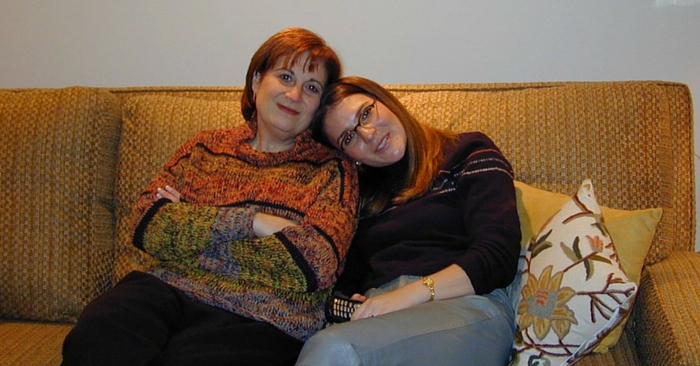
“Apparently I’m becoming my mother.”  I said these words out loud a few weeks ago.  The more I get into this mom thing, the more I hear myself echoing the words – and taking the actions – of my parents.  From giving Shiri baths with colored water, to the silly songs we sing in the morning and while getting ready for bedtime, it’s like my childhood all over again.

However, this goes beyond just parenting; the journey I’m taking in life so clearly imitates theirs as well.  Every day I struggle with the work/home life balance that my parents worked so hard to find.  Though it’s years away, we’re already starting to weigh the pros and cons of a day school education versus public school, and we’ve started saving for Shiri’s college education. Even Sunday picnic dinners are becoming a tradition in my house again.  It seems the older I get, the more like my parents I become.  Of course this feeling is common – it comes from the fact that we have a shared story, a shared legacy.  This is the script by which I’ve learned how to live life.  

In a certain sense, the Torah has contributed to this script as well.  This week we read from parshat Toldot, which literally means “generations.”  We read the story of Isaac and Rebekah, their struggle with infertility, and the subsequent birth of their twins.  The text continues with the sibling rivalry which began in utero and continues throughout the boys’ lives.  Ultimately, Jacob and Esau are no longer able to even live in the same house as the trickery, fighting, and intolerance for one another escalates.  Jacob is sent away for his own safety by his mother, and this section of the narrative comes to an end.  

But before all of the infighting begins, we are shown Isaac’s narrative.  He is described as “son of Abraham,” and chapter 26 tells us he relives many of the events of his father’s life.  Like Abraham, Isaac travels south in a time of famine and tries passing off his wife Rebekah as his sister out of concern for their safety.  Isaac follows his father’s journey to the point that he is re-digging wells that his father had dug and calls them by the same name.  

The story of Isaac, reliving and rediscovering the path of his parent, is similar to so many of our stories.  As we mature, we not only find ourselves resembling our parents in appearance, but often in temperament too.  The text of parshat Toldot, the text of the story of generations, is the understanding of our history, including who we are, where we are, and how we got to be here.  

We read this week’s Torah portion with the knowledge that while it might be disconcerting or downright scary to wake up one day and realize that you’ve turned into your parent, the qualities you choose to emulate are still within your control.  The example that has been set for us cannot be changed, but how we live our lives and raise our children is part of a path forged by our own footsteps in the world.
At First Sight – Parshat Chayei Sarah 5776

At First Sight

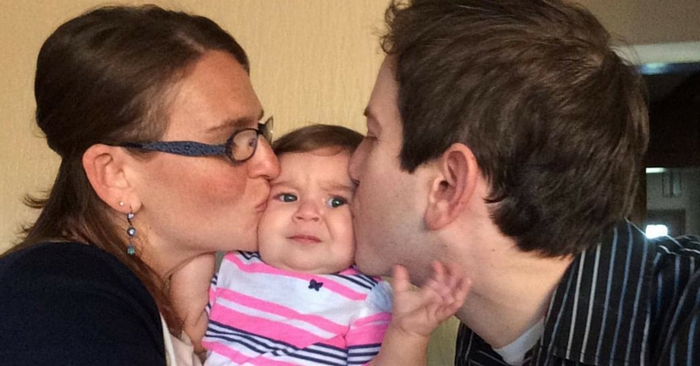
You hear that parenting changes your life completely, but obviously it’s a different feeling for every parent.  Over two years ago as Duncan and I prepared to welcome Shiri into our lives, we knew we were about to experience something intensely emotional, like nothing we’d ever experienced before.  At the same time we weren’t sure how that would manifest itself, and what it would actually feel like to become parents.  There was a certain expectation of an instant bond, an immediate love-beyond-anything connection. For me, having carried Shiri, that feeling was represented by awe, amazement, and gratefulness to God for this beautiful miracle that my body produced.  On the other hand, Duncan likes to take everything in and process it on his time, which for him has meant a love that has grown exponentially ever since that first day.  The more he got to know her, the more he loved her.

The notion that the more you know someone the uglier or prettier they can become is a very real phenomenon. Scientific research based on concepts like “propinquity,” which refers to the nearness of people to each other, suggests a person can become more or less attractive to you based on how much and how long you interact with them.

Our Torah portion this week, parshat Chayei Sarah, illustrates this.  In this part of the narrative, we read about Abraham and Sarah and their journey raising their son Isaac to the huppah and a life of good deeds.  Our reading begins with the death of Sarah, and Abraham looking for a proper place to lay her body to rest.  Immediately after the burial of his own life partner, Abraham sets out to find a mate for his son, hoping to ensure that he has comfort and support as he mourns his mother.  The text shares the story of Isaac and Rebekah meeting, marrying, and falling in love, and it ends with the death of Abraham. Within this section of text is also the building of a family for Rebekah and Isaac.  

The text is clear in chapter 24, verse 67: “Isaac then brought her into the tent of his mother Sarah, and he took Rebekah as his wife.  Isaac loved her, and thus found comfort after his mother’s death.”  In other words, Isaac comes to love Rebekah after he marries her.  Their love is the result, not the prerequisite, of their relationship.  

The Torah reminds us that relationships take time to blossom, and we are urged to take time to know one another, to truly engage face to face with those around us because that’s how meaningful connections grow.

The instantaneous attachment when parent meets child may be real, but it’s shallow and fleeting. Of course I love Shiri because she’s my daughter, but also because I’ve grown to love her as the bright, independent, beautiful spirit she’s becoming. And that’s a love that only gets bigger.

Leading By Example – Parshat Vayera 5776

Leading by Example

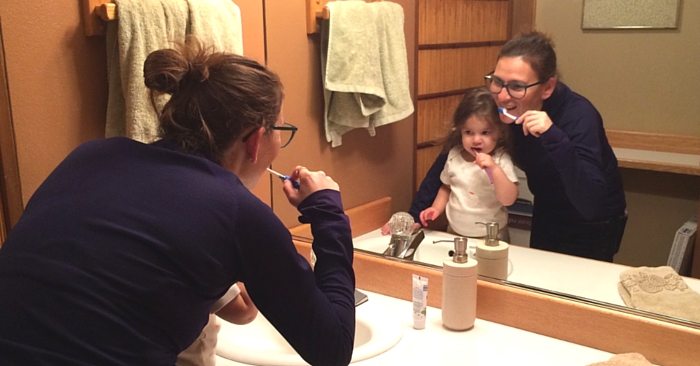
As a parent I am often reminded that there are always little eyes and ears watching and listening to my every move.  Shiri wants to do everything we do, from my marching in place when I’m trying to get in a few extra steps for the day on my Fitbit, to eating the foods she sees us eating, to the way in which she models me on my phone. (Any object she picks up she holds to her ear and yells “Hi!”)  She is a sponge looking to me for what her next move should be.  As human beings we look to others as role models when we’re learning new skills.  We learn how to react by watching others, and we learn the appropriate behavior for a variety of situations by imitation.  This comes as a powerful mandate for the modeler.

The Torah is also filled with instances in which imitation is the mode of transmission for behavior and expectations.  In last week’s parshah, Lech Lecha, Abraham leads by example when he circumcises himself as part of a covenant with God.  Being a moral exemplar is a paramount role in the Torah.

This week we read parshat Vayera, in which Abraham and Sarah contemplate the son that will be born to them in their old age; Sodom and Gomorrah fall as Abraham bargains with God to save Lot’s life; and Isaac is born, causing a rift in Abraham’s house with Ishmael.  Abraham moves forward in making a deal with King Avimelech, and we end with the Akeidah, the test of Abraham as God instructs him to offer up his son, Isaac.

God asks much of Abraham in order to save his family and be a loyal adherent to God’s ways.  Throughout the narrative we see Abraham’s moral compass developing over time. As Abraham is called to take care of issues in Sodom and Gomorrah, he faces a moral dilemma when God’s solution is destruction.  Abraham asks, “Shall not the judge of all the earth deal justly?”  God has challenged Abraham, and now Abraham challenges God right back with the notion that even God is subject to the moral standards decreed for human beings.  That is to say, if God is going to command moral behavior, God must exemplify that behavior.

The flawed sentiment “Do as I say, not as I do” has no place in Judaism.  The idea that parents, teachers, and rabbis can expect one thing and model something else is utter nonsense.  Will my daughter embrace the beauty of Shabbat as an adult simply because I told her how important it was to me?  No.  The perpetuation of the traditions we hold dear will rely on us showing, not merely telling.

This Shabbat, and at every opportunity, let us look to Abraham’s definition of practicing what we preach.  Let us lead by example.