Family reunions bring with them a flood of emotions. This was the case in parshat Vayishlach for Jacob and Esau, and also this week in parshat Vayigash for Joseph and his brothers.
Author: Eve Posen
Brother Against Brother – Parshat Miketz 5776
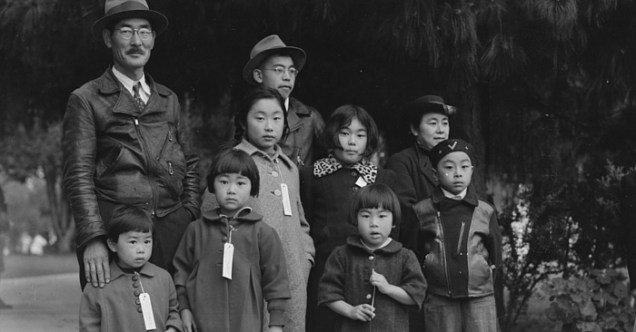
This week we commemorated the Japanese military strike on Pearl Harbor, which led to the United States’ entry into World War II. Among the many tragic events following that attack was the internment of people of Japanese ancestry living in the United States, the majority of whom were American citizens. Sadder still is that fact that it wasn’t until 1992, more than 50 years after Pearl Harbor, that the Civil Liberties Act Amendments finally ensured all remaining internees received redress payments, a process that was put into motion in 1988.
Asking for and granting forgiveness can be a long, difficult road, especially in the extreme instance of nations at war. But that certainly doesn’t explain away this type of treatment of fellow citizens who are our brothers and sisters. This week’s Torah portion, parshat Miketz, speaks to the idea of familial forgiveness in a more literal sense. It’s a lesson in perseverance and understanding between brothers.
We pick up in part two of the life and trying times of Joseph. Our hero has had a few setbacks, among them being sold into slavery by his brothers and thrown into jail. However, Joseph gets his big break when Pharaoh has a startling occurrence of dreams. When none of Pharaoh’s resident magicians are able to interpret his visions, Pharaoh calls on Joseph, and with God’s help, Joseph translates the dreams as a sign of an approaching period of fertility followed by a period of famine. Joseph presents Pharaoh with a game plan and becomes Pharaoh’s right-hand man in preparation for these times that will certainly be difficult not only for Egypt, but also neighboring lands.
With a little project management, Joseph stores the extra food during the fertile years and saves Egypt from starvation during the seven years of famine. Joseph’s brothers are sent by Jacob to Egypt to buy food for the family, and the stage is set for a surprise confrontation between the brothers and Joseph, who has become one of the most powerful men in all of Egypt.
Joseph has a choice to make. He can seek vengeance and throw his brothers into jail (or a dark pit) to rot, or he can forgive and accept them back with open arms. Though we know he chooses the path of forgiveness, he does so in a way that tests their feelings towards their father and their youngest brother Benjamin in order to see if they’ve repented yet for selling him into slavery.
The reunion has a happy ending, but not just because of forgiveness. The greater lesson here is one of perseverance. Joseph could have easily given up hope when his brothers left him to die or while he was in jail when others were set free. Instead, he pressed on and let the fire burning inside him carry him from the darkness rather than consume him.
Crimes committed out of fear against our brothers and sisters, whether in an immediate family or in the more global sense, are a byproduct of ignorance of the worst kind. It was this type of crippling ignorance that forced over 100,000 people into internment camps in the early 1940s. Now imagine if we saw our brothers the way Joseph saw his. Even for Joseph, free and full forgiveness was difficult to achieve, but it came as a result of understanding and ending the ignorance that existed between them. May we learn from Joseph that acceptance is possible, and may we have the perseverance to get there.
Parenting by the Parshah – Miketz
How many times have you heard (or said to yourself) “It’s just a phase”? For Joseph, phases were feast or famine . . . literally. For us, phases are footie pajamas. This too is Torah.
A Time to Mourn – Parshat Veyeshev 5776

If you have some knowledge of the medical world, you may know that septic shock isn’t something you typically bounce back from. My mourning process for my father started when it became clear that he was not going to survive this attack to his vital systems. That’s when it hit me that I would be without my father’s physical presence for the rest of my life.
It sounds strange to begin mourning before a death. After all, he was still breathing. But what triggered my early grief was knowing that each breath brought him closer to his last and that after he was extubated, any moment might be our last together.
Everyone mourns in their own way. My mom, my sister, and I all expressed our feelings differently and on different timelines. I’m not embarrassed to say I was a wreck because I had already accepted the next phase and was plunged into the emotional depths of this loss, but my process was unique to me. We did our best to comfort each other, even as we were in three different phases and mindsets.
Just as no two people are exactly alike, no two relationships between people are exactly alike. That’s the reason the mourning process works differently for every mourner. Individual circumstances shaped my relationship, so there was no “one grief fits all” solution for my pain.
Parshat Vayeshev, which we read this week, shares this idea in its own way. The narrative begins with Joseph’s dreams and his brothers’ revenge on him for sharing his prophetic visions. Jacob is then told that Joseph is gone, and we read about Joseph’s experiences in Potiphar’s house, including his jailing and dream interpretation for fellow prisoners the butler and the baker.
When Jacob is told of Joseph’s “demise,” he reacts as any parent would – he is inconsolable. The text literally reads that he “refused to be comforted.” The word for “comforting a mourner” in Hebrew is l’hitnachem, which is reflexive. Thus, Jacob refused to comfort himself. Samson Raphael Hirsch teaches that we can never truly comfort a mourner, even when we have known a similar loss. We can only surround the mourners with a sense of being cared about, in the hope that this will bring them to the point of comforting themselves.
Parshat Vayeishev is a reminder that we all experience our relationships and the world in unique ways. For that reason, we’re not obligated to heal one another, we’re obligated to be there for one another so the healing can happen.
On Miracles and Hate: Hanukkah 5776
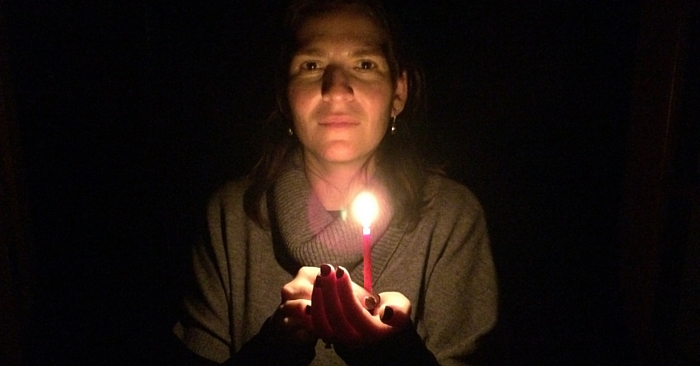
I’m not ready for Hanukkah. By that, I don’t mean that I got a late start shopping for gifts. I don’t mean that I lost my Nana’s latke recipe. What I mean is, how can I possibly go into a holiday of light and miracles when everything in the news is darkness and hate?
In the span of about a week, it’s as if we’ve been reading a twisted, despairing version of The Very Hungry Caterpillar. “On one day, a massive terrorist attack in Paris, but some people were still hateful. Another day, senseless murders in Colorado Springs, but some people were still hateful. And on another day, a massacre in San Bernadino, but some people were still hateful.”
How do I celebrate nights of joy, hope, and freedom in the world that creates days like this? How can I sing Hallel, songs of praise for God, with horrific acts being perpetrated in the name of religion? When all around it seems so dark, how can lighting these lights possibly make a bit of difference?
The answer is right in front of me in the holiday itself: dedication. Hanukkah, Hebrew for “dedication,” embodies the will, the determination, the dedication of a people to survive in the face of insurmountable odds. It’s the spirit that is kindled and does not die, from the Maccabees fighting to preserve their lives and our sacred tradition, to the Parisian Jews being told not to light chanukiot out of fear of further attacks.
Join me, starting Sunday, and let us dedicate our eight nights of light against the hate and the desperation. For eight nights, let there be nothing but our combined glow around the world.
On Sunday I will light for hope.
On Monday I will light for understanding.
On Tuesday I will light for wisdom.
On Wednesday I will light for respect.
On Thursday I will light for acceptance.
On Friday I will light for dialogue.
On Saturday I will light for guidance.
On Sunday I will light for peace.
Now my holiday is dedicated. Now the flames have regained their purpose. Now I’m ready.
 Rabbi Eve Posen