The contrast between joyous Shavuot (when we receive, along with the rest of the Torah, the commandment “Thou shall not kill”) and the horrific events in Orlando and Tel Aviv is jarring and nauseating. Today I offer a departure from my usual lighthearted parenting lessons as I grapple with what it means to give and receive blessing in this world my daughter will inherit. But perhaps this struggle too is Torah.
Author: Eve Posen
Israelites and Window Seats – Parshat Bamidbar 5776
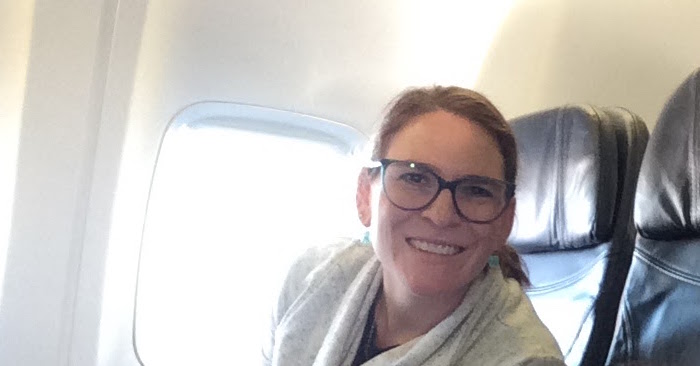
I prefer the window seat on airplanes. If I have to be stuck in an insanely small place for a long period of time, at least I can see the outside world. For me, the window seat is a compromise between the middle seat, where there’s very little room for movement, and the aisle seat, which tends to bleed into the chaos of the rest of the plane, like the unforgiving snack cart or the unobservant passenger. It may not be casebook claustrophobia, but it’s an irrational fear nonetheless.
On one end there’s the middle seat fear of having no control or way out, and it’s unsettling when it happens on the plane or anywhere else. Of course the opposite of total restriction isn’t necessarily ideal either. We learn very early on as small children that we do better with boundaries and set guidelines. Having too many options or choices causes chaos. A child will initially celebrate the expanse of options, only to have a meltdown caused by the overwhelming lack of structure. Parents, you know exactly what I’m talking about.
We see this same phenomenon with the Israelites. This week we begin reading the fourth book of the Torah, Sefer Bamidbar. This text brings us to the accounting of the people, showing us who each of the tribes are and what numbers they hold at this moment. Each tribe is denoted with a flag which marks their territory. This is the beginning of an organized society, a significant change from the free flow uncertainty they had after leaving Egypt and an even bigger change from the tight restrictions they had while enslaved.
This week the story takes another turn. Mitzrayim, the Hebrew word for Egypt, means “from a narrow place.” Egypt was a metaphorically tight place for the Israelites, filled with strict rules and laws and very little freedom to move about or guide their own journeys. Imagine the stark contrast of moving straight from this pre-liberated society to a place called midbar, the Hebrew word for the desert. The desert is a vast open expanse filled with endless (and unknown) possibilities. It’s understandable that this new world without boundaries would cause chaos and uneasiness.
The struggle between too many restrictions and not enough restrictions plays out time and time again, everywhere from business regulations to government power to the running of our own households. In parshat Bamidbar we see further movement (literally and figuratively) toward what a budding nation needs in order to give its people freedom, while keeping safety and security as top priorities. As I said, I prefer the window seat.
Parenting by the Parshah – Bamidbar
The “village” it takes to raise a child is much more about creating a supportive community for yourself than it is about depending on other people for help. This African proverb too is Torah.
Slippery Slope – Parshat Bechukotai 5776

When conservative Judaism made the change to allow congregants to drive to shul on Shabbat, the argument against the change was that congregants would take this permission further than intended. Those opposed to this shift were concerned that anyone who started driving to shul on Shabbat would eventually be driving to the movies on Shabbat or driving to the mall on Shabbat. This is the definition of what we often call a “slippery slope.” It’s the fear, logical or not, that one action may result in unintended and disastrous consequences. The slippery slope argument is invoked in order to maintain the status quo rather than risk a calamitous outcome. In the case of driving on Shabbat, the concern was that one decision would water down the observance of the entire movement.
That’s not a discussion we need to get into specifically, although this week’s parshah contains an interesting version of the slippery slope. This week, in parshat Bechukotai, the Israelite nation is receiving the final laws of the book of Vayikra, which detail specifically how we should treat one another in various relationships and how we should connect to God. The Israelites have only been out of Egypt for a short period of time, and during this first taste of freedom, they are in their stubborn and rebellious adolescent years as a nation. God, as the dutiful parent, tries every which way to implore the Israelites to keep the mitzvot. God tries to use a love and logic approach in giving consequences that fit the actions, as we saw in parshat Yitro. God tries angry intimidation, as exhibited when the Israelites build the golden calf. Now, God brings on the threats.
Chapter 26, verses 14-45 are a section of text known as the Tochecha, the rebuke of the nation for their missteps. In verse 18 God shares that the disciplinary action for sinning will be sevenfold. The Sifra, a fourth century commentary on the book of Leviticus, sees the process of falling away from God’s ordained path as occurring in seven steps, which read remarkably like a cause-and-effect slippery slope argument:
- People will stop studying Torah.
- Without this foundation of study, they will come to see the commandments as matters of personal choice rather than moral obligations.
- They will therefore resent people who do study and practice and who make them feel guilty for not doing so.
- They will then try to stop others from fulfilling the commandments in order to feel less guilty themselves.
- They will deny that the commandments came from God.
- They will deny the existence of a covenant between God and Israel.
- They will deny the existence of God.
The Sifra offers what is certainly a worst cast scenario, but it also reminds us that our actions, for better or worse, can cause chain reactions in the world. And it got me thinking. We really only focus on the negative slippery slopes (a slippery slope has a pretty negative connotation), but the change we sometimes fear could just as easily result in a series of positive aftereffects.
Consider the positive slippery slope of driving to shul on Shabbat. The reason this response was accepted was because removing the prohibition against driving potentially allowed more people to feel comfortable traveling to shul on Shabbat. This, in turn, would help build community and strengthen the Jewish people in the long run. Perhaps rather than calling this positive chain reaction a “slippery slope,” it instead harkens back to how Moshe received the Torah in the first place; he climbed the mountain.
Parenting by the Parshah – Bechukotai
We all know that satisfaction is the greatest reward, blah, blah, blah. But sometimes a tangible reward is the most helpful one. You guessed it – this too is Torah.
 Rabbi Eve Posen