Every Friday night Cantor Bitton, my clergy partner, leads the prayer Hashkiveinu set to “Mad World” by Tears for Fears. I hear this echoing in my head anytime the world feels out of control. “Hashkiveinu l’shalo-om.” God, let us lie down in peace. This is the Torah I shared on Friday night in response to the mad world we live in.
This morning my 3.5-year-old son woke up and told me he had a nightmare about “a police officer putting his knee on the man’s neck.” Here are the things I took from this: we can no longer watch the news with our children, and I’m even more compelled to teach this Torah, to preach peace, justice, and mercy, and to work to end racism in our world.
Pasted below is the outline of my drash; hopefully audio or video will be available shortly. To paraphrase Hashkiveinu, may we be able to create a world where ALL PEOPLE can lie down in peace every night.
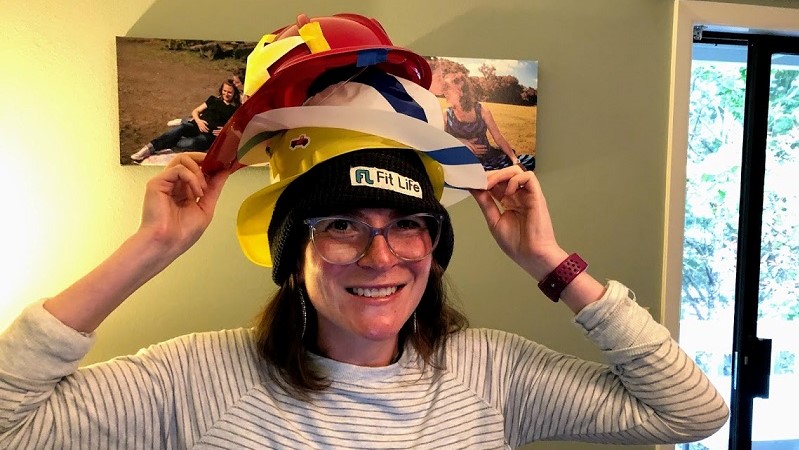
Like most people, I wear many different hats in different situations. I’m a mother, rabbi, friend, youth director, sister, daughter, wife, avid walker, just to name a few of my roles. Where I get in trouble is when I’m wearing one hat while others are expecting me to wear another. Some time ago, my daughter came down with a fever while at school, and it happened to be in the middle of a terrible day for me. This extra weight was the straw that broke this mother’s back. To make my already grumpy mood worse, I took her temperature again when we got home, and it was normal (of course). And later that day when I needed to be wearing my rabbi hat, I was still wearing my frustrated mom hat, and this led to confused feelings and some mismatched expectations all around. The truth is, I’m all of these people all the time, even if I don’t feel like acting like it.
These days, it’s even more confusing, since I’m doing most of my job as a rabbi from home. The lines have further blurred between work life and home life. When am I a rabbi? When am I a mommy?
The Torah this week teaches us a similar lesson as the Israelites learn what it is to be a free society. This week we read from Parshat Bamidbar, the beginning of the fourth book of the Torah. This text brings us to an accounting of the people, showing us who each of the tribes are and what numbers they held at this moment. Each tribe is denoted with a flag which marks their territory. This is the beginning of an organized and well thought out society, a change from the free flow and uncertainty they faced leaving Egypt, and also a change from the tight restrictions they had while in Egypt.
The text begins with a list of the ways in which the Israelites are to march through the desert and set up their camps. In chapter 2, verse 17 we read, “Then, midway between the divisions, the Tent of Meeting, the division of the Levites, shall move. As they camp, so they shall march, each in position, by their standards.” Logistically, this means that the Levites are broken into two units during the march, but the Israelite troops remain intact at all times.
However, another interpretation of “As they camp, so they shall march” could be that individuals should be the same person at home as away from home, in private as in public. True, my home and my family provide a safe space for me to let down my hair and let off some steam, but I’m still a mother and a wife when I leave the house, just as I’m still a rabbi everywhere. This is especially true now, when I’m doing much of my work as a rabbi from my home. That’s not to say I can’t express my emotions or vent now and then. The important thing to remember is that one hat doesn’t define you or anyone else. To be a well-rounded individual, you will naturally take on a variety of roles, but parts of you shouldn’t disappear just because you’re in a different environment or talking to different people at any given time. In other words, instead of removing one hat to put on another, wearing all of them (using all of your experience and expertise in daily life) means you’re truer to your authentic self.
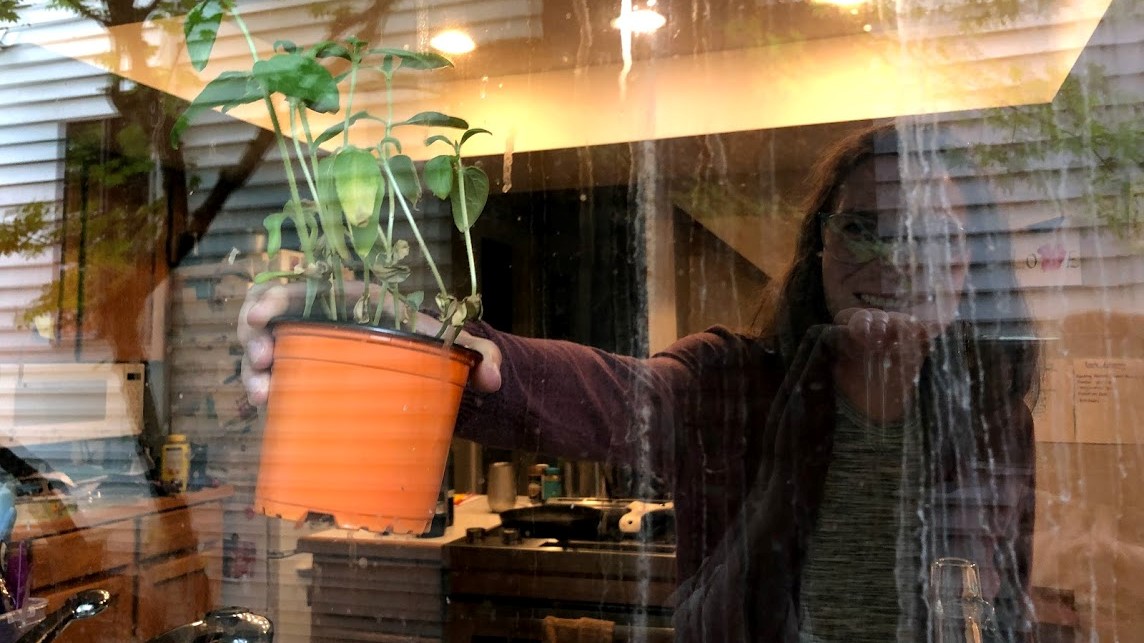
It seems that much of the tension in our world stems from the human desire to own a tangible piece of the world. Whether this means the simple notion of a backyard vegetable garden, a commercial real estate investment, or anything in between, we have an innate desire to have something to call our own. For much of our modern history, land ownership has been a measurement of status, and the drive to own more and more has in many cases increased the divide between those who have ownership and those who don’t.
This concept was also familiar to the Israelites in their quest for the creation of a civil society. This week we read Parshat Behar-Bechukotai, the final parshiyot in the book of Vayikra. This double portion focuses primarily on the laws of agriculture and land. What makes this section of text unique is that it suggests a type of land ownership and farming in which no one group holds complete power forever.
Specifically, we read about the 50-year land ownership cycle requiring the land to rest every seventh year. At the end of the 50 year cycle, land rights returned to their original owner. No one was able to hold land acquisition above the head of someone else because equality and balance would be the rule. Rabbi Abraham Isaac Kook taught that the purpose of the 50th “Jubilee” year (after 49 years of seven seven-year cycles) was primarily spiritual, not economic. It came to restore the sense of unity that once prevailed in Israel and to restore self-respect to the person who may have sunk into poverty or failure.
In today’s world we pride ourselves on the systems set up to maintain balance, like our branches or government and varying income tax brackets, yet we still haven’t been able to close the gap that divides far too many of the most impoverished families and communities in our country. For the entirety of our existence as a Jewish people, the Torah has imagined a world where we’re not stratified and strangulated based on income or job description. Imagine if every 50 years (or every 7 years) we reevaluated and took a serious look at where we’ve been, what we need to continue to thrive, and how we can help others to do the same.
Life is about experiences, and some stick with us so vividly that certain smells, tastes, and even sounds can take us right back there. In fact, the sense of smell is known to have a big connection to memory. Sometimes I get a whiff of something like my father’s cologne at times, and it’s as if he’s visiting me somehow. And smells like chicken soup and chocolate chip cookies will thrust me right back into my mother’s kitchen preparing for Passover. In those moments it’s like I’m literally feeling the memory of warmth, an embrace, and family togetherness.
On the flip side, there are times when I am desperate to relive a memory and can’t find a way to evoke that tight connection. Those are the moments that make sad, and feel as if that familiarity is gone forever.
Many of the experiences described in the Torah are also the kind that evoke memory long after the moment has passed. The sacrifices we learn of produced an array of aromas, and the sound of all of Israel gathering at the mountain and then hushing must have provided quite a contrast. Parshat Emor reminds us of all of this and more. We begin with the specific rules and regulations of the priests, as well as the laws about what we’re supposed to put into our bodies. The text continues with an in-depth look at the laws of our holidays and special times and concludes with the punishments that would be brought to those who break the mitzvot of trust in relationships. With the laws about the priesthood comes one of the defining mitzvot of Jewish community.
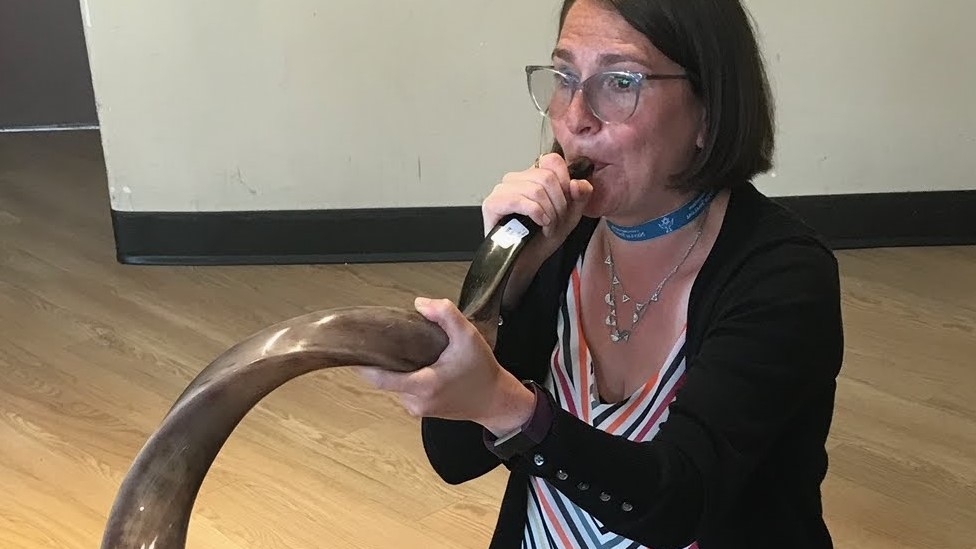
In chapter 23, verse 24 we receive the laws of Rosh Hashanah. The holiday that now begins our year was actually the first day of the seventh month. The Torah describes the festival as a day of complete rest, a sacred occasion commemorated with loud blasts. You shall not work at your occupation (clergy excepted of course) and you shall bring a gift to God. Sounds pretty much like how we celebrate Rosh Hashanah today. We stop what we’re doing (which feels a bit like resting on Shabbat) and we blast the shofar, nice and loud.
However, this verse is also how we learn that we can’t blow the shofar on Shabbat. Why? Because Shabbat is a mikrah kodesh, a holy commemoration of its own, so there is no need for the additional sound. According to the Talmud, on this occasion we’re supposed to remember the sound of the shofar in our hearts, and since that sound is so vividly ingrained, we don’t need both.
The shofar pierces our ears and often our hearts with its loud and startling blasts, but memory is so strong, even the mitzvah of hearing those loud blasts can be fulfilled by recall if it happens to be Shabbat.
What an important message this is about how we celebrate Jewishly, especially during a pandemic, when we might not be able to celebrate in the same ways as usual. Our memories are strong enough that we can recall the sound of the shofar, the sight of the Purim costumes, or the smell of kiddush lunch at shul, and it’s like we’re there.
It has been many years since I have fasted for the full Yom Kippur holiday. The last time was Yom Kippur 2012. This year is the first time since then that I am neither pregnant nor nursing, so I had the obligation to return to the traditional fast. It kind of reminded me of when I was 12 and fasted for the first time. I had dry mouth and a headache, and it was hard to concentrate, especially while leading long services and standing for much of the morning. By mid-afternoon I wasn’t sure I was going to make it through the fast. I had two more programs to do, and my head was feeling a bit woozy, so I caved. I took a big sip of water, and my body instantly calmed down. I made it 20 hours through my fast. I felt a twinge of disappointment that I couldn’t push through, but I also felt proud of the work I’d done both spiritually and physically to get through the day. I still had a meaningful Yom Kippur, I wasn’t smited (at least I don’t think so), and I ended the holiday on a spiritual high.
The Torah would actually support my partial victory. This week we read a double parshah, Acharei Mot-Kedoshim. Parshat Acharei Mot deals with what happens after Aaron’s sons have offered up “strange fire” to God and with certain forbidden relationships between human beings. The structure of this section of text pushes us to look at our relationships with both God and others and see the boundaries and intimacies of each relationship. Parshat Kedoshim deals with what is known as the “Holiness Code” that helps us to understand how we can walk in God’s ways and create a community of relationships and understanding.
It’s Parshat Acharei Mot that carries with it many of the laws for Yom Kippur and how we should atone. Chapter 16, verse 31 expresses that Yom Kippur shall be a Shabbat of complete rest and that we should practice self denial. This is the basis for fasting on Yom Kippur as well as the abstentions from bathing, sexual activity, and wearing leather. We indulge the rest of the year; Yom Kippur is the one time of year when we focus outside of ourselves.
While the intention behind giving up certain things is good, self-denial can be more difficult for some than others, and also potentially dangerous. The Talmud insists that all who are ill or infirm should follow doctor’s orders to eat, drink, and take medication, including on Yom Kippur. Further, if it feels necessary for your own health, you’re allowed to – in small quantities – take a sip of water or a small bite of food.
The fact that Parshat Acharei Mot is followed by Parshat Kedoshim, which literally means holiness, is a not-so-subtle reminder that it’s our laws and traditions that lead us to holiness. However, holiness is more than individual instances of self-denial. It’s about all-around self-care, and that’s something we should be practicing all year long.

 Rabbi Eve Posen