Forever Changed – Parshat Vayishlach 5776

Forever Changed

Truly life-changing moments are few and far between.  A specific encounter can touch your heart, or a story on the news can make you think, but very few of these moments reach us so deeply that our lives are never the same again.  The instances that typically alter our lives are the ones you’d expect, like significant lifecycle events or major traumatic experiences.  However, occasionally an event which seems superficially insignificant can lead to an unexpected transformation.    

This is the case in parshat Vayishlach, which we read this week. The portion is filled with what should have been huge, life-changing moments for Jacob. Jacob and his twin Esau reunite and make up after a 20-year estrangement.  Following this, Jacob’s daughter Dinah is involved in a violent incident in Shechem that prompts her brothers to take revenge on her behalf, Rachel dies in childbirth, and Jacob’s father Isaac dies.  All of these significant events likely impact Jacob in one way or another, but it’s before these at the beginning of the parshah when his life is changed completely.

Jacob is preparing to meet his brother after decades apart, and he struggles with an angel in his sleep.  This unique encounter changes him in an instant, both physically and emotionally.  The wrestling knocks his hip out of its socket, and Jacob’s name becomes Yisrael, literally “one who struggles with God.”  

When Jacob and Esau reunite, Jacob is overcome with emotion.  In Chapter 33, verse 10, Jacob proclaims, “Seeing your face is like seeing the face of God.”  The text in Genesis Rabbah, a 5th century commentary on the Torah, suggests that Jacob is talking about his own transformation, not about his brother’s appearance. Jacob is sharing with Esau that he has seen the face of God and is a changed man, not the deceitful brother who tricked his twin. He no longer sees Esau as a rival, but as an equal, deserving of honor and dignity.  Clearly Jacob is a new person.

It’s a cliché to simply say “people can change.” Our parshah reminds us that change is really about having our perspective shifted so that we may see the world differently.  The hope is that we recognize in ourselves not only these significant moments when they happen, but the potential for them to occur at all.
We Are The Dreamers – Parshat Vayeitzei 5776

We Are The Dreamers

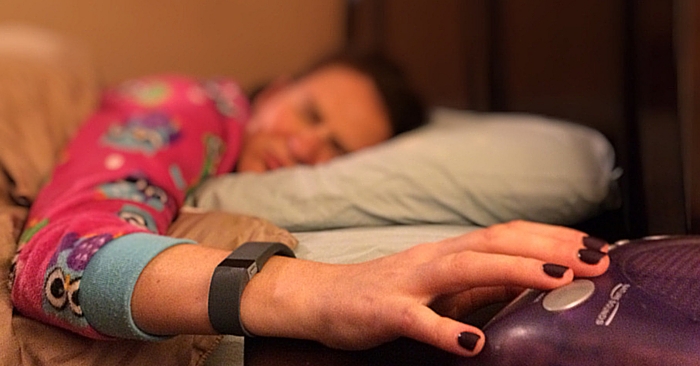
Some mornings I wake up confused as to whether the dream I just had was actually a dream or part of real life. There’s nothing more terrifying than waking up thinking you’ve flunked your high school final or you’ve missed a big deadline at work. On the other end of the spectrum, sometimes I wake up and wish that my dreams were true, that my father really did come back to see me or that magically my student loan debt was paid off. Our dreams let us peer into our deepest desires and fears.  

In the Torah too we learn there are dreamers who walk the tightrope between fantasy and reality. Jacob, Joseph, and Pharaoh all have vivid dreams that ultimately change the course of their lives. With each of these men, their dreams have an additional God-related element that moves them to make a change in their world.  

This week we read from parshat Vayeitzei, one of the turning points and most famous parts of our text. The text picks up with Jacob on his journey away from his parents’ house to meet his cousin, Lavan, and the strange dreams and encounters he has with godly creatures along the way. He ends up falling in love with Rachel, works for her hand in marriage, but is tricked into marrying Rachel’s older sister Leah. Fast forward after a few more years of work, and the prize of having Rachel as his wife is realized. The text continues with the expansion of Jacob’s large family and his journey away from his father-in-law Lavan to a new home.  

In this week’s parshah, Jacob is the dreamer. His dream brings God down to him on earth, and in his dream angels dance around him, surrounding him with warmth and love. Alone in the wilderness because he’s had to run away from his family after deceiving his father and brother, Jacob is in an unfamiliar and probably terrifying place. God comes to him in a dream and promises to always be there with him, that he is not alone. What a relief it must have been for Jacob to feel that divine presence, and at the same time, surely he must have questioned whether or not it was real.

Jacob wakes up makes a deal with God to confirm that his dream was more than just a dream. In chapter 28, verses 20-21 he says: “If God remains with me, if He protects me on this journey that I am making, and gives me bread to eat and clothing to wear, and if I return safe to my father’s house – the Lord shall be my God.” Jacob isn’t sure whether to trust his dreams or not, and his prayer is essentially “I’ll believe it when I see it.” He makes a promise to God, trying to will God’s guidance and presence to be true.  

This reassuring episode undoubtedly helps Jacob feel more closely connected to God, but did it change the course of his life? Ultimately, as his dream and bargaining tell us, the course of Jacob’s life is determined by his actions. Turning dreams into reality isn’t merely an act of God; it’s the combination of faith in God, faith in ourselves, and the active pursuit of the goals we wish to achieve.

I Sound Like My Mother – Parshat Toldot 5776

Like My Mother

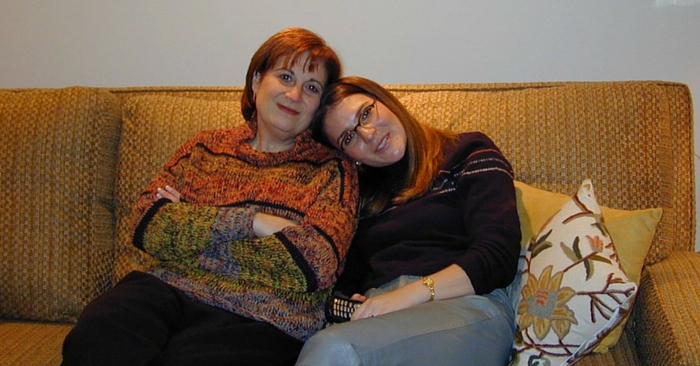
“Apparently I’m becoming my mother.”  I said these words out loud a few weeks ago.  The more I get into this mom thing, the more I hear myself echoing the words – and taking the actions – of my parents.  From giving Shiri baths with colored water, to the silly songs we sing in the morning and while getting ready for bedtime, it’s like my childhood all over again.

However, this goes beyond just parenting; the journey I’m taking in life so clearly imitates theirs as well.  Every day I struggle with the work/home life balance that my parents worked so hard to find.  Though it’s years away, we’re already starting to weigh the pros and cons of a day school education versus public school, and we’ve started saving for Shiri’s college education. Even Sunday picnic dinners are becoming a tradition in my house again.  It seems the older I get, the more like my parents I become.  Of course this feeling is common – it comes from the fact that we have a shared story, a shared legacy.  This is the script by which I’ve learned how to live life.  

In a certain sense, the Torah has contributed to this script as well.  This week we read from parshat Toldot, which literally means “generations.”  We read the story of Isaac and Rebekah, their struggle with infertility, and the subsequent birth of their twins.  The text continues with the sibling rivalry which began in utero and continues throughout the boys’ lives.  Ultimately, Jacob and Esau are no longer able to even live in the same house as the trickery, fighting, and intolerance for one another escalates.  Jacob is sent away for his own safety by his mother, and this section of the narrative comes to an end.  

But before all of the infighting begins, we are shown Isaac’s narrative.  He is described as “son of Abraham,” and chapter 26 tells us he relives many of the events of his father’s life.  Like Abraham, Isaac travels south in a time of famine and tries passing off his wife Rebekah as his sister out of concern for their safety.  Isaac follows his father’s journey to the point that he is re-digging wells that his father had dug and calls them by the same name.  

The story of Isaac, reliving and rediscovering the path of his parent, is similar to so many of our stories.  As we mature, we not only find ourselves resembling our parents in appearance, but often in temperament too.  The text of parshat Toldot, the text of the story of generations, is the understanding of our history, including who we are, where we are, and how we got to be here.  

We read this week’s Torah portion with the knowledge that while it might be disconcerting or downright scary to wake up one day and realize that you’ve turned into your parent, the qualities you choose to emulate are still within your control.  The example that has been set for us cannot be changed, but how we live our lives and raise our children is part of a path forged by our own footsteps in the world.